

Strømsholmen Seasport Center
Family-run PADI/CMAS dive center on Norway's Atlantic Ocean Road since 1981, with 100+ dive sites, seal safaris, and pioneering orca expeditions.
PADI3 languages
Nationally ranked Norwegian dive site on the Atlantic Road with kelp forests, rocky drop-offs to 30m, and rich cold-water fauna.
Last updated April 2026
Hottane sits where Norway's rocky Atlantic coastline meets the open sea, offering a layered underwater landscape that shifts character with depth. The shallow zone is a dense kelp forest — towering fronds swaying in mild surge, sheltering crabs, wrasse, and the occasional well-camouflaged anglerfish on the rocky substrate below. Push deeper through the kelp canopy and the terrain transitions to exposed rock formations, then opens into vertical walls and staged drop-offs that step down to approximately 30 metres onto sandy patches.
The site's range makes it unusually versatile. A single dive can take you from the living canopy of kelp at five metres through mid-depth rock gardens where Norway lobsters retreat into crevices, down to the clean-cut walls where the visibility often improves dramatically below a noticeable salinity layer around ten metres.
Hottane earns its place in Norway's top dive sites through diversity rather than a single showpiece feature. Where many Norwegian sites are defined by wrecks or extreme currents, Hottane delivers varied natural terrain that rewards repeated visits across different profiles and seasons. Lobsters — both Norway lobster and European lobster — are a reliable draw among the rock crevices, while nudibranchs add colour to the cold-water palette.
After dark, the shore zone reveals a different cast. A night dive here brings out lumpsuckers clinging to the rocky substrate, large European plaice resting on sand, and crabs moving freely across terrain they share more cautiously by day. The proximity to Strømsholmen's pier makes these night dives straightforward to stage.
Hottane's Atlantic Road location means surface conditions can shift, though the site itself is sheltered enough for regular operations throughout the summer season. The halocline around ten metres is worth knowing about — visibility above it may be hazy while below it clears up to 20 metres on good days. Water temperature hovers around 15-16°C even at the height of summer, so plan for drysuit diving regardless of the month. Guided boat dives depart daily from Strømsholmen between June and September, with a four-diver minimum per trip.
What makes this dive site stand out.
Vertical and staged drop-offs through kelp forests to 30m.
Featured in three independent best dive sites in Norway lists.
Lobsters, anglerfish, wolffish, and nudibranchs on the reef.
Accessed from Stromsholmen dive centre on Norway's iconic road.
Shore zone offers lumpsuckers and large flatfish after dark.
Strømsholmen operates guided boat trips June through September. Shore diving possible earlier — March dives recorded at 16°C water temperature.
Boat dive NOK 850-1050 depending on distance. Weekly package NOK 18,600 includes accommodation, 12 boat dives, unlimited shore diving. House reef dive NOK 300.
Shallow kelp zone (5-15m) accessible to OW divers. Deep drop-offs to 30m+ require AOW. Drysuit certification strongly recommended for all Norway diving.
Easy in the kelp forest shallows, moderate to advanced on the deeper drop-offs
Book a guided dive at this site.
Family-run PADI/CMAS dive center on Norway's Atlantic Ocean Road since 1981, with 100+ dive sites, seal safaris, and pioneering orca expeditions.
Get in touch to add or claim your dive center listing on DiveCodex.
No spearfishing or collecting marine life at Strømsholmen's regular guided sites.
Multiple international dive media rank Hottane among Norway's top dive sites for its combination of kelp forests, rocky terrain, and cold-water biodiversity. The site benefits from the Gulf Stream's influence, which supports over 1,400 recorded species in the surrounding waters.
A drysuit is strongly recommended. Water temperatures range from about 15-16°C even in summer, and conditions are colder at depth. Strømsholmen rents both drysuits and 5mm wetsuits, though most divers opt for dry.
The shallow kelp forest zone at 5-15m is accessible to Open Water certified divers and offers plenty of marine life. The deeper drop-offs reaching 30m+ are better suited to Advanced Open Water divers. The site accommodates both skill levels on the same dive trip.
A salinity layer around 10m depth can reduce visibility in the shallows, but below this halocline conditions clear up significantly. Logged dives show 20m visibility in May and around 8-10m in September. The best visibility tends to be mid-summer below the halocline.
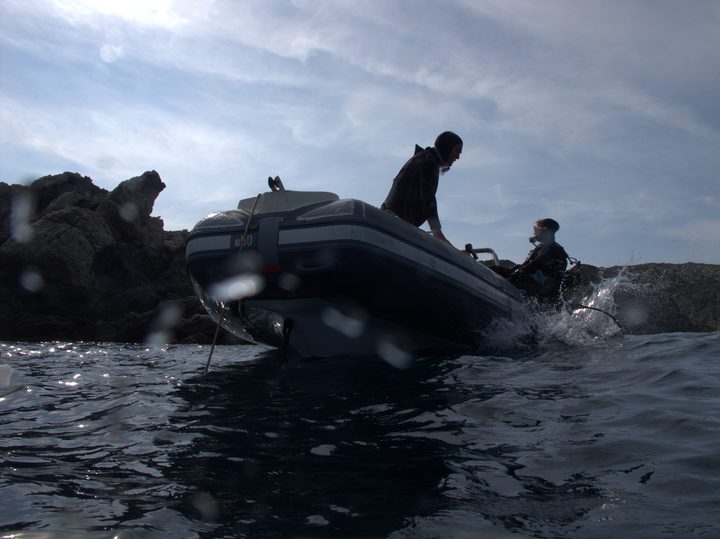
The shore zone in front of the Strømsholmen dive centre offers shallow diving to about 15m, suitable for night dives and relaxed drift dives. The deeper drop-off sections of Hottane require a boat, which Strømsholmen operates daily during summer season with a minimum of four divers.
Log your dives - notes, photos, conditions and the marine life you saw - and share them as one public diver profile. What you share helps the next diver, too.
Log every detail
Depth, duration, conditions, gear, buddy, notes — all in one place. Import from Suunto and other dive computers.
Track marine life
Record species sightings on each dive. Build a personal catalogue of everything you've seen underwater.
Your public dive profile
Share your dive history, stats, and experiences with a profile page you control. Show the world where you've been.