
Diving in Donsol
A plankton-thick bay off Sorsogon where wild whale sharks are met on snorkel by national rule, with the Ticao Pass dive sites a boat ride away.
Last updated October 2026
Overview
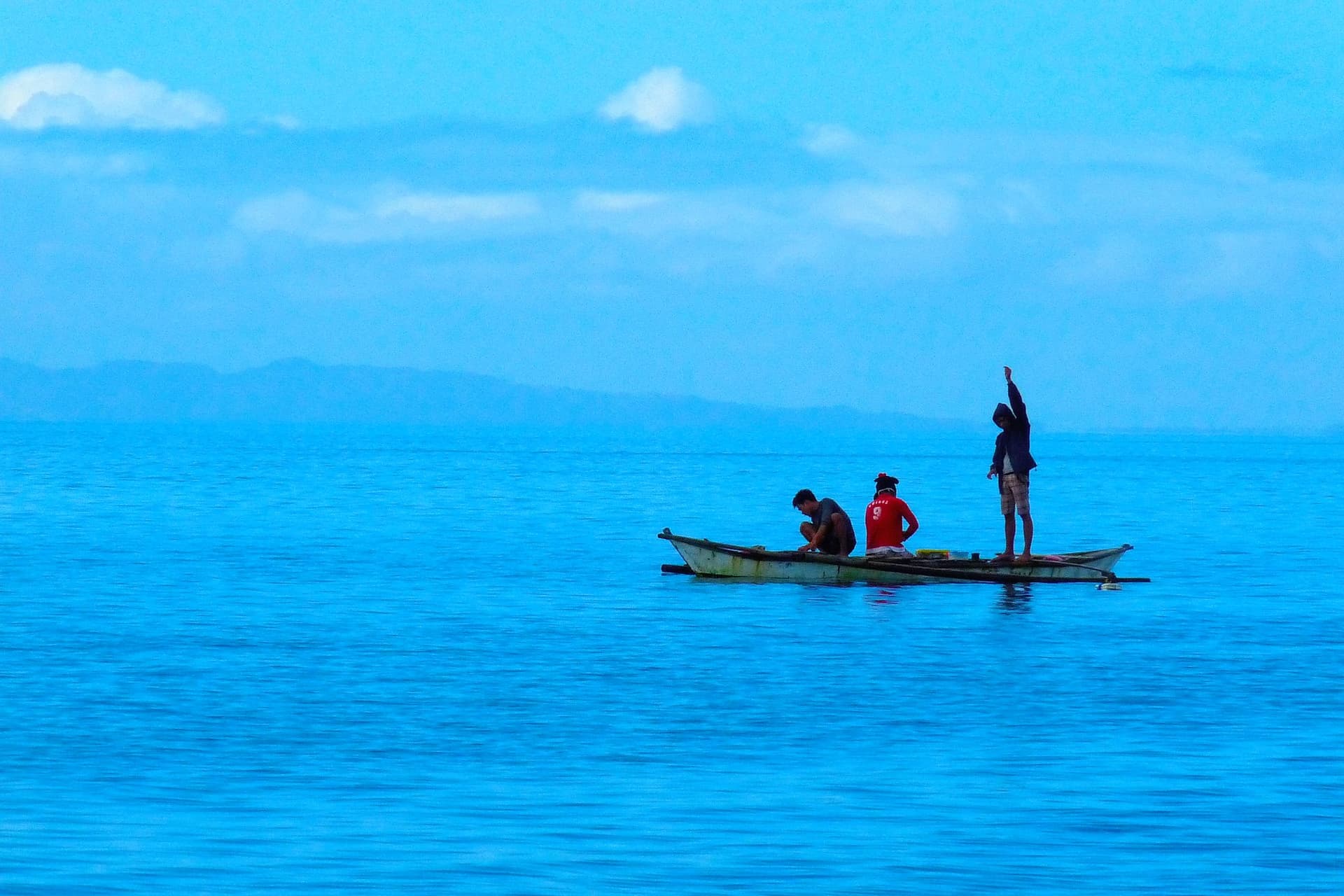
A Donsol morning is a three-hour trip on an open pumpboat, with spotters ranging the bay until one of them calls an animal and everyone goes in the water. Boats leave morning and afternoon. The sharks are here for the plankton, and the plankton is why the water is green and short on visibility, commonly put at 2 to 10 metres.
You meet them on a snorkel by national rule. The 2020 joint circular of the tourism, agriculture, interior and environment departments prohibits scuba at whale shark interaction sites, and its Annex I lists Donsol, Sorsogon1. The ban attaches to the listed sites, so it does not follow that no whale shark in the Philippines can be met on scuba. The waters are also a municipal whale shark sanctuary2.
The scale is documented. Between 2006 and 2020, 614 individual whale sharks were photo-identified in these coastal waters, about 49 percent of the known Philippine population2. The IUCN shark specialists' factsheet for the surrounding Ticao Burias Pass area also records whale shark neonates and mating behaviour, which it calls unique in South-East Asia, although the mating rests on three anecdotal reports2. The morning is busy. Divers describe a crowded, motorised swim, and no encounter is guaranteed. The traffic leaves marks on the animals: of the whale sharks identified here between 2007 and 2016, 16 percent had truncated or amputated fins and 19 percent carried propeller scars3.
The scuba diving is across the water. Donsol's dive shops sell day boats to Manta Bowl and the San Miguel Island sites, ninety minutes to two hours out over the Ticao Pass, and those sites belong to Ticao Island in Masbate province. Manta Bowl is a seamount with strong tidal currents, dived with reef hooks2. Annex I lists the Ticao Pass separately, for sharks and rays. Donsol and Ticao sit inside one protected area, the Ticao Burias Pass Protected Seascape that Republic Act No. 11038 established in 20184.
Planning your visit
Whale shark sightings run from November to June and peak from February to May2. No authority announces the season, so treat any published month boundary as soft and check locally before you book flights around the edges.
Fly Manila to Legazpi, about fifty minutes, then allow roughly an hour and a half by van. The boat fee and the per-person registration fee are set by the municipality; rates move, so confirm them when you register. There is no fixed site and no coordinate to give you. The boat goes where the animal is.
Diving from Donsol is a long day. The shops here advertise half-day and full-day trips across the pass, and the boat time is the cost. Manta Bowl is the demanding dive, in current and with reef hooks as standard, and the operators that sell it recommend Advanced Open Water. San Miguel Island is milder.
Give the whale sharks a morning and the diving a separate day. The crossing alone uses most of one.
Geology & underwater terrain
Donsol Bay opens west into the Ticao Pass, the channel between the Bicol mainland and Ticao Island, and the whale sharks come for what is in the water column, not for anything on the seabed. Across the pass, the Manta Bowl seamount has its crest at 20 m, sloping to 50 m and deeper; that is the seamount's shape and not a dive profile, and the dive itself works at roughly 20 to 25 m.
Dive sites in Donsol
The diving here splits into one zone:
- Donsol Bay
- — A plankton-dense bay opening west into the Ticao Pass, worked by pumpboats that range the water until an animal is found. There is no fixed interaction site.
Marine life
When to dive
- Best season
- February to May
- Water temperature
- About 26.7 C in February to 29.7 C in June
Whale shark sightings run from November to June and peak from February to May, which are also the calmest months and the clearest water across the pass. Nobody opens or closes the season by decree; it starts when animals are seen.
Safety considerations
What can go wrong here, and what divers do about it. Conditions change - take the briefing from the operator on the day.
- Surface and boat traffic: Many pumpboats work under power around swimmers in the bay. Of the whale sharks identified there between 2007 and 2016, 16 percent had truncated or amputated fins and 19 percent carried propeller scars.Stay with your guide, enter only when told and keep the required distance from every animal.
- Current: Manta Bowl across the pass has strong tidal currents with upwelling and downwelling. A 2018 trip report logged two to three knots and needed reef hooks; one earlier diver reported a down current from about 24 to 25 m.Carry reef hooks, hook in instead of fighting the water, and dive it at Advanced Open Water level with a guide who knows the site.
- Remote location: No recompression chamber on the national tourism authority's list is in the Bicol Region, and the Manta Bowl crossing is about ninety minutes by boat.Ask your operator for its evacuation plan before booking a diving day.
Rules and permits
National rules also apply: Rules and permits in Philippines
Frequently Asked Questions
Does the whale shark scuba ban apply at Manta Bowl across the Ticao Pass?▾
Not by its wording, though that is a reading of the text and not a ruling on practice. Section 8.14 of the 2020 national circular bans scuba at whale shark dedicated interaction sites. Annex I lists the Ticao Pass, Masbate as a separate site for sharks and rays, and the ban's text names whale shark sites only. The Annex is also an initial list that the circular says will be updated, so ask your operator which rules the site's managers apply on the day.
How do the whale sharks at Donsol fare around the boats?▾
Divers report that nothing is fed or baited, and the animals come in for the bay's plankton. Not feeding an aggregation is different from leaving it alone, though, and the fin damage and propeller scars recorded on the animals come from traffic and not from provisioning. Up to thirty boats are reported working the bay, and divers describe mornings with several boats trailing a single animal and engines running through the swim.
Is Manta Bowl an advanced dive?▾
The operators that sell it recommend Advanced Open Water, and the grounds are current and depth together. One 2018 trip report recorded two to three knots, called reef hooks necessary and rated the dive advanced. A diver on an earlier trip described a down current beginning around 24 to 25 m. Single reports, but they agree with the area's documented tidal currents and downwelling. If you have not hooked into moving water before, this is the wrong dive to learn on, and the San Miguel Island sites on the same crossing are described as milder.
Will you actually see mantas at Manta Bowl?▾
Not reliably. Two divers who dived it six times over two days in 2013 saw none, and were told none had been around for a fortnight. An instructor who guided the area for several seasons describes mantas turning up constantly through whale shark season. Both accounts are first hand, and neither tells you which morning you will get.
Is it better to dive Manta Bowl from Donsol or from Ticao Island?▾
Donsol costs you boat time. Divers put the crossing from Donsol to Manta Bowl at about an hour and a half to an hour and three quarters, and San Miguel Island at about an hour. A resort on Ticao Island itself is fifteen to thirty minutes from the same seamount. The shops in Donsol advertise a five to six hour half day for two dives and an eight to nine hour day for three. If the diving is the point of the trip and the whale sharks a side visit, base across the pass; if the whale sharks are the point, Donsol is the base.
What medical and evacuation cover is there around Donsol?▾
Plan it before you need it. No recompression chamber on the national tourism authority's list of ten is in the Bicol Region. Navy and hospital chambers operate outside that list, so this is an open question about Bicol and not a settled absence. Ask your operator what its plan is before a diving day, and remember that Manta Bowl is roughly ninety minutes out by boat and Legazpi is about an hour and a half from Donsol by road.
I am a diver and not a snorkeller. Is Donsol still worth the trip?▾
Yes, for the animals, as long as you go in expecting the surface. The water is murky by design and nobody sells scuba with the whale sharks here. The scuba diving that Donsol's shops sell is a long boat ride away, so most divers give the sharks a morning and the diving a separate day.
References
- 1.Department of Tourism, Department of Agriculture, Department of the Interior and Local Government, Department of Environment and Natural Resources — Joint Memorandum Circular No. 01, series of 2020: Rules and Regulations Governing the Conduct of Marine Wildlife Tourism Interactions in the Philippines
- 2.IUCN SSC Shark Specialist Group — Ticao Burias Pass Important Shark and Ray Area factsheet
- 3.Frontiers in Marine Science 5:271, August 6, 2018 — Long-Term Photo-Identification Reveals the Population Dynamics and Strong Site Fidelity of Adult Whale Sharks to the Coastal Waters of Donsol, Philippines
- 4.LawPhil Project, Arellano Law Foundation, June 22, 2018 — Republic Act No. 11038, the Expanded National Integrated Protected Areas System Act of 2018
Every dive has a story. Share yours.
Log your dives - notes, photos, conditions and the marine life you saw - and share them as one public diver profile. What you share helps the next diver, too.
Log every detail
Depth, duration, conditions, gear, buddy, notes — all in one place. Import from Suunto and other dive computers.
Track marine life
Record species sightings on each dive. Build a personal catalogue of everything you've seen underwater.
Your public dive profile
Share your dive history, stats, and experiences with a profile page you control. Show the world where you've been.