

Simply Diving
PADI 5 Star IDC Resort in Marbella marina, running daily boat dives to reefs and historic wrecks plus excursions to Tarifa and Gibraltar since 1999.
PADI6 services2 languages
Costa del Sol resort diving where murky nearshore water contrasts with Las Bóvedas, an offshore seamount at 18-40m with 20m+ visibility and pelagics.
Last updated April 2026
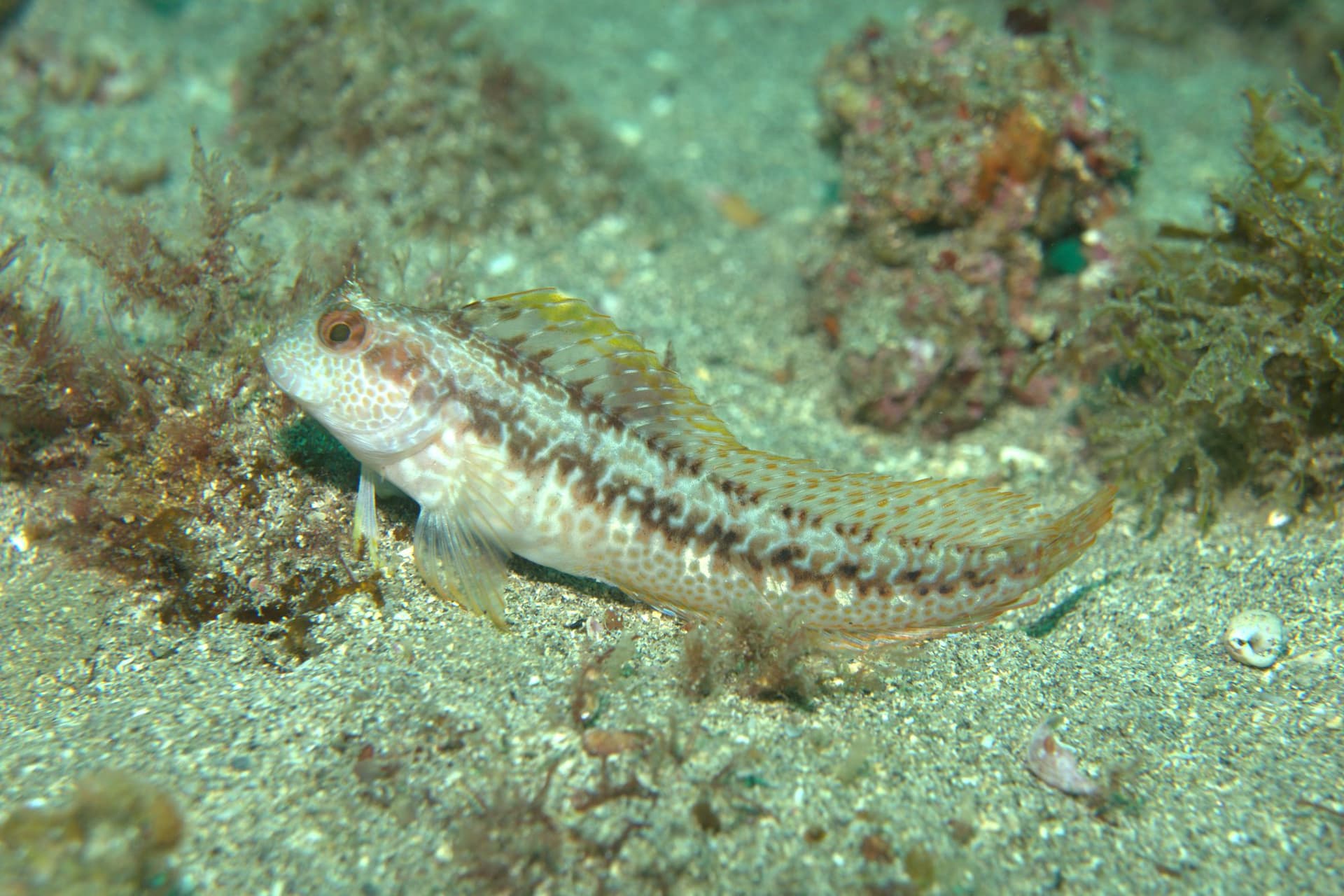
Marbella is a story of two water columns. Close to shore the Costa del Sol runs yellow-brown after rain, and the Spanish diving community has told newcomers for fifteen years to drive an hour east to La Herradura or west to Tarifa for cleaner water. What keeps Marbella on the map is what sits 5km offshore. Las Bóvedas rises from deep water to an 18m pinnacle, its distance from shore keeping it clear of river plumes. Visibility regularly reaches 20 metres or more, strong currents bring sunfish, tuna, swordfish, dolphins and turtles, and on the rock faces below 30m the basket starfish Astrospartus mediterraneus appears, rare elsewhere on this coast. The second draw is older. In March 1705 the French warship Le Lys was driven ashore during the Battle of Marbella and torched by her own crew. Her timbers, masts, buttons, buckles and cannonballs still rest in 7-8m of water off San Pedro de Alcántara, under a strict look-but-don't-touch convention. For a beginner's second sea dive it is almost unreasonably good. The workhorse is Torre del Mineral at 10-12m off the marina, where a broken iron-ore tower, a crane arm, a small freighter and a Virgen del Carmen statue host morays, conger, cuttlefish, octopus and spider crabs. Deeper, Los Roqueillos packs container-sized boulders with schools of pink anthias at 26-32m. Further out, the 1917 SS Menapier lies past 40m as a technical dive.
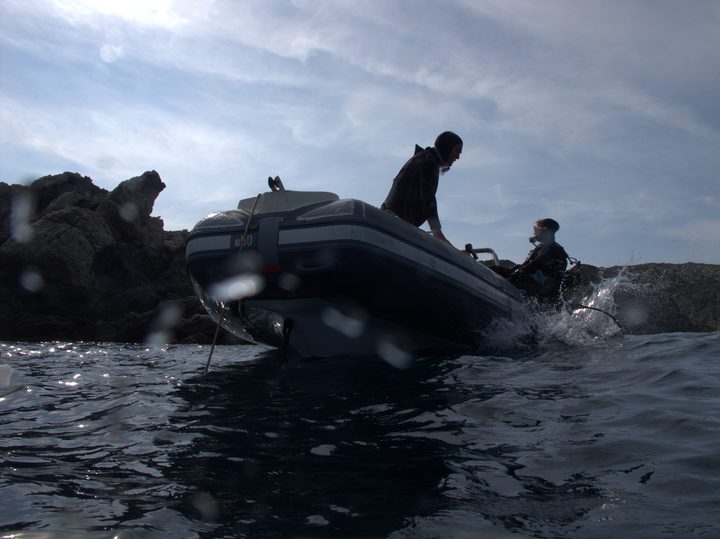
All commercial boat dives leave from Puerto Deportivo de Marbella; Happy Divers departs from Atalaya Park Hotel beach further west. Typical trips are half-day, two dives, usually 9am and 2pm. Las Bóvedas needs a 20-minute RIB ride and Advanced Open Water certification; conditions decide whether it is the dive of the trip or a cancellation, so ask before booking. Nitrox is available and recommended for deeper profiles. The honest operator briefing is what separates a good nearshore day from the yellow-brown reviews; a centre that swaps sites when visibility blows out is the one to book. For beginners, Torre del Mineral and El Galeon are reliable shallow picks. If the water turns over, the local advice is to drive east to La Herradura or west to Tarifa, and most Marbella centres arrange those day trips themselves.
Narrow continental shelf shaped by the Betic Cordillera extending offshore. Nearshore, sandy bottoms alternate with scattered rocky reef and artificial structures. Las Bovedas rises as a submerged mountain from deep water to an 18m pinnacle, its 5km distance from shore keeping it clear of river plumes.
Advanced divers chasing the area's flagship offshore dive when the weather window opens
Beginner and macro photography divers looking for a shallow artificial reef with industrial heritage near Marbella
Technical wreck divers and advanced recreational divers building deep wreck experience on the Costa del Sol
Book online or contact a centre that dives this area.
PADI 5 Star IDC Resort in Marbella marina, running daily boat dives to reefs and historic wrecks plus excursions to Tarifa and Gibraltar since 1999.
Get in touch to add or claim your dive center listing on DiveCodex.
National rules also apply: Rules and permits in Spain
Honestly, it is uneven. Nearshore sites often run murky; long-time residents openly send visitors an hour east to La Herradura or west to Tarifa for better water. What Marbella does deliver is two standout experiences: the 1705 Le Lys wreck at 7m with original timbers and artefacts, and Las Bóvedas, an offshore seamount with 20m+ visibility and pelagic visitors. The honest positioning is a convenience base with exceptional set-pieces, not a dedicated dive destination.
Yes. Three species are permanently present along this stretch of coast: common dolphins, bottlenose dolphins, and striped dolphins. Dive boats heading out to the offshore sites see them regularly.
It is a submerged mountain 5km off the coast, rising from deep water to an 18m pinnacle with canyons and caverns down the sides. Because river runoff does not reach it, visibility regularly exceeds 20 metres. Pelagic visitors include sunfish, tuna, swordfish, dolphins and turtles. On rock faces at 30m and deeper the basket starfish Astrospartus mediterraneus appears, which is near-impossible to see elsewhere on this coast. Currents are strong, so drift diving is standard, and AOW certification with Nitrox is recommended.
Yes. Multiple shallow sites between 7 and 14m work for Discover Scuba and Open Water courses. La Torre (Torre del Mineral), with its iron-ore tower base, crane arm, small freighter and Virgen del Carmen statue, is the area's workhorse training site. El Galeon at 7m is another popular second-or-third sea dive. A mobile dive school also meets students at beach locations along the coast.
Two. El Galeon, also called Le Lys, is a 1705 French warship beached during the Battle of Marbella; timbers, masts, buttons, buckles and cannonballs sit in 7-8m of water at San Pedro de Alcántara. The SS Menapier, an iron-ore carrier lost in 1917 after colliding with the SS Iddesleigh, lies past 40m and is for technical divers only, usually dived on nitrox or trimix.
Marketplace rates run roughly 95-500 EUR with a median around 150 EUR for a two-tank guided boat dive. Discover Scuba sits at 95-120 EUR. PADI Open Water courses run 395-515 EUR depending on the centre. Verify current pricing directly with your chosen operator before booking.
June through October for warmest water (surface 22-26C). Late summer and early autumn give the best nearshore visibility. Las Bóvedas depends less on season thanks to its offshore position, but it does depend on surface conditions; you need a calm enough day to run the 20-minute RIB out there. Diving operates year-round, but centres change sites daily based on conditions.
If you are already in Marbella on holiday and want a convenient dive, the marina-based centres are competent and easy. If you have come to dive seriously, the Spanish diving community has recommended the same thing for fifteen years: drive to La Herradura (one hour east) for granite walls, or Tarifa (80 minutes west) for Strait drift diving. Several Marbella-based centres also run day trips to both.
Log your dives - notes, photos, conditions and the marine life you saw - and share them as one public diver profile. What you share helps the next diver, too.
Log every detail
Depth, duration, conditions, gear, buddy, notes — all in one place. Import from Suunto and other dive computers.
Track marine life
Record species sightings on each dive. Build a personal catalogue of everything you've seen underwater.
Your public dive profile
Share your dive history, stats, and experiences with a profile page you control. Show the world where you've been.