with Posidonia Dive
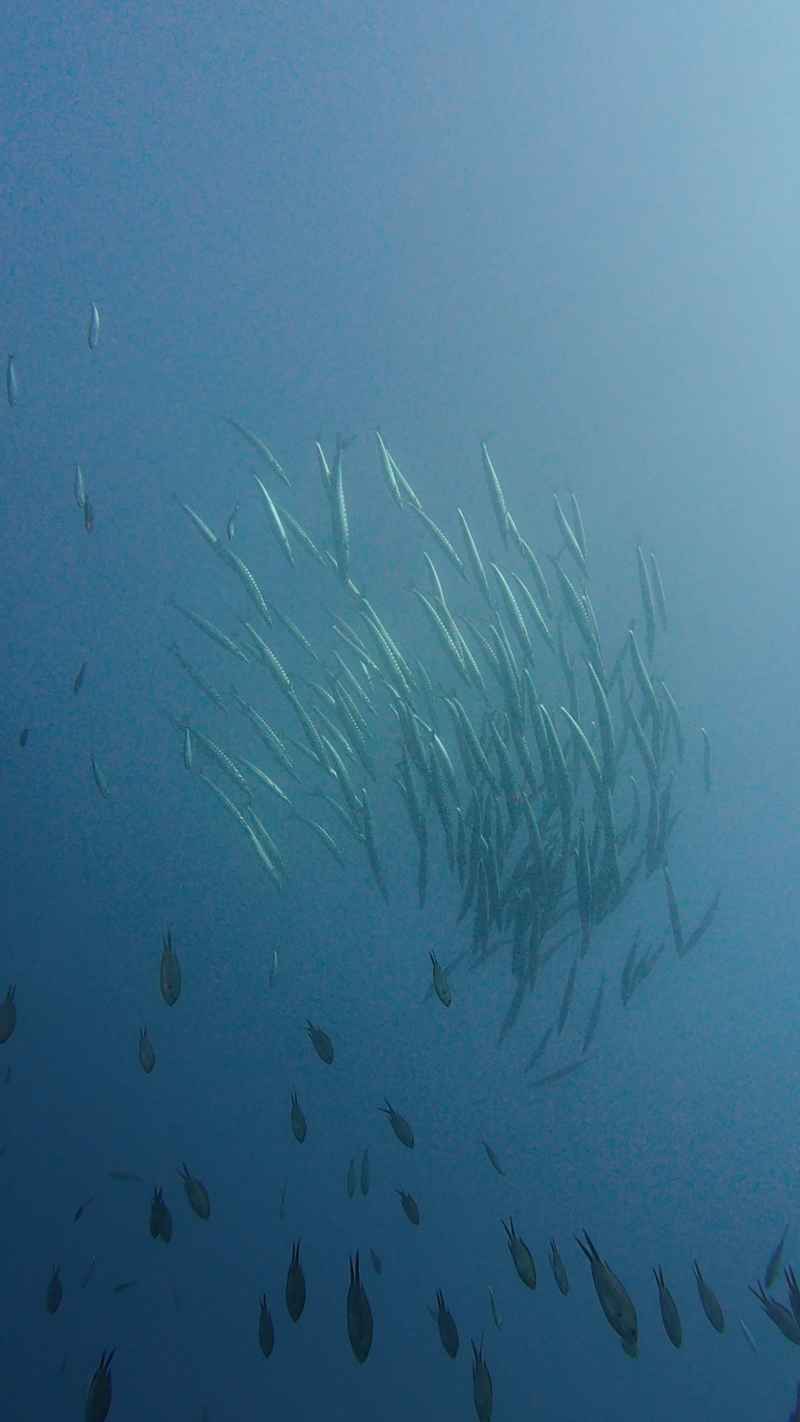
Tight barracuda school circling near anchor
No current, good viz, sunny day. With the waters warmed up to 20-23 degrees, the ridge was covered by sea snot, or moco like the locals call it. "Moco" is a cottony, jelly-like goo released by microscopic algae. When the water warms up in spring and there's plenty of light, these algae grow super fast and produce a sticky mucus that blankets everything: rocks, other algae, the seagrass. It lasts a few weeks and then clears up on its own. It's not pollution or an invasive species; it's a natural Mediterranean event that happens every year. Scientifically called benthic mucilaginous aggregate (BMA). It's not a single species. BMA are caused by five filamentous macroalgae: free-living forms of two brown algae, Acinetospora crinita and Tribonema marinum, and three fast-growing benthic chrysophytes - Nematochrysopsis marina, Chrysonephos lewisii, and Chrysophaeum taylorii. The mix varies site to site and even within a bloom. In any case, it was everywhere, especially on the shallower depths of 16-20m. We took the north-east route on the coast side and spent some time on the sandy/posidonia fields part - all the typical fish: combers, wrasses, one small moray - that one diver harassed out of its hole by touching its tail - Please do not touch marine life! Natalia spotted a few nudis, nice schools of mojarras, and as the highlight of the dive, a really tight circling school of barracudas near the anchor.
A free companion app for divers who want to keep a proper record of their time underwater.
Log every detail
Depth, duration, conditions, gear, buddy, notes — all in one place. Import from Suunto and other dive computers.
Track marine life
Record species sightings on each dive. Build a personal catalogue of everything you've seen underwater.
Your public dive profile
Share your dive history, stats, and experiences with a profile page you control. Show the world where you've been.
