

Colona Divers
PADI 5 Star IDC in Hurghada tracing to a 1977 Red Sea liveaboard, with daily boat dives, a house reef to 30+ m, and liveaboard safaris.
PADI5 services3 languages
Also known as: Aquanum, Aquarium, Gota Abu Ramada, Gotta Abu Ramada, Stingray Station, The Aquarium
Hurghada's most popular reef, nicknamed The Aquarium for its extraordinary fish density on an oval coral block at 10-15 m with satellite pinnacles.
Last updated October 2026
Clouds of orange anthias swarm the reef top as you descend to the mooring. The oval reef sits on white sand at 12-15 metres, its walls alive with bannerfish schools trailing long dorsal fins. Pick a direction. The west side pinnacles rise to 6 metres, dressed in soft corals and gorgonians, with sweetlips clustered at the base and squirrelfish hiding in the shade. Goatfish work the sand between the reef and the ergs, sifting with their barbels in groups of dozens. In the overhangs, glassfish form shimmering curtains that split apart when a scorpionfish lunges. On the east side, three smaller ergs create a coral garden with gullies where trevallies hunt. Blue-spotted stingrays dot the sand everywhere you look. The reef is small enough to circumnavigate in one dive and rich enough that you will want to stop every few metres.
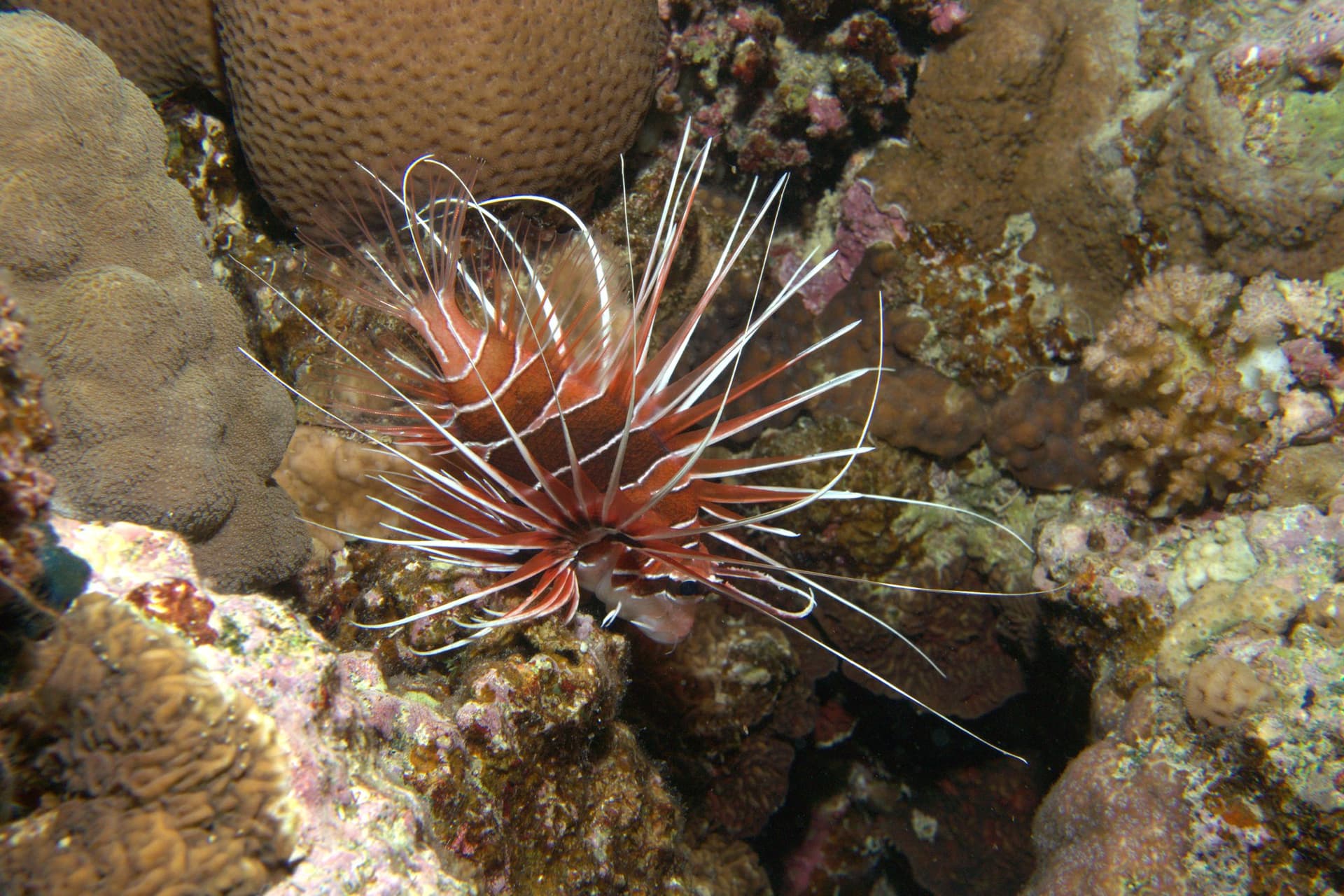
Few reefs near Hurghada pack this much life into so little water. Divers who work through the area's day-boat sites repeatedly name it among their favourites. The biodiversity runs from cornetfish and masked pufferfish to giant moray eels with cleaner shrimp working their gills. Scorpionfish sit perfectly camouflaged on every coral head. The combination of quantity and variety in a shallow, calm setting makes it a site where experienced divers find as much as beginners do. Slow down, look closely, and the reef reveals its critter residents: stonefish blending into the coral, geometric morays deep in crevices, octopuses changing colour against the wall. After sunset, the Aquarium transforms completely. A night dive here turns up porcupinefish, hunting lionfish, and brain corals packed with crustaceans.
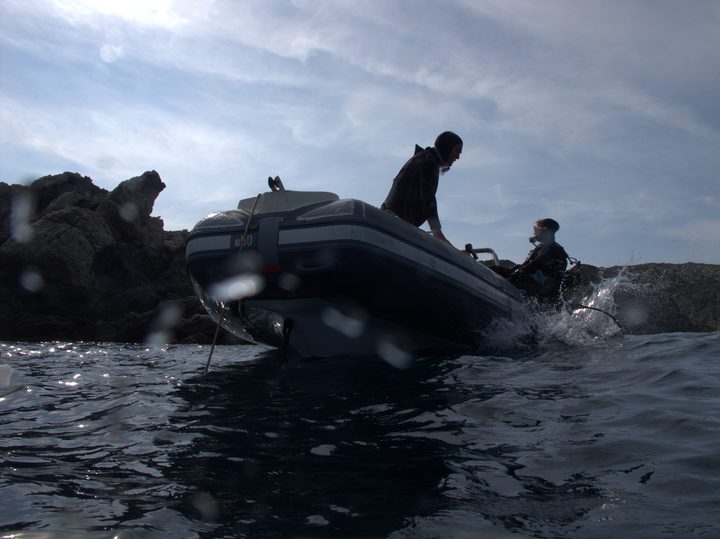
Most Hurghada day boats include this site on their schedule, often as the relaxation dive at the end of the day. The boat ride is 60-90 minutes. Boats moor on the sheltered south side. The site can be crowded in August and September, when tourism peaks and triggerfish are nesting. Give nesting triggerfish a wide berth. Fire corals on the northeast erg are easy to brush against. Stonefish are present and well-camouflaged. The depth is forgiving but buoyancy control matters for protecting the coral. A 3 mm suit is enough from May to September. In winter, 5-7 mm keeps you comfortable at 21 degrees.
What makes this dive site stand out.
Earned the Aquarium nickname from bannerfish schools, anthias clouds, and goatfish congregations
Two ergs rising to 6 m with soft corals, gorgonians, and concentrated schooling fish
Blue-spotted stingrays common on the sandy bottom surrounding the oval reef
Confirmed rich nocturnal fauna with porcupinefish, hunting lionfish, and crustaceans in brain corals
The oval reef can be explored west side, east side, or full circuit in a single dive
27.1988°N, 33.9828°E
Warmest water (26-30 C), best visibility (25 m+), turtle breeding season, peak marine life activity.
Suitable for Discover Scuba Diving (introductory dives limited to 12 m) through to experienced divers. Open Water is the standard for independent diving down to the 16 m sandy bottom.
Summary
Shallow, calm, mild to no current. The reef structure is easy to navigate.
Safety considerations
What can go wrong here, and what divers do about it. Conditions change - take the briefing from the operator on the day.
Book a guided dive at this site.
PADI 5 Star IDC in Hurghada tracing to a 1977 Red Sea liveaboard, with daily boat dives, a house reef to 30+ m, and liveaboard safaris.
Get in touch to add or claim your dive center listing on DiveCodex.
The nickname comes from the sheer density and diversity of fish life on this oval reef. Bannerfish schools, thousands of anthias on the reef top, goatfish congregations on the sand, glassfish curtains in the overhangs. The combination in such a small, accessible area feels like swimming through a curated aquarium.
It is one of the best sites in Hurghada for a first open-water dive after certification. The depth is 10-15 metres, current is negligible, and the reef structure is easy to navigate. Discover Scuba Diving introductory dives are also conducted here within 12 metres.
The site transforms after dark. Porcupinefish emerge from hiding, lionfish hunt actively, prawns and crabs fill the brain corals, and small moray eels become visible. The shallow depth makes for a comfortable night dive. Turtles have also been reported on night dives here.
The west side pinnacles are considered livelier, with soft corals, gorgonians, sweetlips, and squirrelfish. The east side coral garden has a labyrinth of smaller ergs with grottoes and trevallies hunting through the gullies. Both are excellent. A full circumnavigation covers everything in one dive.
Yes. Blue-spotted stingrays are common enough on the sandy bottom that the site has a second nickname: Stingray Station. Check the sand around the reef base, where they rest partially buried.
Wide-angle for the schooling bannerfish, anthias, and goatfish. Macro for morays with cleaner shrimp, camouflaged scorpionfish, and shrimp gobies on the sandy flats. The shallow depth provides excellent ambient light. The site is described as a dream studio for underwater photography.
Approximately 60-90 minutes from Hurghada Marina. The site is southeast of Abu Ramada Island, south of the Giftun Islands.
Log your dives - notes, photos, conditions and the marine life you saw - and share them as one public diver profile. What you share helps the next diver, too.
Log every detail
Depth, duration, conditions, gear, buddy, notes — all in one place. Import from Suunto and other dive computers.
Track marine life
Record species sightings on each dive. Build a personal catalogue of everything you've seen underwater.
Your public dive profile
Share your dive history, stats, and experiences with a profile page you control. Show the world where you've been.