
Cala Ferriol
Also known as: Illa Ferriol, Illot de Cala Ferriol, Illot de la Ferriola, La Ferriola
Sheltered cove between L'Estartit and L'Escala. A wide, naturally-lit tunnel cuts through a small islet at 12-26 m, ringed by red coral and sponges.
Last updated May 2026
The dive
The boat moors between two small islets, attention turning to the larger of the pair. Drop down the sheltered inside face to about 12 m and the wall opens into a crevice that becomes the tunnel entrance. The tunnel is about 30 m long and up to 15 m wide — broad enough that the walls stay out of fin range, and natural light enters from both ends. Red coral and sponges cover the brighter sections. Lobsters sit in the cracks. Conger eels watch from holes. The exit drops divers at around 26 m into a small canyon that runs northeast to a sandy bottom at ~29 m, where stone blocks break up the seabed. The deep extension is optional. Most divers turn at the tunnel exit and start the ascent. The shallow return runs the islet perimeter at 5-10 m, passing octopus holes and eel crevices on the rocky face before surfacing at the boat.
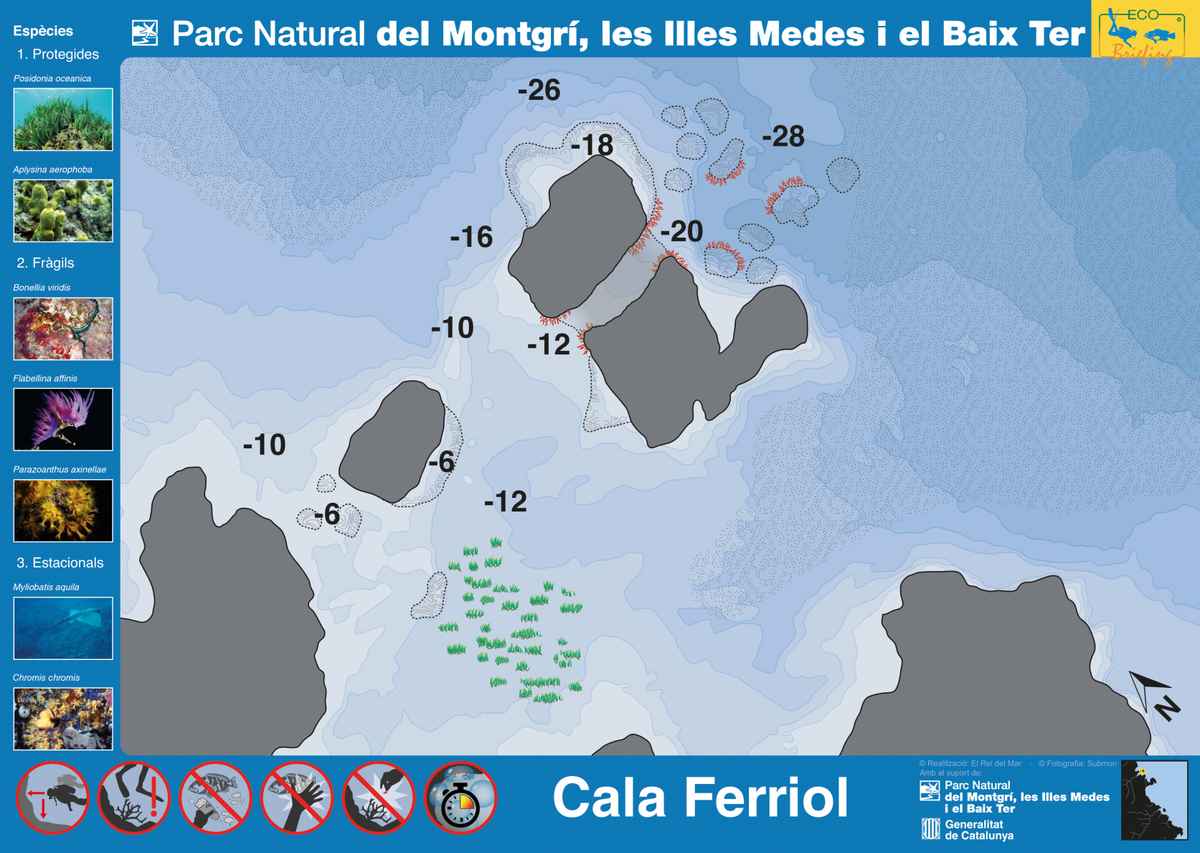
Illustration: Parc Natural del Montgrí, les Illes Medes i el Baix Ter — Generalitat de Catalunya
What makes it special
Most overhead features on the Costa del Montgrí ask something of the diver. La Pedrosa's tunnel is longer and starts at 18 m, with an exit at 24 m and a chimney shaft running up the middle. The Cala Viuda cave cluster is a 200 m system with multiple passages and three air chambers, requiring a guide. Cala Ferriol is the simpler version — a single straight tunnel, wide enough to swim through without thinking about the walls, lit from both ends, with the entrance in OW recreational depth. For first-time tunnel divers it is the coast's introductory swim-through. For experienced divers it works as a relaxed second dive after deeper morning work at Reggio Messina at 32 m or Marmoler at 42 m, both on the same boat circuit. The cove itself stays quieter than the Medes islands a few kilometres offshore.
Know before you go
Coast operators run a 25-minute boat ride from L'Estartit to the mooring between the islets. Anchoring is not permitted in the cove; mooring buoys handle this — yellow buoys reserve for dive-centre boats and free blue buoys take boats up to 9 m. Buoy use runs sunrise to sunset only. Bring a torch even though the tunnel is naturally lit; it brings out the colour on the red coral. The sandy floor silts under fin strokes, so trim and slow finning matter inside the tunnel. Tramontana (N/NNE) is the wind that cancels coast diving; heavy easterlies expose the cove from the open-sea side. For the optional extension to 29 m at the post-tunnel sandy seabed, plan EAN32 if your training supports it.
Why Dive Cala Ferriol
What makes this dive site stand out.
- Wide, lit tunnel
Up to 15 m wide and naturally lit at both ends. Beginner-friendly overhead, not a technical cave.
- Tunnel-and-island circuit
Tunnel at 12-26 m, then a shallow 5-10 m perimeter loop back to the boat.
- Red coral and sponges
Corallium rubrum and sponges visible on the tunnel walls and on stone blocks at the deeper exit.
- Coast site, not the reserve
Inside the Parc Natural del Montgrí but outside the Illes Medes reserve. No permit and no per-diver tax.
- Quiet alternative to Medes
Used as a relaxed second dive after deeper morning work at Reggio Messina or Marmoler.
Depth & Profile
Conditions & difficulty
Spring and autumn offer the best balance of warm water and lower boat traffic on the coast.
No published per-dive price specifically for Cala Ferriol. Coast operators typically run morning and afternoon boat slots covering several Montgrí coast sites; price by package or per-trip.
OW divers can complete the tunnel-and-shallow-circuit profile within recreational limits. The optional 29 m sandy extension is AOW territory.
Summary
Wide, short, naturally-lit tunnel makes this the coast's introductory swim-through. Buoyancy control still matters: the sandy floor silts up under fin strokes.
Safety considerations
What can go wrong here, and what divers do about it. Conditions change - take the briefing from the operator on the day.
- Visibility: Sandy tunnel floor silts up under fin strokes.Maintain horizontal trim and keep buoyancy off the sand.
- Overhead: Park rules cap recreational diving inside caves and tunnels at 30 m and require small groups within natural light.Enter in small groups. The tunnel is short and lit at both ends, so the depth cap is rarely binding here.
- Current: The seaward tunnel exit can carry current with N/NNE tramontana winds.Brief the exit direction and surface plan before descent.
Rules and permits
Dive centres in Catalonia must require insurance from every diver on their dives, and must be able to offer a policy to anyone who has none.
Frequently Asked Questions
Do I need a permit to dive Cala Ferriol?▾
No. The site sits inside the Parc Natural del Montgrí but outside the Illes Medes Reserva Natural Parcial. The Medes permit and €5.30 per-dive tax apply only to dives entering the Medes reserve zone. Coast dives such as Cala Ferriol pay only the operator's service fee. Spanish national law requires diving insurance, which most operators sell at the desk.
Is Cala Ferriol a good first tunnel dive?▾
Yes — that is exactly its reputation on the coast. The tunnel is around 30 m long, up to 15 m wide, with the entrance at roughly 12 m and the exit at around 26 m. Natural light enters from both ends, the walls stay out of fin range, and the dive can finish on a shallow island circuit at 5-10 m. The sandy bottom inside the tunnel rewards good buoyancy: fin strokes silt the floor, so trim and slow finning matter.
What certification do I need?▾
Open Water Diver is sufficient for the standard profile: wall descent to the tunnel entrance, tunnel crossing, then shallow island circuit. The optional extension to the sandy seabed at ~29 m beyond the tunnel exit is AOW territory. The tunnel itself, with light at both ends, sits inside park limits for recreational overhead diving and does not require a cavern certification.
How do I get to Cala Ferriol?▾
By boat. Coast operators run a 25-minute crossing from L'Estartit, mooring between the two islets in the cove. There is a hiking route from L'Estartit through the Montgrí massif to the cove itself — described as 60-90 minutes one-way over rough limestone — but it is for walkers, not divers carrying kit. L'Escala-based centres also reach the site as part of their Montgrí coast circuit.
What will I see at Cala Ferriol?▾
Red coral and sponges line the tunnel walls and the stone blocks at the deeper exit. Octopus and moray work the islet's rocky circuit. Conger eels and scorpionfish hold position in crevices. European spiny lobster show on the deeper blocks. The site is not no-take fishing-protected the way the Medes islands are, so the very large grouper aggregations of the reserve do not concentrate here.
When is the best time to dive Cala Ferriol?▾
May to October for water temperature and visibility. Summer brings 22-25°C surface water with 16-18°C below the thermocline, and typical visibility of 15-20 m. Spring and autumn are favoured by local divers for fewer boats and similar visibility. The site is diveable year-round in the right exposure suit; some L'Escala operators run winter boat trips by reservation. Tramontana (N/NNE) is the main weather-cancel driver.
How does Cala Ferriol compare to La Pedrosa or Cala Viuda?▾
All three are tunnel or cave features on the Montgrí coast but they differ in scale and demand. La Pedrosa has a longer 70 m skylit tunnel with a chimney shaft and reaches 24 m at the exit — moderate-to-advanced. Cala Viuda is a 200 m cave system with multiple connected passages and three air chambers, requiring local guidance. Cala Ferriol is the shortest and shallowest of the three, with light at both ends and no navigation puzzle, which is why coast centres pick it as the first tunnel dive of a course.
Photos
Every dive has a story. Share yours.
Log your dives - notes, photos, conditions and the marine life you saw - and share them as one public diver profile. What you share helps the next diver, too.
Log every detail
Depth, duration, conditions, gear, buddy, notes — all in one place. Import from Suunto and other dive computers.
Track marine life
Record species sightings on each dive. Build a personal catalogue of everything you've seen underwater.
Your public dive profile
Share your dive history, stats, and experiences with a profile page you control. Show the world where you've been.