



Costa Brava Divers
PADI 5 Star centre on L'Estartit seafront with stay-and-dive packages, four daily boat dives between Illes Medes and Montgrí, plus tec diving.
PADI6 services5 languages
Limestone coast beside the Illes Medes: swim-through tunnels, rock arches, caves with air chambers and two deep wrecks, with gorgonian walls to match.
Last updated October 2026
Limestone cliffs that rise up to 100 m above the sea carry on below the surface, dropping up to 50 m, and the sea has cut them into capes, coves, islets, arches and caves along the Montgrí massif between L'Estartit and L'Escala. The park authority catalogues sixteen submarine itineraries along this shore, and the diving on them is about the rock: swim-through tunnels, arches, caves with air chambers and two wrecks. The Illes Medes lie just offshore and have their own page.
Cala Pedrosa has a tunnel through Pedrosa island at 18 to 24 m, lined with sponges and red coral, for experienced divers; the dive carries on past 30 m. Trencabraços has a tunnel through to las Cámaras, also experienced level, and Arcs del Duï opens three rock arches to swim through. Cala Viuda is the cave set: several caves totalling 200 m of passage with three air chambers.
The wrecks are the deep end. The Reggio Messina lies broken in three sections, stern, middle and bow, too large for one dive, at 23 to 35 m by the park's figure and 40 m in a wreck listing, with 5 to 15 m of visibility. The Marmoler, near Cala Montgó at the southern end, is reported at 42 to 44 m.
On the walls, Punta Salines runs from 3 to 28 m over rock and coralligenous growth with yellow and red gorgonians and spiny lobster, and it is little protected from levante. Puig de la Sardina is an underwater mountain about 200 m offshore with three peaks at 14, 22 and 27 m, gorgonian-covered walls and shoals of amberjack and horse mackerel.
Fish life is modest next to the reserve: the odd grouper turns up at Cala Calella and Punta Mila, and morays, octopus and congers use the cracks and tunnels. Macro life carries the night dives. Plan the wrecks around the deeper depth figure.
Start with level. Punta Salines, Baix de Cols and Negre del Falaguer are the easy end, the tunnels at Cala Pedrosa and Trencabraços are for experienced divers, and the Reggio Messina reaches past 30 m.
Boats leave L'Estartit for most of the coast and L'Escala for the southern end around Cala Montgó and the Marmoler. Girona-Costa Brava airport is about 40 km from L'Estartit, Barcelona about 125 km, roughly two and a half hours by road. Operators out of L'Estartit generally run both the Medes and the coast, and one advertises themed route days for wrecks, caves, tunnels and walls, so name the feature you want when you enquire.
The coast lies inside a protected natural park and the centre briefs you on its rules before you get in the water. The park's voluntary Ecobriefing programme reports up to 6.5 times less impact from guided, briefed dives than from unguided ones.
May to October gives the warmest water and best visibility. Take the tunnels and caves with a guide who knows the passage; the park recommends one for Cala Viuda.
A limestone massif continuous with the Illes Medes, cut by waves into capes, coves, islets, arches and submerged caves, with coralligenous growth and posidonia meadows between the rock.
The diving here splits into 4 zones:
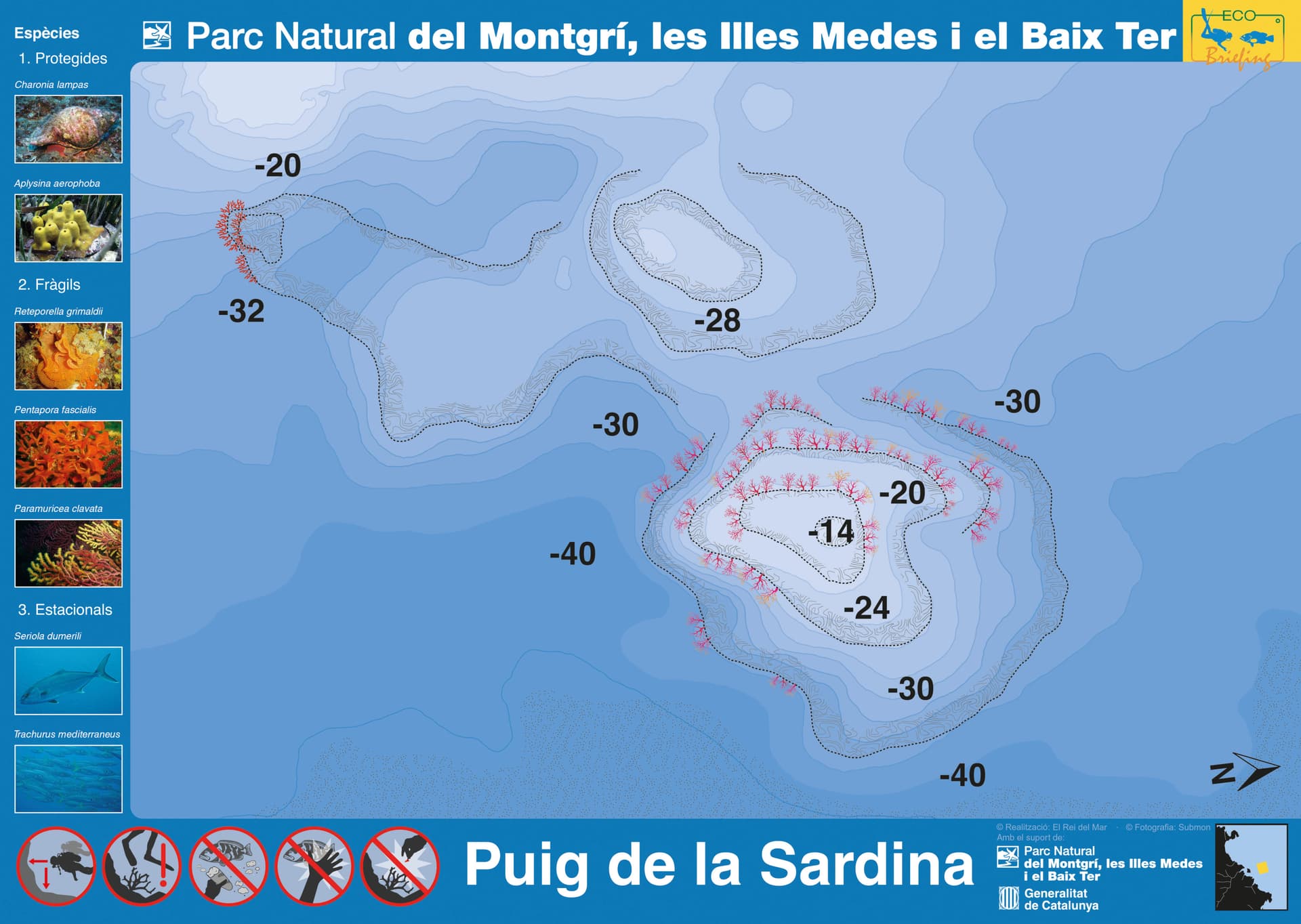
Gorgonian walls on an offshore three-peak mountain, with open blue beside them
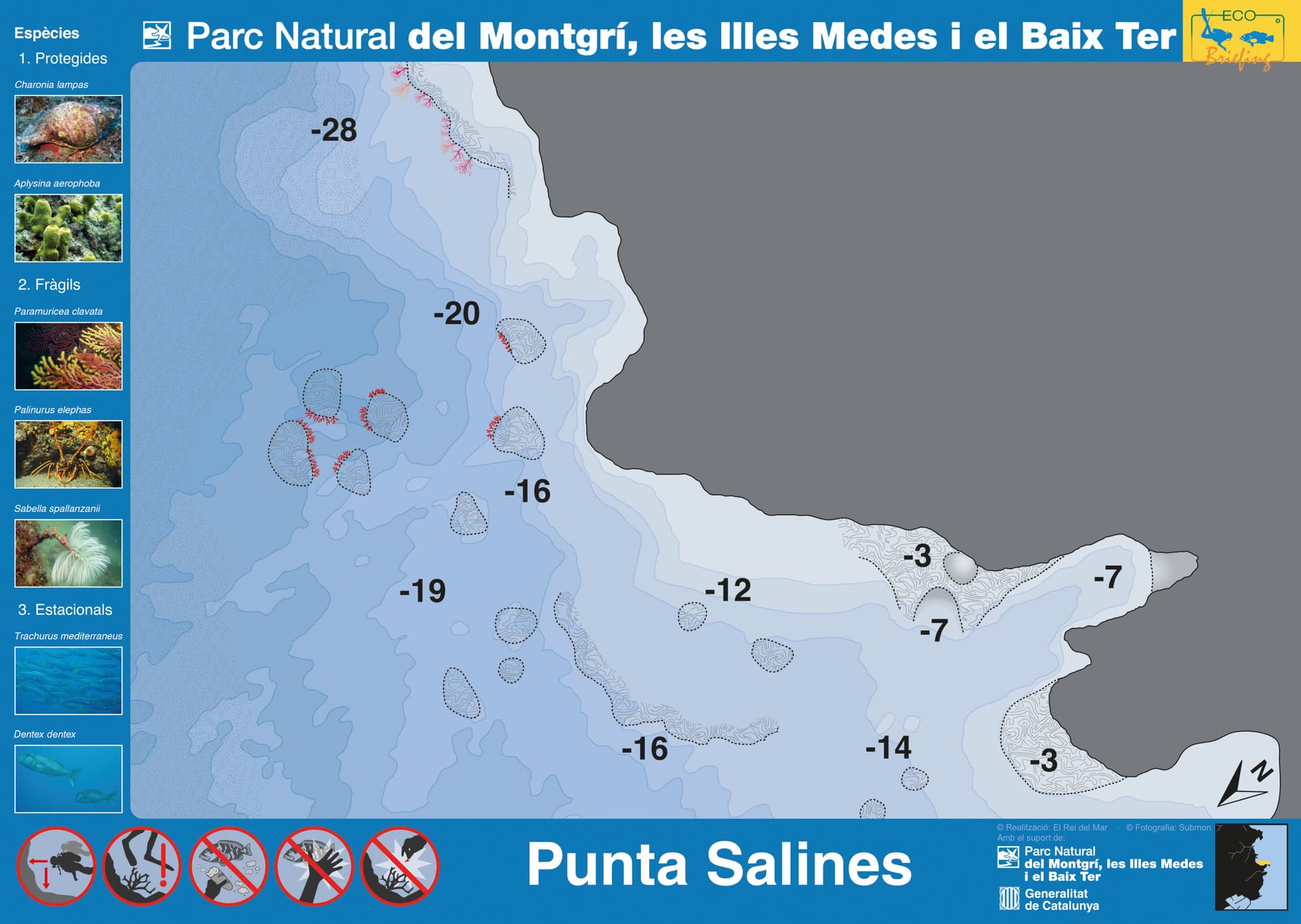
Sand bay, gorgonian wall and a chimney exit in one dive
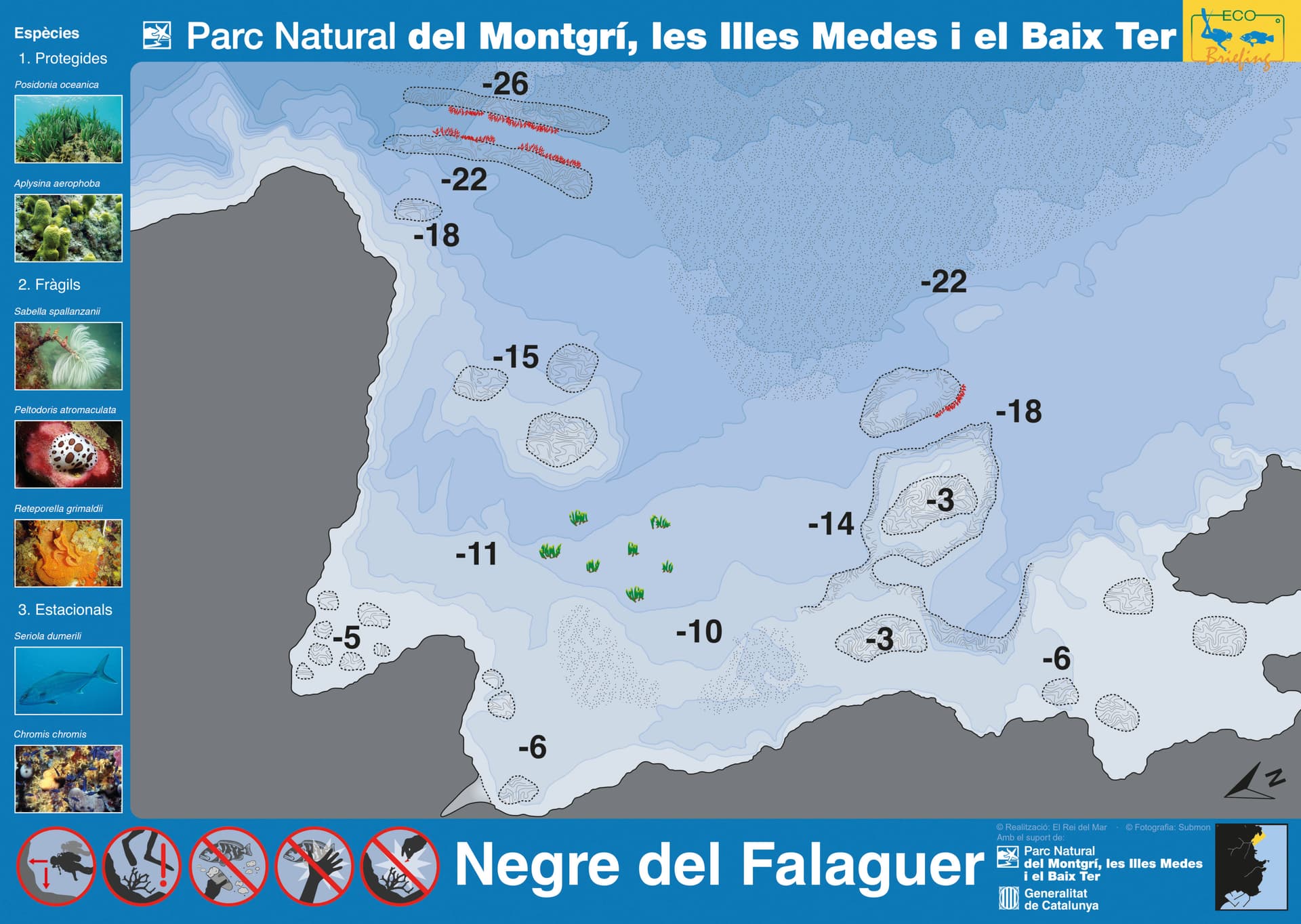
Open Water divers, beginners, and macro photographers wanting a sheltered Costa del Montgrí dive that holds when tramuntana closes the islands.
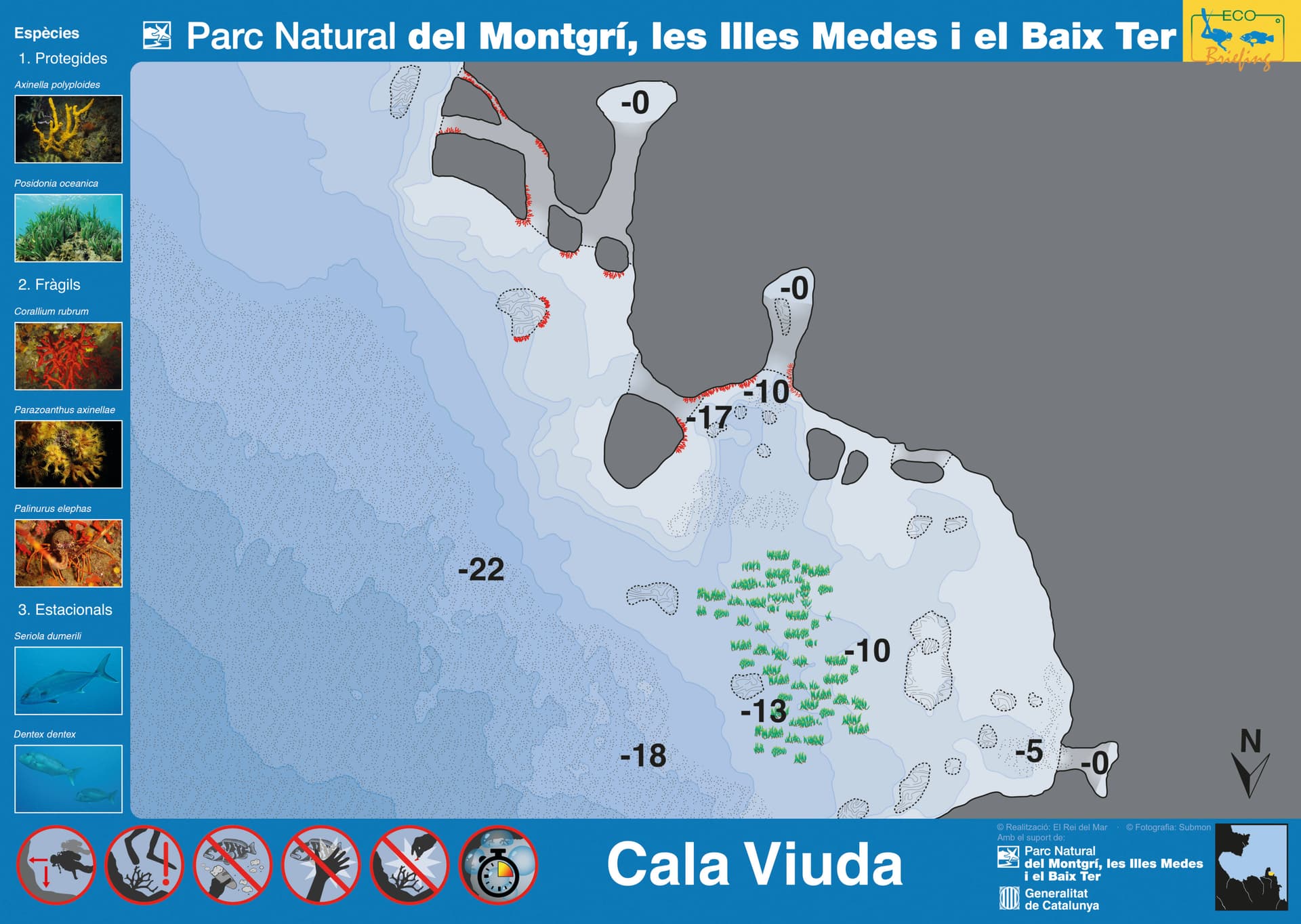
200m cave complex with three air chambers on the Montgrí coast
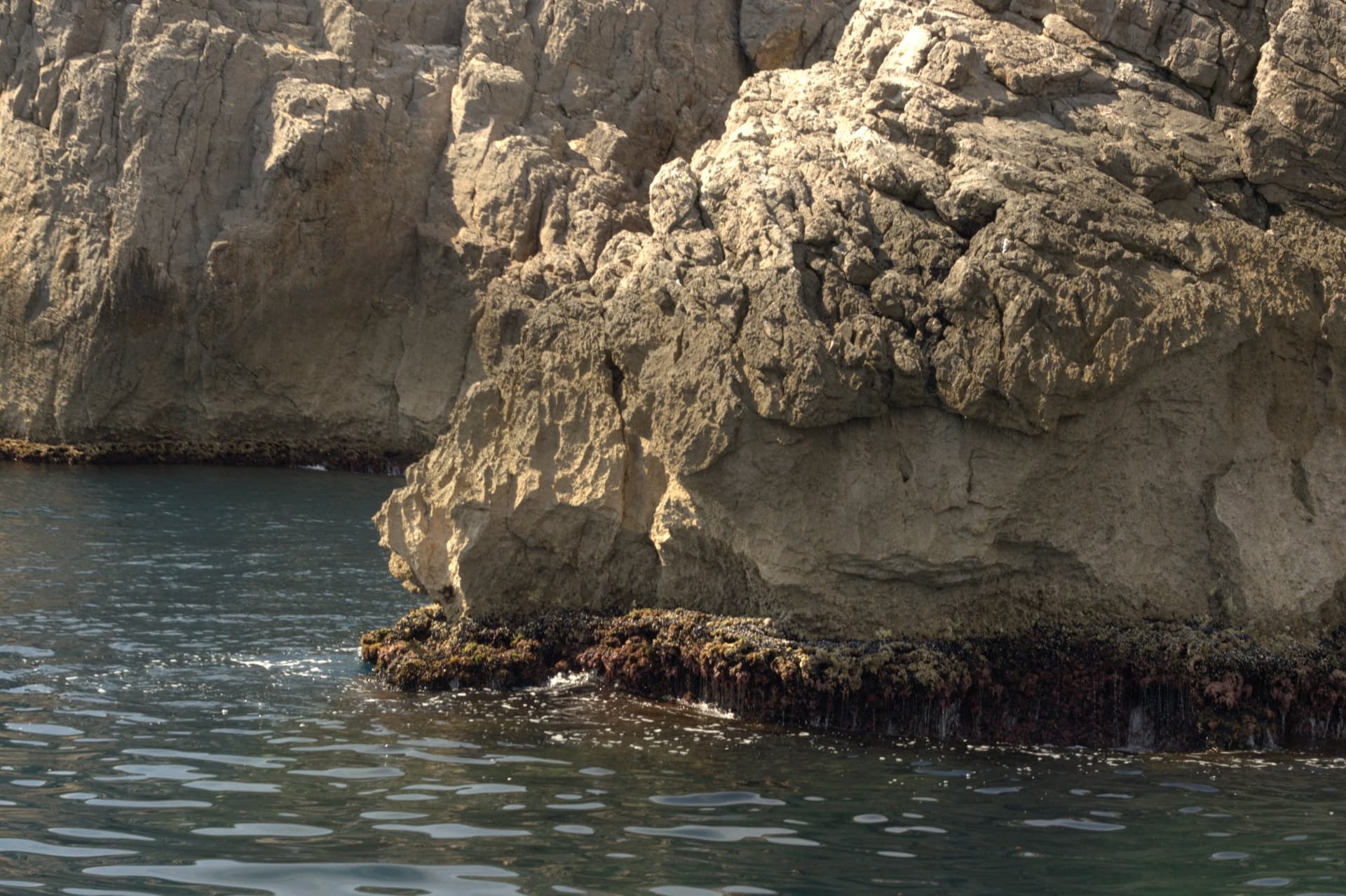
A wide, daylit islet tunnel with red coral walls and a cove alternative
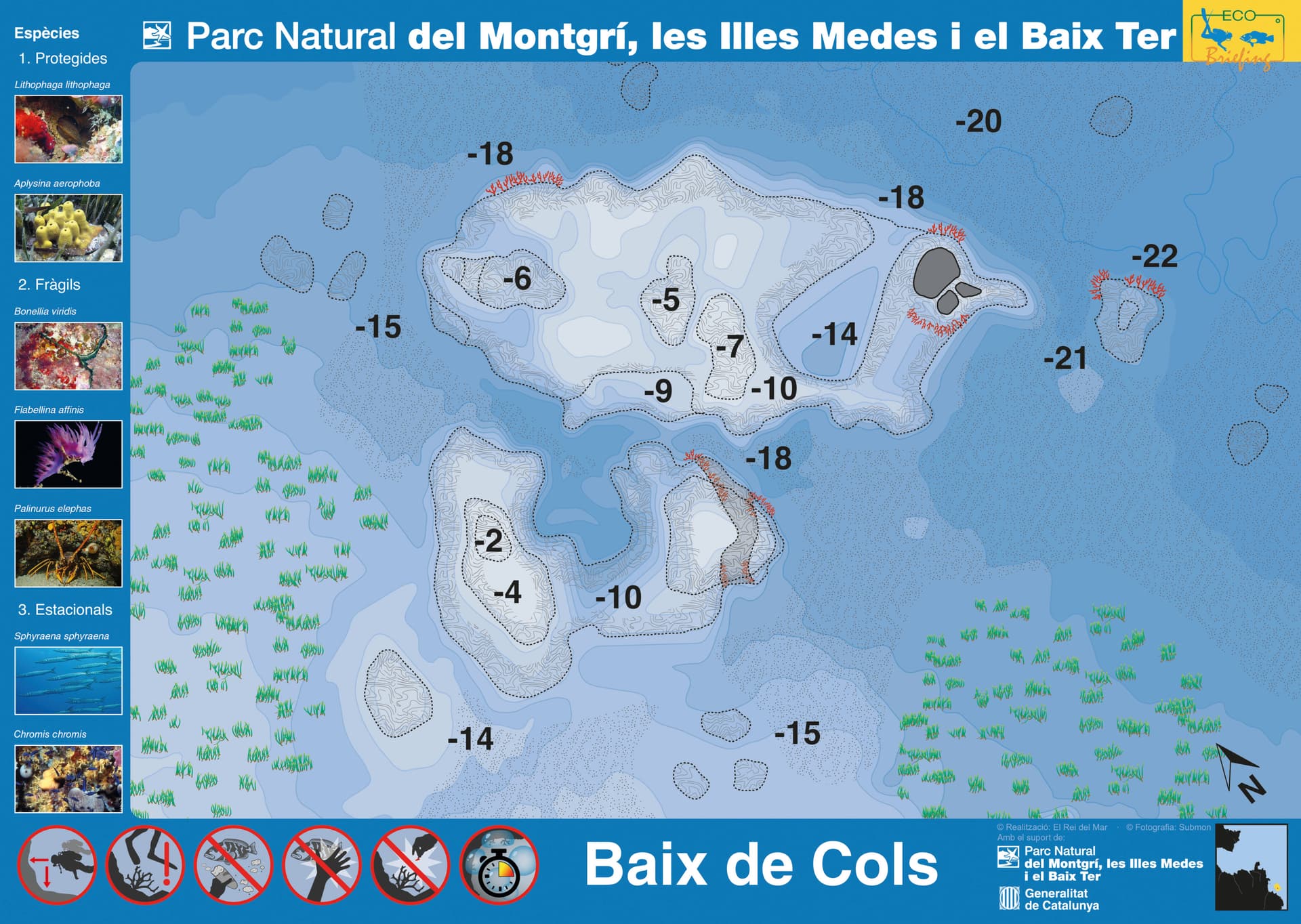
Open Water divers wanting a sheltered wall with a swim-through tunnel on the Costa del Montgrí, no marine-reserve permit needed
First-time divers and Open Water divers who want a calm sheltered cavern dive on the L'Escala side of the coast, or any diver needing a reliable backup when tramuntana cancels the exposed sites.
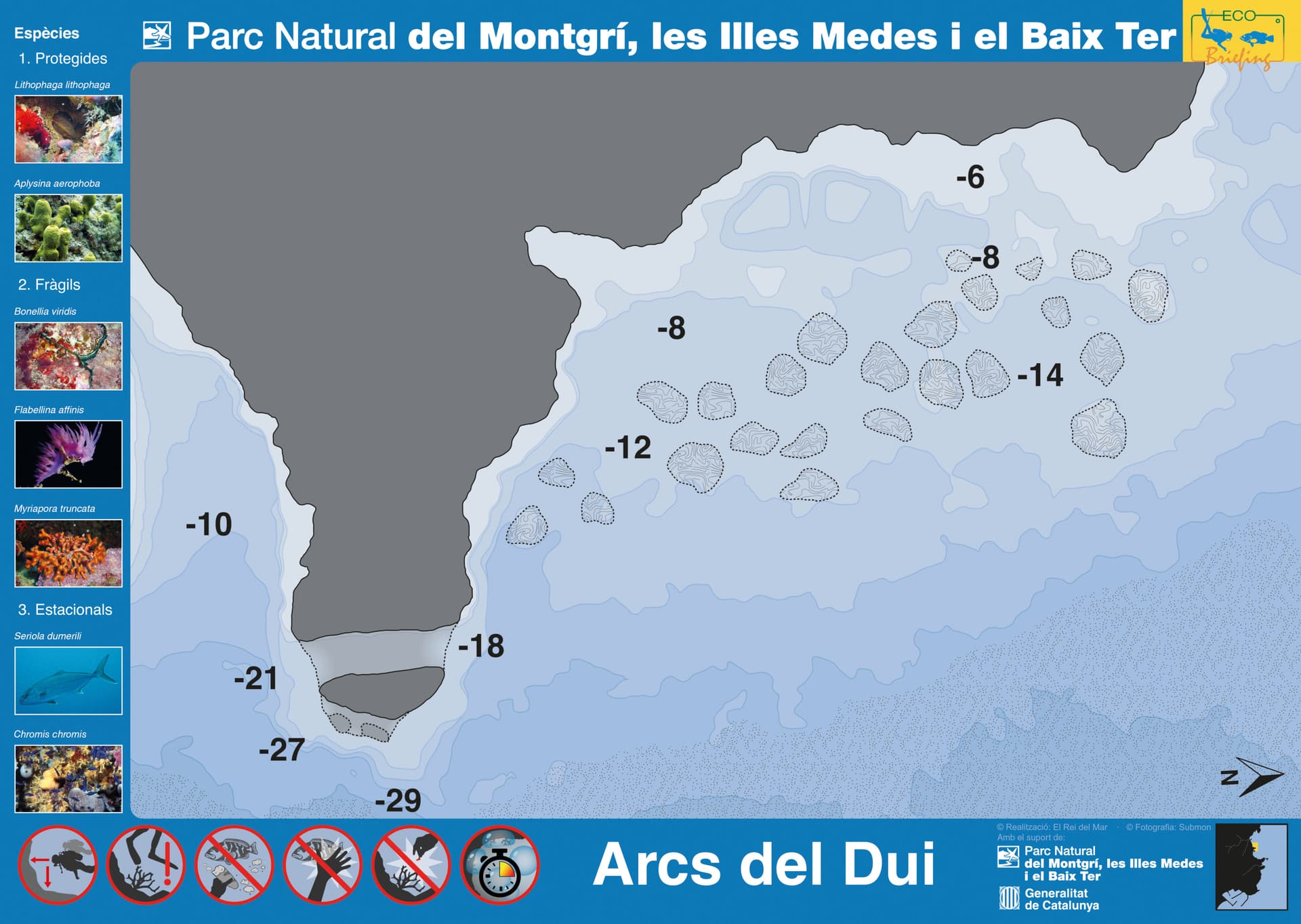
Open Water divers, beginners, and check-dive groups wanting an easy Costa del Montgrí site with three swim-through arches at recreational depth.
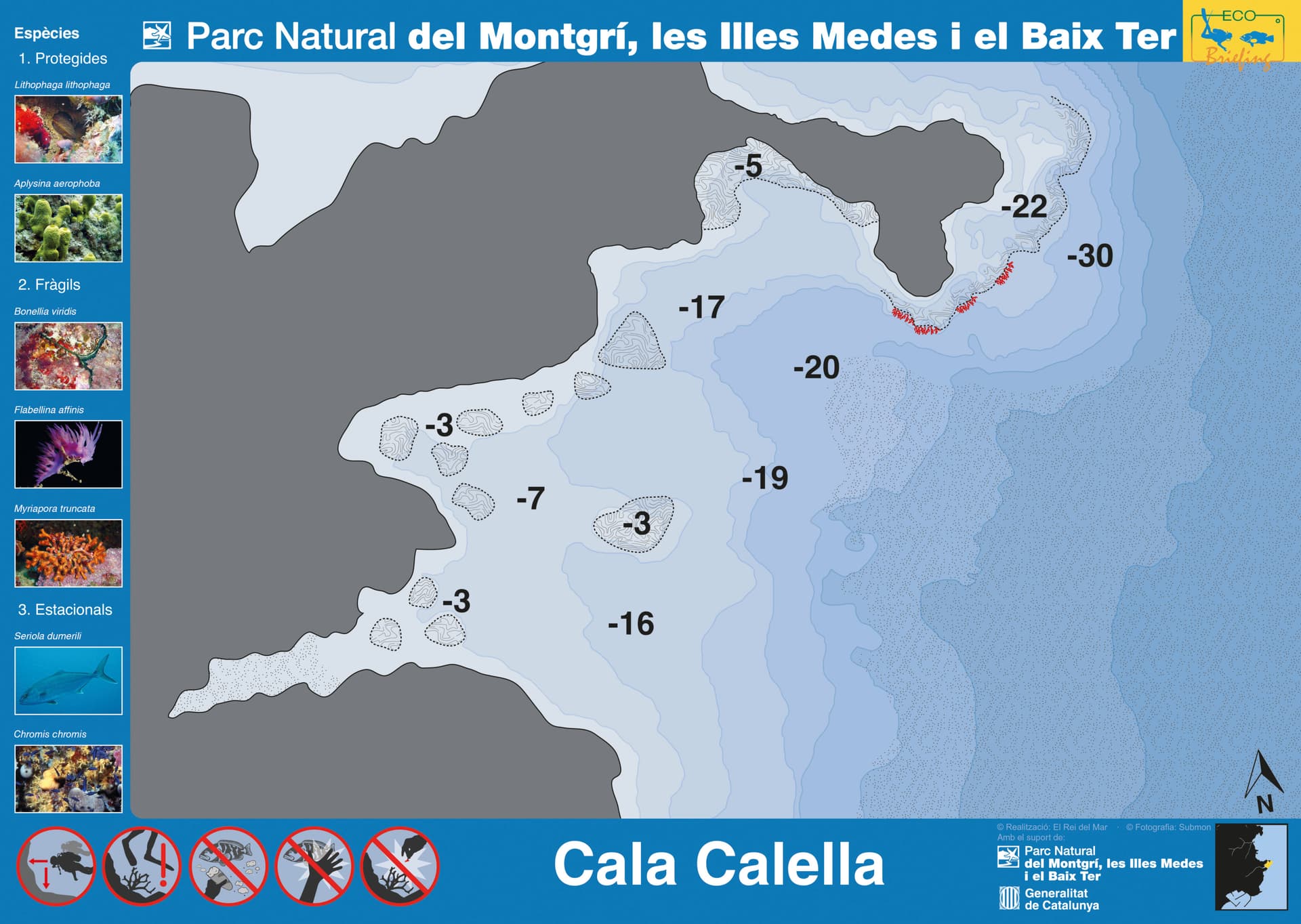
Open Water divers wanting a multi-level coast wall on the Montgrí without the Medes permit, and macro-minded divers working benthic crevice life
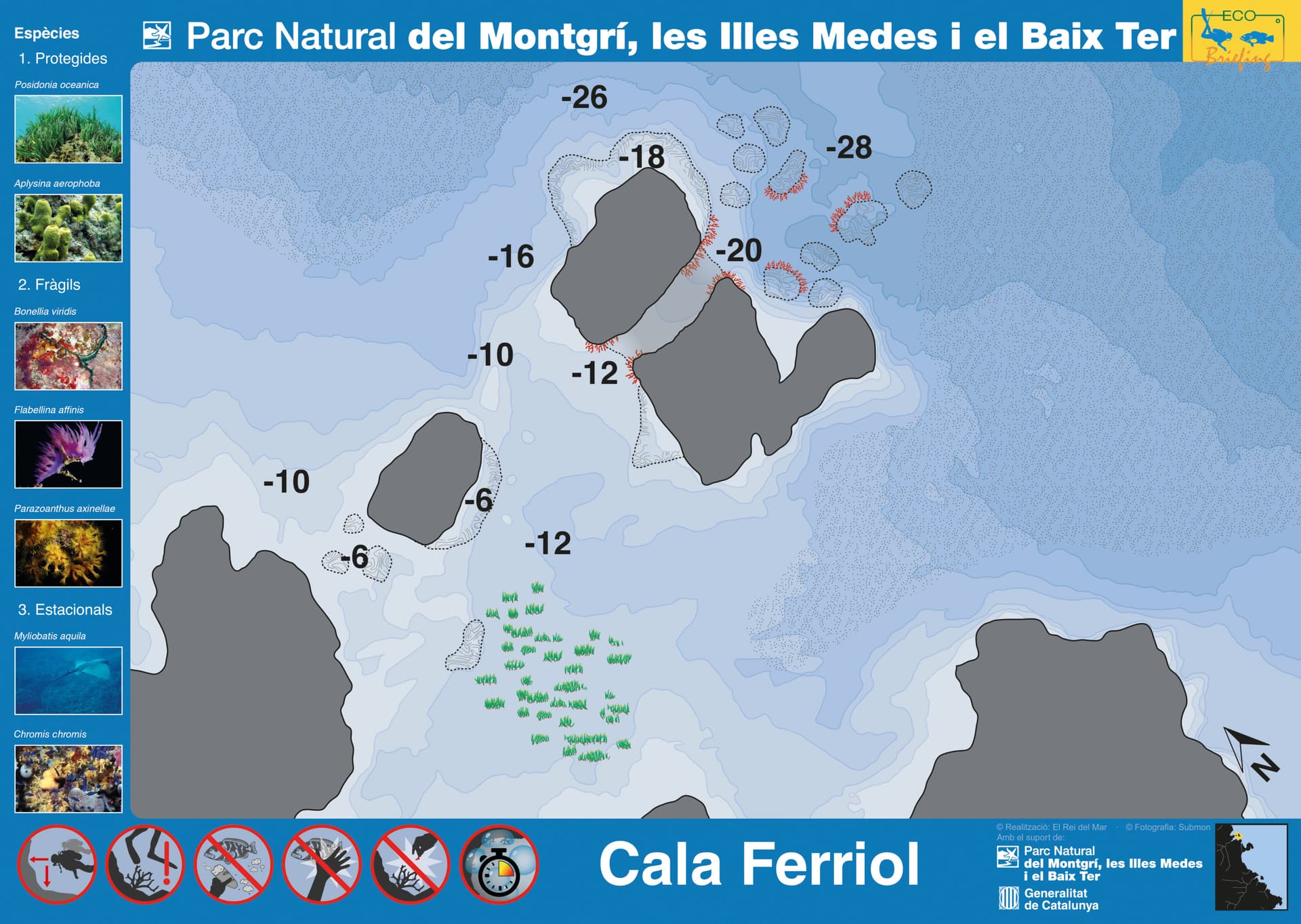
Open Water divers wanting their first tunnel swim-through on a quiet stretch of the Costa del Montgrí, away from the Medes reserve quotas
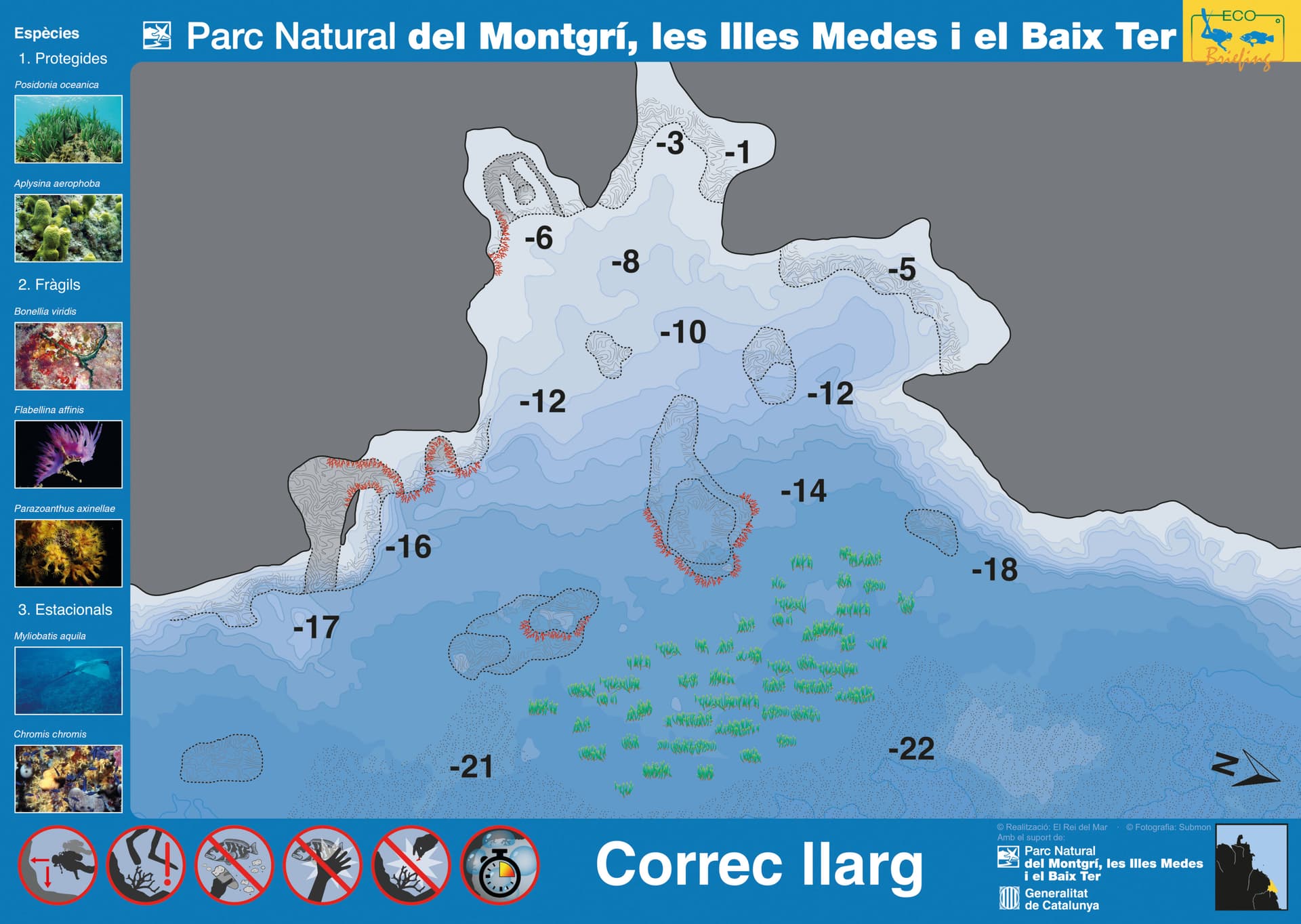
Recently certified Open Water divers easing back in or wanting a brief, low-stress cavern profile outside the Illes Medes reserve permit zone
Mixed-level boat groups looking for a single-buoy coast dive: an Open Water wall route and an Advanced rock-and-crevice line to 28 m, with no Medes reserve permit needed.
Divers who want a dramatic arch swim-through with red coral and gorgonians on the Montgri coast, without the Medes reserve permit
Open Water divers wanting a short, skylit tunnel passage at recreational depth on the L'Escala side of the Costa del Montgrí coast, and macro photographers shooting nudibranchs.
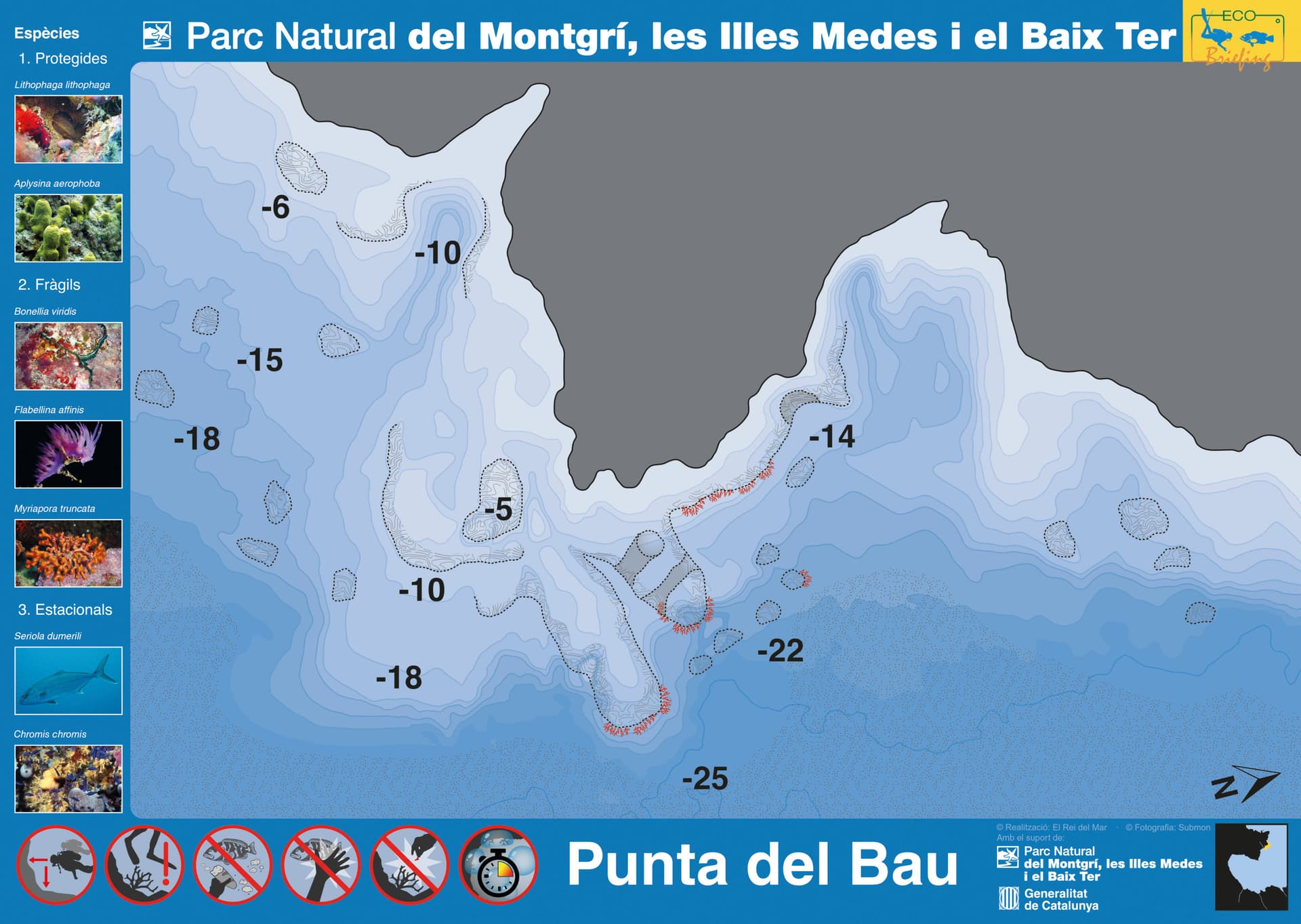
Open Water divers and first-of-season divers who want a sheltered Montgrí coast dive with a cave feature, on days when the Tramuntana closes exposed sites
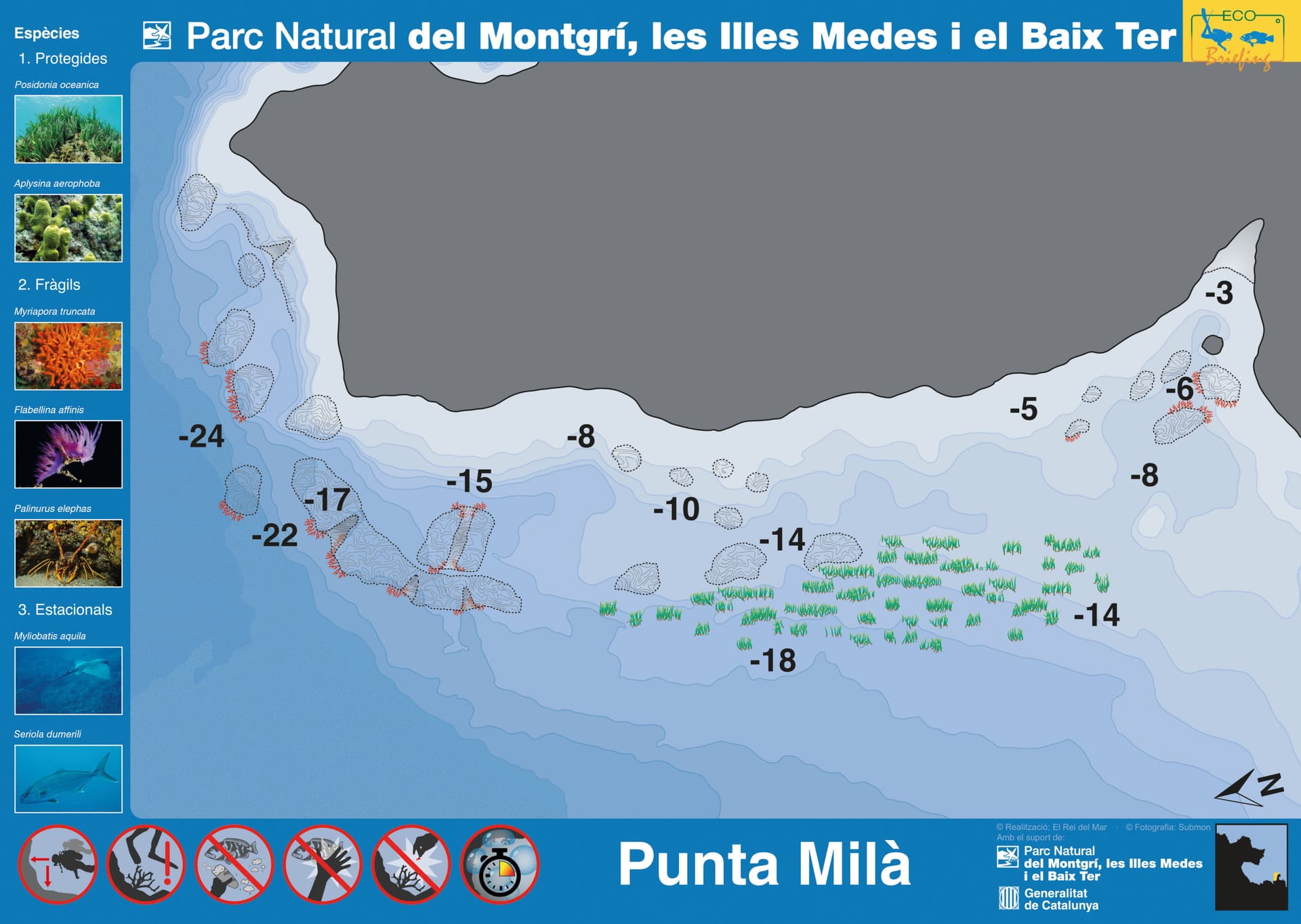
Mixed-level groups wanting wall and shallow cave in one boat trip, with a named cultural site accessible to beginners
All levels seeking a calm, torch-lit crevice dive when wind or river runoff closes down the Medes and exposed headlands
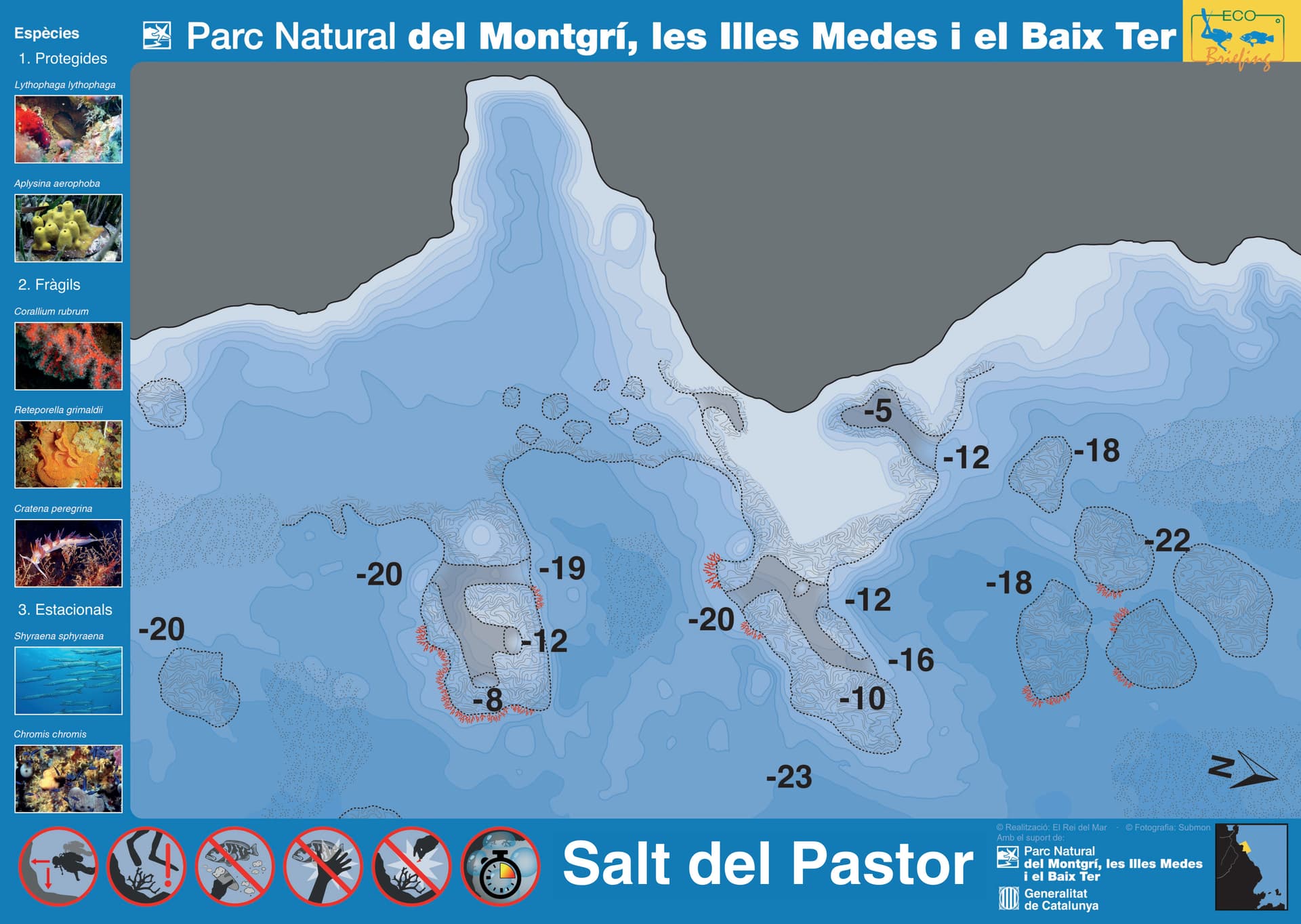
AOW divers wanting a compact geological site with a named arch, crevice-dwelling gorgonias, and a strong resident-species list on the Montgrí mainland coast
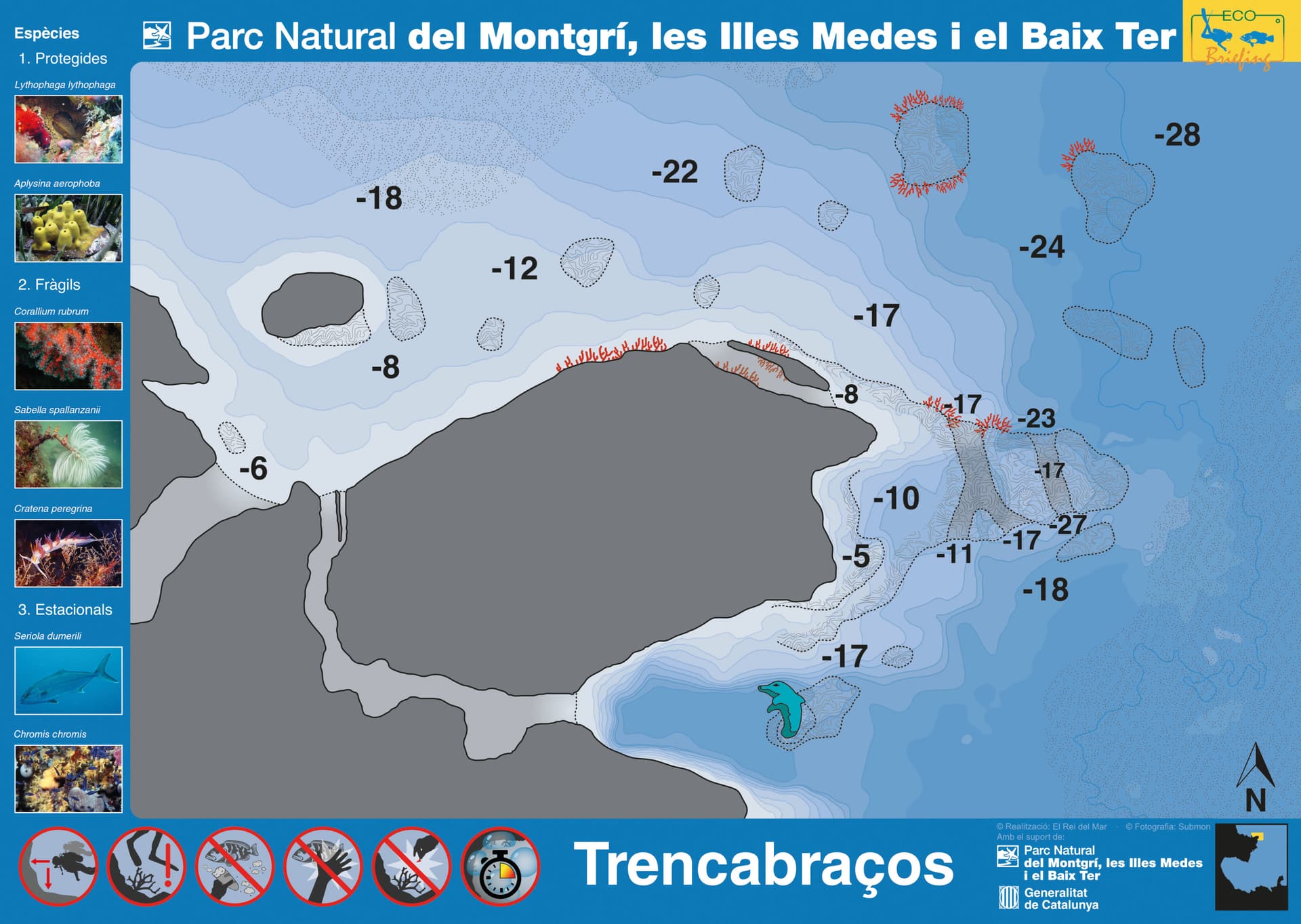
Divers who want both a wall dive and a through-tunnel in a single outing — wall circuit suits Open Water, tunnel traverse suits Advanced.
Book online or contact a centre that dives this area.
PADI 5 Star centre on L'Estartit seafront with stay-and-dive packages, four daily boat dives between Illes Medes and Montgrí, plus tec diving.
Family-run PADI centre in L'Estartit, run by Peter and Jacqueline Lane for nearly 40 years, with PADI Green Star and four other environmental credentials.

Small-group dive center in Tossa de Mar with a year-round boat, max 4 divers per guide, PADI TecRec and CCR training, and on-site accommodation.

L'Estartit's oldest dive centre (est. 1965), a PADI 5 Star CDC running daily boat trips to Illes Medes and the Montgrí Coast with volume dive packages.

SSI Diamond Instructor Center in L'Estartit, authorized Illes Medes operator since 2008. Full spectrum from try dives to cave and technical diving.
Get in touch to add or claim your dive center listing on DiveCodex.
Late-spring plankton blooms can cut visibility to 5-8 m, and boat schedules thin out in winter. Local divers favour May-June and September-October for quieter boats.
What can go wrong here, and what divers do about it. Conditions change - take the briefing from the operator on the day.
Decree on dive centresGeneralitat page for dive centresChecked: Oct 2026
National rules also apply: Rules and permits in Spain
The park gives the Reggio Messina as 23 to 35 m, and a wreck listing puts the same ship at 40 m. Ask your centre which section the boat is diving and plan for the deeper figure if no one can say. Below 30 m you are past the usual Advanced Open Water limit. The Marmoler near Cala Montgó is reported at 42 m by one diver and 44 m in a wreck listing; at either depth it is a deep or technical dive.
Accounts differ. Wreck listings date the sinking to 1991, while a diver heading out to it in 2009 recalled that it went down after the Barcelona '92 Olympics.
It depends on the feature. The Cala Pedrosa tunnel, 18 to 24 m with the dive continuing past 30 m, and the Trencabraços tunnel to las Cámaras are both for experienced divers. Cala Ferriol has a tunnel up to 15 m wide at 12 to 25 m that suits beginners in tunnel environments, and Cala Viuda suits divers starting in caves, with a guide recommended.
The coast is about topography: tunnels, arches, caves and wrecks, with lighter fish life and the odd grouper at Cala Calella or Punta Mila. Operators out of L'Estartit generally run both, so many visitors alternate.
Negre del Falaguer is calm and well protected from tramontana, Cala Pedrosa is sheltered from north and east winds, and Punta del Bau is reported flat calm on tramontana days. Punta Salines is little protected from levante, so the centre may steer you elsewhere when it blows from the east.
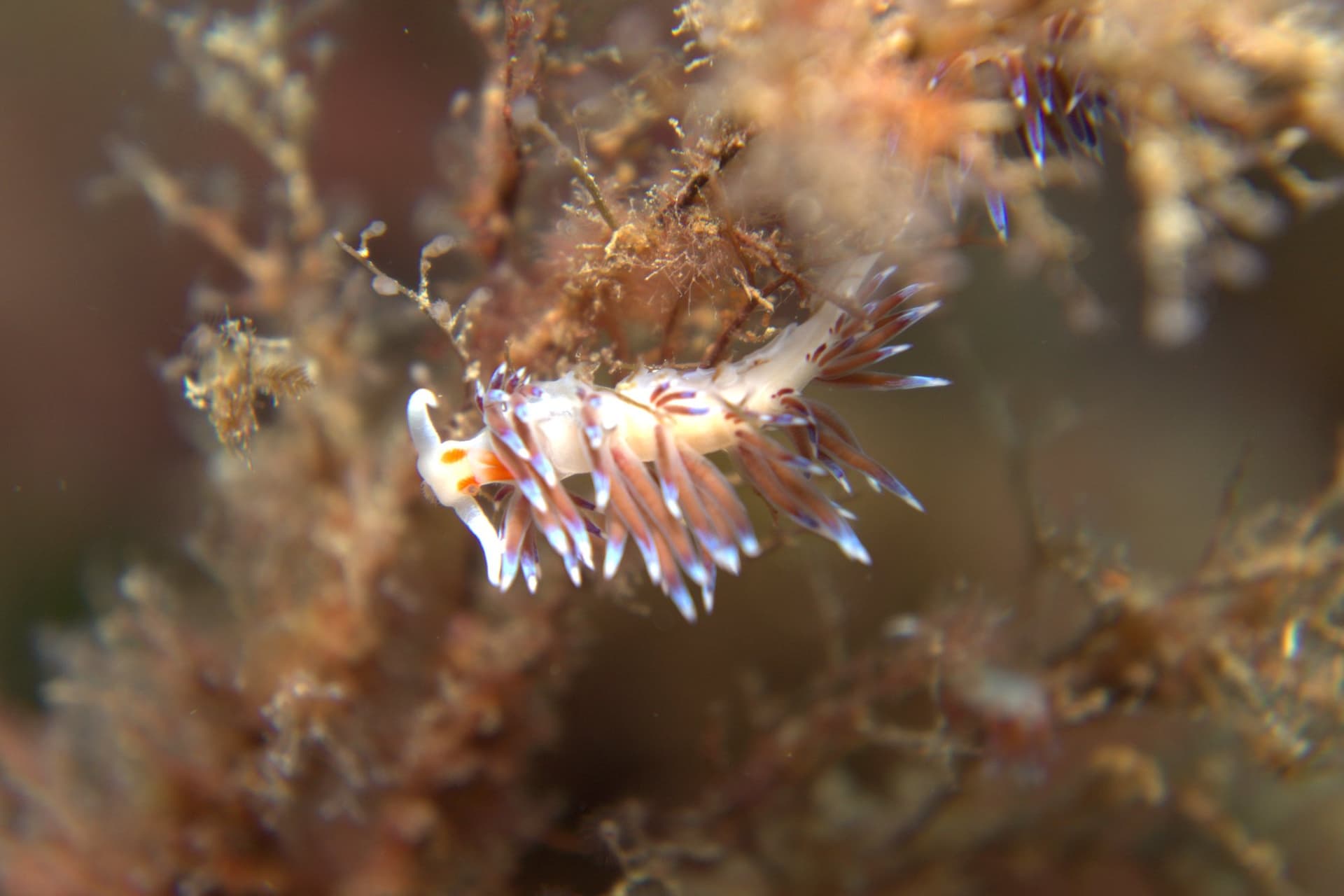
Photo reports from L'Estartit divers show nudibranchs such as Hypselodoris and Cratena peregrina, flatworms, black scorpionfish and spiny lobsters on coast night dives. It suits macro photography, and centres decide each day whether a night boat goes.
Punta Salines runs 3 to 28 m over rock and coralligenous growth and suits all kinds of divers. Baix de Cols, to 20 m, is uncomplicated and suits novices, with a small sponge-lined tunnel and congers inside, especially in spring. Cova de la Sal is a shallow cave dive for beginners, and Negre del Falaguer is calm, with its tunnel kept for the experienced.
Almost every dive is by boat because the cliffs block access on foot. Divers have described a walk-in entry past the water treatment plant at Cala Mateua, heading toward Cala Montgó, with backlit corridors and tunnels. Those accounts are old, so check the entry with a local centre before relying on it.
Log your dives - notes, photos, conditions and the marine life you saw - and share them as one public diver profile. What you share helps the next diver, too.
Log every detail
Depth, duration, conditions, gear, buddy, notes — all in one place. Import from Suunto and other dive computers.
Track marine life
Record species sightings on each dive. Build a personal catalogue of everything you've seen underwater.
Your public dive profile
Share your dive history, stats, and experiences with a profile page you control. Show the world where you've been.