DiveCodex

Chrisoula K

Greek freighter sunk 1981 at Sha'ab Abu Nuhas. Tile cargo wreck.

The dive

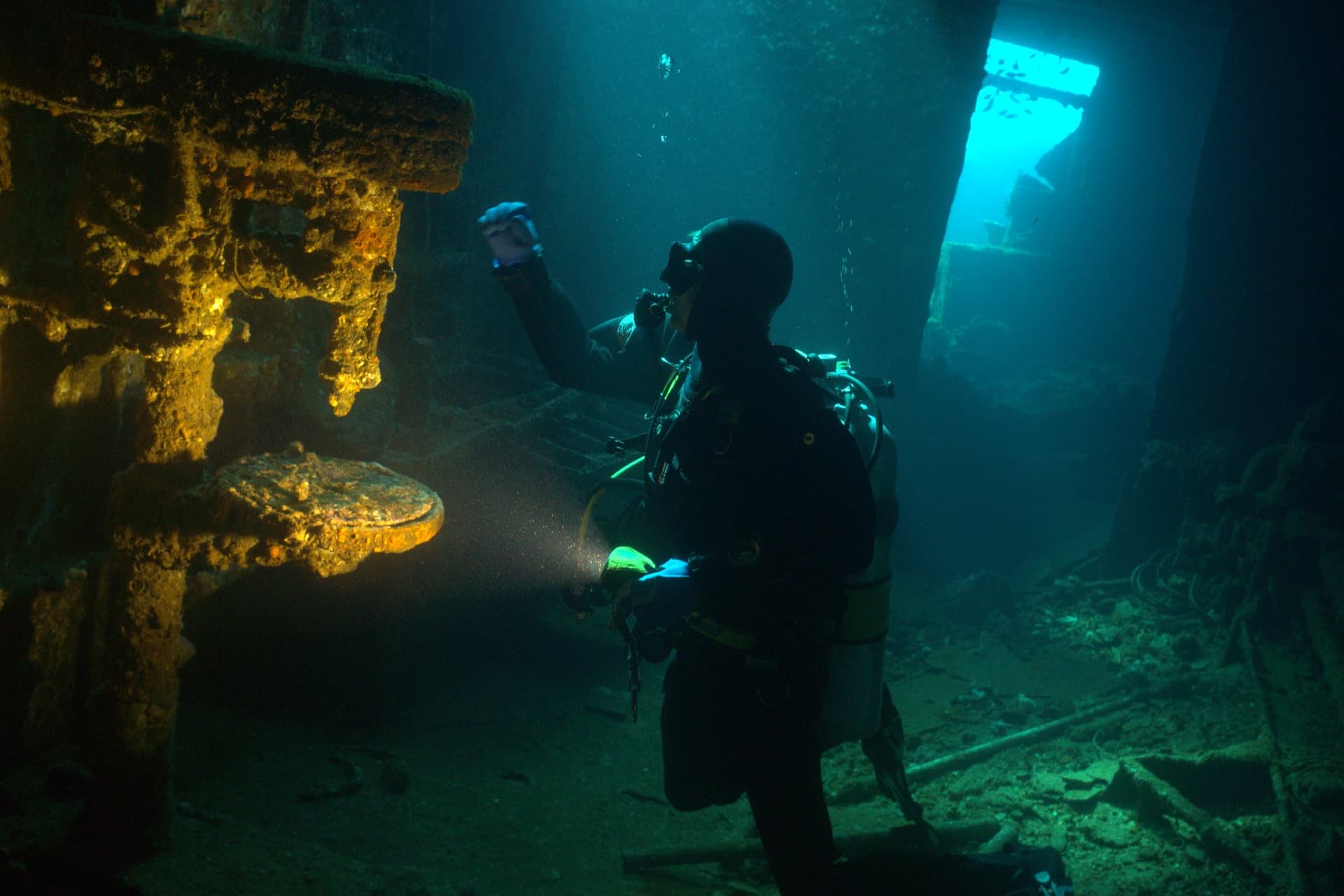
Stacks of Italian floor tiles, still neatly packed after four decades underwater, line the cargo holds of this 98-metre Greek freighter. The Chrisoula K rests almost upright on Abu Nuhas reef, her bow jammed into the coral at just 3 metres and her stern angling down to a sandy bottom at 28m. A typical dive starts at the propeller, working forward through the tile-filled holds before ascending through increasingly shallow superstructure to finish at the embedded bow. The wreck's relatively sheltered position on the reef means currents are lighter here than at the neighbouring wrecks, and the exceptional visibility often allows the entire hull to be seen from a distance.

What makes it special

The Chrisoula K is the shallowest wreck at Abu Nuhas and the only one where snorkellers can observe wreck structure from the surface. But its real distinction lies below: the cargo holds function as an underwater warehouse, stacked with tiles that time has barely disturbed. The interior hosts a particularly rich macro ecosystem — nudibranchs, shrimp, gobies, and flatworms thrive in the sheltered crevices of the holds and engine room. Where the Giannis D draws photographers for its dramatic tilt and the Carnatic captivates with its skeletal iron ribs, the Chrisoula K rewards patient, close-up exploration. The engine room offers a genuine wreck penetration challenge at around 20m, with restricted passages that demand experience and composure.

Know before you go

Two dives are recommended to cover both the deep stern route and the mid-ship holds and engine room. The cargo holds offer easy, warehouse-like swim-throughs suitable for divers with basic wreck experience, but the engine room should only be attempted with guide supervision and proper wreck training. Fallen beams and metal obstructions are present throughout. Visibility is typically excellent, making this a strong wide-angle photography subject — the whole wreck can be framed from a distance on good days. A torch is essential for hold exploration, and nitrox extends bottom time on the deeper stern section considerably.

Depth & Profile

3m
Min depth
28m
Max depth
3–28m
Typical range
wreckcoralsand

Location

27.5814°N, 33.9319°E

Conditions

Temperature
22°C29°C
Visibility
20–30m
Current
moderate

Difficulty & Certification

moderateMin cert: AOWNitrox recommended

Wreck exterior and holds are straightforward. Engine room is challenging with restricted passages and obstructions.

Frequently Asked Questions

Why is the Chrisoula K called the Tile Wreck?
The ship was carrying a cargo of Italian floor tiles from Italy to the Saudi port of Jeddah when it sank. Over 40 years later, stacks of tiles remain visible in the cargo holds — neatly packed and still recognisable despite decades underwater. This distinctive cargo gave the wreck its universal nickname among Red Sea divers.
Can beginners dive the Chrisoula K?
The wreck exterior and cargo holds are accessible to Open Water divers, and the bow at 3-5m can even be snorkelled. The holds offer easy penetration — described as swimming through an underwater warehouse. However, the engine room is a different story: restricted passages and obstructions make it suitable only for experienced wreck divers.
What is the best dive plan for the Chrisoula K?
A two-dive approach works well. Dive one: start at the stern propeller at 26-28m, swim forward through the holds past the tile cargo, and ascend to the bow at 3-5m. Dive two: focus on the holds and engine room amidships, ascending through the superstructure. This splits the deep and shallow highlights across two comfortable profiles.
How does the Chrisoula K compare to the other Abu Nuhas wrecks?
It is the shallowest of the four, with its bow at just 3m versus the Giannis D mast at 4m or the Carnatic top at 18m. This makes it the most accessible and the only one where snorkelling is feasible. Its strength is the tile cargo and rich macro life interior — nudibranchs, shrimp, and gobies. The Giannis D wins for photography, and the Carnatic for historical atmosphere.
Is the wreck deteriorating?
The shallower bow section has succumbed more to wave action and weathering than the deeper stern, which remains largely intact. The stern is described as slowly separating from the main hull. The wreck still offers excellent penetration, but conditions change over the years — sections that were accessible in one decade may shift or collapse in the next.

Photos & Video

Jouni Kuisma

Jouni Kuisma

Jouni Kuisma

Jouni Kuisma

Jouni Kuisma

Morena

Jouni Kuisma

Jouni Kuisma

Jouni Kuisma

Jouni Kuisma

Jouni Kuisma

Jouni Kuisma

Jouni Kuisma

Jouni Kuisma

Jouni Kuisma

Jouni Kuisma

Jouni Kuisma

Log your dives

Track every dive with depth, duration, conditions, and marine life sightings. Join a club and share your underwater experiences.

Try DiveLog — it’s free