

Andreas Diving
Family-run SSI center on Menuda Beach in Tossa de Mar since 1998, with eco-guide philosophy, 17 dive sites, and authorized Cressi service.
SSI4 languages
Also known as: Cueva del Bispe, La Cueva de Tossa, The Cave of Tossa
Shore-accessible cavern at 18 m in Tossa de Mar with lobsters, conger eels, and crustacean-filled rock holes along a comfortable approach route.
Last updated April 2026
From the banyera at Mar Menuda beach, the route rolls over rocky terrain at a relaxed pace. Every formation along the way is riddled with holes. Morays peer out. Scorpionfish sit motionless on ledges. Octopus retract into crevices barely wider than a fist. The approach passes precoralligenous rock where a torch reveals forkbeard and spiny lobsters tucked into gaps. At 18 metres the cave appears: a compact opening roughly two metres deep. Inside, a conger eel occupies the back wall while European lobster cling to the ceiling. Spider crabs and shrimp fill the smaller cracks. One diver fits at a time. The torch does the work here, sweeping surfaces where every centimetre holds something alive.
Two metres of cave. That is the entire overhead environment, and it is enough. The cavern concentrates crustacean life into a space where nothing hides from a patient torch: lobster, conger, forkbeard, shrimp, spider crabs, all unbothered by a slow-moving diver. The exterior rock mirrors the same density at larger scale, hundreds of holes each hosting its own resident. What separates this from the broader Mar Menuda complex is that single focal point. Routes in Mar Menuda spread across three depth zones with dozens of variants; the cave gives the dive a destination. After dark the character shifts. European lobster and santiaguino shrimp emerge from recesses invisible during daytime. Local centres call it one of the most famous dives on the Costa Brava, not for depth or drama, but for the concentration of life packed into a small space.
Bring a torch. The cave interior and the hundreds of surrounding holes reward light more than any other piece of equipment. For the night dive, book through your dive centre in advance. Entry is from Mar Menuda beach through the banyera, a sheltered pool that simplifies gearing up. Summer beach access may be restricted between roughly 10:00 and 18:30; plan accordingly or use the marked divers' path. Water temperature at depth can reach 16 C in summer and 11 C in February below the thermocline. A 7 mm semi-dry or drysuit with hood and gloves covers winter diving. The cave sits at 18 metres, well within Open Water limits, and the route there is gentle enough for recently certified divers.
What makes this dive site stand out.
European lobster, spider crabs, shrimps, and forkbeard inside a 2 m cavern at 18 m depth
Surrounding rock riddled with crevices sheltering morays, scorpionfish, and octopus
After dark the cave reveals European lobster and santiaguino shrimp invisible during the day
Easy walk-in from Mar Menuda beach with entertaining fauna along the entire route
41.7220°N, 2.9400°E
September-October sweet spot for warm water, good visibility, and fewer crowds. Winter offers monkfish and macro opportunities.
32 EUR with own equipment, 55 EUR with full rental. Night supplement 13 EUR. Insurance approximately 7-8 EUR/day if not covered.
The cavern is a brief swim-through with light always visible. Maximum 18 m is within OW limits. Night dives may require Advanced Adventurer certification with some centres.
Summary
Route to the cave described as very comfortable with entertaining fauna along the way. The cavern is only 2 m long, not an overhead penetration dive.
Safety considerations
What can go wrong here, and what divers do about it. Conditions change - take the briefing from the operator on the day.
Book a guided dive at this site.
Family-run SSI center on Menuda Beach in Tossa de Mar since 1998, with eco-guide philosophy, 17 dive sites, and authorized Cressi service.
Family-feel PADI and CMAS centre in Tossa de Mar with free parking, van to Mar Menuda, and a wide course menu including ice, altitude and DPV specialties.
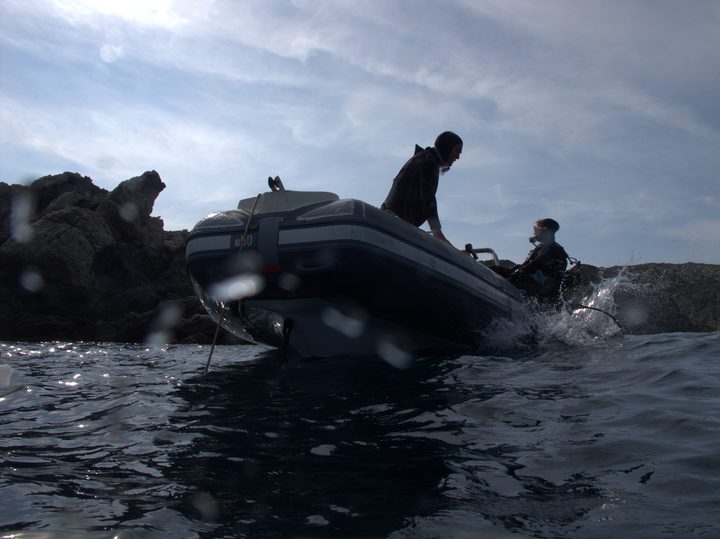
Get in touch to add or claim your dive center listing on DiveCodex.
No permits, fees, or diver quotas. The area has PEIN and Natura 2000 ZEC environmental protection but no marine reserve diving restrictions.
The cavern shelters European lobster, conger eels, forkbeard, spider crabs, and shrimp. The cave itself is about 2 metres long and fits one diver at a time. Outside, the surrounding rocks are full of holes where morays, scorpionfish, octopus, and spiny lobsters live. A torch is essential to see the residents inside.
No. The cavern is a brief swim-through approximately 2 metres long with natural light visible at all times. It is not a technical cave dive. Open Water certification is sufficient. Local dive centres guide this dive regularly.
The cave transforms after dark. European lobster emerge from hiding and santiaguino shrimp fill the interior and surrounding rocks. These species are rarely seen during day dives. The shore entry from Mar Menuda beach makes it accessible for divers new to night diving.
Shore entry from Mar Menuda beach in Tossa de Mar. Enter through the banyera, a sheltered pool-like entry at the beach edge. The underwater route to the cave is comfortable, with marine life along the way. In summer, beach entry may be restricted between roughly 10:00 and 18:30; use the marked divers' path.
May to October for warm water and active marine life. September and October combine warm conditions with fewer crowds. Winter diving rewards patience: monkfish appear camouflaged among rocks, macro photography conditions improve, and the water is often clearer.
Cueva de Tossa is a specific destination within the broader Mar Menuda shore dive complex. Mar Menuda covers multiple routes from the same beach across several depth zones. Cueva de Tossa focuses on a single small cavern and its surrounding rock formations, best known for crustacean life and night diving. Both share the same beach entry point.
Local dive centres describe it as one of the most famous dives on the Costa Brava. Divers have been visiting the cave for decades. Its combination of easy shore access, a genuine cavern experience, and dense invertebrate life in a compact setting makes it a staple destination for divers visiting Tossa de Mar.
Log your dives - notes, photos, conditions and the marine life you saw - and share them as one public diver profile. What you share helps the next diver, too.
Log every detail
Depth, duration, conditions, gear, buddy, notes — all in one place. Import from Suunto and other dive computers.
Track marine life
Record species sightings on each dive. Build a personal catalogue of everything you've seen underwater.
Your public dive profile
Share your dive history, stats, and experiences with a profile page you control. Show the world where you've been.