Cuevas de Port Salvi
Also known as: Cuevas Eden Rock, Cuevas de Sant Feliu, Túneles de Port Salvi
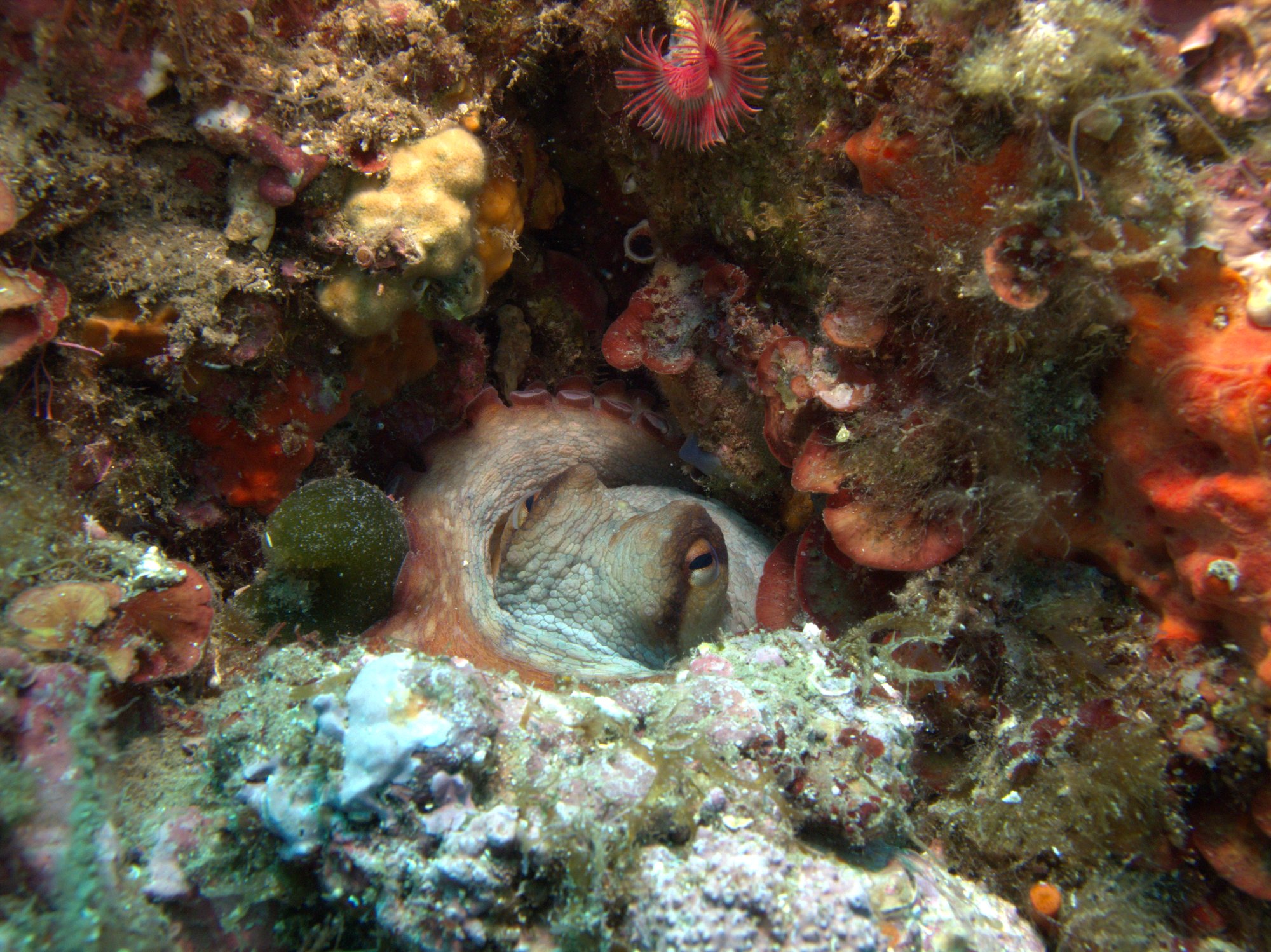
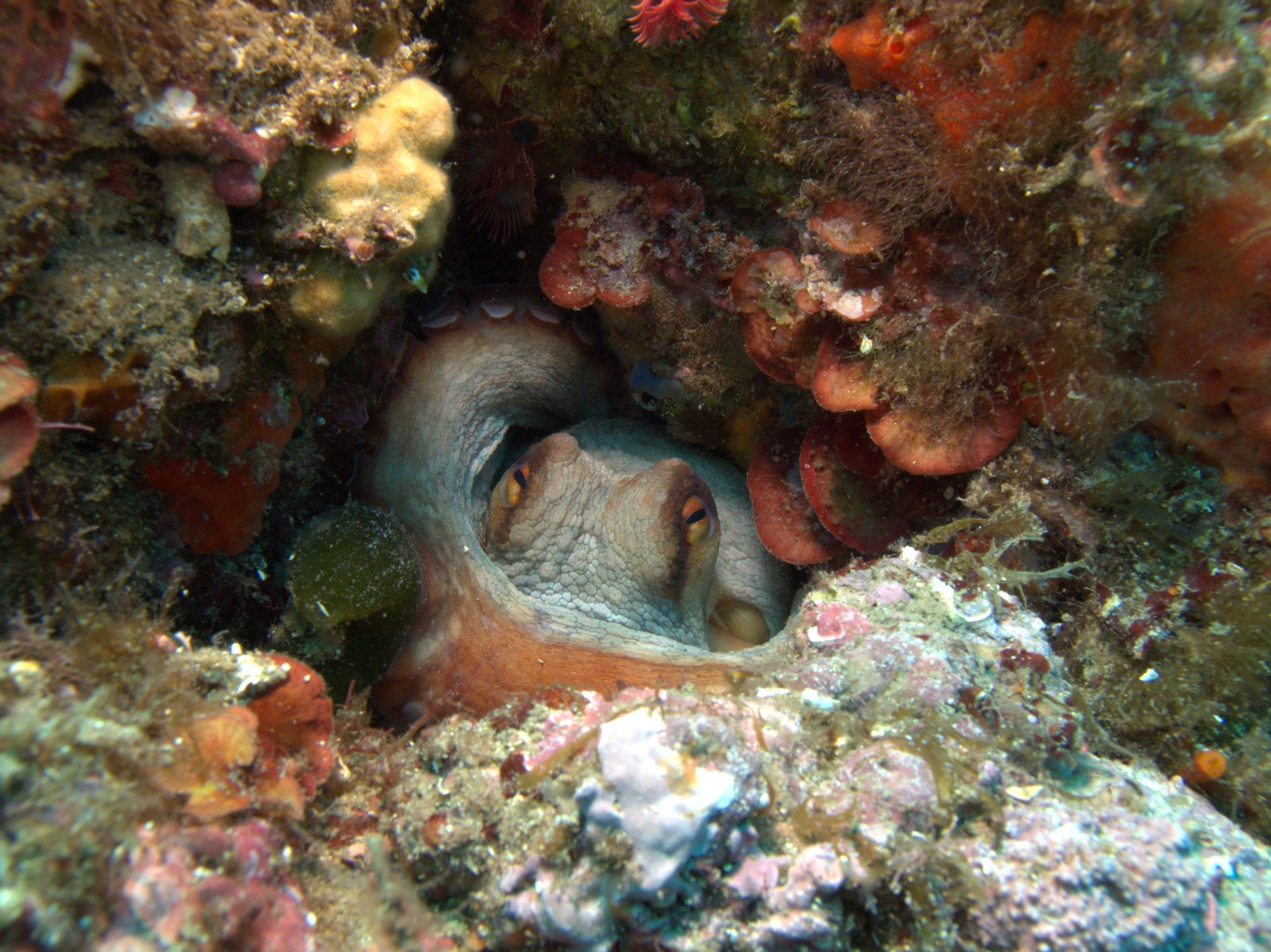
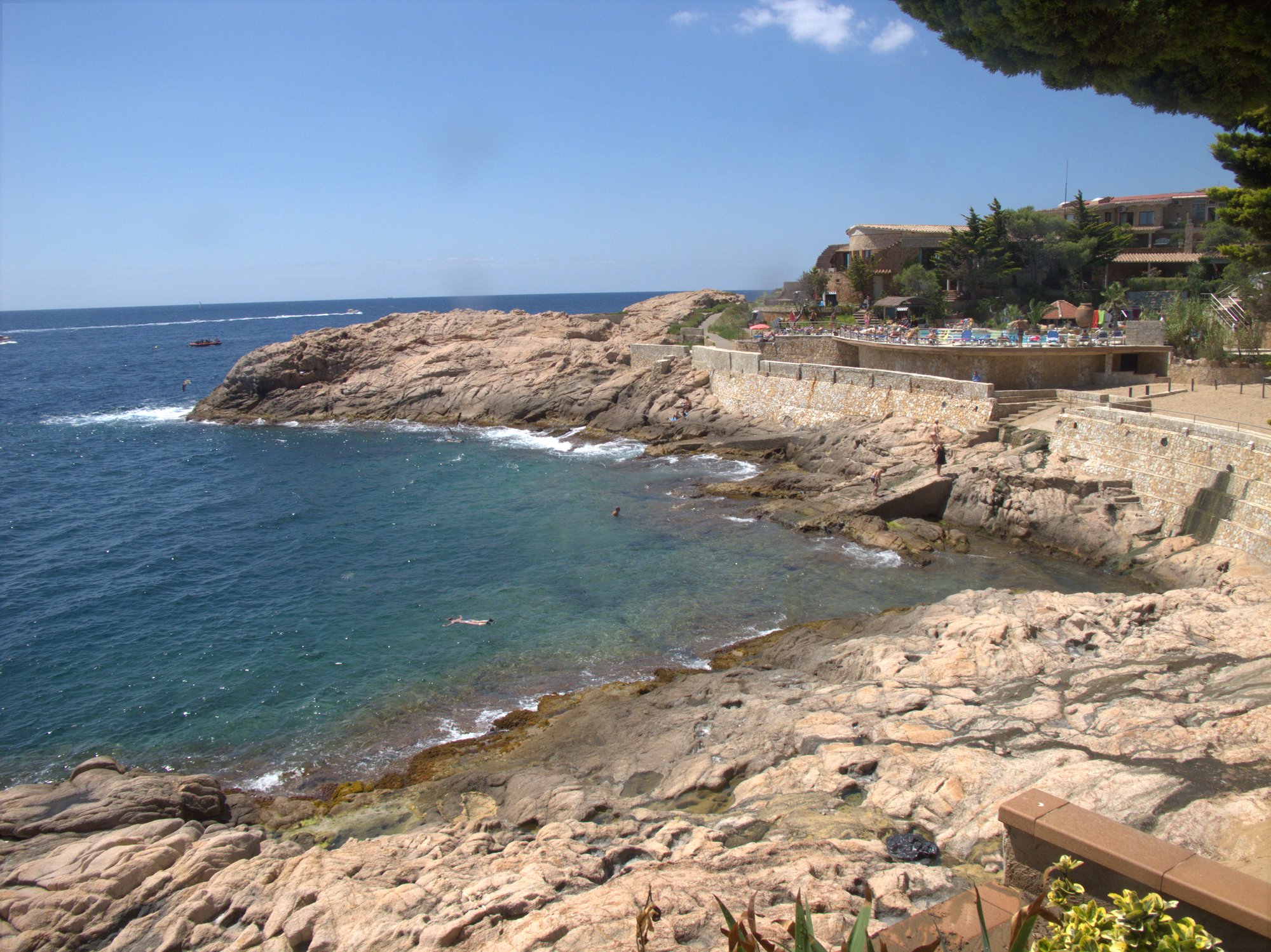
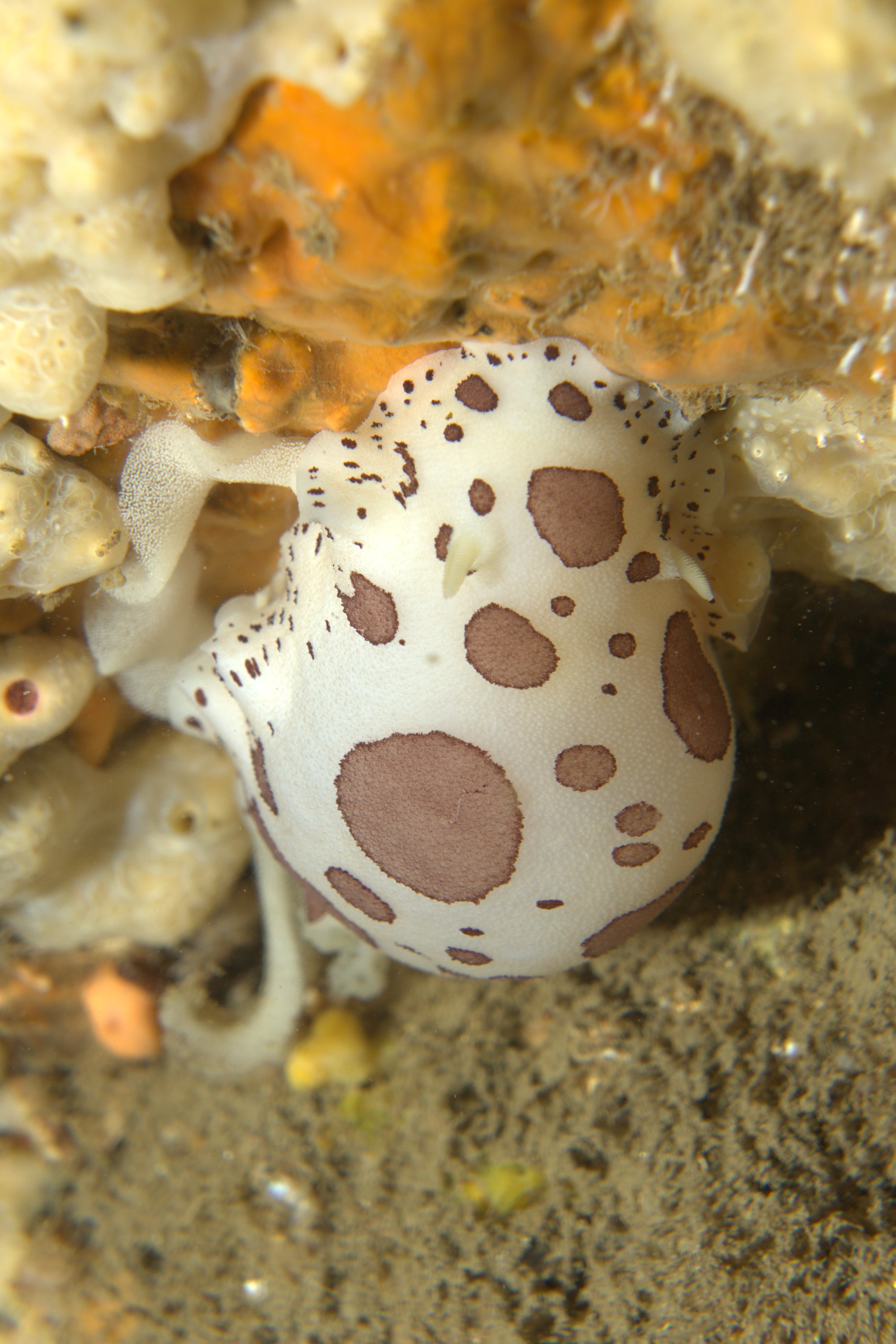
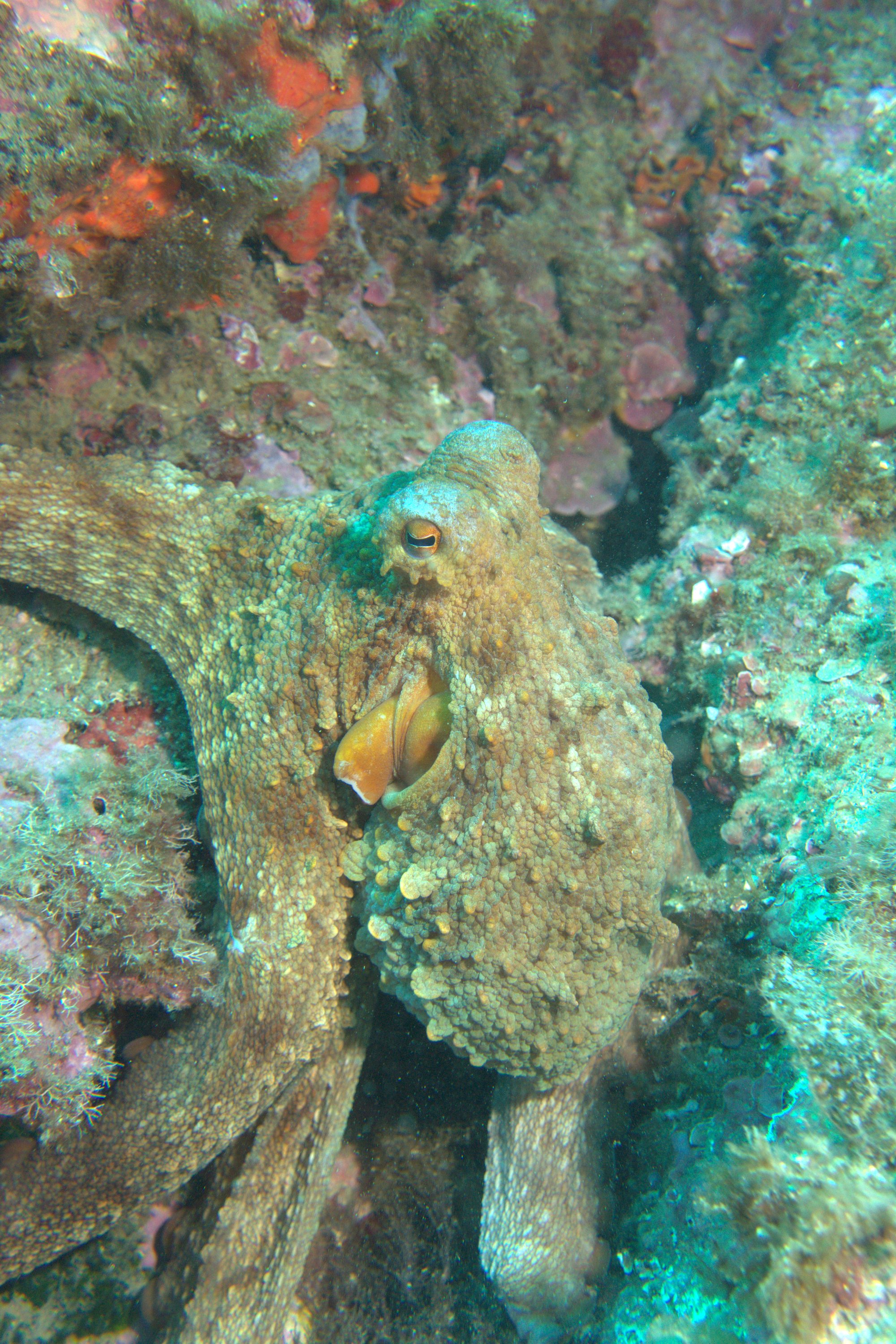
Cave system near Port Salvi, Sant Feliu de Guíxols. Shore entry via rocky ramp. High biodiversity: moray eels, lobsters, gorgonians, nudibranchs. Winter preferred.
The dive
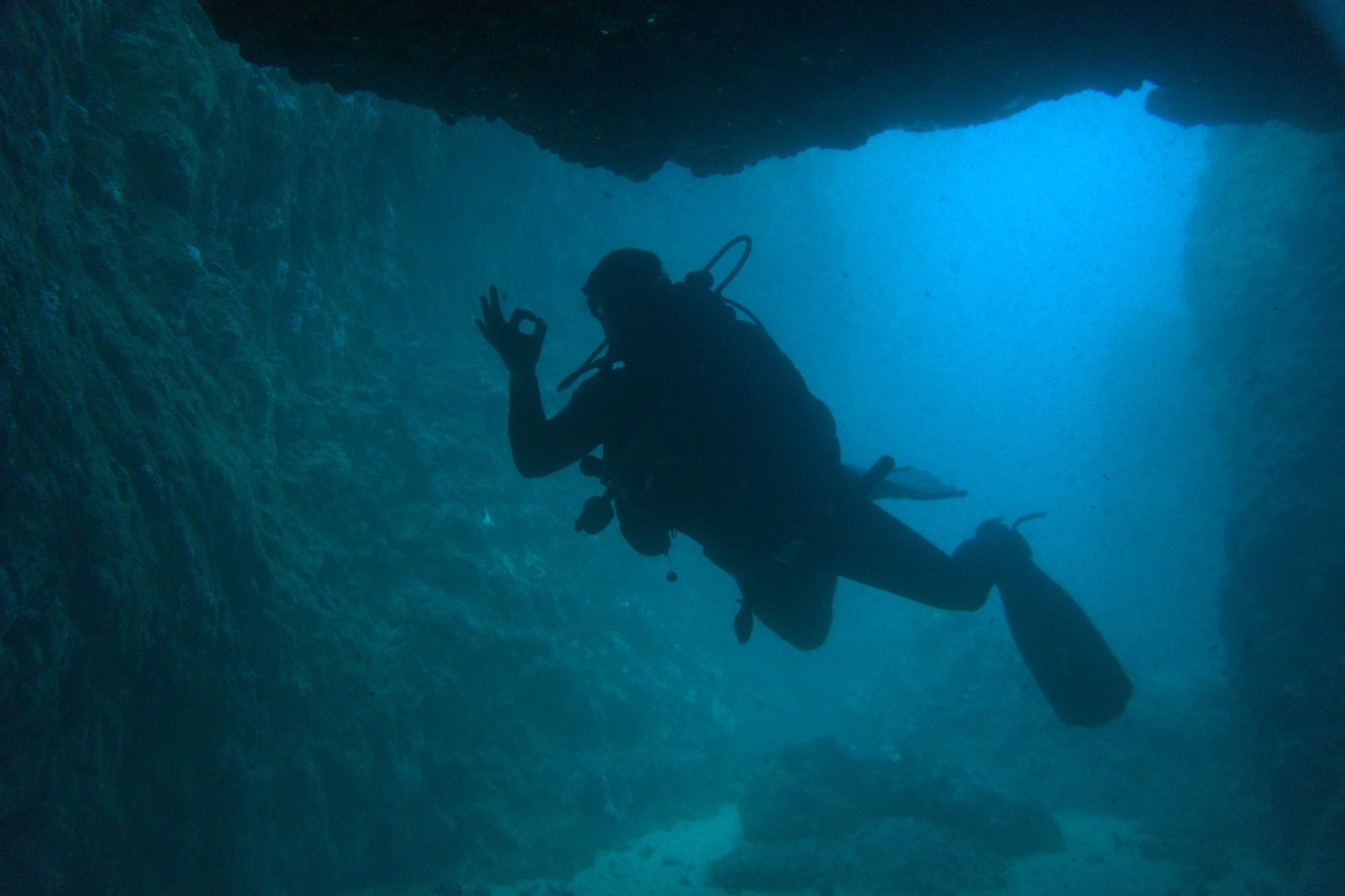
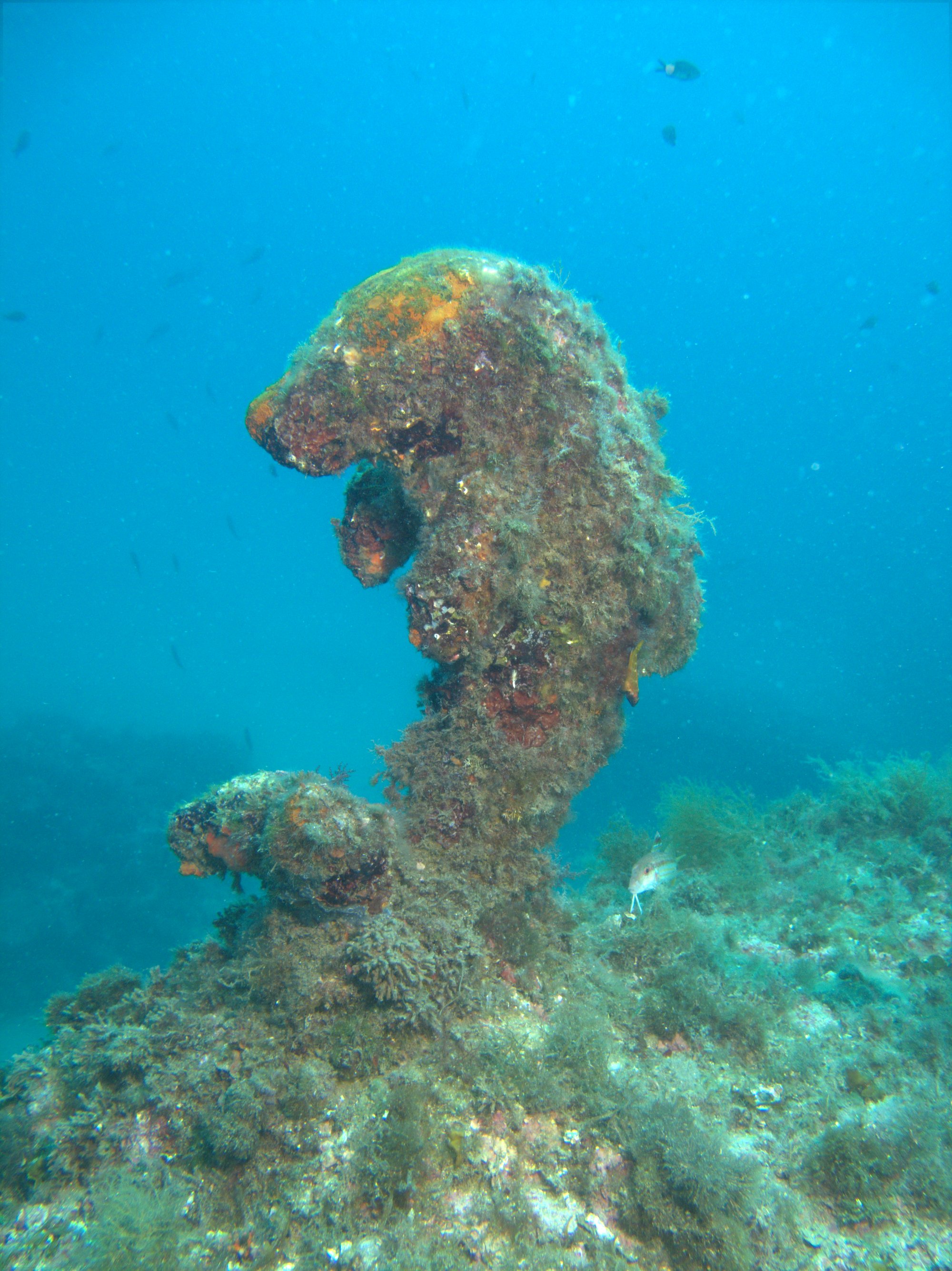
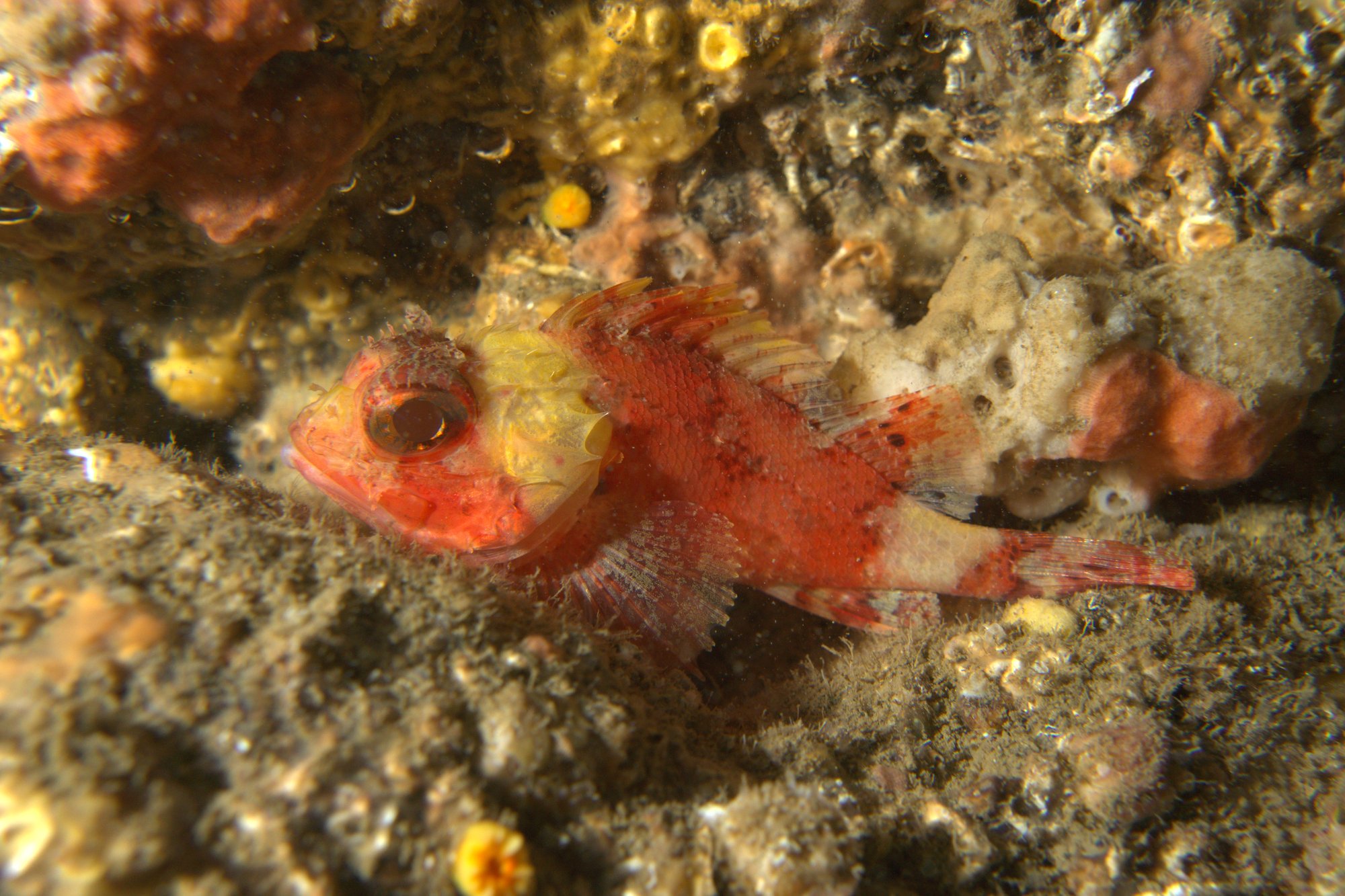
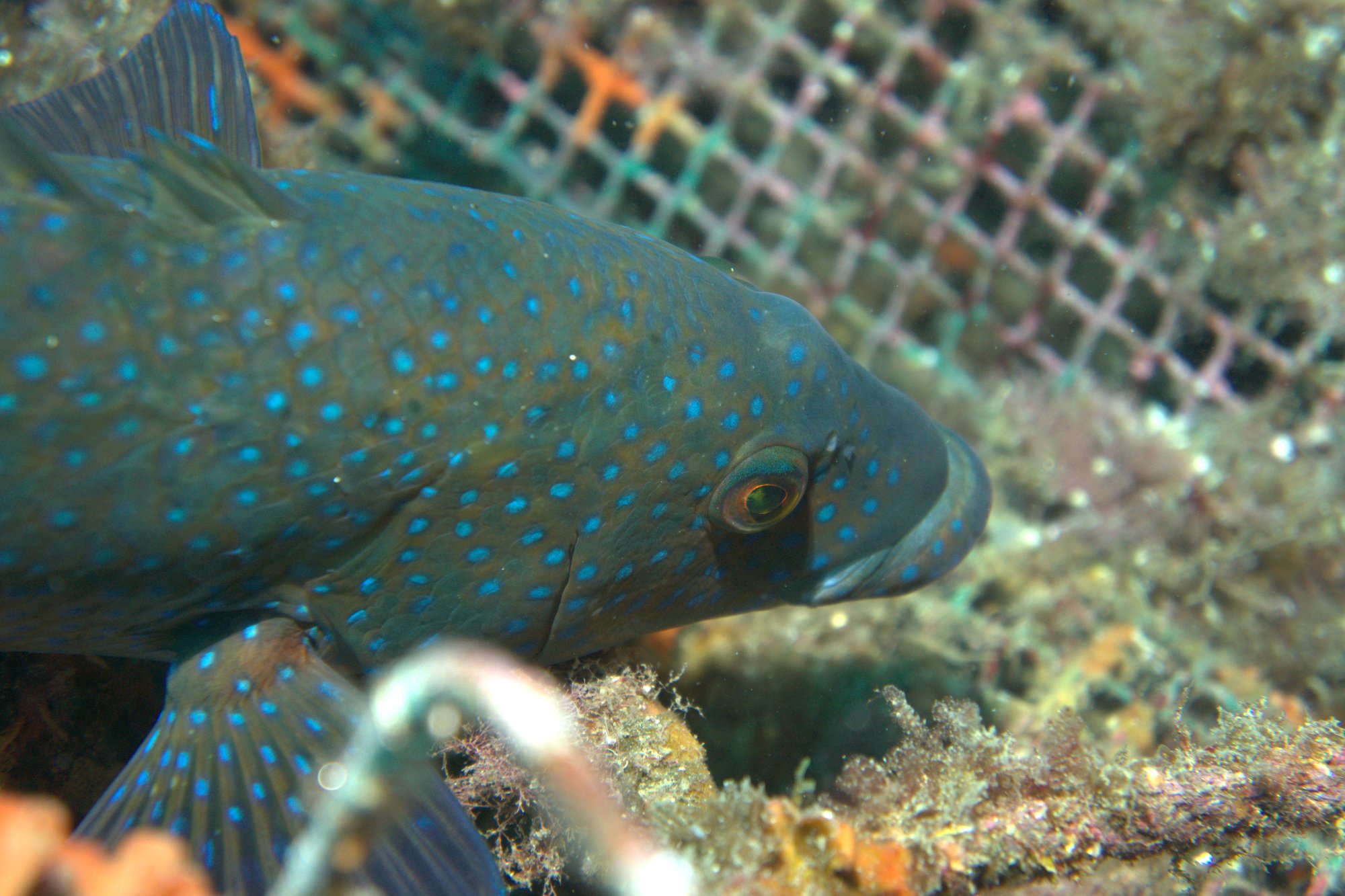
Three tunnels cut through the rocky Punta de Garbí coastline at depths between 21 and 29 metres, connected by sandy channels and rocky terrain. The first tunnel is the longest — roughly 18 to 20 metres — with a low ceiling that narrows on one side and a compass rose sculpture marking the area above its entrance. The second is wider, ending with a dolphin statue at its exit. The third, shallowest and shortest, includes a three-metre elevation change as you ascend through it. Between the tunnels, scorpionfish sit on the approaches and groupers move through the rocky formations. The spacing means you cover real distance — gas discipline decides whether you see two tunnels or all three.
What makes it special
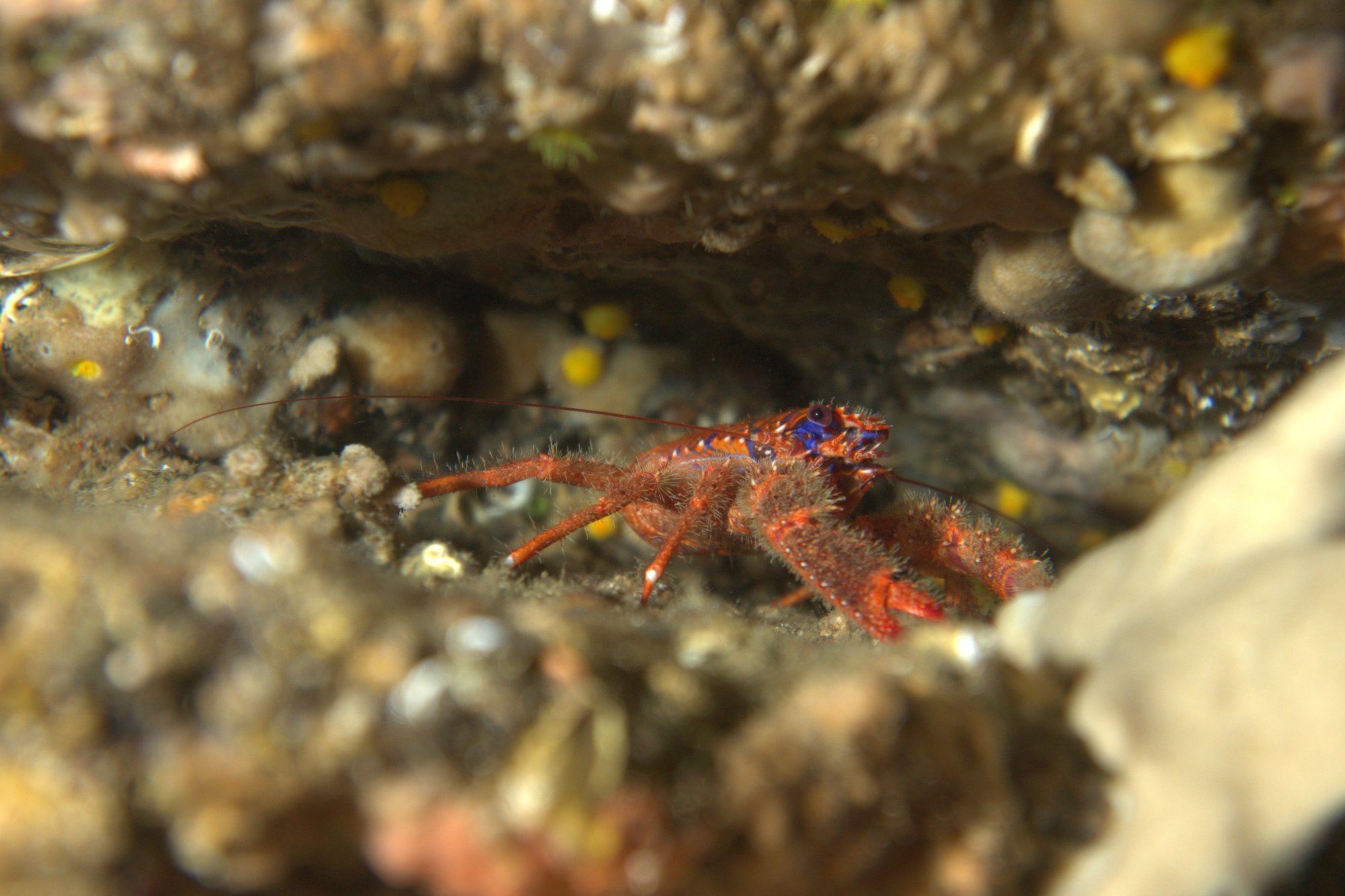
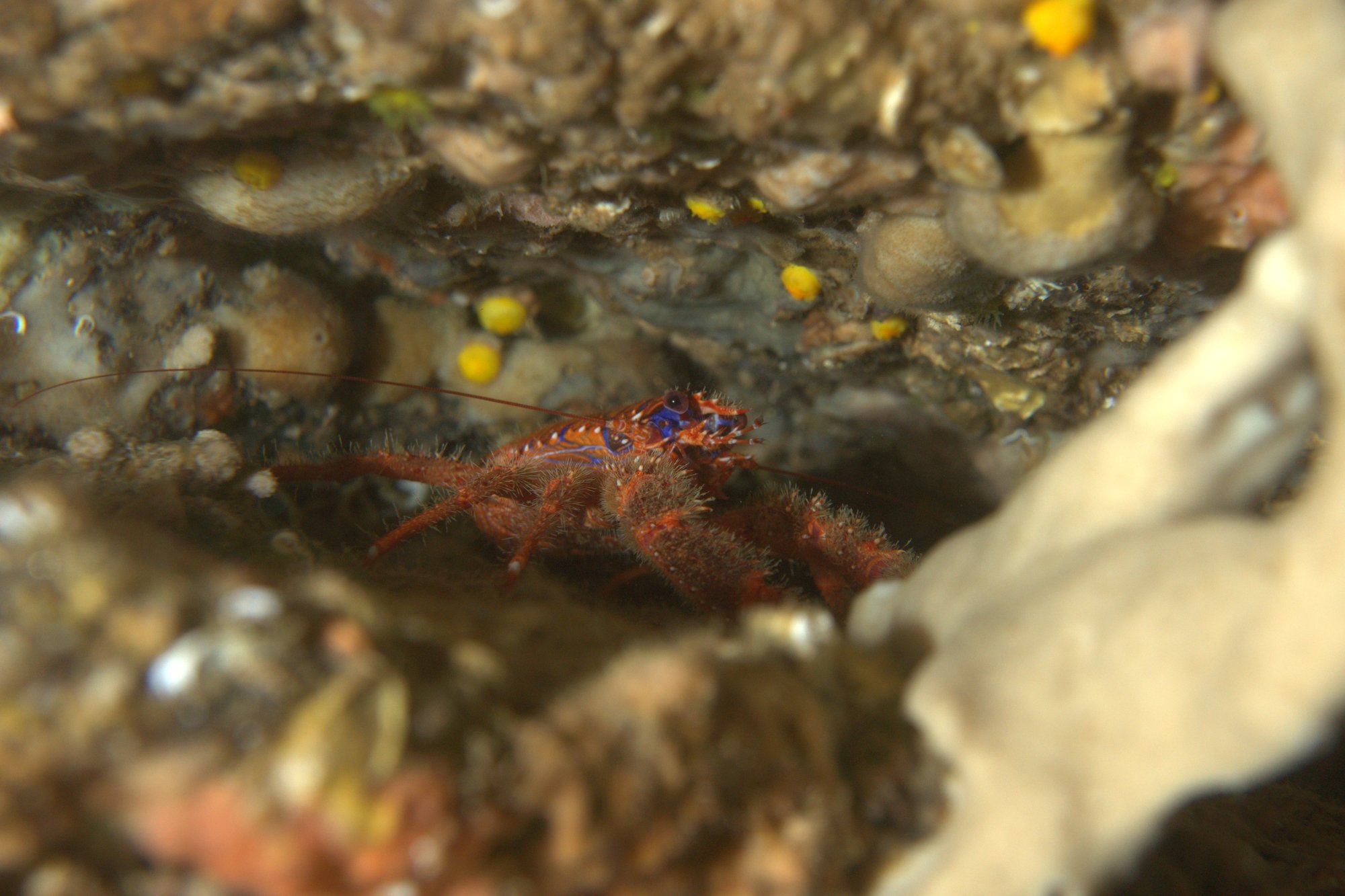
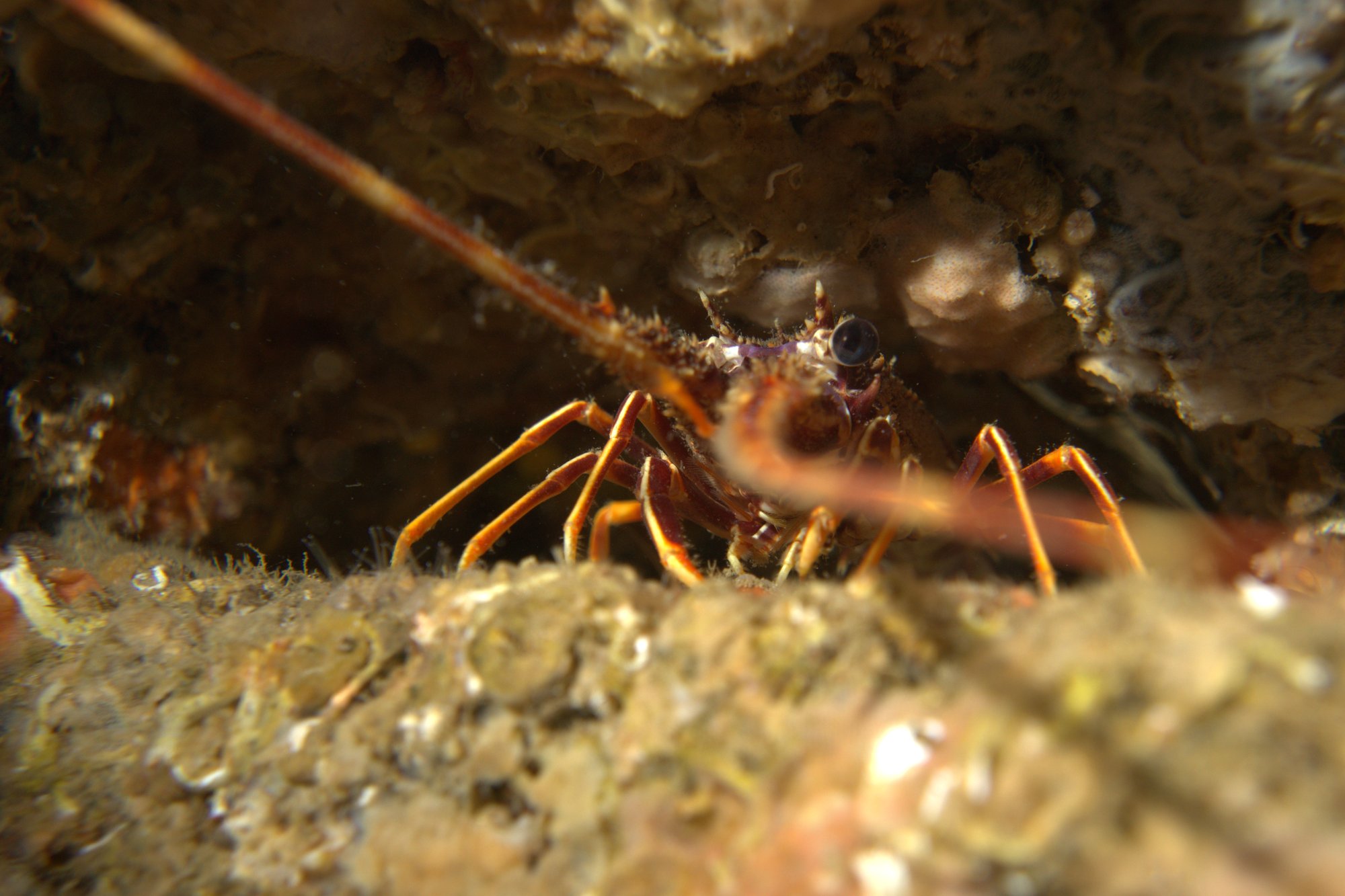
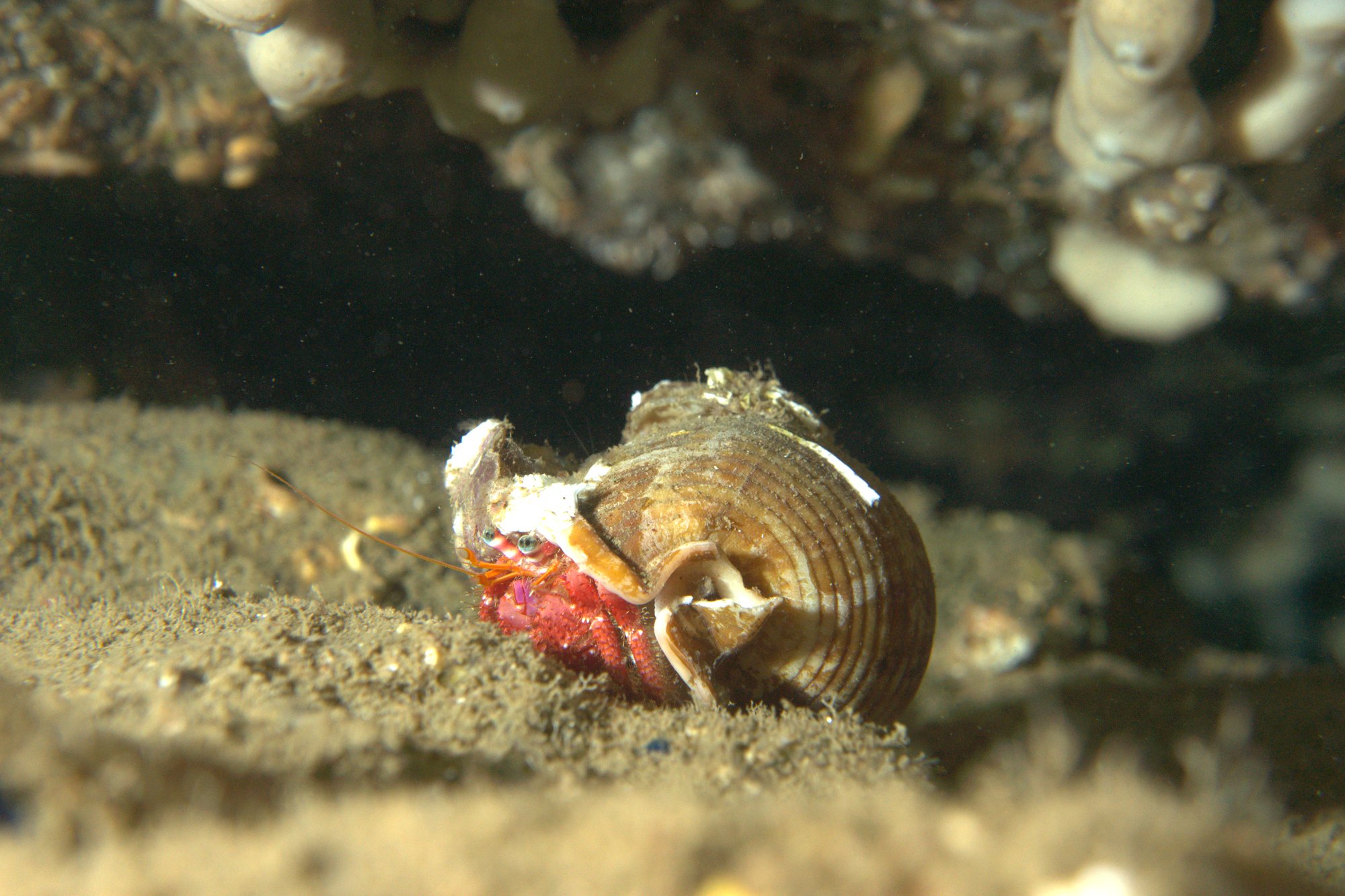
The backlight effects are the centrepiece. Looking outward from inside each tunnel, the open water frames silhouettes and light shafts that operators consistently highlight as the dive's signature visual. Inside the chambers, crustaceans and mollusks concentrate in the sheltered environment — these tunnels are specifically noted for their crustacean diversity rather than the fish life found at open-water sites nearby. The installed sculptures — a compass rose and a dolphin — add an unusual gallery element that no other Sant Feliu site offers. Five centres from two different ports run this dive, making it one of the most widely operated tunnel experiences on the central Costa Brava.
Know before you go
Shore entry from Port Salví beach is possible but physically punishing — a steep ramp, rope-assisted climbing, and what local divers call the "frog jump" water entry, all under the weight of a full rig. The walk from parking with a 15-litre tank is described as exhausting, and the hotel restricts nearby parking in peak season. Boat access is the practical choice. A torch reveals the crustacean and mollusk life hiding in crevices that ambient light barely reaches. If planning a winter visit, the tunnels reportedly host richer life in the cold months and the shore entry becomes more feasible with fewer crowds.
Depth & Profile
Location
41.7790°N, 3.0350°E
Conditions
Difficulty & Certification
Moderate underwater. Shore entry from Port Salví beach adds significant physical difficulty.
Frequently Asked Questions
Can I do Cuevas de Port Salvi as a shore dive?▾
How deep are the tunnels at Port Salvi?▾
What are the sculptures inside the tunnels?▾
Are the Port Salvi tunnels safe for recreational divers?▾
When is the best time to dive the Port Salvi tunnels?▾
Which dive centre runs trips to Port Salvi?▾
Photos & Video
Jouni Kuisma
Jouni Kuisma
Jouni Kuisma
Jouni Kuisma
Jouni Kuisma
Jouni Kuisma
Jouni Kuisma
Jouni Kuisma
Jouni Kuisma
Jouni Kuisma
Jouni Kuisma
Jouni Kuisma
Jouni Kuisma
Jouni Kuisma
Jouni Kuisma
Jouni Kuisma
Jouni Kuisma
Log your dives
Track every dive with depth, duration, conditions, and marine life sightings. Join a club and share your underwater experiences.
Try DiveLog — it’s free