

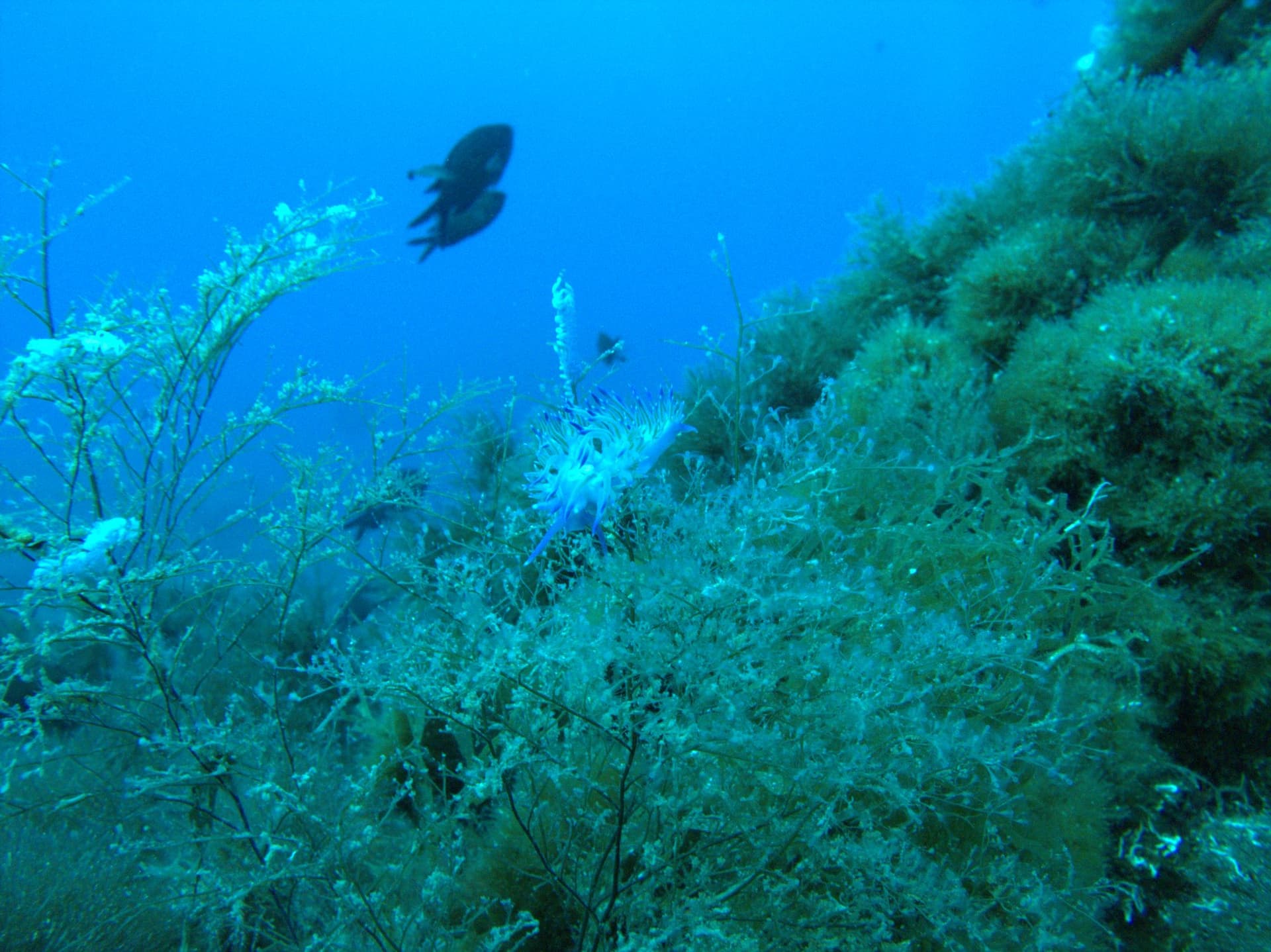

Piscis Diving
PADI 5-Star Dive Resort in Sant Feliu de Guixols with 27 years of operation, 12 dive sites, and a perfect 5.0 rating from over 1,000 reviews.
PADI5 services4 languages
Costa Brava bay led by the limestone tunnels at Port Salví, with easy reefs by the port and deeper walls offshore.
Last updated October 2026
The limestone at Port Salví has been worn into a run of tunnels, and they are why most divers book here. They sit at 12-27 m, their ceilings are covered in delicate filter-feeders, and the dive rewards slow, buoyancy-controlled passes. Entry is by a short zodiac run from the port or by a steep shore ramp at Eden Rock, and the full route is second level.
The bay holds the gentler half of the diving. El Jardín y la Red leads along a sand corridor to a rock shaped like a camel's head, then drops to a wall. La Llosa de Sant Feliu is a rock opposite the breakwater that ends in shallows where cleaner shrimp work on their clients. Les Planetes and the islet of S'Adolitx, south of Port Salví, round out the easy dives, and operators list seahorses at Les Planetes.
Deeper diving needs more training. Montilivi, an L-shaped wall riddled with holes at 20-40 m off Cala Giverola, takes a boat run and a second-level certificate, and El Amarrador, at 25-42 m, is rated advanced. Octopus, morays and congers are the regulars across the reefs, and eagle rays pass the Port Salví corridor and Montilivi.
The south-facing bay is sheltered from Tramontana and most Garbí winds, which is why centres along the coast send divers here when wind closes other Costa Brava entries. Cala Ametller, Punta de Garbí and Cala Vigatà form a municipal Bio-knowledge Marine Area run by the Town Council through Custòdia Marina agreements, and a 2008 proposal for a formal reserve at Cala del Vigatà and Punta de Garbí ended as a bathing zone only.
Piscis Diving, SubLimits and Varadero Dive are among the operators running guided dives from the town. Piscis works from Club Nàutic and reaches the tunnels by boat; Varadero sits on the beach near Hotel Eden Roc with direct shore access; SubLimits also runs dives from Tossa de Mar, Platja d'Aro and Palamós. Each centre sets its own dive prices.
The tunnels and the deep walls call for second level, while La Llosa, Les Planetes and S'Adolitx suit every level.
June to October is the comfortable window, with 22-25 C at the surface in summer; below the thermocline the water stays cooler, so plan exposure for the deepest point. Winter runs 13-15 C and is often the clearest water of the year. Opening off-season varies by shop: SubLimits advertises opening all year, and the safe course is to confirm a booking before you travel.
Girona-Costa Brava airport is the closest gateway, with Barcelona's airport also reachable by road.
A limestone coast whose dissolved rock has opened the tunnels at Port Salví, with rock, sand and posidonia meadows on the seabed around the bay.
The diving here splits into 3 zones:
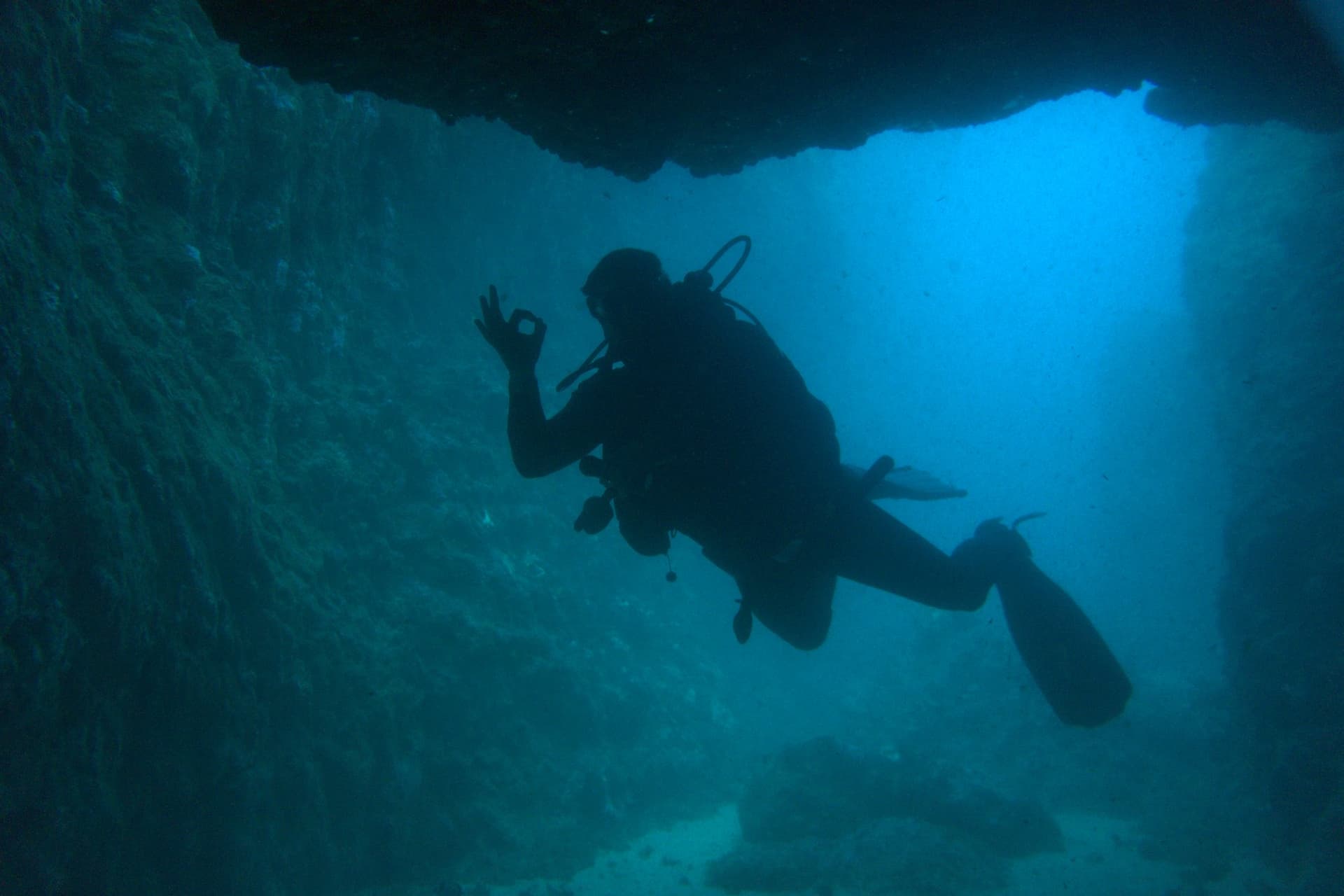
AOW divers wanting Costa Brava's signature multi-cave traverse with two underwater sculptures from a single Sant Feliu entry.
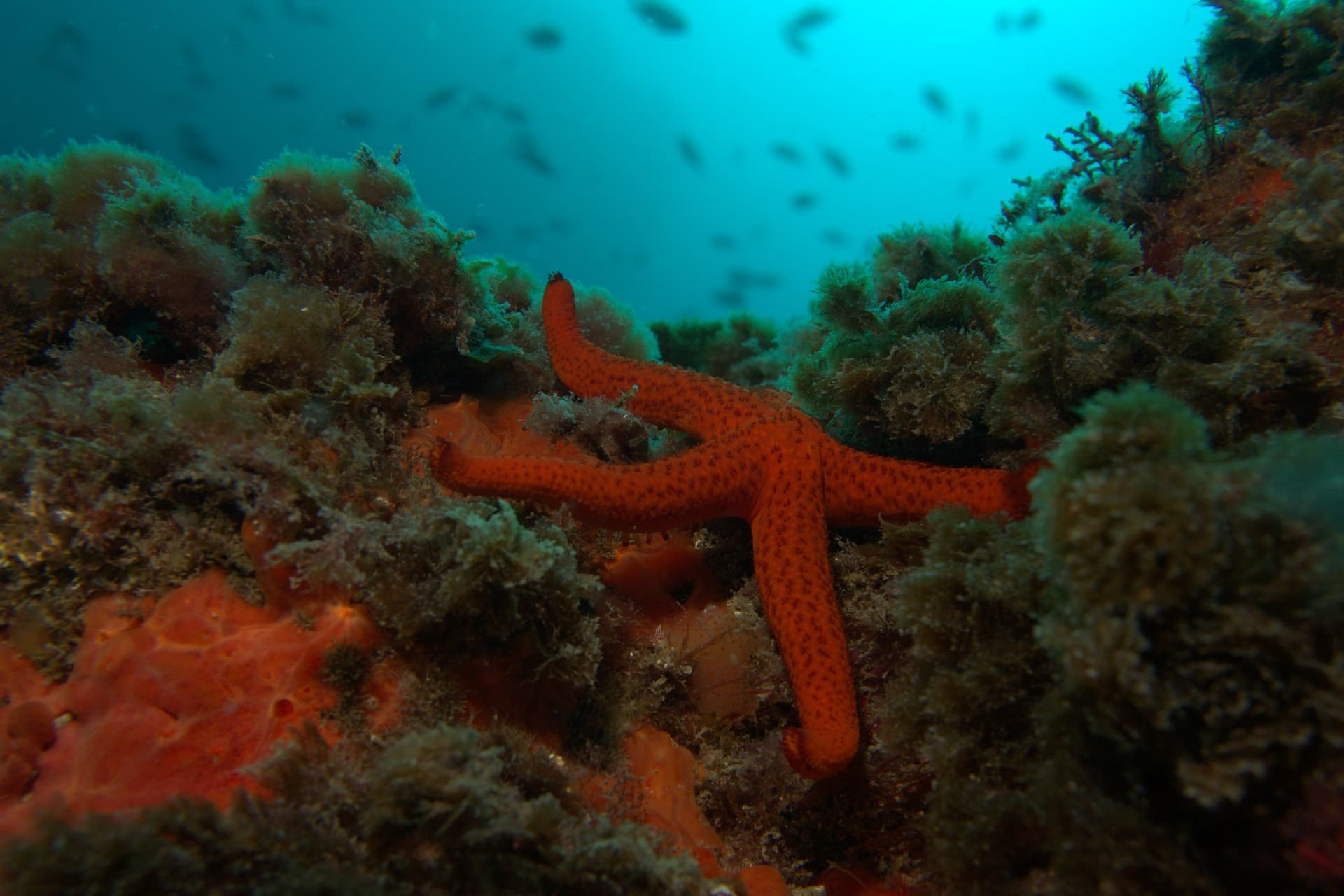
All-level groups wanting a low-pressure circumnavigation with a short bonus tunnel near Sant Feliu de Guixols.
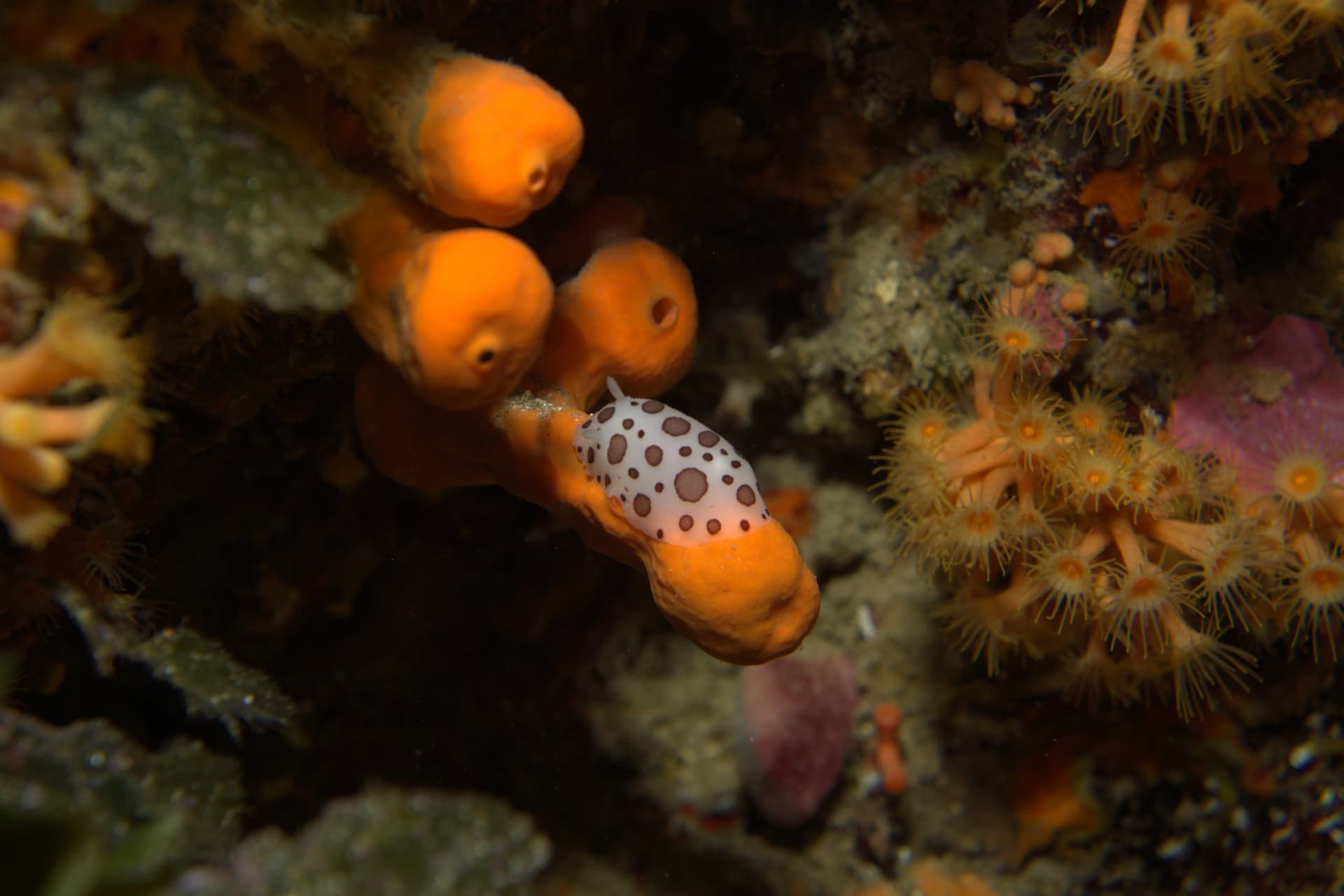
A yellow-anemone rock and a fishing net grown into the reef
All-level divers wanting a wind-sheltered Sant Feliu reef with macro cavities and a multilevel profile when SW Garbi shuts down exposed sites.
All-level divers wanting a sheltered, macro-rich reef close to Sant Feliu de Guixols when nearby exposed sites have current.
Book online or contact a centre that dives this area.
PADI 5-Star Dive Resort in Sant Feliu de Guixols with 27 years of operation, 12 dive sites, and a perfect 5.0 rating from over 1,000 reviews.

SSI Instructor Training Center in Sant Feliu de Guixols, open year-round, running boat dives and the full professional training pathway on the Costa Brava.
PADI 5-Star Dive Resort on Platja dels Canyerets in Rosamar, operating with a low web footprint but confirmed active in 2025.

Small SSI center on the Cala Gogo beachfront near Sant Antoni de Calonge, capping discover dives at two and courses at four, with the boat from Palamos.

PADI 5-Star IDC Center at Port Marina Palamós with technical, recreational, and freediving programs and daily boat trips to Ullastres and the Boreas wreck.
Dive center at Port Marina Palamós, 20+ years running, with a full published price list and DPV rental under owner Jordi.
Get in touch to add or claim your dive center listing on DiveCodex.
Upcoming trips published by dive centres in this area.
Availability is read from each centre's public calendar and refreshed daily. Last checked October 16. Confirm with the centre before travelling.
September and October pair warm water with clearing visibility and fewer divers. Winter water is often the clearest of the year; eastern Llevant storms close the east-facing headlands.
What can go wrong here, and what divers do about it. Conditions change - take the briefing from the operator on the day.
Decree on dive centresGeneralitat page for dive centresChecked: Oct 2026
National rules also apply: Rules and permits in Spain
Piscis markets the Port Salví complex as six tunnels, while other accounts describe three caves, so the number you hear depends on who is counting and where the route starts and ends. Ask the guide which passages the planned route covers.
Yes, from the Eden Rock beach near Hotel Eden Roc, where Varadero Dive has direct access. The entry is a frog-jump from a steep ramp and the exit is up a fixed rope. Piscis runs a boat from Club Nàutic that reaches the tunnels in about 15 minutes and skips the ramp.
Night brings crustaceans and swimming congers and none of the morning traffic. The catch is the exit from the third tunnel: a north current can stretch the swim back, so the return is flown on compass with air in hand. Piscis also lists Les Planetes for night diving.
The water is diveable and often at its clearest. Opening is the uncertain part: SubLimits advertises that it is open all year, but off-season availability differs from shop to shop. Confirm with the centre before you travel, and ask which boat runs are scheduled.
The full Port Salví tunnel route and Montilivi are second level, or Advanced Open Water. Piscis rates El Amarrador advanced and describes it as the deepest dive in its catalogue. The easy reefs by the breakwater suit every level.
Piscis Diving has worked from Club Nàutic since 1999 and runs the tunnels by boat. Varadero Dive sits on the beach by Hotel Eden Roc, advertises tunnel and cave visits, and offers SSI, CMAS and TDI training. SubLimits, near the port, also dives from Tossa de Mar, Platja d'Aro and Palamós.
Operators list seahorses at Les Planetes, with yellow and red ones noted on the walls at Llosa de Platja d'Aro. They are residents of the reef, not a scheduled sighting, so treat them as a bonus on the dive.
Also known as: San Feliu de Guíxols
Log your dives - notes, photos, conditions and the marine life you saw - and share them as one public diver profile. What you share helps the next diver, too.
Log every detail
Depth, duration, conditions, gear, buddy, notes — all in one place. Import from Suunto and other dive computers.
Track marine life
Record species sightings on each dive. Build a personal catalogue of everything you've seen underwater.
Your public dive profile
Share your dive history, stats, and experiences with a profile page you control. Show the world where you've been.