

Arrecifal
SSI dive center in La Restinga, El Hierro, running daily boat dives in the Mar de las Calmas Marine Reserve.
SSI4 languages
Also known as: El Dezierto, The Desert
Volcanic sand flat at El Hierro's western reserve edge, home to one of Europe's largest garden eel colonies beside reef walls and a small underwater crater.
Last updated April 2026
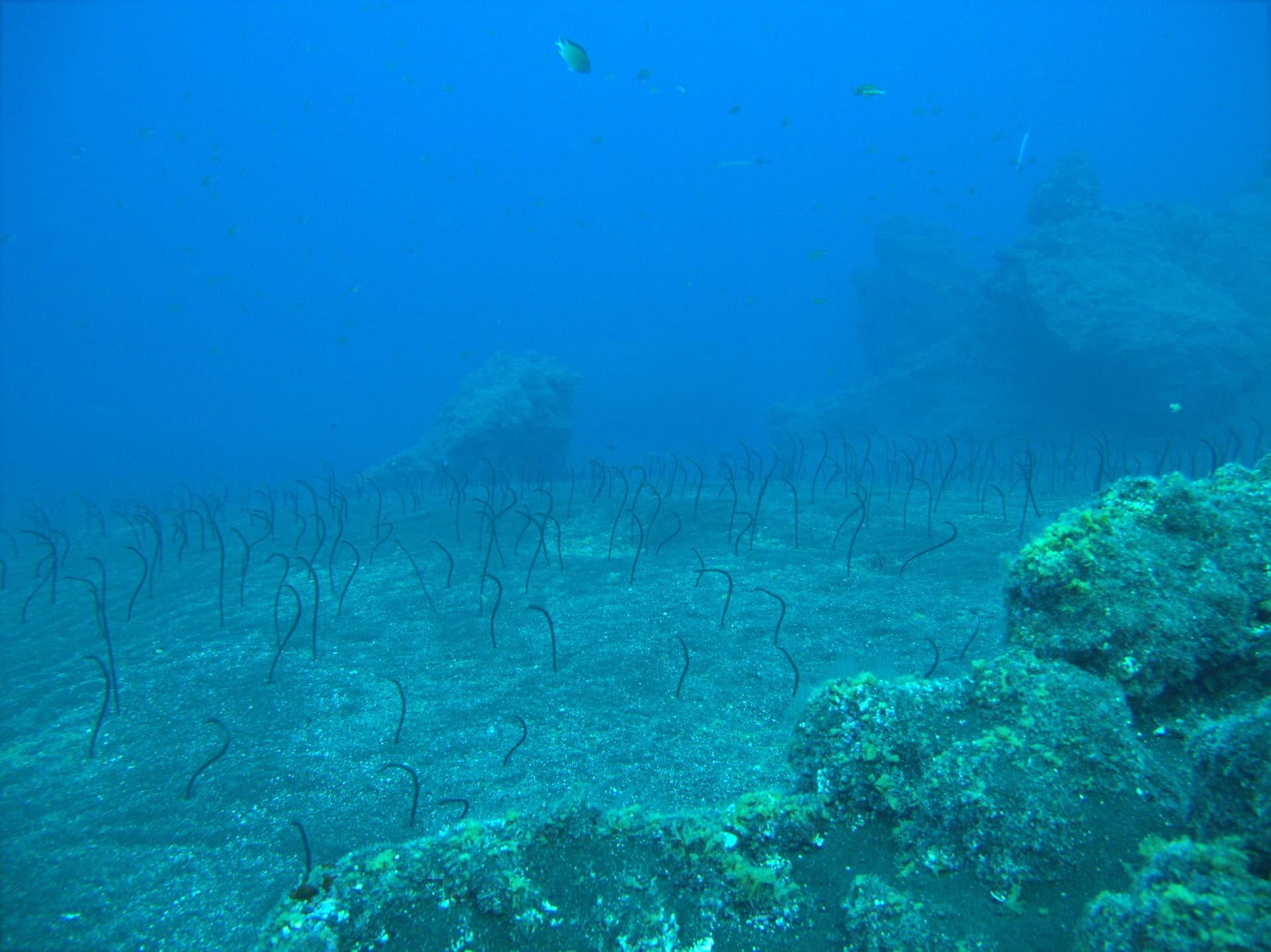
The first section crosses a shallow rocky area fringed with algae before dropping to a reef edge at roughly ten metres, where crevices, small arches, and volcanic pockets shelter moray eels and crustaceans. Beyond this edge, the terrain opens into a broad sand flat — and here the garden eels appear. Thousands of slender bodies sway in unison from the black volcanic sand. The colony covers the flat from edge to edge. Approach slowly; the colony retracts at the first sign of disturbance. Past the eel field, a circular stone reef and small underwater crater add structural relief, and groupers of notable size shadow divers through this section with an almost companionable persistence. For those with the certification and gas supply, a second reef edge at the far end descends steeply past 30 metres into deeper water where jacks and tuna hunt along the wall.
El Hierro's other signature dives are vertical: walls, pinnacles, lava tubes. El Desierto is horizontal. A flat expanse of volcanic black sand defines the site, and the garden eel colony across it is what no other reserve site replicates. Thousands of slender bodies rise in unison, forming one of the largest documented concentrations in European waters, present on every dive regardless of season. The contrast between the apparently barren sand flat and the density of life it supports gives the site both its name and its character. It also sits on the reserve's western passage for devil rays — occasional large visitors that add open-water scale to a dive that otherwise stays close to the bottom.
Garden eels are the main event, but they punish impatience — fin kicks near the colony send them underground in seconds. Neutral buoyancy and a slow, horizontal approach are essential for both observation and photography. The sand flat itself is not visually dramatic until the eels emerge, so trust the route and give it time. Beyond the eel field, watch your depth at the second reef edge where the wall drops steeply past 40 metres; agree on a maximum depth with your buddy before reaching it. The site sits inside the sheltered Mar de las Calmas. Current is mild and conditions are consistently manageable.
What makes this dive site stand out.
Thousands of Heteroconger longissimus rising from volcanic black sand, confirmed by multiple sources.
Shallow arch and crevice zone at 10m feeds into a sandy flat at 25m, with an optional deeper wall at 30-40m.
Large dusky groupers throughout. Some stay with divers for extended periods.
Mar de las Calmas shelter keeps currents mild and weather cancellations rare.
27.6921°N, 18.0624°W
Diveable all year inside the sheltered Mar de las Calmas. October recommended for calmer alisio winds and best visibility.
Verify current rates with your dive centre in La Restinga.
The shallow sandy area with garden eels is accessible to all levels. The deeper reef edge beyond 30m requires AOW.
Summary
Easy on the shallow sand flat. Moderate overall due to the deeper reef edge where walls drop beyond 40m. Centres adjust the profile to the group.
Safety considerations
What can go wrong here, and what divers do about it. Conditions change - take the briefing from the operator on the day.
Book a guided dive at this site.
SSI dive center in La Restinga, El Hierro, running daily boat dives in the Mar de las Calmas Marine Reserve.

SSI center in La Restinga, El Hierro, highly rated by divers, with 24+ volcanic sites, a 30m depth cap, and the top recommendation on Spanish dive forums.

Dive centre in La Restinga, El Hierro, operating since 1978 and certified under PADI, FEDAS/CMAS and ESA, with a stable, named team and bundled trip logistics.
Get in touch to add or claim your dive center listing on DiveCodex.
Dive centres in the Canary Islands check that you hold the certification the dive needs.
Multiple sources describe it as one of the largest concentrations in Europe, possibly the largest in the Canary Islands. Thousands of individual eels extend from the black volcanic sand across a wide area. The colony is the site's defining feature and its primary reason for visiting.
Approach very slowly and low to the sand. Garden eels retract into their burrows when they sense vibration or movement, so patience is essential. Settle into position and wait for them to re-emerge rather than swimming directly toward the colony. A macro or medium zoom lens works best.
The main sandy area with garden eels sits at 10-15m with mild current, making it accessible to Open Water divers. The deeper reef edge beyond 30m is where the dive becomes more demanding and requires AOW certification. Centres tailor the profile to the group.
A distinctive volcanic formation where a ring of rock encloses a section of the seabed. It sits among the reef features at the site and hosts groupers and moray eels in its crevices. Combined with a small underwater crater nearby, it gives the dive more topographical interest than the sandy bottom alone suggests.
Devil rays are described as frequent passing visitors at this site, drawn along the western edge of the reserve. Sightings depend on current and season and are never guaranteed, but El Desierto is considered one of the more likely encounter points within the reserve.
Log your dives - notes, photos, conditions and the marine life you saw - and share them as one public diver profile. What you share helps the next diver, too.
Log every detail
Depth, duration, conditions, gear, buddy, notes — all in one place. Import from Suunto and other dive computers.
Track marine life
Record species sightings on each dive. Build a personal catalogue of everything you've seen underwater.
Your public dive profile
Share your dive history, stats, and experiences with a profile page you control. Show the world where you've been.