

Arrecifal
SSI dive center in La Restinga, El Hierro, running daily boat dives in the Mar de las Calmas Marine Reserve.
SSI4 languages
Lava walls, arches and pinnacles on the youngest Canary Island, dived from La Restinga inside a marine reserve, with El Bajón as the big dive.
Last updated October 2026
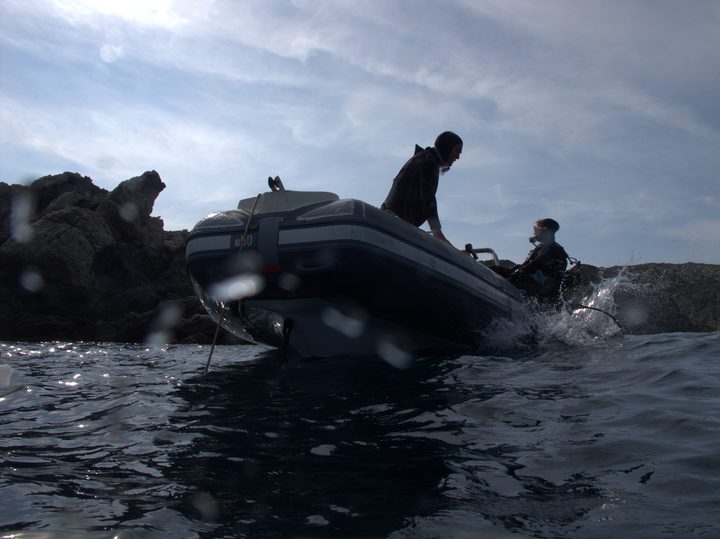
El Hierro is the youngest of the Canary Islands, and its seabed is still mostly raw lava. Within 300 m of the coast the bottom falls past 200 m, and the lava along the way has set into walls, arches, tunnels and pinnacles, with black coral on the deeper faces. Reef-building coral does not grow here. Nearly everything is dived from La Restinga, a one-street fishing village at the southern tip, on zodiacs that reach most sites in under 15 minutes.
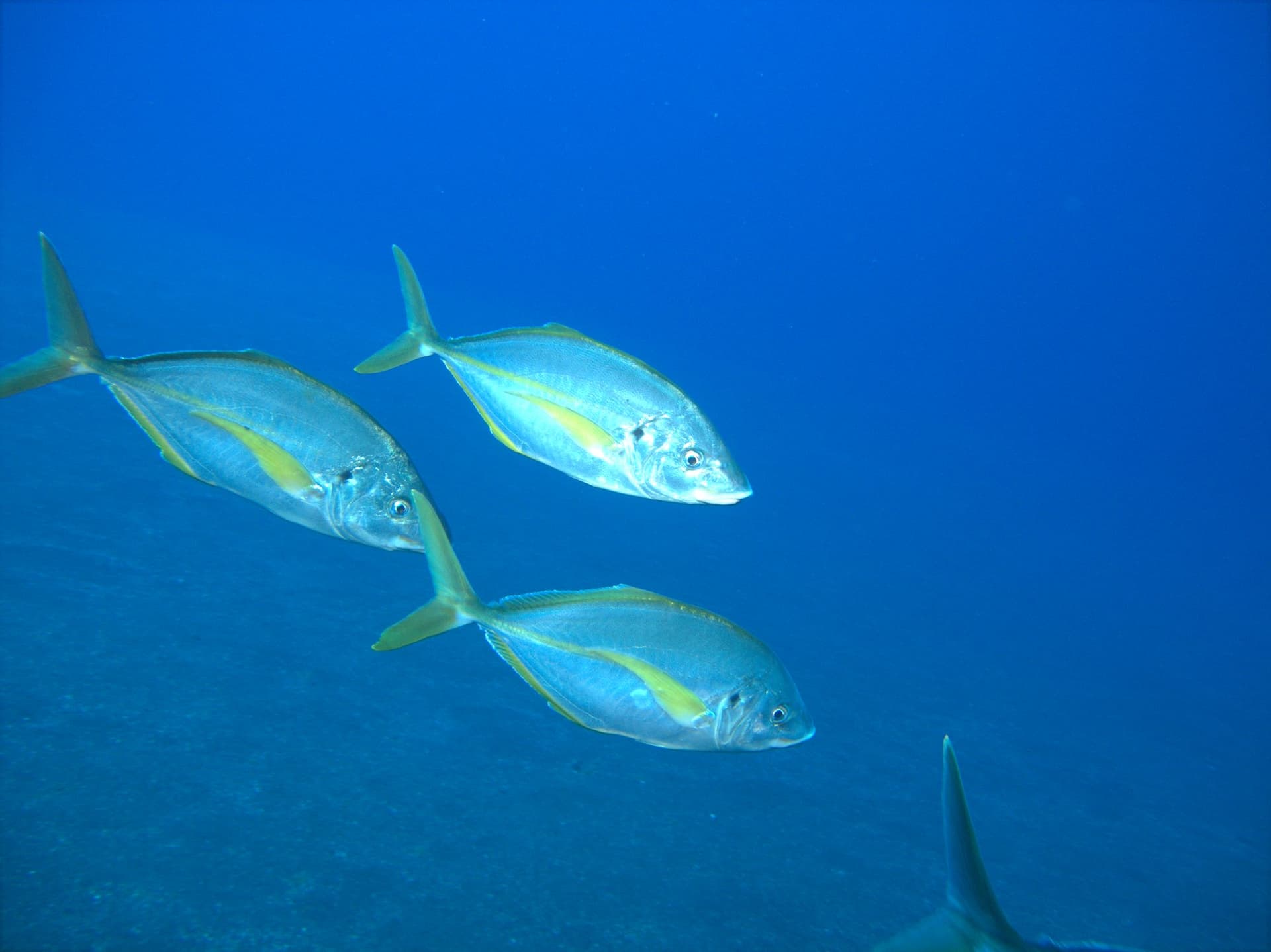
Those dives sit mostly inside the Reserva Marina de La Restinga, created in January 1996 along the sheltered southwest coast known as Mar de las Calmas; official figures for its surface range from 750 to 1,180 ha. El Bajón is the dive people fly in for: a twin-peaked volcano rising from sand at about 100 m to summits 6 to 9 m below the surface, with vertical walls and overhangs where amberjack, dusky grouper and barracuda gather in the current. Divers report current on nearly every dive there, and it runs only when swell, wind and buoy space allow. Baja Rosario is a shallow shoal rising to 7 m, where a smalltooth sand tiger shark was reported in August 2025 after about six years without a record. The inner reserve then reads as a tour of lava forms: El Saltu's small caves and light-ray tunnel, La Cueva del Diablo's skylit cavern with angel sharks on the sand outside, El Desierto's drop from sand to twisted lava, Punta Restinga's arches and shelves with several route choices.
When the Alisios drop, the exposed east coast opens: Baja Bocarones, a volcanic tower with angel sharks and rays; El Río, a submerged lava channel; Roque de Bonanza, a dyke you can swim around. Life outside the headline sites is steady but not dense, and divers expecting tropical numbers are often disappointed. What holds up is relief, visibility that is commonly over 30 m, small groups and almost no crowds. Repeat visitors rate the night dive from the La Restinga pier, at 0 to 12 m with rays, cuttlefish, sleeping turtles and Spanish dancers, among the best dives on the island.
Fly to Tenerife Norte or Gran Canaria and connect to El Hierro airport in about 30 minutes, or take the ferry from Los Cristianos on Tenerife, about two and a half hours. La Restinga is roughly 35 km and 50 minutes by road from the airport, and a rental car is the norm because public transport is thin. The road across the island climbs to about 1,500 m, so leave a safety margin after your last dive before crossing it, follow your computer's altitude guidance and the centre's advice, and sleep in La Restinga. The village has no hotels, only apartments, around 40 to 50 EUR a night for two, and they fill in high season.
Diving inside the reserve needs authorisation from MAPA or the Canary Islands government, and happens only at marked points from a support boat. A fully protected reserva integral off Bahía de Naos, between Roque de Naos and La Herradura beach and marked by plastic buoys, is closed to diving; scuba is allowed only outside it. Centres describe a limit of 12 divers per buoy, guides included, and groups of four to eight are usual. A typical day is two morning dives from about 08:30, with afternoon and night dives on request. Not every centre can run El Bajón on a given day, so say you want it when you book and allow several days for a window.
Easy sites such as La Cueva del Diablo and El Rincón suit newer divers; El Bajón, El Veril and El Río call for advanced skills. October is the favourite month, and June to October is the main season. Days off pair well with the volcanology centre, the Charco Azul pools and the El Golfo valley.
The youngest of the Canary Islands, built of lava flows that stand underwater as walls, arches, tunnels and pinnacles; the shelf is narrow, with the bottom past 200 m within 300 m of shore.
The diving here splits into 2 zones:
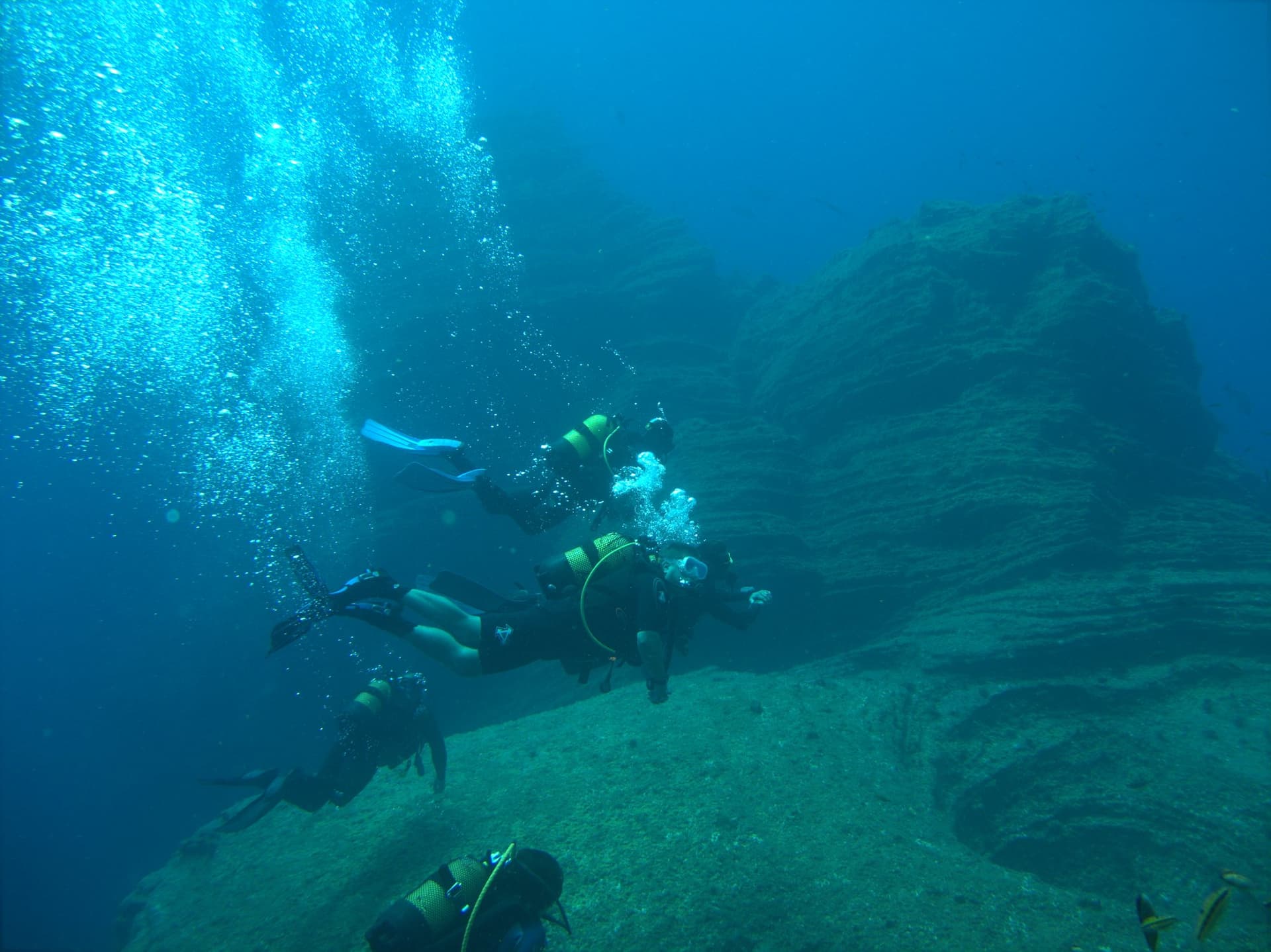
Advanced divers with current experience seeking El Hierro's signature dive, with vertical walls, dense fish aggregations, and rare pelagic encounters
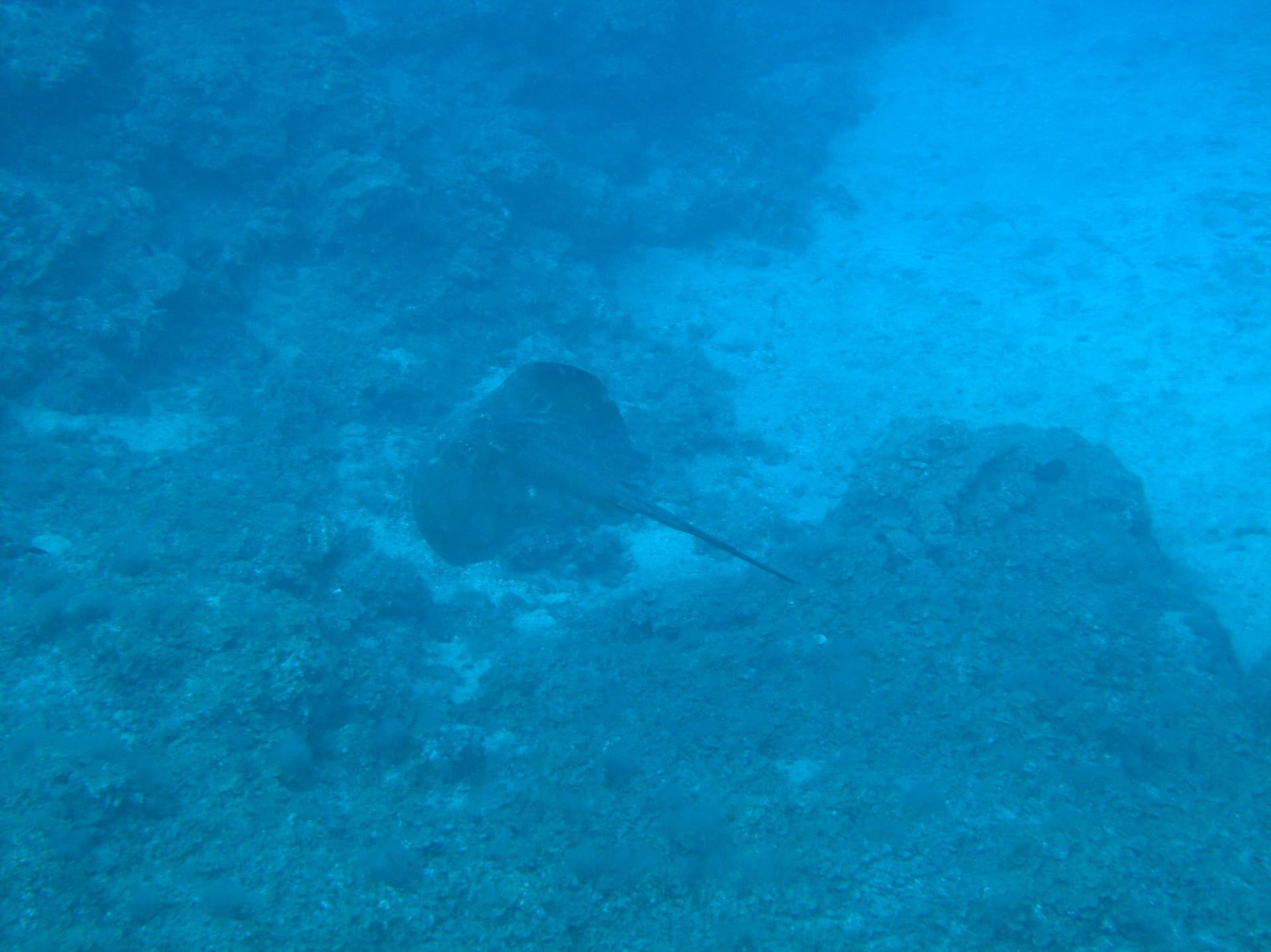
Shallow volcanic hollow and flat summit in the Mar de las Calmas reserve
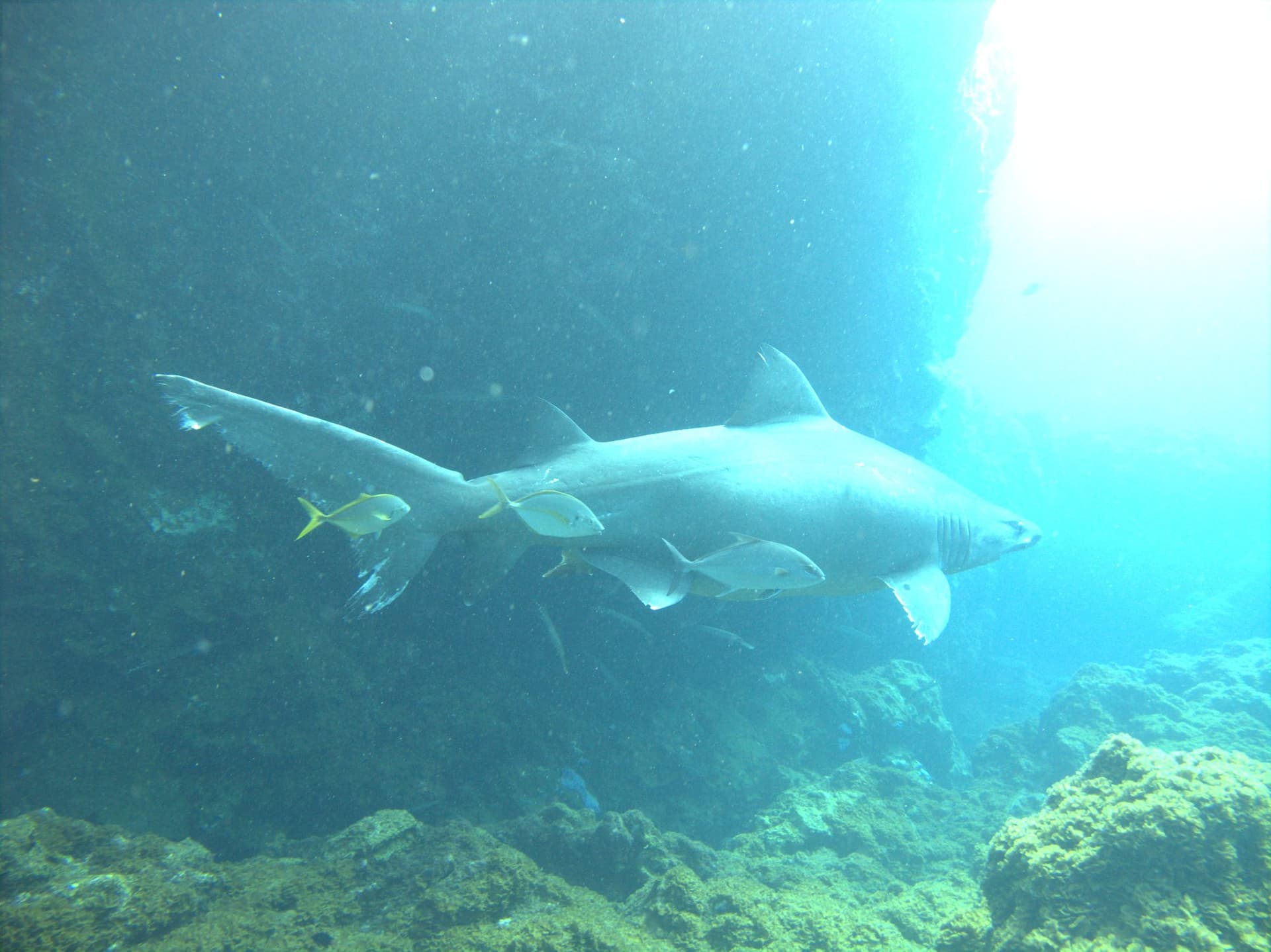
Underwater photographers and OW divers drawn to volcanic topography with natural light effects and cave-like features without technical demands
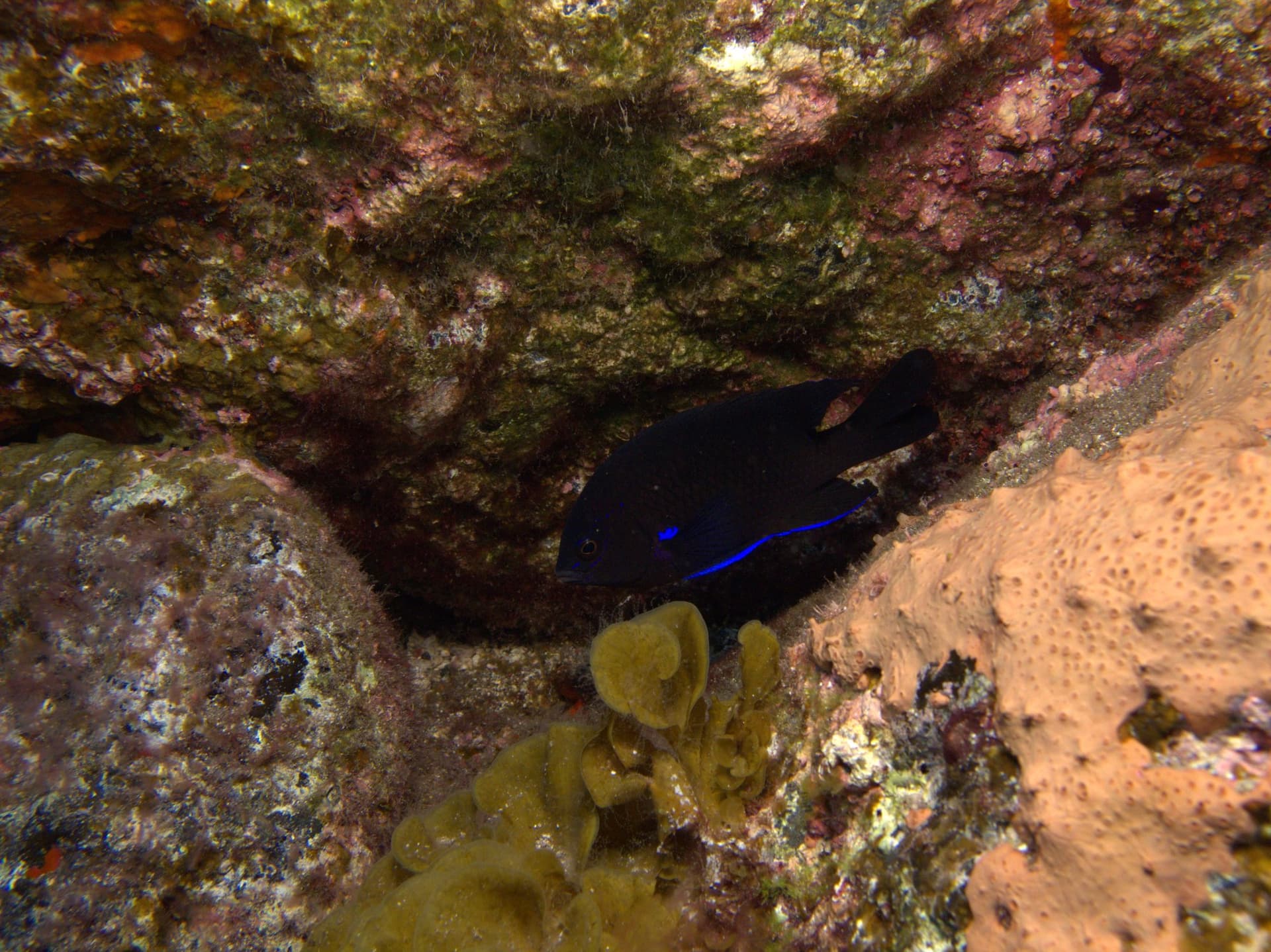
OW and AOW divers based in La Restinga seeking a multi-route site with dramatic volcanic terrain and the option to push to a 40m black coral arch
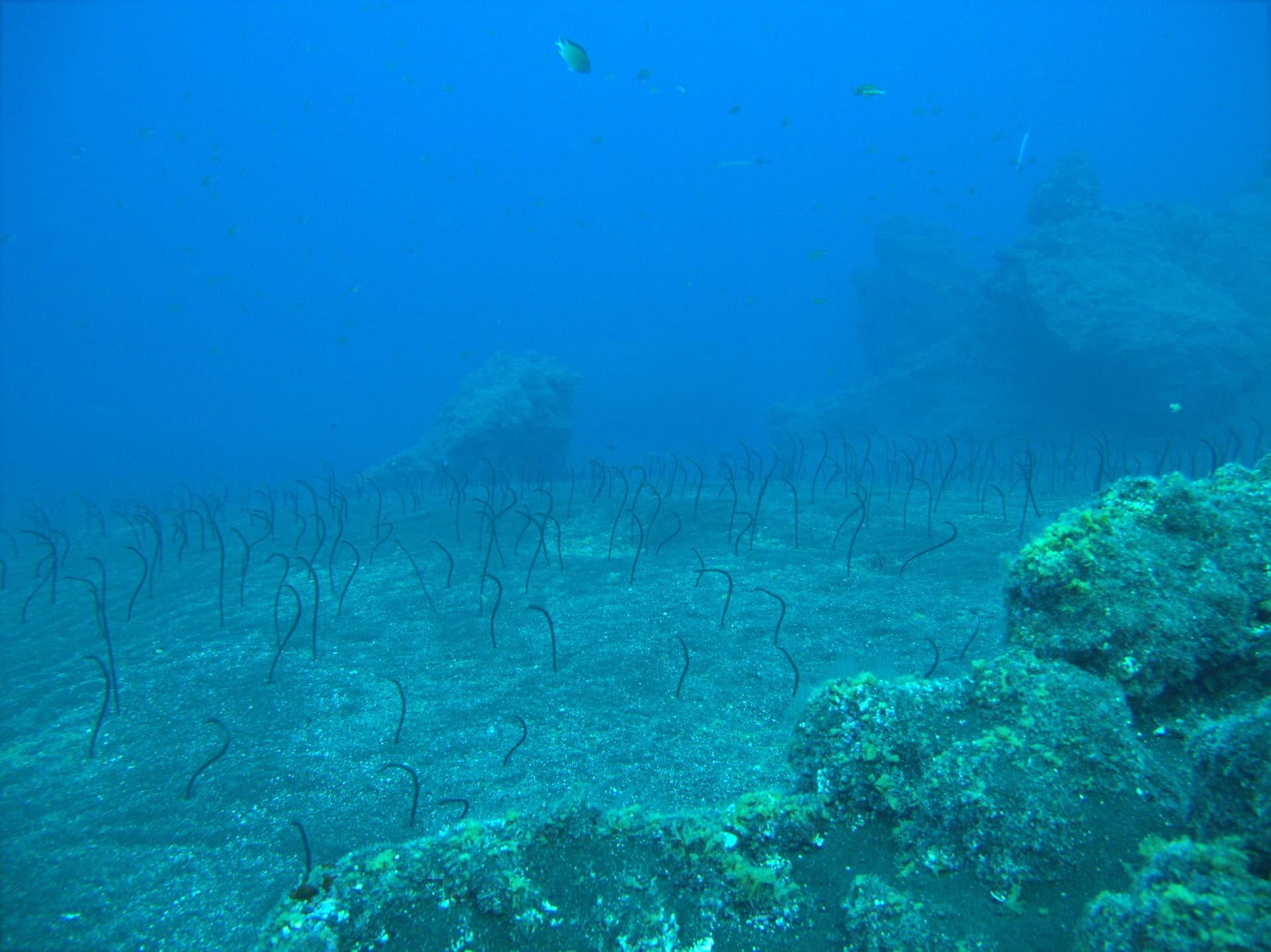
OW divers and underwater photographers seeking a calm, accessible reserve dive with Europe's most spectacular garden eel colony
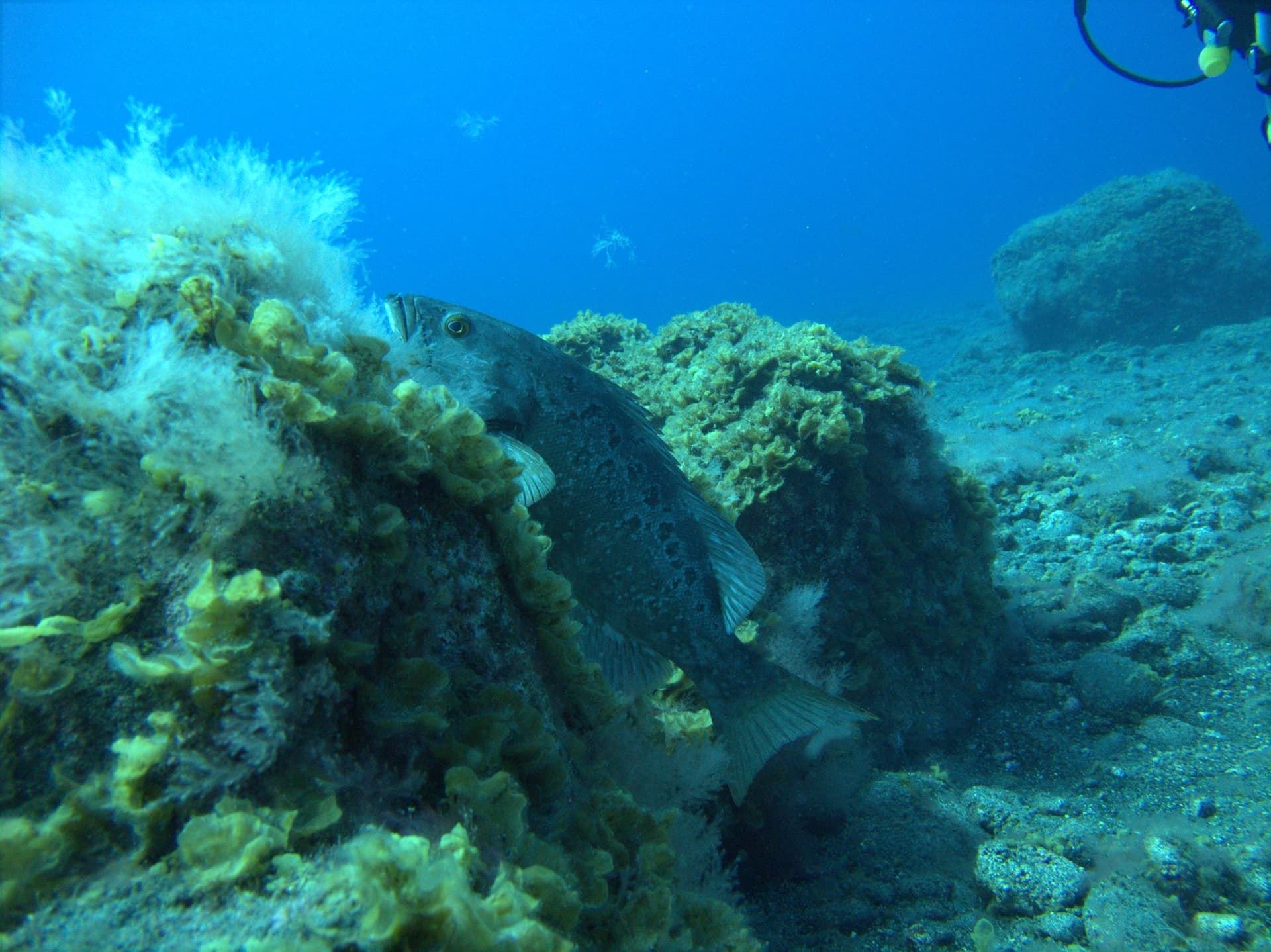
Newly certified divers and photographers wanting a dramatic skylit cavern on El Hierro without technical demands
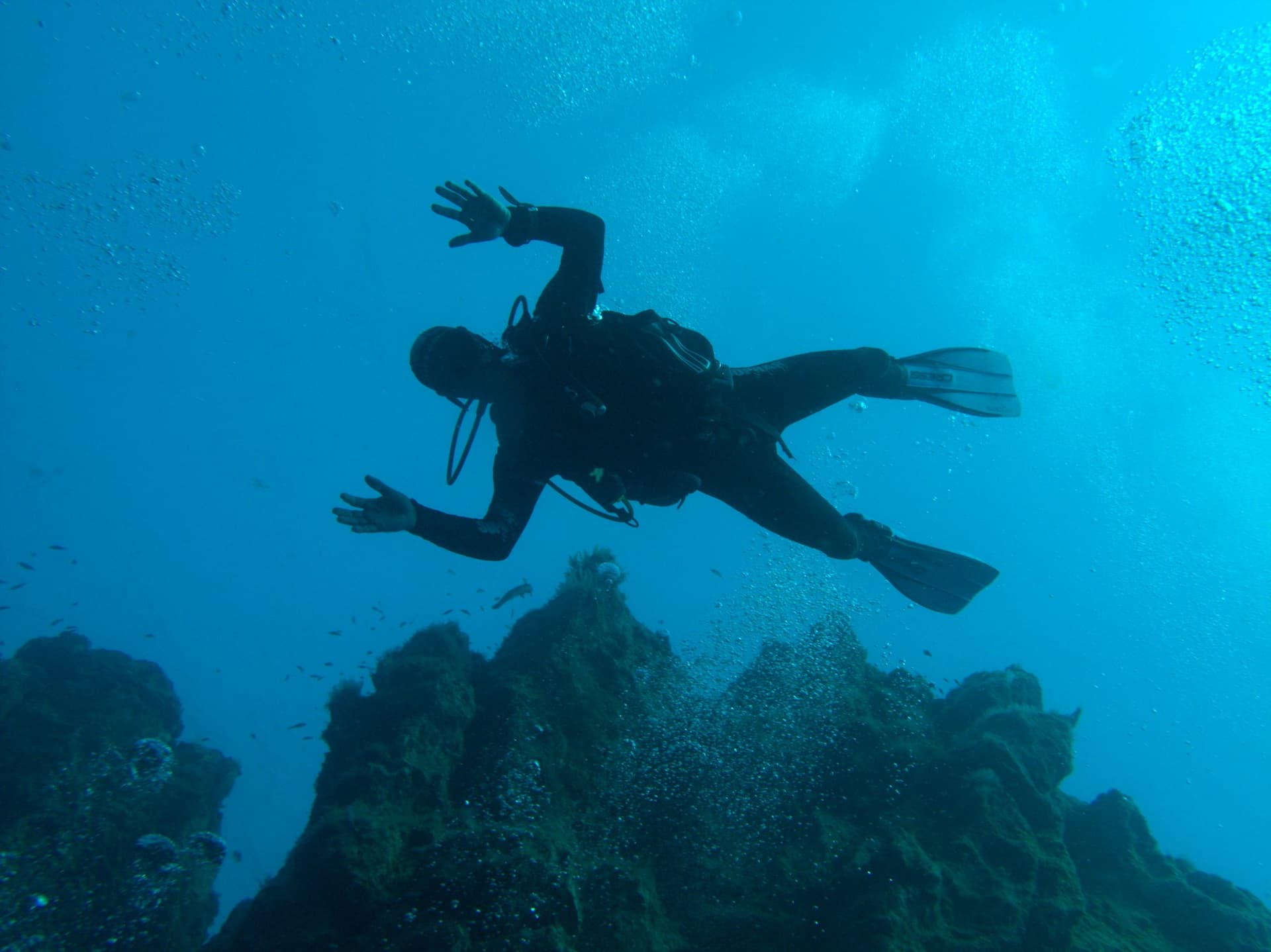
AOW divers with solid buoyancy control seeking a pure wall dive and open-water pelagic encounters in a protected Canary Islands reserve
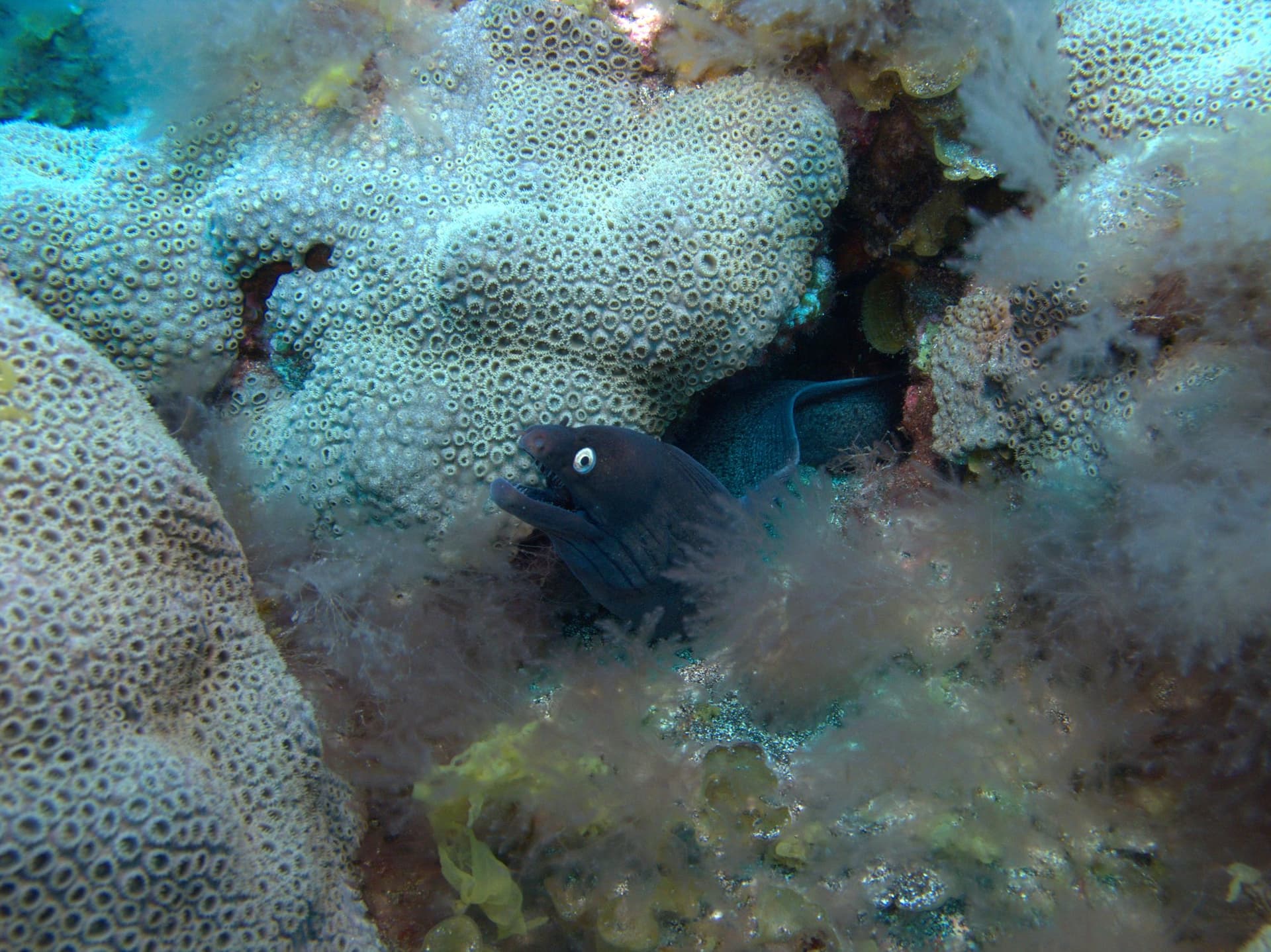
Open Water divers who want a geological dive outside the main reserve, with volcanic channels, endemic lobsters, and a profile accessible from 5 to 20m
A vertical volcanic tower in open blue water, dived when the wind allows
Book online or contact a centre that dives this area.
SSI dive center in La Restinga, El Hierro, running daily boat dives in the Mar de las Calmas Marine Reserve.

SSI center in La Restinga, El Hierro, highly rated by divers, with 24+ volcanic sites, a 30m depth cap, and the top recommendation on Spanish dive forums.

Dive centre in La Restinga, El Hierro, operating since 1978 and certified under PADI, FEDAS/CMAS and ESA, with a stable, named team and bundled trip logistics.
Francophone owner-run dive centre in La Restinga, El Hierro. Triple eco-certified, six divers per zodiac, top-rated across both major review platforms.
Get in touch to add or claim your dive center listing on DiveCodex.
The southwest coast is sheltered from the Alisios, while the east coast dives only when the trade wind drops. December to March brings colder water, variable swell, thinner flight and ferry schedules and, at times, poor visibility.
What can go wrong here, and what divers do about it. Conditions change - take the briefing from the operator on the day.
Marine reserve
Permits and how to apply (ministry)Diving rules in the reserve (BOE)Reserve establishing order (BOE)Checked: Oct 2026
Official decree on dive centresDive-centre authorisation procedureCompiled decree PDF with annexesChecked: Oct 2026
National rules also apply: Rules and permits in Spain
It is a proposal. The Spanish Cabinet approved on 30 July 2024 the plan to declare Spain's first fully marine national park around Mar de las Calmas, protecting about 24,000 hectares, and the draft law went to public hearing from 2 June to 2 July 2025. Until Congress passes the law, the existing marine reserve and its diving rules are what a visiting diver deals with. Check with your centre for any change before you travel.
Three or four diving days is the floor, and five or more lets you cover the reserve and still catch an east-coast window. Travel from the mainland takes most of a day each way, and El Bajón is run only when swell, wind, current and buoy space allow, so a short stay can end without it. Many divers pair the island with a stay on Tenerife.
October is the month divers name most often: warm water, calm seas and clear blue. The June to October window is the busy season. Winter dives are possible, but divers report water around 17 to 20 C, variable swell, patchy visibility and fewer flights and ferries, and some divers who saw both seasons found March a pale shadow of October. A thicker suit or a drysuit with a hood is the sensible winter choice.
It works against you. The road across the island climbs to about 1,500 m, and driving it soon after a dive adds altitude exposure on top of your nitrogen load. Divers who know the island recommend sleeping in La Restinga, where every centre is based and the sites are minutes from the harbour. Rooms are apartments, there are no hotels in the village, and centres will often help find one.
No. The submarine eruption of October 2011 built a seamount off La Restinga whose summit sits about 89 m down, beyond recreational limits. The eruption ran for roughly six months and La Restinga was evacuated during some phases. Divers' interest now centres on how the surrounding waters recovered; several local operators say marine life has multiplied since.
Parts of it are. La Cueva del Diablo (5 to 17 m) and El Rincón (0 to 20 m, along the harbour breakwater) are easy, and the Mar de las Calmas is sheltered from the trade winds. El Bajón, El Veril and El Río are advanced because of depth and current. Tell the centre your level so it can match you to the day's sites.
It is the smalltooth sand tiger shark, Odontaspis ferox, a deep-water species. A specimen was reported again in August 2025 at the Baja Rosario and El Saltu dive points after about six years without a record, which makes it a bonus to hope for and not something to plan a trip around. Ask the centre how it briefs encounters with the animal.
Opinions split. El Bajón and the harbour night dive draw consistent praise. Several experienced divers found the rest of the reserve more modest than the island's reputation, especially when the trade winds shut the east coast and the same sites repeat, and a few expected tropical density and did not get it. Divers who go for the volcanic relief, visibility and quiet usually leave satisfied.
Also known as: Hierro, Isla del Meridiano
Log your dives - notes, photos, conditions and the marine life you saw - and share them as one public diver profile. What you share helps the next diver, too.
Log every detail
Depth, duration, conditions, gear, buddy, notes — all in one place. Import from Suunto and other dive computers.
Track marine life
Record species sightings on each dive. Build a personal catalogue of everything you've seen underwater.
Your public dive profile
Share your dive history, stats, and experiences with a profile page you control. Show the world where you've been.