El Malag
Deep dive site near Hurghada.
The dive
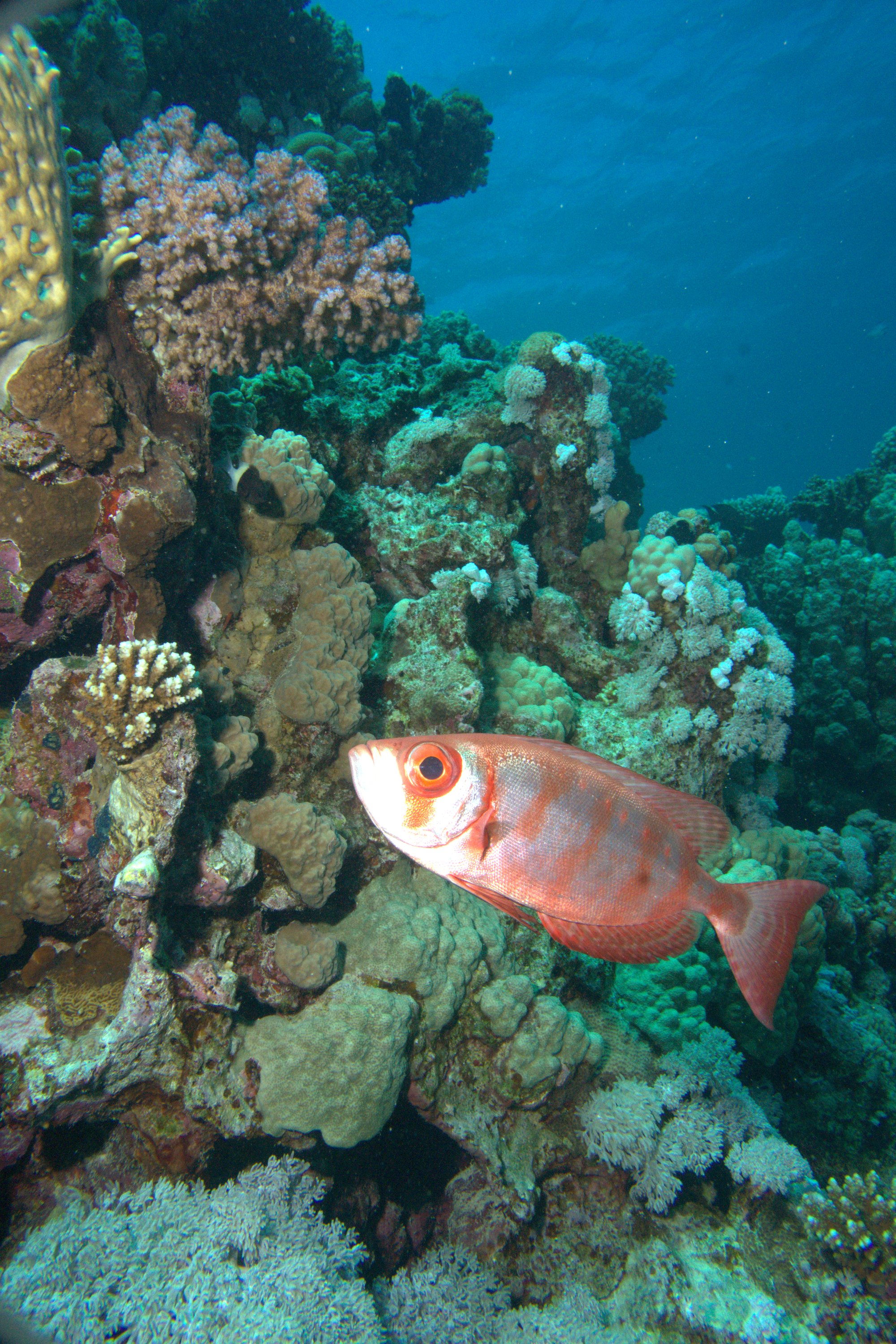
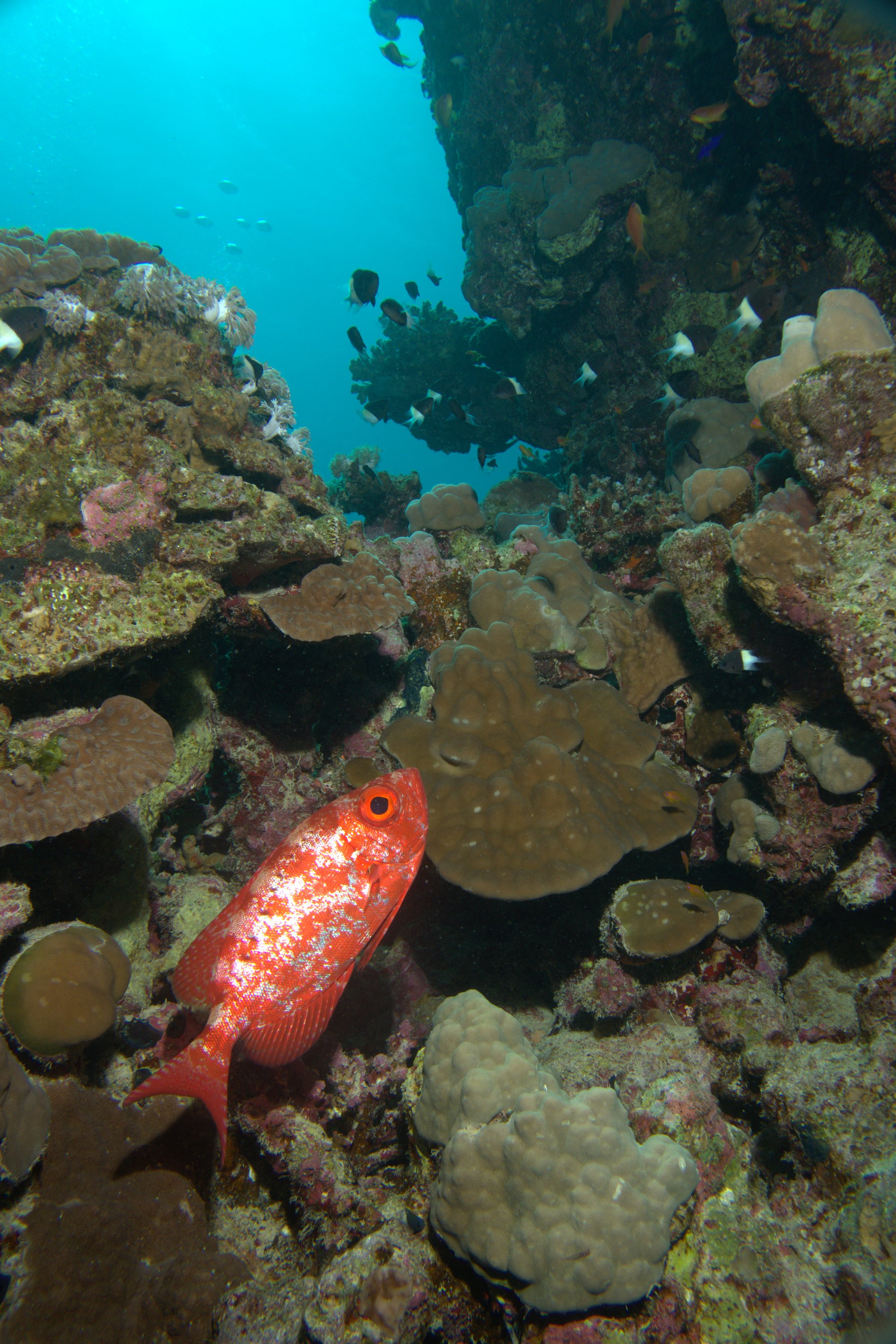
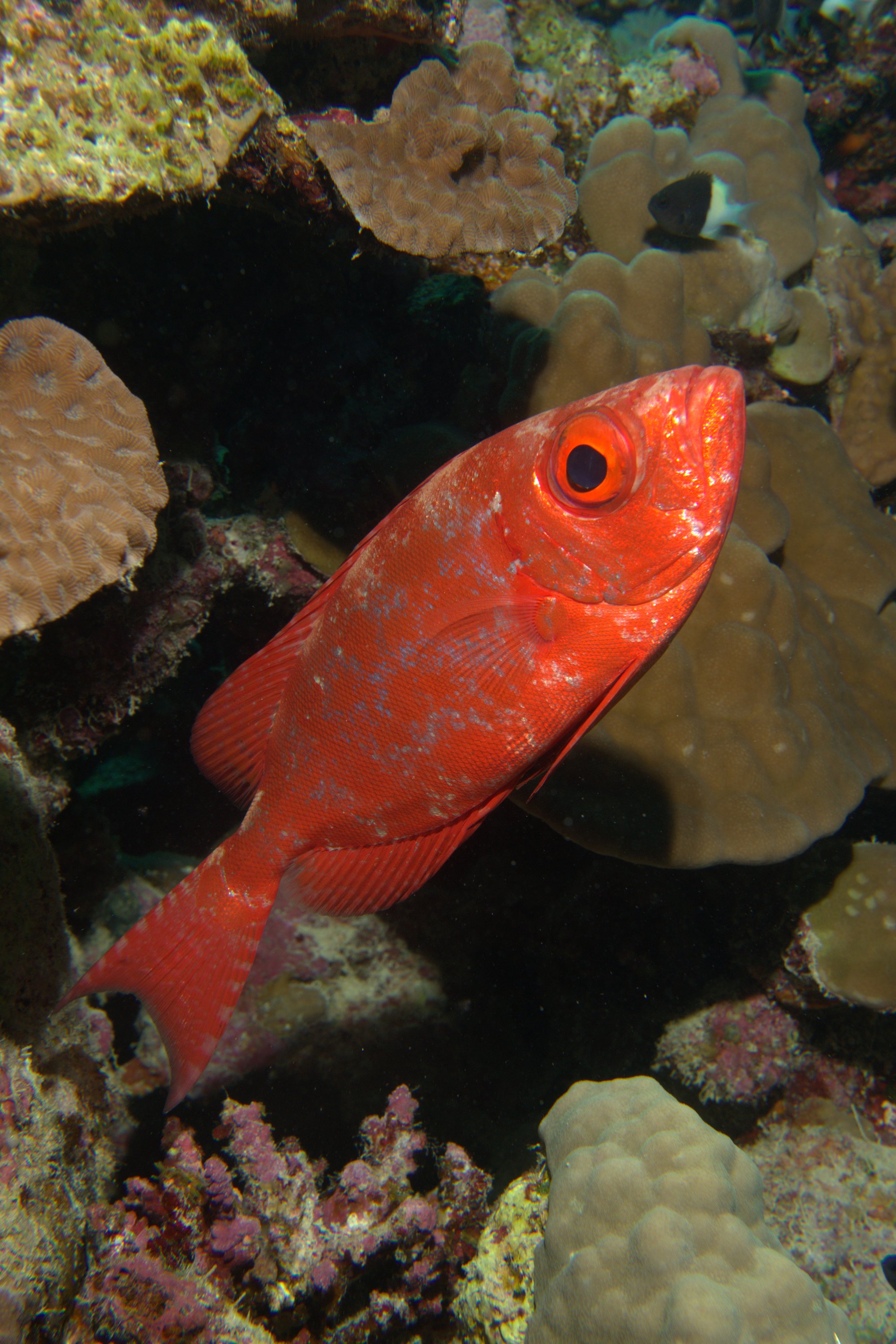
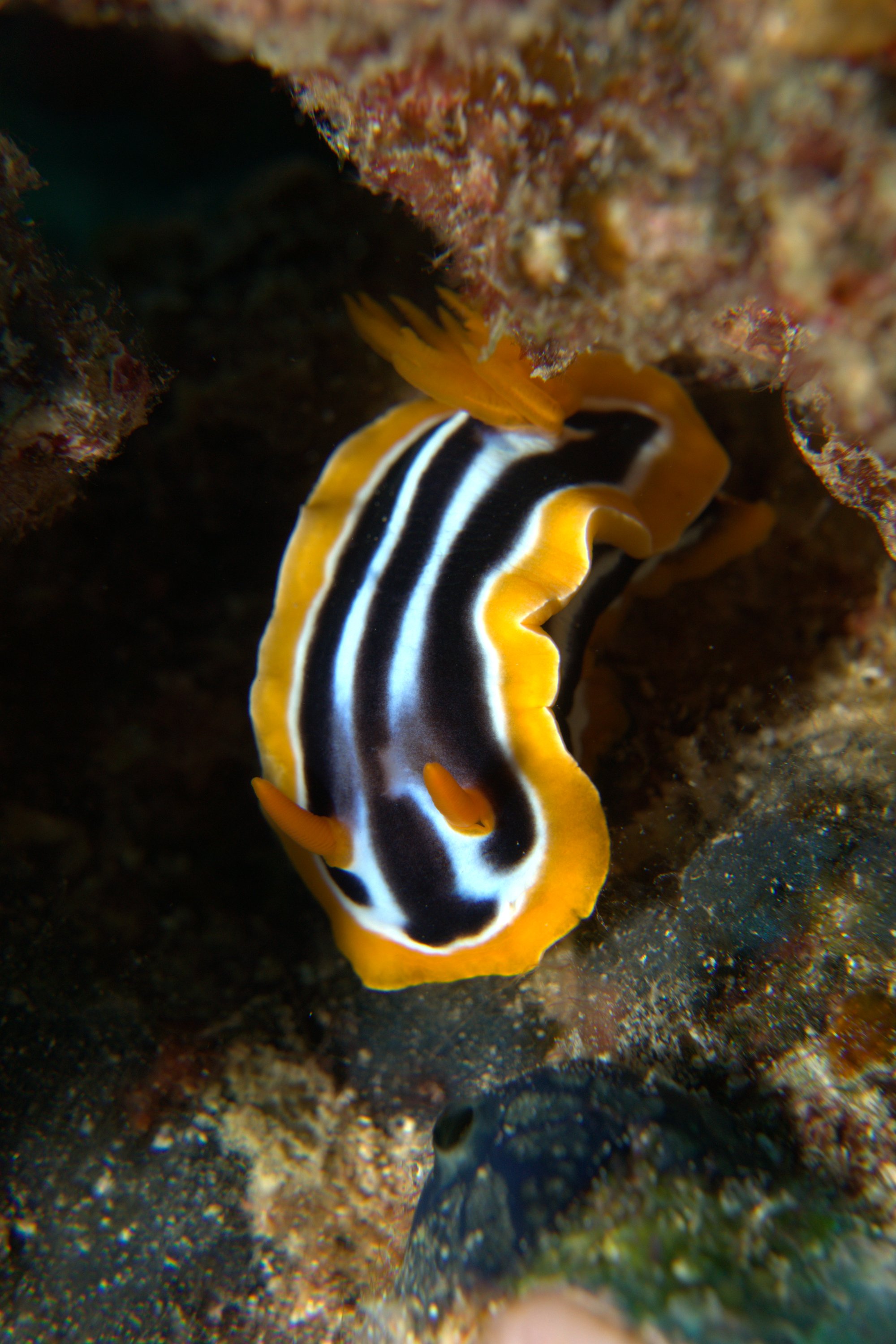
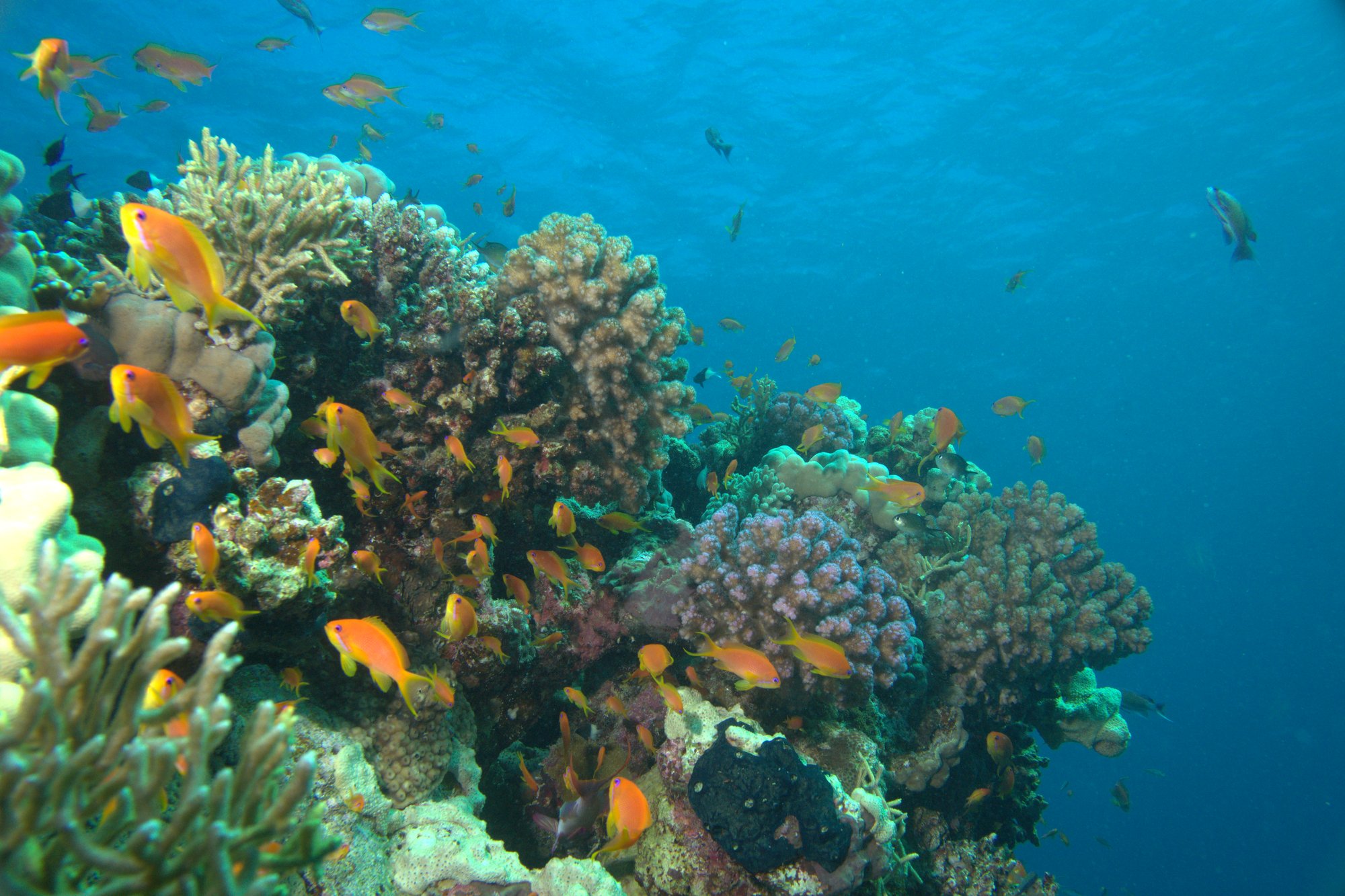
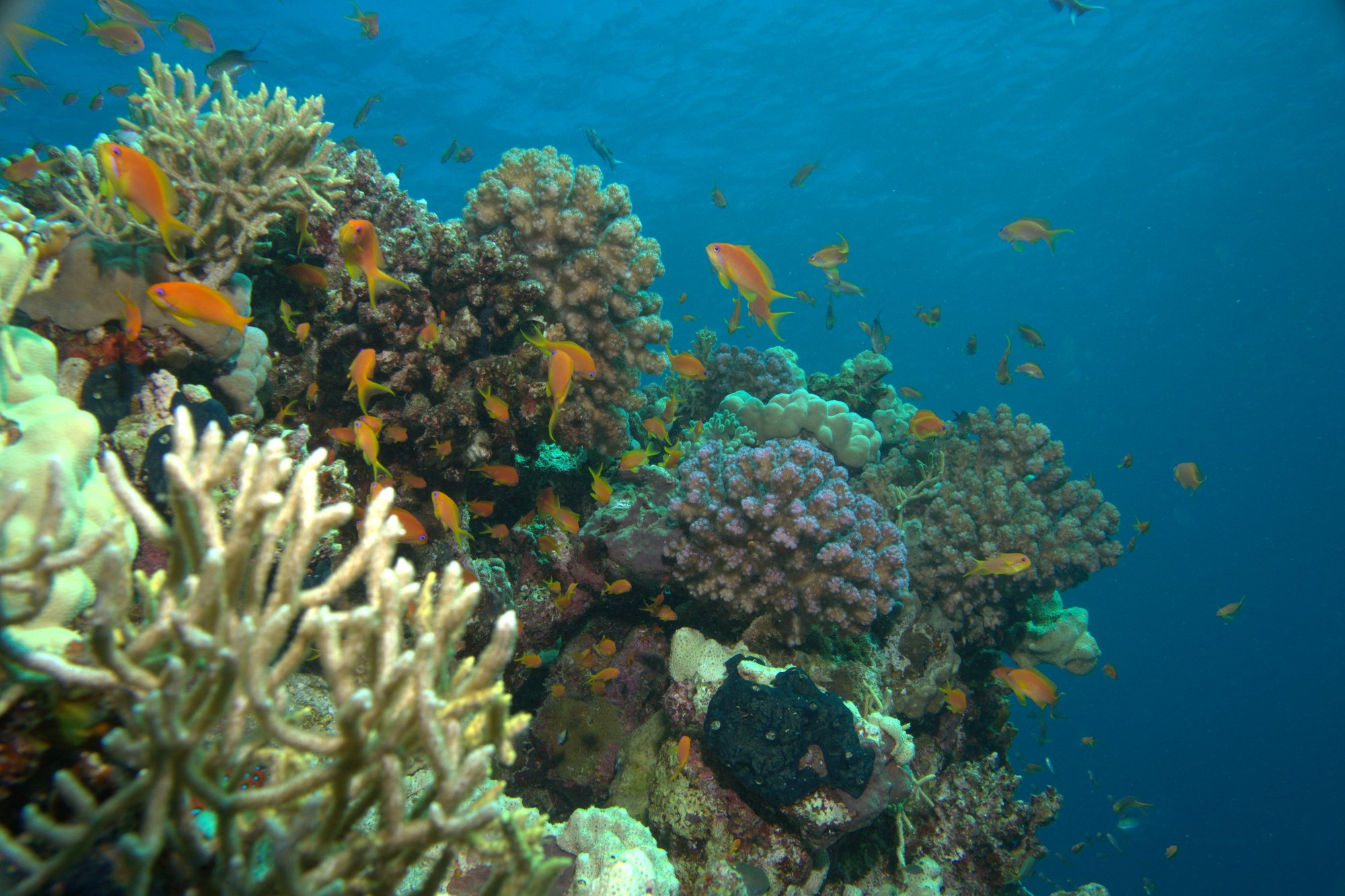
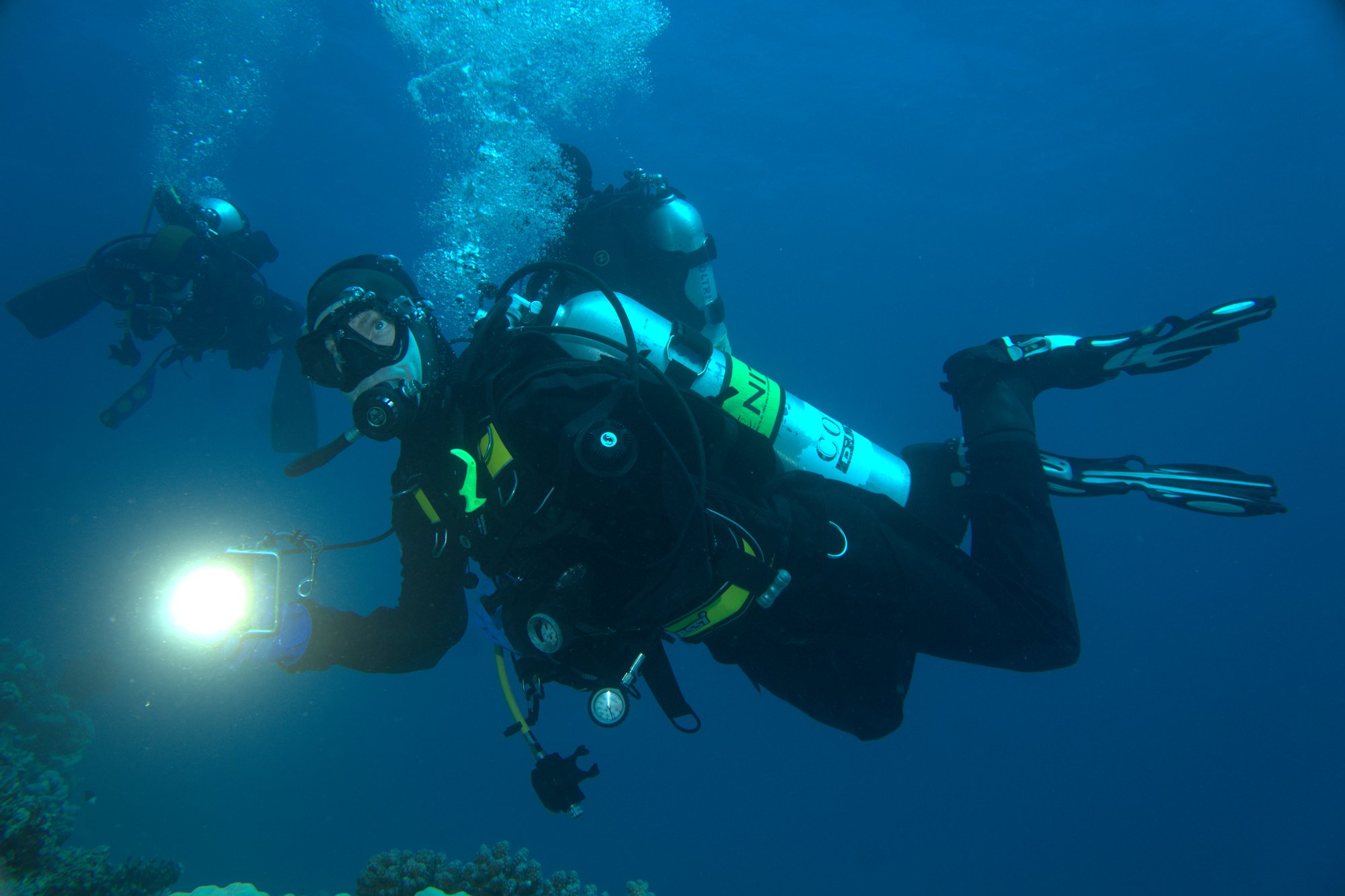
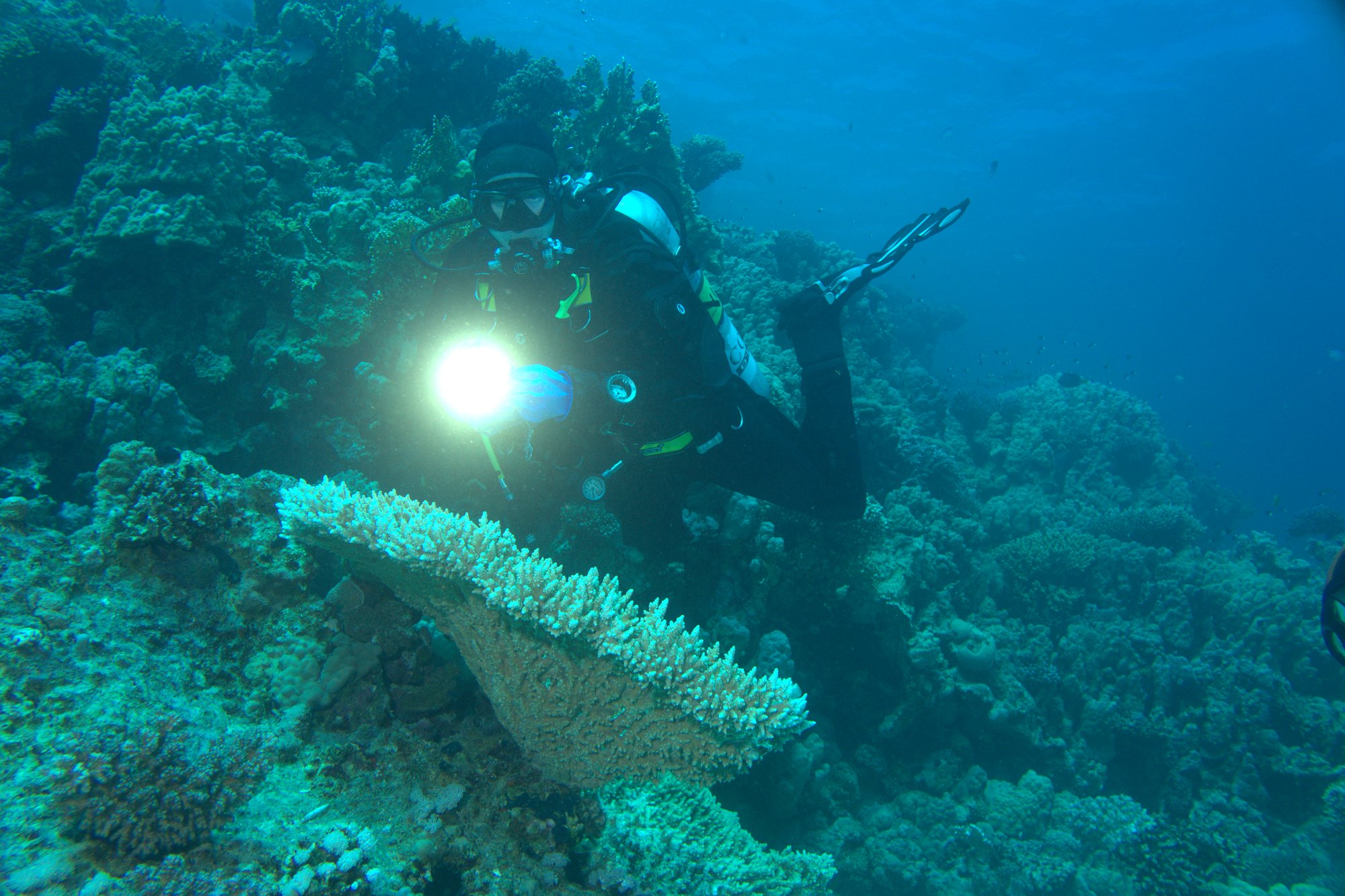
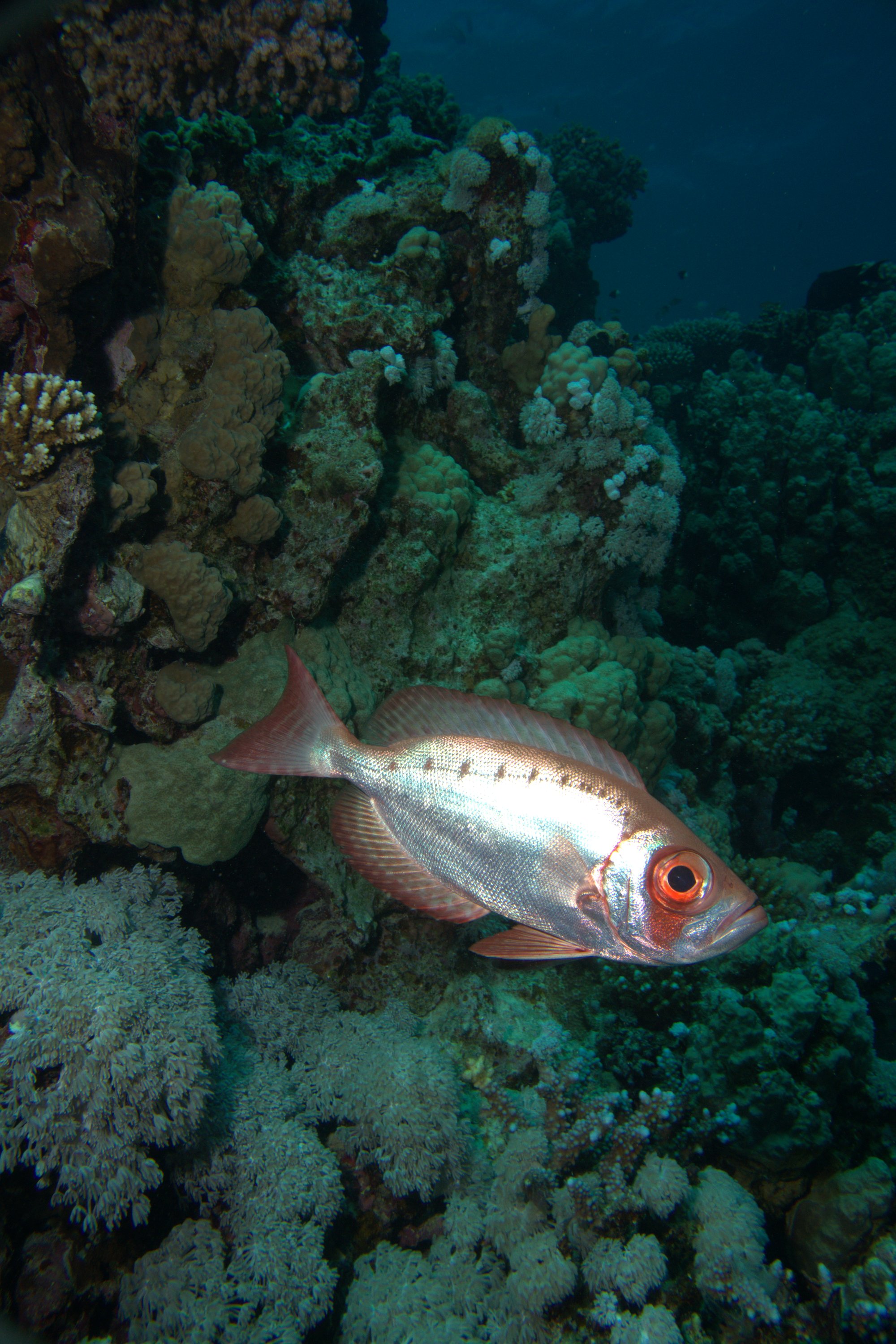
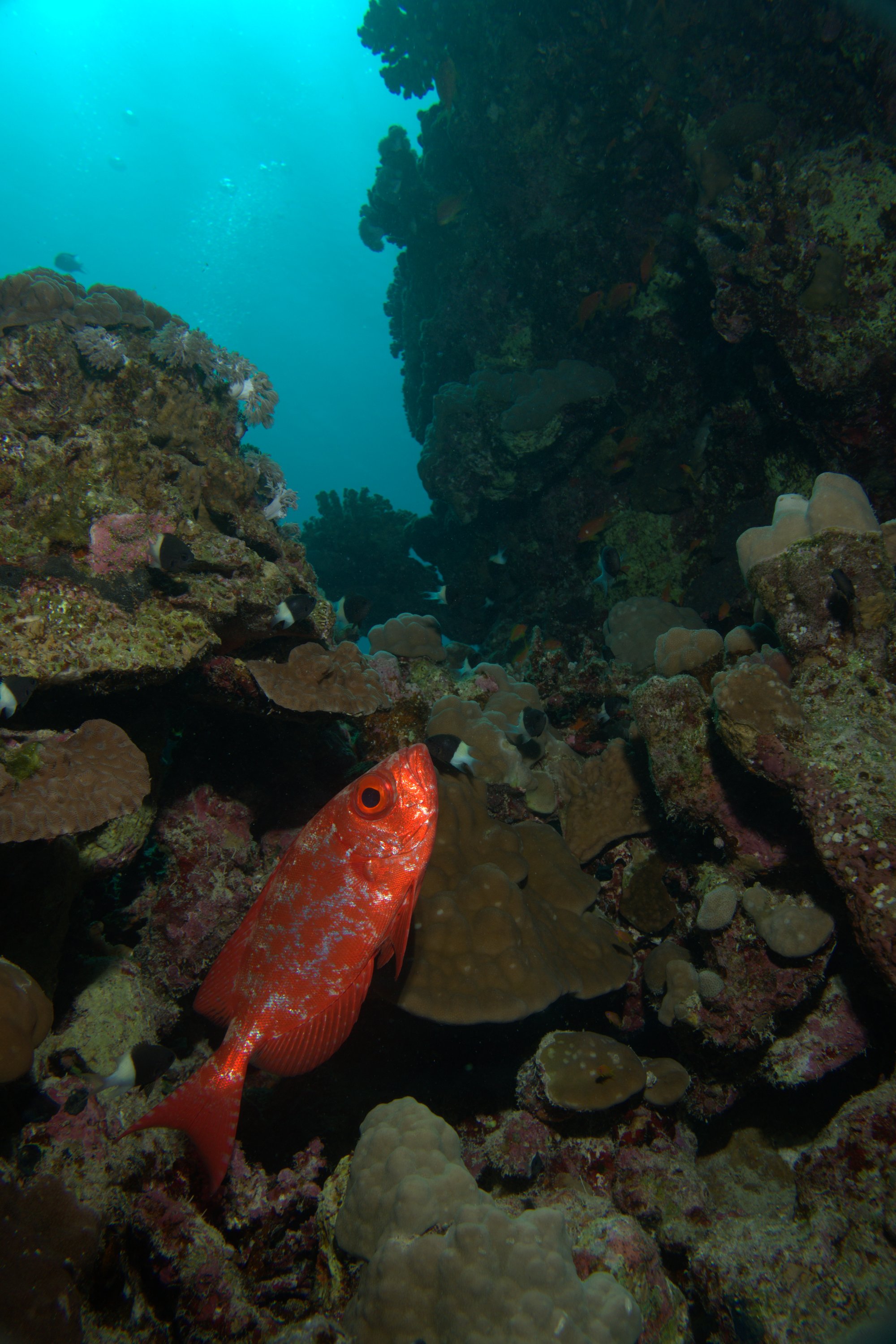
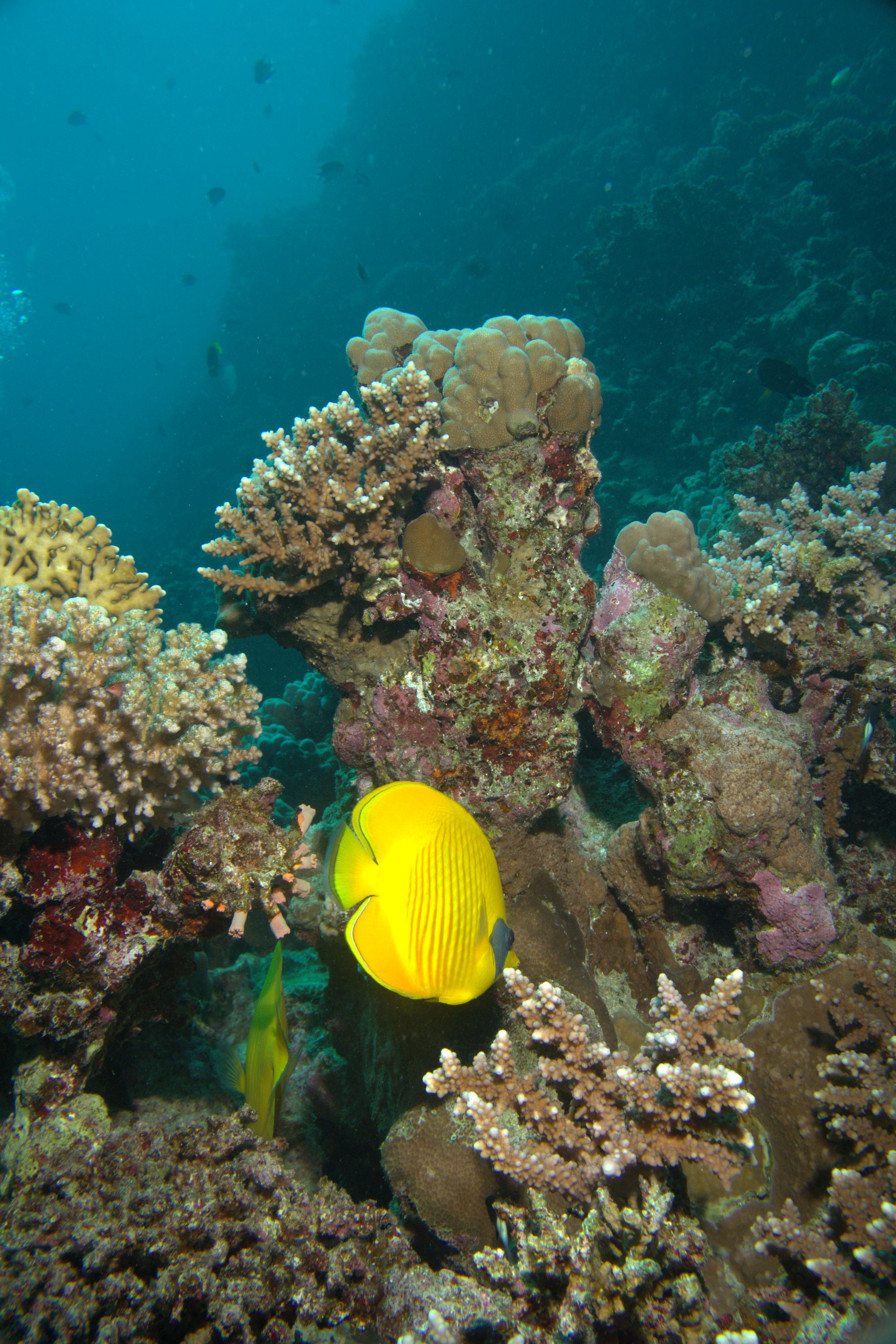
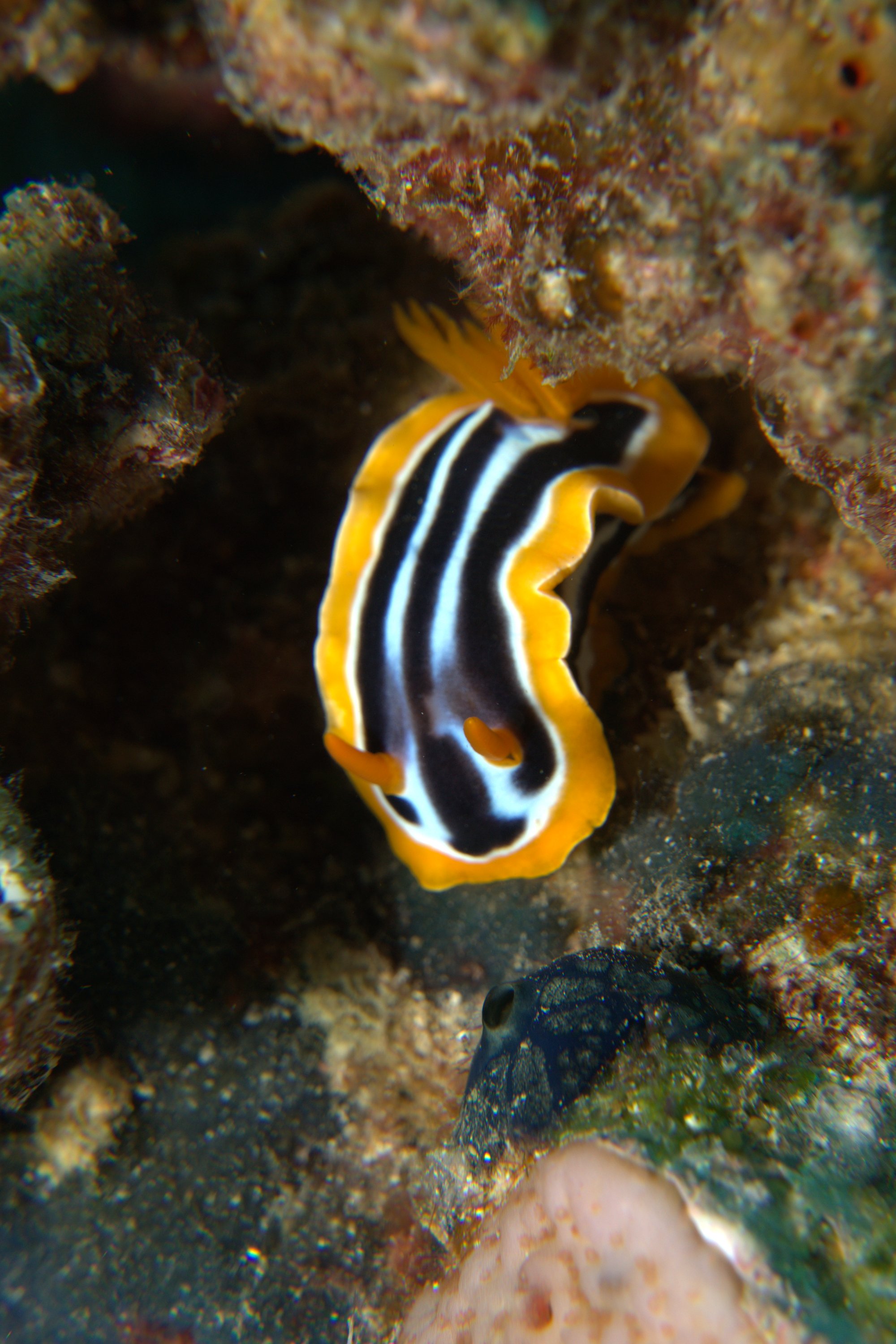
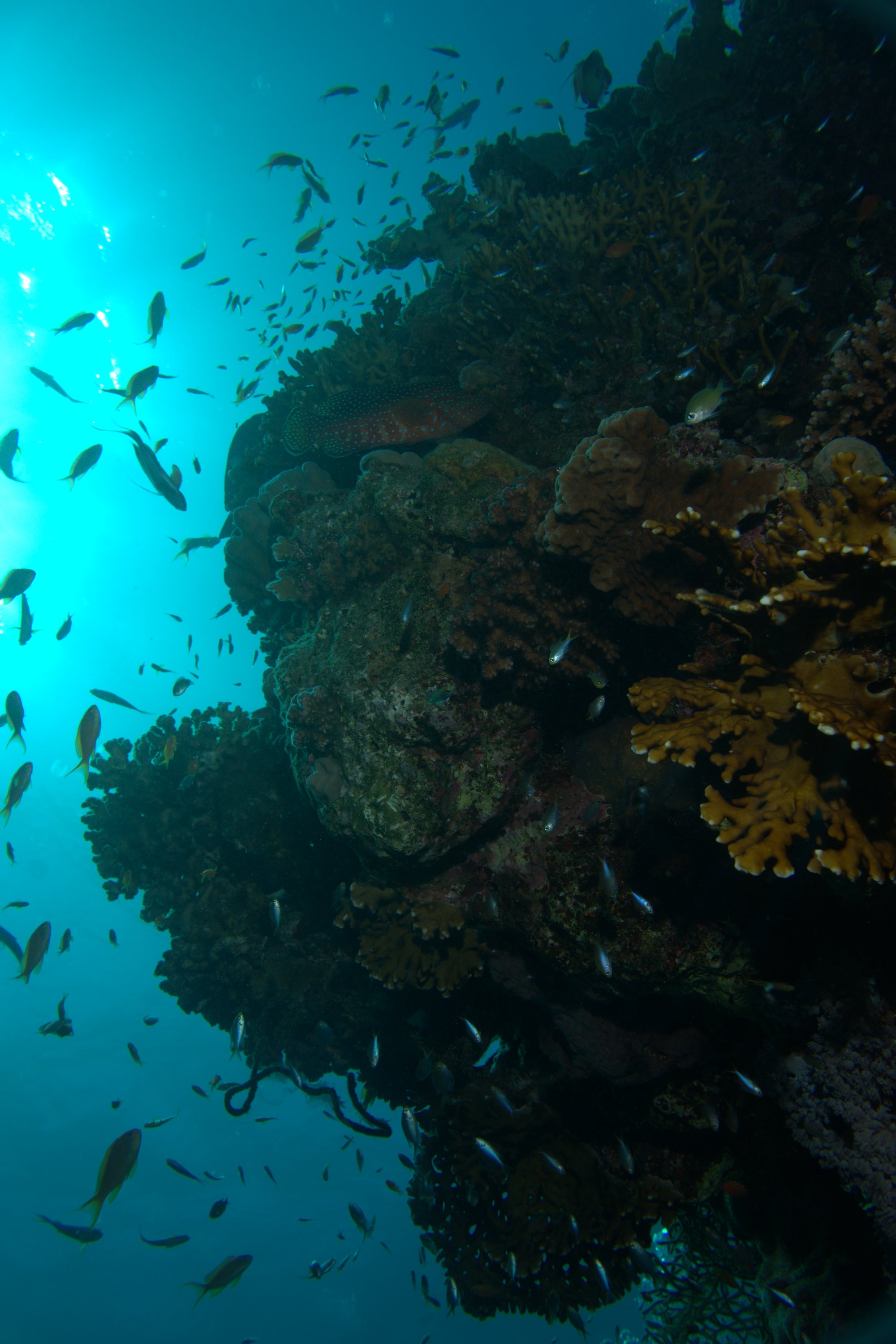
El Malag is a reef-and-wall site south of Hurghada used often as the first dive of a trip — a check dive, where buoyancy and weighting are calibrated before moving to more demanding sites. At 15-20m the reef is healthy: coral formations shelter schooling bigeyes, and the substrate carries enough sponge cover to support pyjama chromodoris nudibranchs. Below the reef, a wall drops sharply toward 56m, giving advanced divers an entirely different objective on the same mooring.
What makes it special
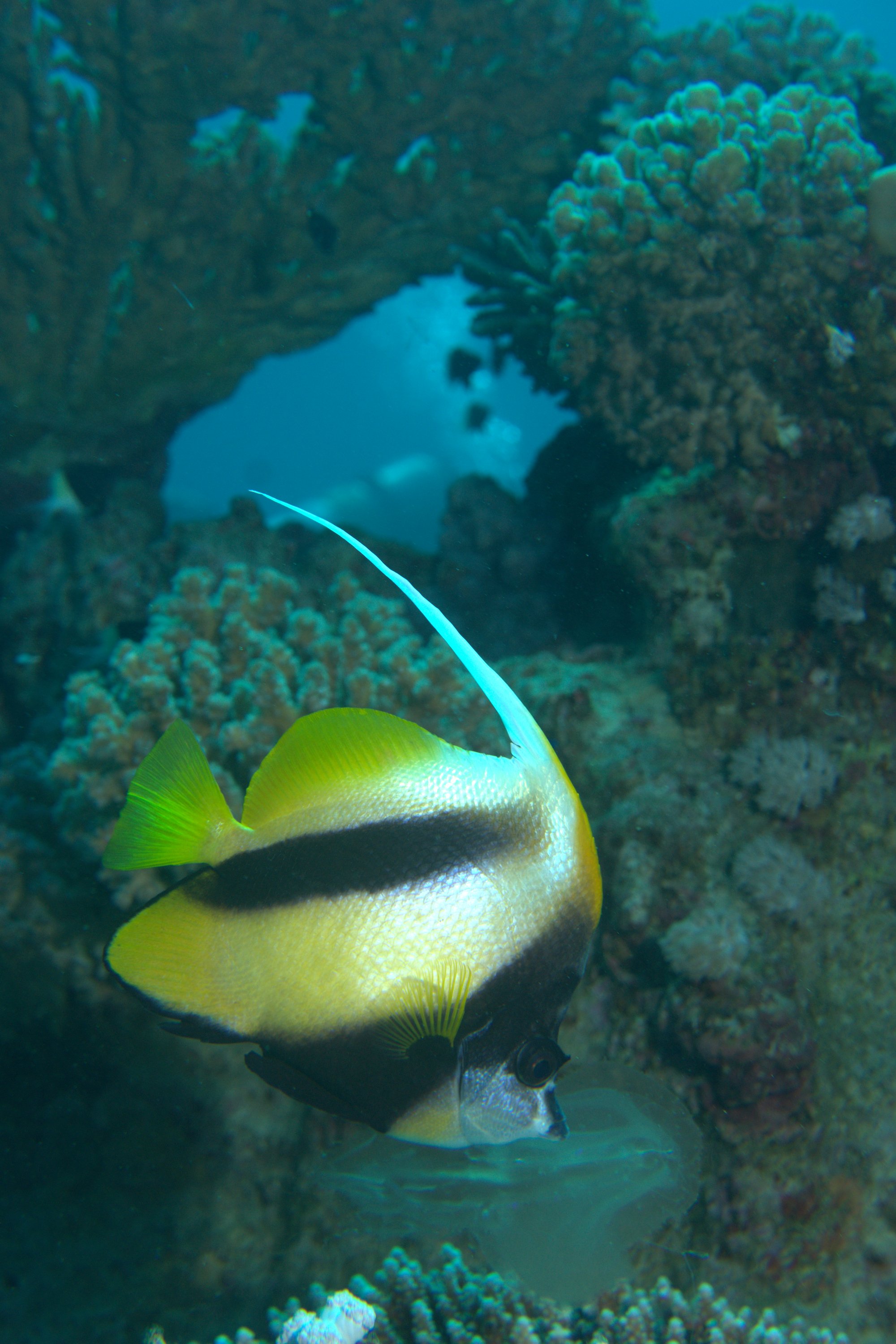
Two distinct dives occupy the same site: the accessible reef that works for Open Water divers getting their bearings after travel, and the deeper wall that demands something more. The nudibranch population — pyjama chromodoris are reliably present on sponge-covered reef surfaces — rewards slow, attentive diving at recreational depth. The site has also seen a whale shark pass through, which, while unpredictable, signals the kind of open-water movement that characterises the area. Visibility in these waters frequently reaches 30-40m, turning even a modest reef into a wide-open panorama.
Know before you go
El Malag runs as part of a multi-site day trip — operators typically combine it with Ras Abdulla and Ras Disha. Plan it as your first dive if weighting hasn't been confirmed since your last trip; the site is well-suited to that role. If you intend to explore the wall below 30m, bring your AOW card at minimum. Jellyfish can concentrate here during plankton blooms — not a hazard, but worth noting for photographers. The site is boat-access only from Hurghada or Sahl Hasheesh.
Depth & Profile
Conditions
Difficulty & Certification
Easy to moderate on the reef at 20m. Advanced for the wall section at 56m.
Frequently Asked Questions
What kind of dive site is El Malag?▾
What marine life can you see at El Malag?▾
Is El Malag suitable for beginners?▾
Can you see whale sharks at El Malag?▾
How do you get to El Malag from Hurghada?▾
Photos & Video
Jouni Kuisma
Jouni Kuisma
Jouni Kuisma
Jouni Kuisma
Jouni Kuisma
Jouni Kuisma
Jouni Kuisma
Jouni Kuisma
Jouni Kuisma
Jouni Kuisma
Jouni Kuisma
Jouni Kuisma
Jouni Kuisma
Jouni Kuisma
Jouni Kuisma
Jouni Kuisma
Jouni Kuisma
Log your dives
Track every dive with depth, duration, conditions, and marine life sightings. Join a club and share your underwater experiences.
Try DiveLog — it’s free