

Buceo La Restinga
SSI center in La Restinga, El Hierro, highly rated by divers, with 24+ volcanic sites, a 30m depth cap, and the top recommendation on Spanish dive forums.
SSI2 languages
Also known as: Punta del Río
Submerged lava river channel on El Hierro's east coast with ravines, tunnel caverns, and giant endemic Herreña lobsters at depths to 20-30m.
Last updated April 2026
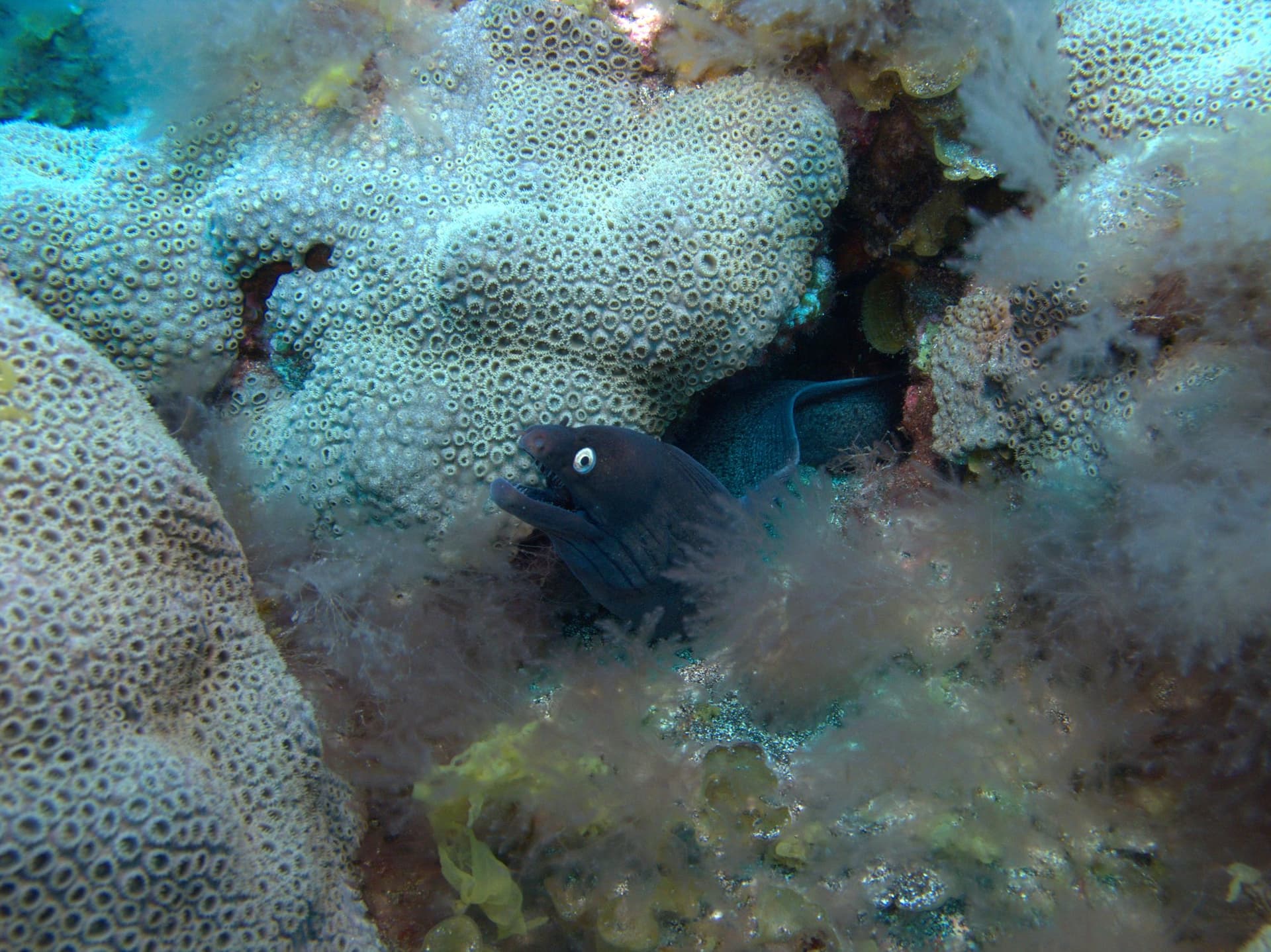
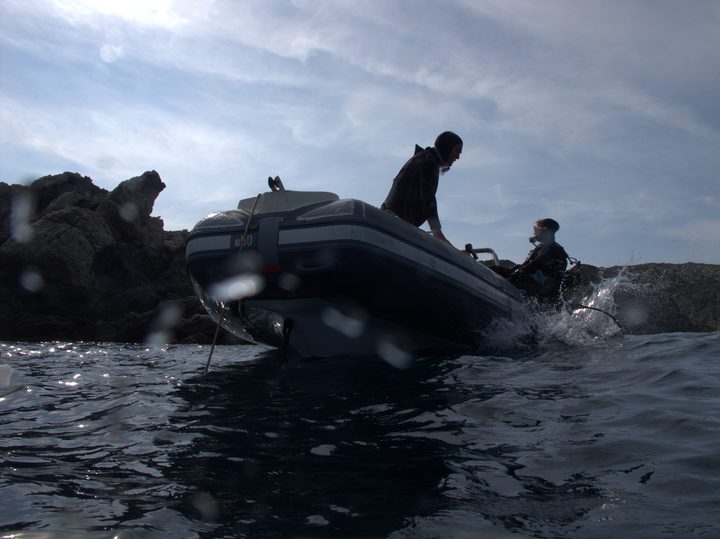
The boat stops two minutes from La Restinga port, on the eastern face of the lava wall. Follow the channel seaward. The ancient riverbed drops gradually from a shallow entry, the volcanic walls rising on both sides as the depth reaches 20m. The channel stays open above (this is not cave diving), but the scale creates something close to a passage. At the channel's end, turn back and work through the parallel ravines at 5-15m. The rock here is fractured and deep-creviced. Grouper hold the larger cracks; morays take the narrow ones. In the longest caverns, which extend back into the rock well beyond natural light, the Herreña lobsters live. Giant specimens, tucked into gaps at the far ends. You need a guide who knows where to look.
No other site on El Hierro looks like this. The reserve sites on the west side offer calm grouper encounters and gorgonian walls. That is what the island is famous for. El Río is the counterargument. Raw volcanic architecture shaped by a lava river millions of years before the sea arrived. The empty channel reads as absence: no reef growth, no protective structure, just volcanic rock in a form dictated by eruption and gravity. The Herreña lobster (Panulirus echinatus) has claimed the deepest recesses of the caverns, as far from human traffic as the site allows. East coast conditions have to cooperate, and they do not always. Divers who spend a week on El Hierro treat El Río as the prize that requires patience.
Ask your centre about east coast conditions on arrival. If trade winds are active, El Río is off the schedule regardless of your plans; the operator will run reserve sites instead. When conditions are right, the boat ride is two minutes from port. A torch is worth having for the cavern sections — the lobster locations change, and the deepest ones are easy to miss without one. The site is straightforward for Open Water divers staying at 20m. Surge in the enclosed cavern sections is possible if wind has been active recently, even on a day that looks calm at the surface. Dive with a local guide the first time.
What makes this dive site stand out.
Giant Panulirus echinatus in tunnel cavern ends; protected Macaronesian endemic
Submerged ancient lava bed descends seaward to 30m in an open channel
Outward descent through deep channel; return through ravines and caverns at 5-15m
East coast site: only accessible on calm days when trade winds ease
27.6406°N, 17.9754°W
End of trade wind season, warmest water, best east coast conditions
Check current prices with local operators; La Restinga centres typically charge 50-55 EUR per guided dive
OW sufficient for the typical 20m profile. Full 30m channel descent requires AOW. Cavern sections require overhead environment awareness.
Summary
Main channel and return route are straightforward for OW divers; overhead cavern sections add complexity. East coast weather access is the primary constraint.
Safety considerations
What can go wrong here, and what divers do about it. Conditions change - take the briefing from the operator on the day.
Book a guided dive at this site.
SSI center in La Restinga, El Hierro, highly rated by divers, with 24+ volcanic sites, a 30m depth cap, and the top recommendation on Spanish dive forums.

Dive centre in La Restinga, El Hierro, operating since 1978 and certified under PADI, FEDAS/CMAS and ESA, with a stable, named team and bundled trip logistics.
Get in touch to add or claim your dive center listing on DiveCodex.
Dive centres in the Canary Islands check that you hold the certification the dive needs.
El Río (the river) is named after the ancient lava flow that created it. A volcanic lava river once ran from land into the sea, leaving an empty channel on the seabed. That submerged channel, descending to 30m, is the dive's defining feature.
Open Water is sufficient for the typical dive at around 20m. Local operators note no special certification is required and the site is suitable for all levels. The full 30m channel descent would require AOW. For cavern sections, a local guide is strongly recommended.
Panulirus echinatus is a large lobster endemic to the Macaronesian region, found only in the Canary Islands, Azores, Madeira, and Cape Verde. It is a protected species. El Río is a known refuge with giant specimens in the hard-to-reach cavern ends. A knowledgeable guide gives you the best chance of finding them.
El Río sits on El Hierro's east coast, exposed to trade winds. It is only diveable when east coast conditions are calm. September to November is the best window, when trade winds ease. On active wind days, local operators typically dive the sheltered reserve sites on the west side instead.
No. It sits just outside the Reserva Marina de La Restinga on the east coast. No reserve permits are required. The site offers a different character from the reserve: more geological, less protected, and weather-dependent.
The reserve (Mar de las Calmas) offers calmer conditions, tame groupers, and more predictable dives. El Río trades that reliability for a wilder geological experience: lava channels, canyon ravines, and the endemic Herreña lobster. Both are typically offered on the same multi-day trip to El Hierro.
Log your dives - notes, photos, conditions and the marine life you saw - and share them as one public diver profile. What you share helps the next diver, too.
Log every detail
Depth, duration, conditions, gear, buddy, notes — all in one place. Import from Suunto and other dive computers.
Track marine life
Record species sightings on each dive. Build a personal catalogue of everything you've seen underwater.
Your public dive profile
Share your dive history, stats, and experiences with a profile page you control. Show the world where you've been.