

Posidonia Dive
SSI Instructor Training Center at Port Balis marina, 35 km north of Barcelona, running 24 boat dive sites on the Maresme coast year-round.
SSI8 services3 languages
Compact rocky structure south-east of Port Balis at 22-24m, with crevice macro on top and a sandy drop-off east where eagle rays occasionally cross.
Last updated April 2026
Out of Port Balis, the boat heads south-east for ten or fifteen minutes and anchors directly on what feels like one of the better parts of the structure. The descent line runs to about 21m onto rocky top with crevices in every direction. From here, the dive's character changes within a few fin-kicks. Move north or north-east and the rock is densely featured — productive for moray, lobster, and the small life that makes this site reward attention. Continue until the structure flattens. Loop south or fan east and the bottom slopes onto open sand at about 24m, the contact zone where the occasional eagle ray crosses and the gas plan starts to pinch.
The west flank is rockier with isolated blocks and discontinuous crevices that run a parallel option for the second leg. Centres typically lay a line across the rock from the anchor as a return reference, so divers exit on a different face from the one they entered on. A typical profile is forty to fifty minutes at 22-24m, which is tight on air and the practical reason most centres recommend Nitrox 32 here.
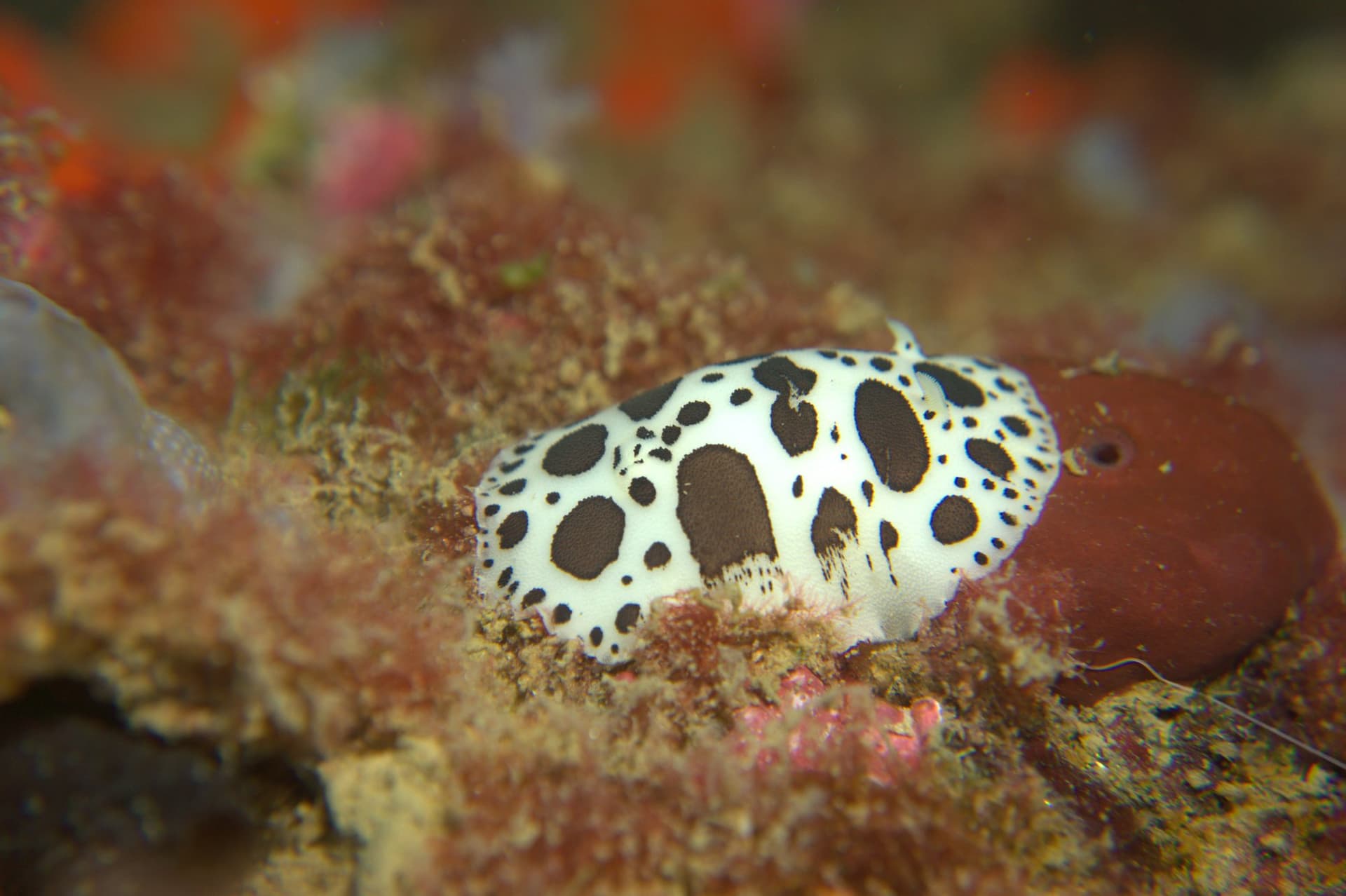
What rewards a slow second pass on the rocky top is macro detail. Spring 2026 dives have logged pink flatworm (Prostheceraeus roseus) on the shallower sections, Discodoris atromaculata camouflaged on rock, a Cribrinopsis crassa anemone with a white-bodied Cratera peregrina nudibranch attached, and Flabellinas in the cracks. Cuttlefish near the anchor have been reported by other divers in the group. A torch helps because much of this lives in shadow.
The geometry is what sets El Trencat apart from the longer Port Balis ridges. A compact structure where the anchor lands on the most productive section, with cardinal directions opening into different characters: macro and crevices on the north and west, sand drop-off east, and a softer southern exit. Older dive blogs describe the same general shape: a 5-7m wide rocky ridge with isolated blocks east. The cold-water nudibranch finds, including pink flatworm and the locally-distinctive vaquita suiza, bring photographers back across seasons. Eagle rays on the east-side sand-rock contact are not guaranteed but show up in centre and trip-report records often enough to call them part of the site's repertoire.
This is a moderate-depth dive that benefits from a couple of preparation choices. Run Nitrox if your centre offers it — at 22-24m the air-tank version of this dive ends before the diver has fully worked the structure. Bring a torch for the crevice macro that defines the experience. The east-side sand drop-off is a short fan-out from the anchor; budget gas and time for it if you want the eagle-ray zone. SMB, cutting device, and dive computer round out the kit list required by Spanish recreational law. Surface chop on Garbi (SW) days makes the boat ride uncomfortable; the bottom is usually unaffected.
What makes this dive site stand out.
Anchor lands on the most productive section; topography changes within fin-lengths in any direction
Eastern edge falls to about 24m on sand, the contact zone for occasional eagle ray crossings
Pink flatworm and Discodoris atromaculata both observed on a single spring dive
Different site from La Trencada (Mataro) and Cap Trencat (Cap de Creus); both are commonly confused
41.5466°N, 2.5266°E
Bigger fauna sightings (moray, grouper, barracuda) concentrate July-October. Cold-water nudibranchs bias spring and shoulder seasons.
Posidonia Dive 2026 published rates. 5-dive packages reduce per-dive cost. Verify current rates directly.
OW-accessible per the operating centre. AOW recommended for the deeper east-side sand drop-off and longer profiles.
Summary
Working depth 22-24m sits near the OW depth ceiling. Mild current on most dives. Navigation eased by the centre's anchor line across the structure.
Safety considerations
What can go wrong here, and what divers do about it. Conditions change - take the briefing from the operator on the day.
Book a guided dive at this site.
SSI Instructor Training Center at Port Balis marina, 35 km north of Barcelona, running 24 boat dive sites on the Maresme coast year-round.
Get in touch to add or claim your dive center listing on DiveCodex.
Upcoming trips to this dive site published by local centres.
Availability is read from each centre's public calendar and refreshed daily. Last checked October 16. Confirm with the centre before travelling.
Dive centres in Catalonia must require insurance from every diver on their dives, and must be able to offer a policy to anyone who has none.
No. They are two different dives on opposite sides of the Costa del Maresme. El Trencat sits south-east of Port Balis at 22-24m and is run by Posidonia Dive; La Trencada is a shallow barra at about 14m run from Port de Mataro. Names look similar in writing but the sites, the ports, and the centres differ.
Yes. The operating centre lists it as OW-accessible. Working depth on the productive top is 22m, near the OW limit, so OW divers stay on the structure rather than dropping to the 24m sand floor on the east. AOW divers can include the deeper east-side profile.
Crevice fauna on the rocky top: Mediterranean moray, octopus, scorpionfish, big lobster, plus cold-water nudibranchs on shoulder-season dives. Spring divers have logged pink flatworm (Prostheceraeus roseus), Cribrinopsis anemones with Cratera peregrina nudibranchs attached, and Flabellinas. Eagle rays cross the sand-rock contact zone east of the structure occasionally.
June through October for the bigger fauna: moray peaks in August, barracuda concentrate July through October, and grouper sightings cluster in the same window. Spring and autumn are stronger for cold-water nudibranchs. The site runs in centre rotations year-round, with winter dives demanding drysuit or 7mm semi-dry.
Recommended rather than required. Working bottom at 22-24m on air leaves a moderate no-stop window; Nitrox 32 extends what a diver can comfortably do on the east-side profile and is locally available. The site rewards time, particularly for macro work.
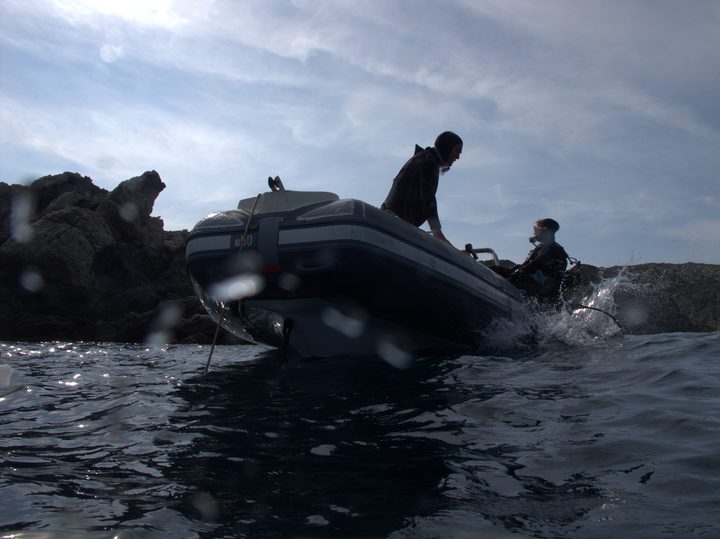
Boat dive from Port Balis, about 10-15 minutes south-east. Drive time from Barcelona to the port runs about 30 minutes. The boat drops anchor onto the structure itself (no fixed mooring buoys exist on this stretch) and the centre lays a return line across the rock for navigation back.
Log your dives - notes, photos, conditions and the marine life you saw - and share them as one public diver profile. What you share helps the next diver, too.
Log every detail
Depth, duration, conditions, gear, buddy, notes — all in one place. Import from Suunto and other dive computers.
Track marine life
Record species sightings on each dive. Build a personal catalogue of everything you've seen underwater.
Your public dive profile
Share your dive history, stats, and experiences with a profile page you control. Show the world where you've been.