

Andreas Diving
Family-run SSI center on Menuda Beach in Tossa de Mar since 1998, with eco-guide philosophy, 17 dive sites, and authorized Cressi service.
SSI4 languages
Shallow boat dive off Tossa de Mar with rocky outcrops in posidonia meadows, nacra colonies, and a cavern with a vertical exit.
Last updated April 2026
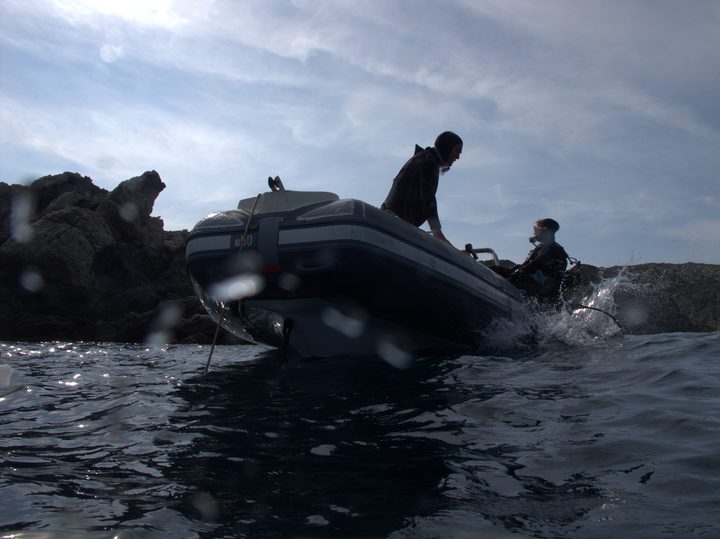
Five minutes by boat from Tossa port, the anchor drops over a cluster of rocky outcrops barely breaking 18 metres. The route follows the escollos in a circuit, weaving between islets fringed with posidonia. Among the seagrass, nacra shells stand upright like dark fins, some nearly a metre tall. Stingrays flatten into the sand between meadow patches. Midway through the circuit, a cavern opens in the rock face. The entrance is wide and the passage short. Light pours down through a vertical exit above, throwing shifting patterns across the walls. Photographers wait here.
Es Palomar is the quietest dive on the Tossa de Mar roster. Where siblings like Perduts demand compass skills at 30 metres and Tres Barres spans three distinct rocky ridges, Es Palomar keeps things simple. One circuit, shallow water, calm conditions. That simplicity has a purpose. This is where instructors bring students for their final Open Water dive, and where returning divers shake off the rust. The posidonia ecosystem here is the real draw. Nacra colonies are declining across the Mediterranean, and this site has a healthy population in accessible water.
Boat only. The coastal cliffs between Tossa and Sant Feliu de Guixols rule out any shore approach. Three centres run trips here: TossaSub, Andreas Diving, and Canyelles Diving. The cavern needs no special certification. Its vertical exit means natural light reaches the entire passage. Bring a camera if you have one. The backlighting through the exit is the best photography opportunity on this dive.
What makes this dive site stand out.
Noble pen shells (Pinna nobilis) found among the posidonia meadows surrounding the outcrops.
Easy-access cavern offers backlighting opportunities for underwater photography.
Numerous small escollos and islets create a varied route at shallow depth.
Consistently described as the calmest dive in the area, ideal for OW course finales.
41.7256°N, 2.9472°E
September-October is the sweet spot for warm water and good visibility. Diveable year-round.
Approximate guided dive cost. Verify current rates with your dive center.
Shallow depth (3-18m) is within OW limits. The cavern has easy access and a vertical exit, no overhead-environment certification needed.
The most relaxed dive in the Tossa de Mar area. Ideal for final OW course dives, refresher dives, or posidonia observation.
Book a guided dive at this site.
Family-run SSI center on Menuda Beach in Tossa de Mar since 1998, with eco-guide philosophy, 17 dive sites, and authorized Cressi service.
Get in touch to add or claim your dive center listing on DiveCodex.
PEIN/ZEC environmental protection, not a marine reserve. No permits or reserve fees required.
Yes. Three dive centers independently rate it as their easiest dive. The maximum depth of 18m stays within Open Water limits, currents are negligible, and the cavern has a wide entrance with a vertical exit. Many centers use it for the final OW course dive or refresher dives.
The posidonia meadows host colonies of nacra (noble pen shell), a protected Mediterranean species growing up to a metre long. Common stingrays rest among the seagrass. The rocky outcrops shelter moray eels, scorpionfish, and nudibranchs typical of the Tossa de Mar coast.
No. The site sits below inaccessible cliffs between Tossa de Mar and Sant Feliu de Guixols. Boat access only, with a 5-10 minute ride from Tossa port.
There is a cavern with easy access and a vertical exit that stays naturally lit. It is a recreational cavern, not a technical cave. The backlighting through the exit creates good conditions for underwater photography.
May to October for warm water, with September and October offering the best combination of temperature and visibility (up to 30m). The site is diveable year-round, though winter requires a semi-dry or drysuit.
Log your dives - notes, photos, conditions and the marine life you saw - and share them as one public diver profile. What you share helps the next diver, too.
Log every detail
Depth, duration, conditions, gear, buddy, notes — all in one place. Import from Suunto and other dive computers.
Track marine life
Record species sightings on each dive. Build a personal catalogue of everything you've seen underwater.
Your public dive profile
Share your dive history, stats, and experiences with a profile page you control. Show the world where you've been.