
DiveCodex

Giannis D

Greek cargo ship sunk 1983 at Sha'ab Abu Nuhas. Broken in two sections.

The dive

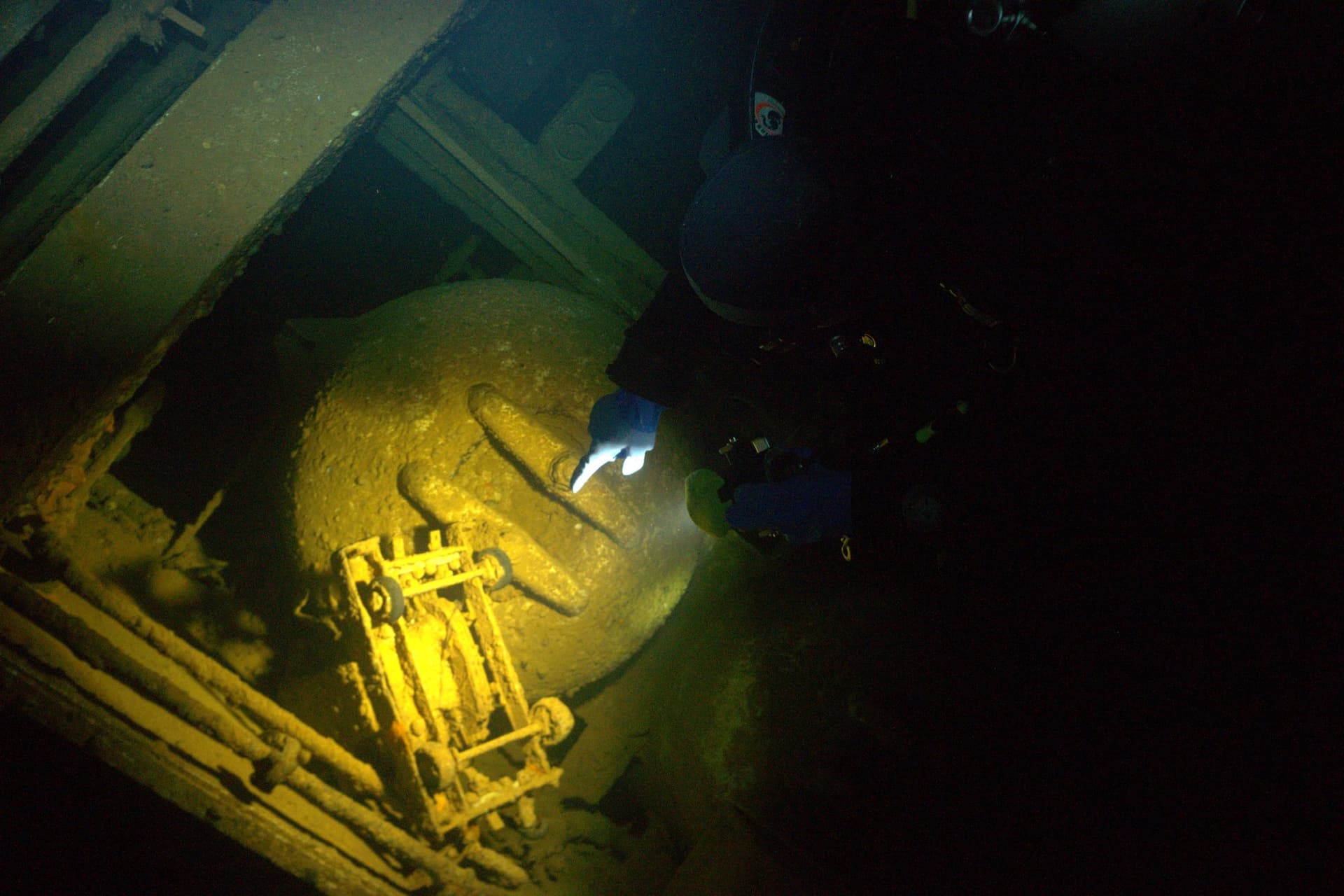
Everything about the Giannis D sits at an angle. This 100-metre Greek cargo ship broke into three sections when it hit Abu Nuhas reef in 1983, and the stern settled on sand at 45 degrees — turning corridors into slopes and walls into floors. The standard dive route drops to the stern at 24m, enters the engine room at 13m where dense clouds of glassfish part around your beam, then works forward through multilevel rooms before exiting to ascend along the main mast. That mast extends horizontally almost to the surface at 4m, offering one of the Red Sea's most comfortable safety stops — and some of its best macro hunting, with scorpionfish and nudibranchs hidden in the encrusted surface.

What makes it special

The "D" painted on the funnel has become an icon of Red Sea wreck diving, reproduced in countless dive magazines and underwater photography portfolios. But the Giannis D earns its reputation as the most photographed Abu Nuhas wreck through more than a single shot. The engine room at 13m delivers a visual that few wrecks anywhere can match: thick clouds of glassfish swirl in the backlit water while giant morays patrol the passageways below. The 45-degree tilt creates compositions impossible on upright wrecks — divers frame themselves against skewed doorways and angular decking. Outside, 40 years of soft coral growth have draped the hull in colour, and batfish cruise the exterior like a welcoming committee. Three names, three countries, and a final voyage from Croatia that ended on an Egyptian reef — the ship's history adds narrative depth to its visual drama.

Know before you go

The Giannis D is the easiest of the four Abu Nuhas wrecks and the best starting point for divers new to wreck penetration. The engine room at 13m has ample natural light, wide passages, and glassfish to navigate through rather than debris. Deeper rooms are more confined and demand wreck experience. The 45-degree tilt is genuinely disorienting on first encounter — maintain depth awareness and keep your exit route clear. An SMB is essential here, as currents can push you away from the boat during ascent. This wreck is popular and often crowded during peak day-boat hours; liveaboard scheduling gives you the quieter dawn and dusk windows.

Depth & Profile

4m
Min depth
24m
Max depth
4–24m
Typical range
wreckcoralsand

Location

27.5814°N, 33.9319°E

Conditions

Temperature
22°C29°C
Visibility
20–30m
Current
variable

Difficulty & Certification

moderateMin cert: AOWNitrox recommended

Easiest of the four Abu Nuhas wrecks. The 45-degree tilt is disorienting but adds to the experience rather than the danger.

Frequently Asked Questions

Why is the Giannis D tilted at 45 degrees?
When the ship broke apart after hitting the reef at full speed, the stern section settled on the sandy bottom at an angle while the bow remained closer to the reef slope. The three resulting sections each rest at different orientations, but the stern's dramatic tilt is what defines the dive. Inside, corridors become walls and floors become slopes — a disorienting but unforgettable navigation experience.
What is the 'D' on the funnel?
The letter D on the ship's funnel stands for the final part of the vessel's name — Giannis D. It has become one of the Red Sea's most recognisable underwater photography subjects. The funnel sits at around 18-20m and is often framed with soft corals and passing fish as a backdrop.
Is the Giannis D good for new wreck divers?
It is widely considered the easiest wreck to dive at Abu Nuhas. The engine room at 13m offers straightforward penetration with good natural light filtering through clouds of glassfish. The maximum depth of 24m is within most Open Water certification limits, and the main mast at 4m provides a comfortable safety stop. That said, the deeper multilevel rooms require wreck diving experience.
How was the ship named three times?
The vessel was built and launched in Japan in 1969 as the Shoyo Maru. A Greek company bought her and renamed her Markos in 1975, then Giannis D in 1980. She was on her final voyage from Croatia to Saudi Arabia and Yemen when she hit Abu Nuhas in 1983 — following a pattern of captains losing concentration after the Suez Canal transit.
What is the best dive route on the Giannis D?
Start at the stern on sand at 24m, enter the engine room at 13m to see the glassfish clouds and resident morays, work through the wreck exploring the multilevel rooms, then exit and ascend along the main mast. The mast extends horizontally to 4m — use it as your safety stop platform while searching for scorpionfish, gobies, and nudibranchs in its encrusted surface.

Photos & Video

Jouni Kuisma

Jouni Kuisma

Jouni Kuisma

Jouni Kuisma

Jouni Kuisma

Jouni Kuisma

Jouni Kuisma

Jouni Kuisma

Jouni Kuisma

Log your dives

Track every dive with depth, duration, conditions, and marine life sightings. Join a club and share your underwater experiences.

Try DiveLog — it’s free