

Colona Divers
PADI 5 Star IDC in Hurghada tracing to a 1977 Red Sea liveaboard, with daily boat dives, a house reef to 30+ m, and liveaboard safaris.
PADI5 services3 languages
Also known as: Giftun Drift, Gorgonia Garden, Police Station
Drift dive along a wall hung with gorgonian fans on Small Giftun, easing onto a coral plateau, with longnose hawkfish living in the branches.
Last updated October 2026
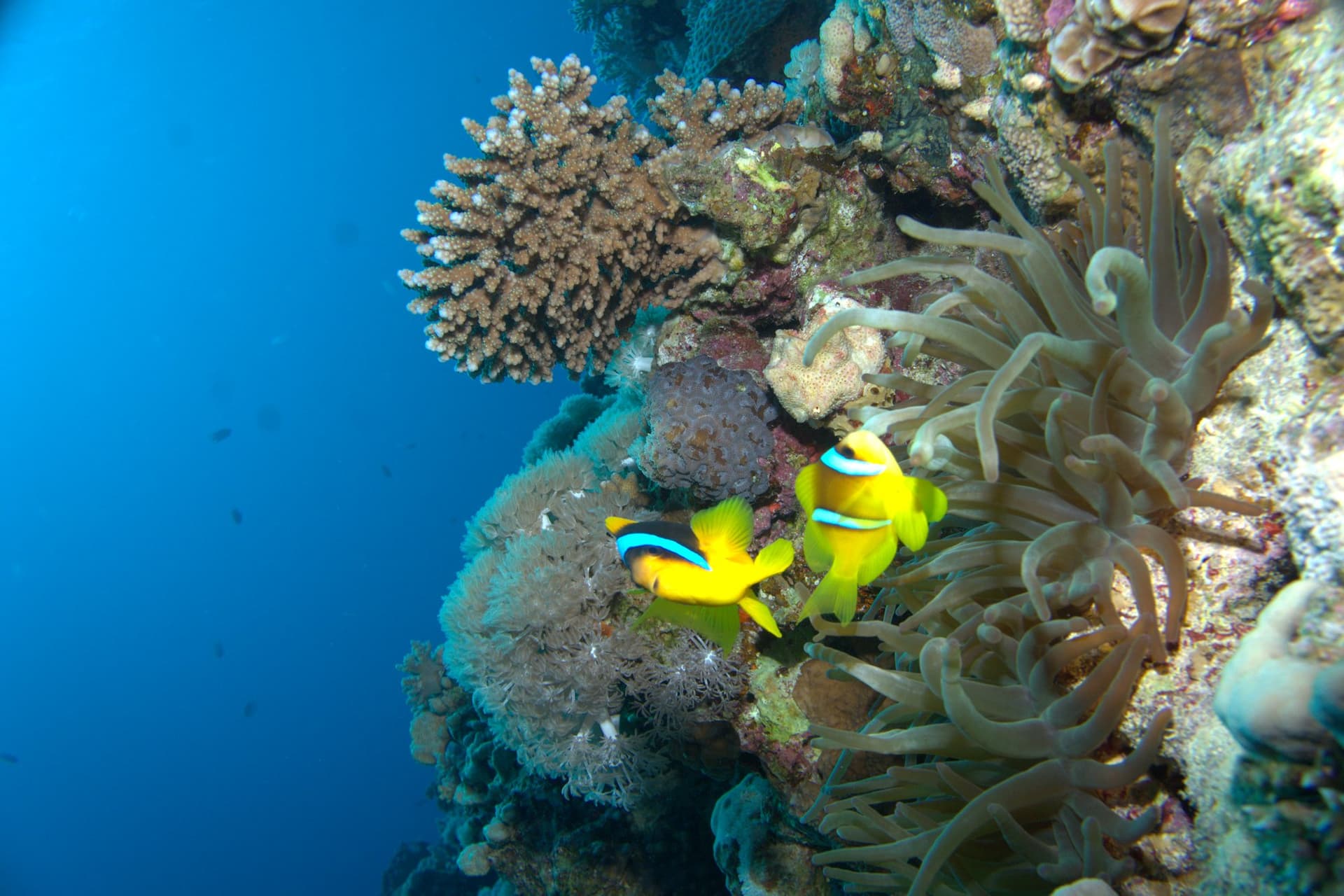
Boats moor on top of the plateau just south of the Giftun police station, and the drop-in is beside a vertical wall. Put your right shoulder to the reef and let the current take you south. The wall is hung with large gorgonian fans, soft corals rooted in every gap between them, and longnose hawkfish wait in the branches for prey that the current delivers. Out in the blue, operators report tuna and barracuda. Where along the wall you start depends on how deep you mean to go and how you are doing on gas. Further south the wall gives way to a widening shelf and the drop-off turns west in a zigzag. You can follow it for a while, but not so far that you lose the main reef. The dive finishes back on the plateau, a semi-covered coral garden where turtles cruise, with sand between the coral heads that holds bluespotted stingrays and crocodilefish, and the moorings overhead.
Large gorgonian fans clothe the wall and sway with the current, and the hawkfish perched in them, reported independently by two operators, are the small-scale find among the big structure. Below the wall lie caves at 35 m and a tunnel at 40-45 m, outside recreational range. Early-morning dives carry a chance of sharks passing along the drop-off; every operator that mentions them hedges it. The wall, the shelf and the plateau come in one drift, so a single dive moves from fans and open water to a coral garden.
The current always comes from the north but varies from mild to strong, so carry a surface marker buoy and expect pickup away from where you dropped in. The drop-in can be choppy, and the boat waits in calmer water at the moorings. Keep fins clear of the fans. In September one operator warns of titan triggerfish at this site, so keep your distance from any triggerfish that holds its ground. The Napoleon wrasse and morays on the plateau have been fed in the past, which is why they come close; do not feed them.
What makes this dive site stand out.
Large sea fans hang along a steep wall and sway in the current
Two operators place them in the gorgonian branches, waiting for prey
The current comes from the north and carries the dive south along the wall
The wall gives way to a coral garden and a sandy plateau near the moorings
27.1862°N, 33.9823°E
Advanced Open Water is the level the wall and the north current point to. Open Water divers can use the plateau at 15-25 m with a guide who keeps the group shallow. Operators grade the site from beginner to advanced and no regulation sets a level.
Summary
Depth on the wall combined with a north current that runs from mild to strong; the plateau at the end of the dive is easier.
Safety considerations
What can go wrong here, and what divers do about it. Conditions change - take the briefing from the operator on the day.
Book a guided dive at this site.
PADI 5 Star IDC in Hurghada tracing to a 1977 Red Sea liveaboard, with daily boat dives, a house reef to 30+ m, and liveaboard safaris.
Get in touch to add or claim your dive center listing on DiveCodex.
Plan for Advanced Open Water if you want the wall. The gorgonian fans sit along a drop-off, operators give the deepest point as 25, 30 or 40 m, and the current from the north is unpredictable. One operator grades its Small Giftun entry beginner, with a maximum of 25 m; another dive guide rates the site for advanced and experienced divers, and a third asks for some experience on the deep wall. Open Water divers can stay on the plateau at 15-25 m with a guide who keeps the group shallow, and no rule fixes the level.
Most likely. Boat pages describe a drift along a gorgonian wall beside the police station on Small Giftun, and the same wall appears as Giftun Drift and Police Station in dive guides. Gorgonian Garden is an instructor's name for it. Where the name stops and the rest of Small Giftun begins is not drawn, so ask the guide which mooring and which stretch of wall your boat uses.
Log your dives - notes, photos, conditions and the marine life you saw - and share them as one public diver profile. What you share helps the next diver, too.
Log every detail
Depth, duration, conditions, gear, buddy, notes — all in one place. Import from Suunto and other dive computers.
Track marine life
Record species sightings on each dive. Build a personal catalogue of everything you've seen underwater.
Your public dive profile
Share your dive history, stats, and experiences with a profile page you control. Show the world where you've been.