

Andreas Diving
Family-run SSI center on Menuda Beach in Tossa de Mar since 1998, with eco-guide philosophy, 17 dive sites, and authorized Cressi service.
SSI4 languages
Also known as: Illa Sa Palma, L'Illa, L'illa Sa Palma, S'Illa, Sa Bauma
Rocky island wall dive off Mar Menuda beach with two-route flexibility from 14 to 30 m, white gorgonian walls, and canyon topography carved by radial rock tongues.
Last updated April 2026
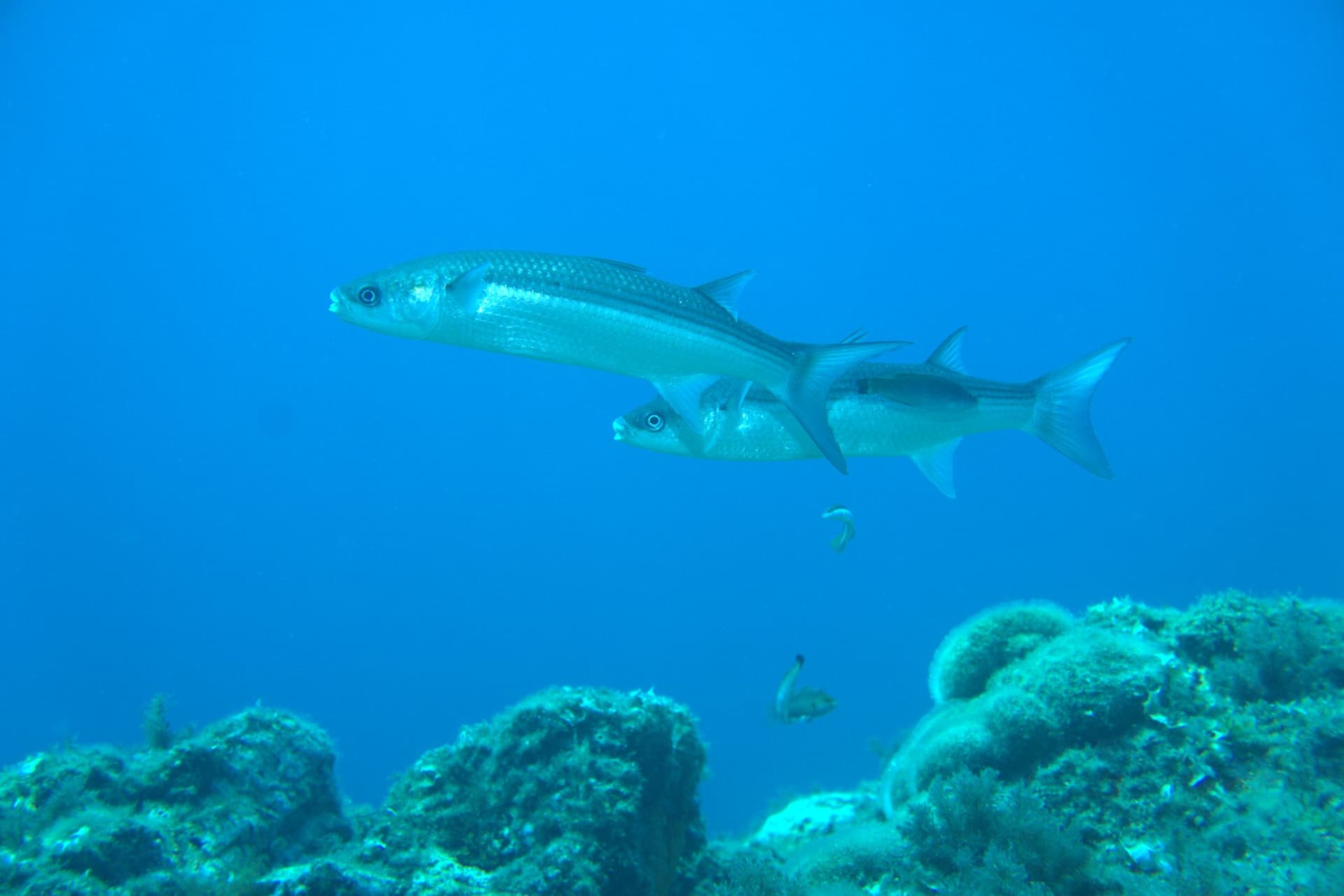
Canyons carved by rock tongues define the east wall of the island. Descent from the mooring lands at 14 metres, where the near-side route traces the contour of the peak. White gorgonian fans spread across the rock face, perpendicular to the flow and thickest between 15 and 22 metres. Schools of bream, damselfish, and salps fill the midwater along the wall. Small nativity figures placed by local tradition sit on the seabed at intervals, anchoring the route. The full circumnavigation returns to the mooring without retracing ground, and the gorgonians show a different face from each angle. A typical circuit runs 40 to 50 minutes.
Two dives live on one mooring line. The near-side circuit is a wall dive built around white gorgonians in concentrations rarely matched at recreational depths elsewhere on the Costa Brava. Cross to the far side and the character shifts: open water replaces shelter, a chain of detached rock ridges runs north to south at 30 metres, and the rock transitions to pre-coralligenous cover. Between these extremes sits the La Caida route, a vertical drop covered in yellow encrusting anemone and pale dead man's fingers projecting from the rock. Locals who return year after year call it a site that always surprises. Against its neighbours, the distinction is clear. Mar Menuda offers sandy posidonia and a beach entry. Roca Muladera carries the grouper reputation. Illa de Tossa carries the gorgonian walls and the canyon geometry.
The upper wall at 14-18 metres suits any Open Water diver. The full near-side circuit reaches 24 metres and requires Advanced Open Water certification. The far side demands different planning: at 30 metres on the seaward face with fewer reference points, the turnaround rests on air and depth awareness. On a first visit, start with the circumnavigation to read the site before committing deeper. Dream Dive caps guided groups at four divers per guide. The island sits inside Mar Menuda bay facing south and stays diveable when tramontana closes exposed sites. Nitrox extends the deep route. Below the summer thermocline, water at 30 metres drops to 16-20 degrees despite a warm surface, so plan exposure protection accordingly.
What makes this dive site stand out.
Large white gorgonian fans spread across the island walls, densest on the east face.
Near-side circuit at 14-24 m for all levels; far-side route to 30 m for experienced divers.
Rock tongues descending radially from the island core create natural canyons on the east wall.
Reachable via a swim from Mar Menuda beach or a boat ride under 5 minutes from Tossa port.
41.7199°N, 2.9404°E
Summer peak for fish aggregations and warm water. September-October sweet spot for returning clarity, warm water, and fewer crowds.
No site-specific pricing. Area-wide dive centre rates apply. Verify current rates directly.
The upper wall (14-18 m) is accessible to OW divers. The full near-side circuit to 24 m requires AOW. The far-side route to 30 m requires AOW with good air management.
Summary
Variable by route. Near side is straightforward wall diving; far side requires depth management and air awareness at 30 m.
Safety considerations
What can go wrong here, and what divers do about it. Conditions change - take the briefing from the operator on the day.
Book a guided dive at this site.
Family-run SSI center on Menuda Beach in Tossa de Mar since 1998, with eco-guide philosophy, 17 dive sites, and authorized Cressi service.
Barcelona dive school and shop diving from Lloret de Mar, Costa Brava; SSI Diamond Instructor Training Center since 2006, plus Extended Range technical courses.

Family-run PADI/SSI/CMAS centre in Tossa de Mar with 21+ seasons, free Nitrox on guided dives, marine life courses, and on-site apartments.
Family-run Costa Brava dive center at Cala Canyelles, Lloret de Mar, with its own boat reaching reefs and pinnacles from Blanes to Tossa de Mar.
SSI Instructor Training Center in Tossa de Mar since 2002, with own boat, equipment rental, a multilingual team, and a strong review record.
Get in touch to add or claim your dive center listing on DiveCodex.
Upcoming trips to this dive site published by local centres.
Availability is read from each centre's public calendar and refreshed daily. Last checked October 16. Confirm with the centre before travelling.
Dive centres in Catalonia must require insurance from every diver on their dives, and must be able to offer a policy to anyone who has none.
The near-side route circles the island peak at 14 to 24 metres and suits all certified divers. Canyons on the east wall provide natural passages between depth zones, with white gorgonians and navigation landmarks along the way. The far-side route follows the seaward face to 30 metres along a chain of detached rock ridges. It requires good air consumption and comfort at depth.
Yes. The island sits directly off Mar Menuda beach, separated by the Freu channel. Experienced divers can swim out through the channel. Most divers take the boat from Tossa port, which is under five minutes, saving the surface swim for bottom time.
White gorgonian sea fans (Eunicella singularis) growing on the island walls, most dense on the east face. They are the visual signature of this dive. White gorgonians are the most common gorgonian species at recreational depths on the Costa Brava, thriving on rocky walls with moderate flow.
June through August brings the densest fish schools around the island and the warmest surface water. September and October combine warm water with improving visibility and fewer boats. Winter offers the chance of john dory along the walls and monkfish among the deeper rocks, plus the best annual clarity on calm days.
Small underwater nativity figures placed on the seabed by local tradition. They sit along the near-side route and serve as navigation landmarks. The belenes are specific to Tossa de Mar diving and give the island circuit distinctive reference points.
White gorgonians against open blue and backlit canyon passages are the frames most divers come back for. Summer fish schools add wide-angle opportunities. The La Caida route offers yellow encrusting anemone and dead man's fingers for close-up work on the vertical drop.
A strong summer thermocline means surface temperatures of 24-26 degrees can drop to 16-20 degrees below 20 metres. Divers planning the 30 m seaward route in July and August should bring a 5 mm wetsuit as minimum. In winter the entire column mixes at 13-15 degrees and a 7 mm semi-dry or drysuit is standard.
Log your dives - notes, photos, conditions and the marine life you saw - and share them as one public diver profile. What you share helps the next diver, too.
Log every detail
Depth, duration, conditions, gear, buddy, notes — all in one place. Import from Suunto and other dive computers.
Track marine life
Record species sightings on each dive. Build a personal catalogue of everything you've seen underwater.
Your public dive profile
Share your dive history, stats, and experiences with a profile page you control. Show the world where you've been.