Kimmon M
Wreck dive near Hurghada, Red Sea.
The dive
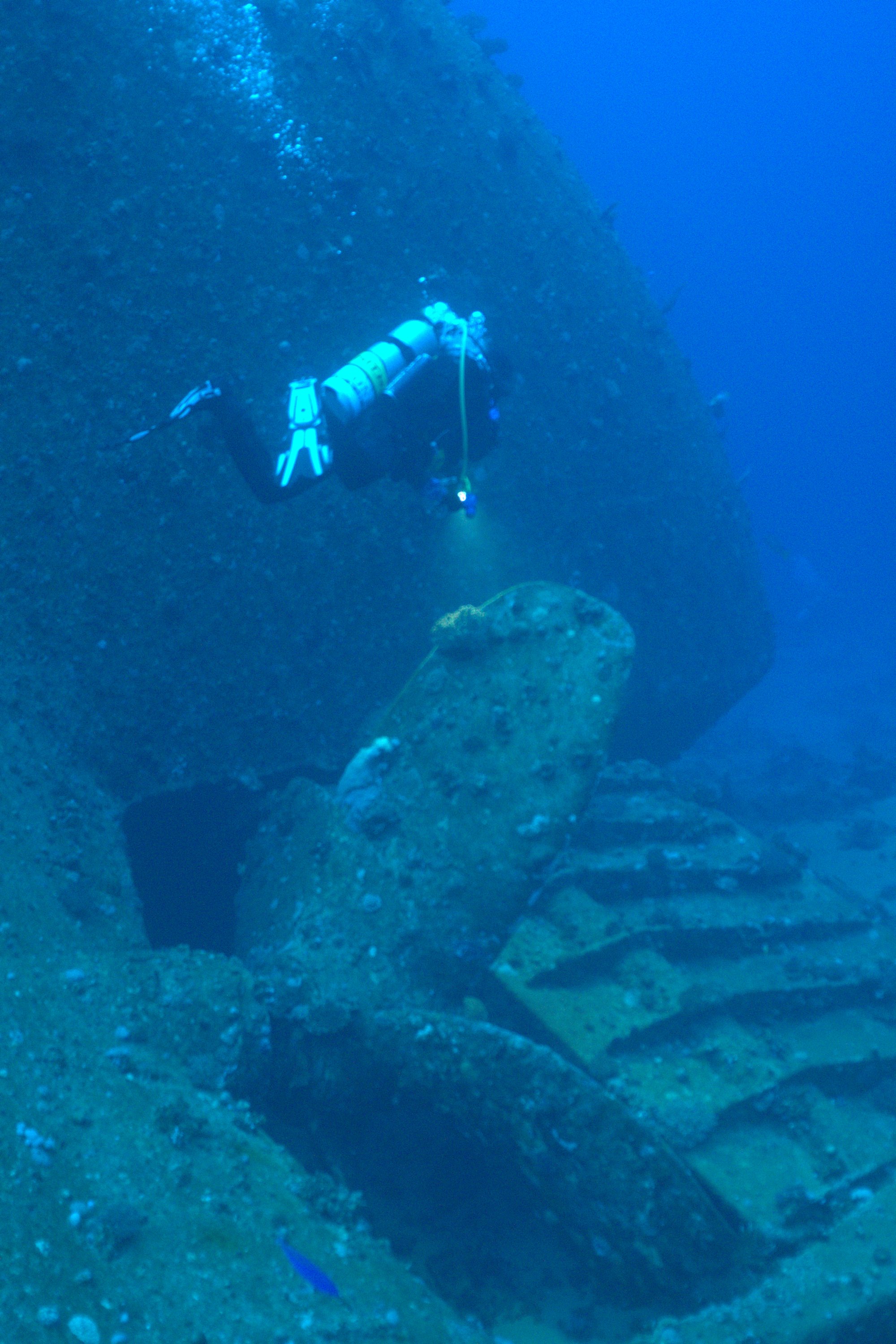
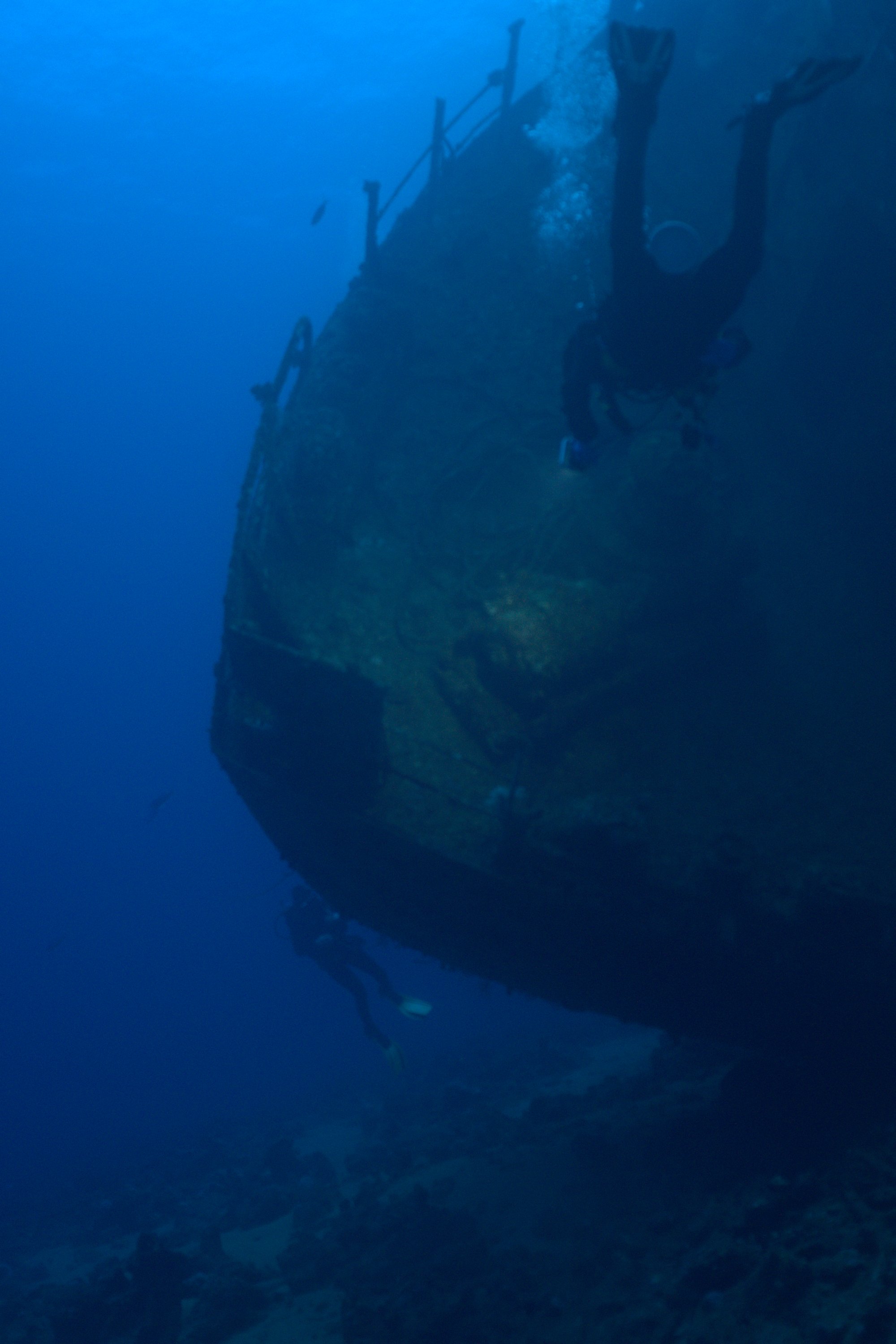
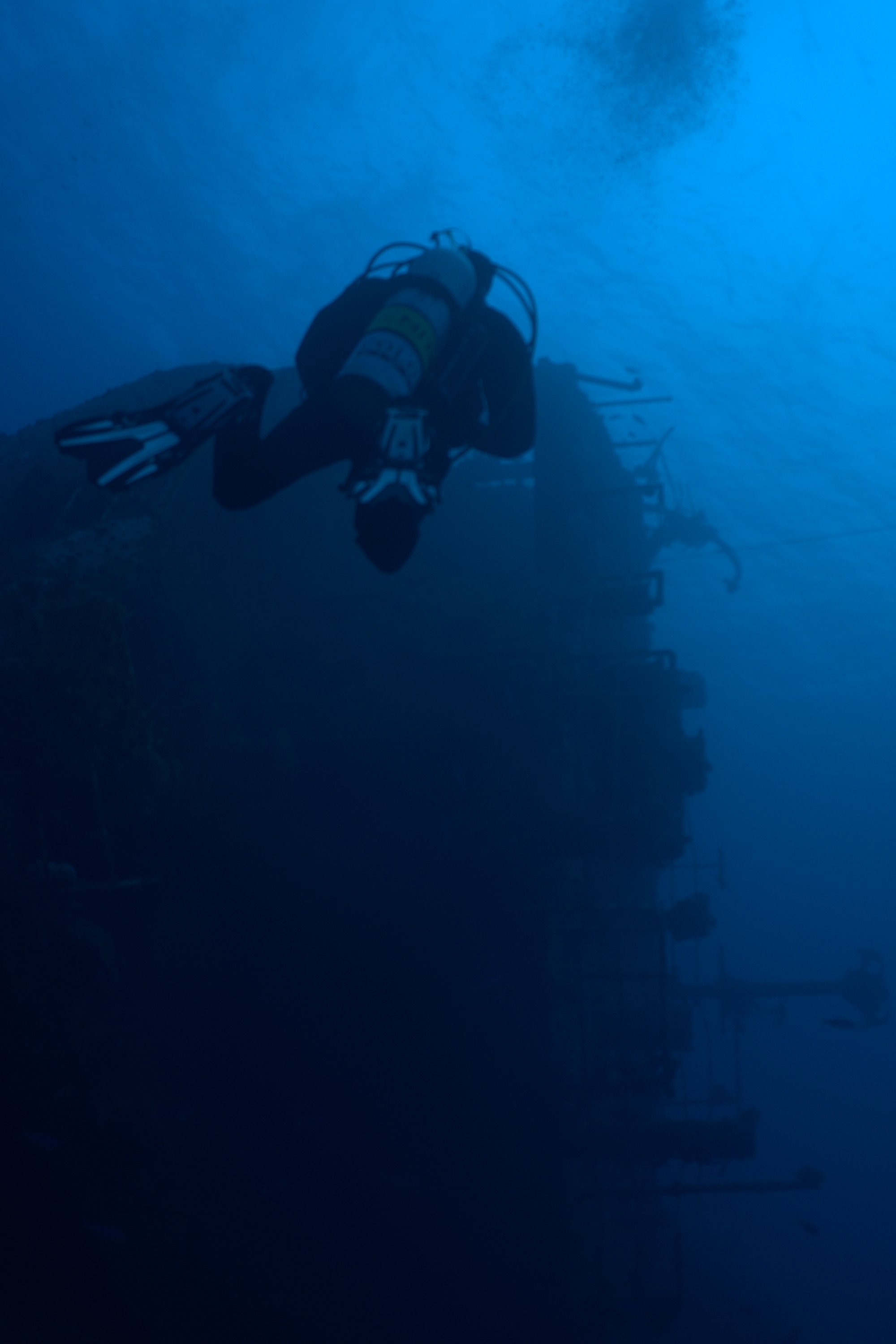
Descending through the blue towards the Strait of Gubal seabed, the Kimon M materialises as a dark silhouette resting on her starboard side — 120 metres of steel cargo ship, the largest structure at Abu Nuhas. At the stern, a massive propeller juts into the water column at 32m, framed by exposed engine machinery that creates some of the most dramatic wide-angle compositions on any Red Sea wreck. The engine room opens into shadowed passages where groupers hold station in crevices and lionfish drift among the ironwork.
Moving forward along the hull, the wreck's 46-year immersion becomes apparent. Soft and hard corals have colonised the steel plates, and careful scanning of the encrusted surfaces reveals the site's signature residents: pipefish, multiple species, their elongated forms pressed against the wreck structure. This is the one marine life feature that consistently distinguishes the Kimon M from her three neighbouring wrecks.
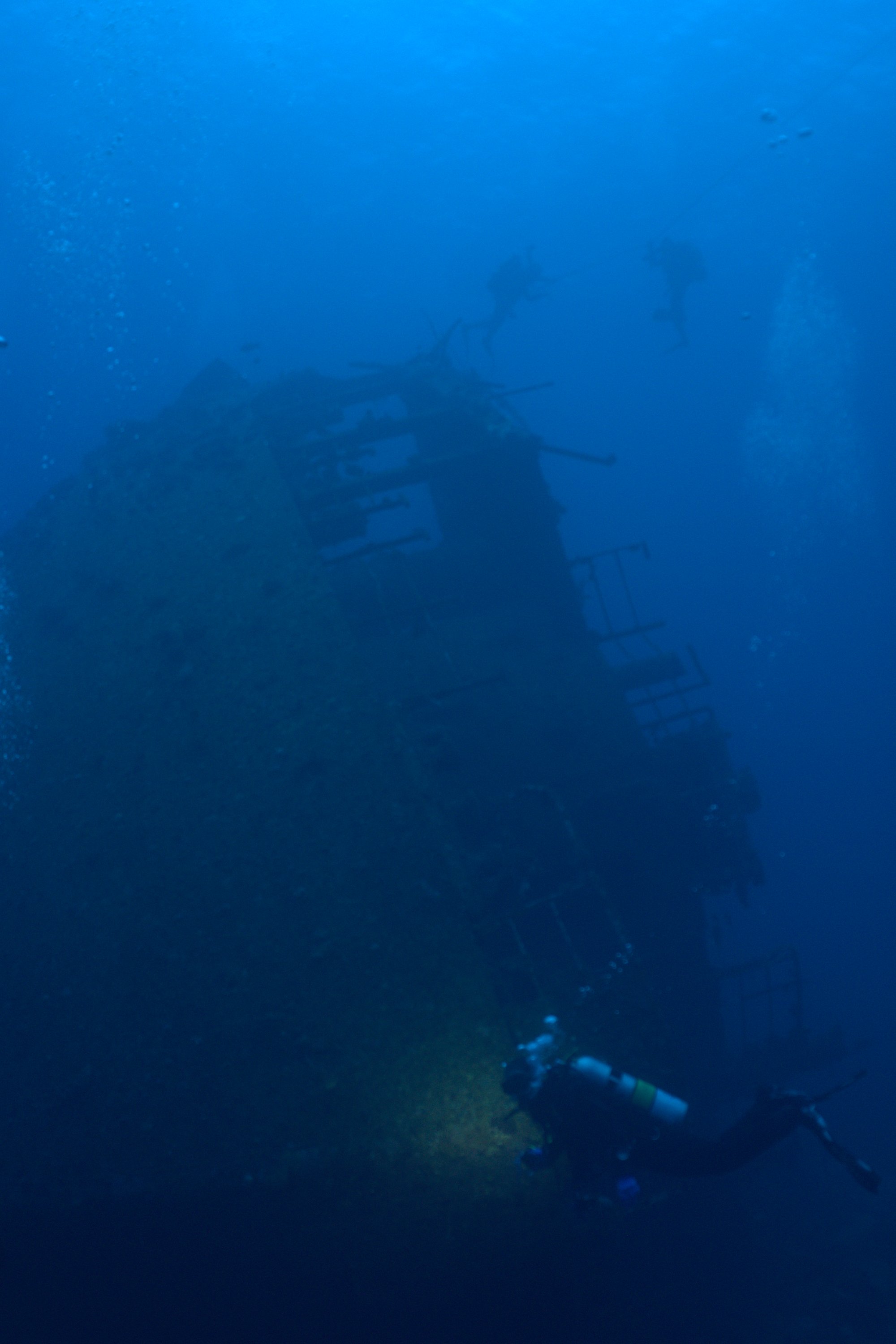
The midship section shows the wreck's age — partially collapsed, with structural members creating unplanned swim-throughs that require good spatial awareness. Beyond this, the bow dissolves into a scattered debris field where the ship's forward structure has broken apart over decades of current and corrosion. The contrast between the intact stern and the disintegrating bow tells the story of a wreck in transition, still revealing new passages and features as the structure continues to shift.
Because the Kimon M reaches 32m at the stern, it is almost always the first wreck dived each morning at Abu Nuhas. This scheduling logic — deepest first, progressively shallower through the day — means arriving at the wreck in early light, often with good visibility and fewer boats. The trade-off is limited bottom time: even on nitrox, the deep sections demand discipline with the dive computer.
What makes it special
Four wrecks rest within swimming distance of each other at Abu Nuhas, all within recreational limits. The Giannis D gets the most attention for its photogenic stern section; the Carnatic draws history enthusiasts to the Red Sea's oldest diveable wreck; the Chrisoula K offers easy penetration through tile-filled holds. The Kimon M occupies its own niche as the biggest, the deepest, and the least visited of the four.
That relative obscurity is part of the appeal. Where the other three wrecks may have multiple groups of divers exploring simultaneously, the Kimon M often has just one or two teams on it. The stern propeller and engine room — the wreck's highlight features — can be explored and photographed without competing for position. For macro photographers, the pipefish colony offers subjects that simply are not found on the neighbouring wrecks.
The wreck's history adds a human dimension. She departed Turkey bound for Bombay carrying thousands of tonnes of lentils, struck the north-east corner of Abu Nuhas reef on 12 December 1978, and sank. Her crew was rescued by the passing ship Interasja and taken to Suez. Originally she sat upright on the reef, but over the following years currents and wind rolled her onto her starboard side and pushed her into deeper water — a slow-motion second sinking that continues to reshape the dive site today.
Know before you go
The 32m stern depth places this firmly in Advanced Open Water territory. Bringing nitrox is not optional in practical terms — on air at 32m, the no-decompression limit is around 16 minutes, barely enough to reach the propeller and turn around. On EANx32, bottom time extends meaningfully, allowing a proper exploration of the stern section before ascending through the shallower midship and bow areas.
Currents at Abu Nuhas range from negligible to strong, particularly where the Kimon M lies at the north-east corner of the reef where Suez Canal currents converge. A descent line, when available, makes reaching the wreck easier on days with flow. Carry an SMB — current can push you away from the wreck during ascent, and the boat needs to find you.
The wreck's structural condition varies section by section. The stern is solid and navigable; the midship section is partially collapsed with sharp edges and reduced overhead clearance; the bow is an open debris field. Penetration requires wreck diving experience, a good torch, and awareness that silt disturbance in enclosed spaces reduces visibility quickly. For those who prefer to stay outside, the hull exterior and debris field offer plenty of interest, including the pipefish that inhabit the outer structure.
Liveaboard is the practical way to dive the Kimon M. Abu Nuhas sits 65 km from Hurghada in the Strait of Gubal — reachable by day boat, but the 90-minute-plus transit each way makes a liveaboard far more sensible. Northern Red Sea itineraries from Hurghada or Sharm El Sheikh typically include all four Abu Nuhas wrecks alongside other Strait of Gubal sites.
Depth & Profile
Location
27.5814°N, 33.9319°E
Conditions
Difficulty & Certification
Deepest of the four Abu Nuhas wrecks; medium to strong currents possible; penetration hazards in collapsed sections
Frequently Asked Questions
▾
▾
▾
▾
▾
▾
▾
Photos & Video
Jouni Kuisma
Jouni Kuisma
Jouni Kuisma
Jouni Kuisma
Jouni Kuisma
Log your dives
Track every dive with depth, duration, conditions, and marine life sightings. Join a club and share your underwater experiences.
Try DiveLog — it’s free