

Andreas Diving
Family-run SSI center on Menuda Beach in Tossa de Mar since 1998, with eco-guide philosophy, 17 dive sites, and authorized Cressi service.
SSI4 languages
Also known as: Montilivi
Deep precoralligenous reef off Tossa de Mar at 21-36 m, praised locally as the area's most scenic landscape dive, with fish schools and vast terrain.
Last updated April 2026
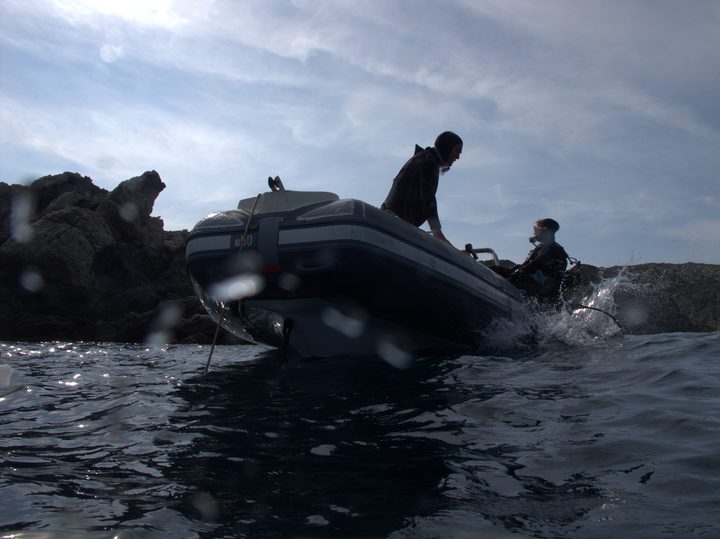
After a 20-minute boat ride from Tossa port, the longest navigation of any standard site here, divers drop into a precoralligenous landscape at 21 m. There is no shallow warmup. The reef spreads out rather than rising up, a broad rocky plain textured with formations, cavities, and old fishing nets snagged on the rock. At 24-26 m, the typical cruising depth, morays thread through crevices while conger eels sit deeper in the gaps. Dentex schools patrol the open water above. The terrain keeps going. One dive covers a fraction of what is there. Rock cavities shelter nudibranchs, lobsters, and scorpionfish. At the deeper edges, the formations drop to 36 m before meeting sand.
Local operators call this the prettiest dive in the Tossa area. Not for a single species or a dramatic drop-off, but for the underwater landscape itself. The precoralligenous plain is large enough for three or four separate dives, each covering different ground. That scale is rare on the Costa Brava. The old fishing nets tangled in the rock give the terrain a character that groomed shore dives lack. Fish life is consistently dense. The site sits on what divers describe as an important passage for pelagic species. Sunfish have been filmed here. Tuna pass through. Among experienced Costa Brava divers, Montirivi has a quiet repeat-visit reputation.
Air management matters here. At 24-26 m average depth, bottom time is limited, and the vast terrain tempts you to push it. The deepest areas at 34-36 m eat through a tank fast. Nitrox is worth carrying. Old fishing nets on the rock are a visual feature but also an entanglement hazard. Keep clear and carry a cutting tool. The site is large enough that group separation is a real concern. Dive with a guide on your first visit. Below the thermocline year-round at this depth, expect bottom temperatures of 16-20 C even in summer. Plan your exposure suit for the bottom, not the surface.
What makes this dive site stand out.
Area large enough for 3 to 4 separate dives across its rocky formations.
Dentex schools and abundant morays, conger eels, and nudibranchs across the reef.
Nets caught on the formations give the terrain a distinctive character.
Open-water position brings occasional sunfish, tuna, and barracuda through the site.
41.7300°N, 2.9500°E
September-October sweet spot for warm water, returning visibility, and fewer crowds.
Approximate area-wide guided boat dive rate. Verify current rates with your dive center.
Minimum depth of 21 m exceeds Open Water limits. CMAS 2-star or PADI Advanced Open Water required. Deep Diver specialty advisable for the 34-36 m areas.
Summary
Depth range 21-36 m with large area requiring good navigation awareness and air management. Group separation risk flagged by experienced local divers.
Safety considerations
What can go wrong here, and what divers do about it. Conditions change - take the briefing from the operator on the day.
Book a guided dive at this site.
Family-run SSI center on Menuda Beach in Tossa de Mar since 1998, with eco-guide philosophy, 17 dive sites, and authorized Cressi service.
Get in touch to add or claim your dive center listing on DiveCodex.
Advanced Open Water or CMAS 2-star minimum. The shallowest point is 21 m, already beyond Open Water limits. For the deepest sections at 34-36 m, a Deep Diver specialty is advisable. Nitrox certification adds real value given the depth profile.
The area's longest-established dive centre singles it out as the prettiest dive for scenery. The precoralligenous terrain covers an unusually large area with clean water, dense fish schools, and rock formations draped in old fishing nets. Most Tossa sites can be explored in one dive. Montirivi cannot.
Large enough for 3 to 4 separate dives covering different sections. Each visit reveals new terrain. This makes it one of the few Tossa sites that genuinely rewards repeat visits.
Yes. The site reaches 34 m, where enriched air extends bottom time and reduces nitrogen loading. At the typical depth of 24-26 m, standard air works but Nitrox provides a more comfortable margin for exploration.
Dentex schools are the standout encounter, alongside moray eels, conger eels, scorpionfish, octopus, lobsters, and nudibranchs in the rock cavities. The site sits on a pelagic passage zone. Sunfish and tuna pass through occasionally, though sightings are seasonal and not guaranteed.
Both are deep advanced dives in Tossa's far sector. Santa Anna is a single pyramidal pinnacle at 25-36 m known for its sunfish cleaning station. Montirivi is a broad precoralligenous plain at 21-36 m valued for its vast terrain and landscape beauty. Santa Anna is more vertical, Montirivi more horizontal.
Log your dives - notes, photos, conditions and the marine life you saw - and share them as one public diver profile. What you share helps the next diver, too.
Log every detail
Depth, duration, conditions, gear, buddy, notes — all in one place. Import from Suunto and other dive computers.
Track marine life
Record species sightings on each dive. Build a personal catalogue of everything you've seen underwater.
Your public dive profile
Share your dive history, stats, and experiences with a profile page you control. Show the world where you've been.