

Posidonia Dive
SSI Instructor Training Center at Port Balis marina, 35 km north of Barcelona, running 24 boat dive sites on the Maresme coast year-round.
SSI8 services3 languages
Oval rocky ridge at 19-28m off Port Balis, current-exposed and crevice-dense, sitting at the deeper end of the Maresme barra rotation.
Last updated April 2026
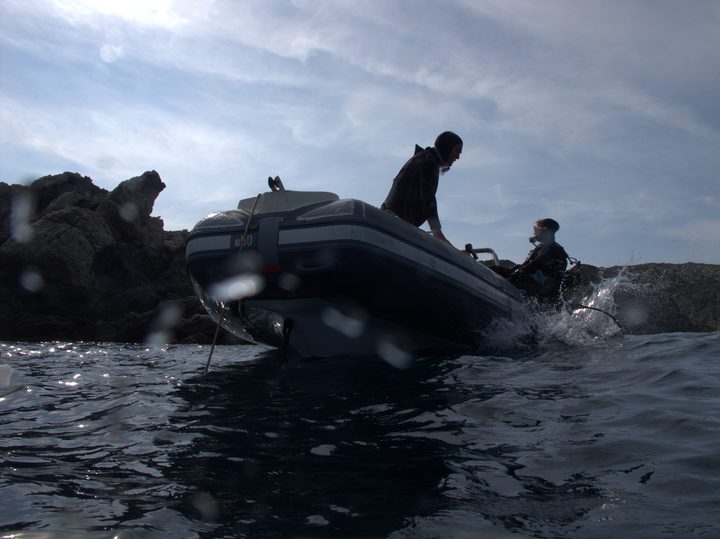
The boat runs 10 to 15 minutes out of Port Balis and drops anchor on top of the oval. There is no fixed buoy on this ridge. The anchor itself is the descent and ascent reference, and the centre runs a guide line across the rock so divers can find their way back. Down the line, the rock opens out at 19 to 21 metres in a shape that is rounder than the long parallel ridges that define most of this coast. The defining detail is crevice density. The porous rock holds endless holes, ledges, and overhangs, and the dive is torch-in-hand work along that texture rather than fast travel across distance.
The plan starts at the anchor and follows one side of the oval, almost always against any current present so the return leg runs downstream. On a current day this matters: a November 2025 owner log captured a "started north with current, inconveniently" decision that turned the swim home into a slow battle. The current is episodic on this ridge, not constant, but Montseny is one of three Port Balis sites where strong current is genuinely documented. The flanks of the oval slope from the 19 metre top down to 27 to 29 metres on the sand line, so most of the working dive sits in the 22 to 26 metre band. That is why both the operating centre and the platform listings flag Nitrox rather than treat it as optional. The NE side of the anchor tends to carry richer crevice life than the SW, a planning detail that does not appear on any centre page.
Bottom return is the opposite flank at shallower depth, ending at the anchor for a controlled ascent. Visibility is the wild card on this coast. A summer-calm dive can deliver 18 to 25 metres of clean water; a December 2025 owner dive recorded 2 metres of visibility after days of rain despite a sunny surface, with the ascent guideline becoming the navigation reference rather than the ridge itself.
Montseny is what divers in the Port Balis rotation reach for when the shallower ridges feel routine. Three things separate it. First, the shape: an oval rather than a long parallel ridge, which compresses crevice density into a smaller footprint and rewards a slow-traverse style of diving. Second, the depth: at 22 to 26 metres on the working bottom, NDLs run short on air and Nitrox becomes the local default rather than an upgrade. Third, the current pattern: episodic but documented, enough that planning direction off the anchor is a real decision rather than a formality. The fauna mix is the standard Mediterranean reef palette. Morays sit in the holes, scorpionfish on porous rock, congers in deeper recesses, an occasional small lobster, and a single grouper or barracuda passing through. Postcard-class species are not the draw. The terrain and the technique are.
Plan against any current present on the day. Starting downstream is the lesson divers learn the hard way on this ridge, with a slow swim back through the working depth band eating into NDL margin. A computer and SMB are mandatory at this depth and a working compass earns its place across the oval. The anchor-cross line the centre lays helps but should not be the only way back. Carry a torch. The dive lives inside the crevices, and ambient light alone does not reveal what is tucked into the rock. Match the wetsuit to the working depth, not the surface — summer thermocline puts bottom temperature at 15 to 18 degrees while the surface sits at 20 to 22. Drysuit or 7mm semi-dry from November through April. Solo diving is not appropriate here. Buddy team, ideally with a guide who knows the NE side of the anchor better than the SW. And check conditions with the centre on the morning of the dive. A sunny week after heavy rain can still deliver 2 metres of visibility regardless of the forecast.
What makes this dive site stand out.
Distinct shape vs the long parallel ridges of Mataro, with a 19m top dropping to 27-29m on the sides
One of three Port Balis sites where strong current is documented; plan direction at the anchor
Torch work pays off, with morays, scorpionfish, congers, and small lobsters tucked into the holes
Most of the dive sits 22-26m where bottom time is the limiting factor on air
41.5514°N, 2.5520°E
Warmest water and longer summer-calm windows. Electric ray observation window concentrates in August-September.
Verify current rates with Posidonia Dive.
Posidonia lists it for all levels, but the 25-29m sides and episodic current push this past beginner-friendly in practice.
Summary
Depth, episodic current, and the 22-26m bottom band are the difficulty drivers. Crevice navigation is straightforward on the oval.
Safety considerations
What can go wrong here, and what divers do about it. Conditions change - take the briefing from the operator on the day.
Book a guided dive at this site.
SSI Instructor Training Center at Port Balis marina, 35 km north of Barcelona, running 24 boat dive sites on the Maresme coast year-round.
Get in touch to add or claim your dive center listing on DiveCodex.
Dive centres in Catalonia must require insurance from every diver on their dives, and must be able to offer a policy to anyone who has none.
Advanced Open Water is the practical floor. Posidonia lists the site for all levels, but the working depth runs 22-26m with excursions to 27-29m on the sides. Open Water divers should pair with the centre's experienced guide on a conservative profile rather than dive it on a fresh certification.
Episodic but real. Most days are calm, but a November 2025 dive recorded current strong enough to dictate direction off the anchor. The pattern to avoid is starting downstream and battling back. Plan the ridge traverse against any current so the return leg runs downstream, and the dive is straightforward.
Most of the dive sits at 22-26m and the deeper sides reach 27-29m. On air, bottom time runs short before you have worked the crevices. EAN31-32 turns a 25m profile into a meaningful dive instead of a quick descent and ascent. Both the operating centre and the platform listings flag this specifically.
Late June through early October for warmest water and longer summer-calm visibility windows. August and September concentrate the electric-ray observation window. Winter and early spring divers find the site quieter and the visibility more variable, with drysuit or 7mm semi-dry as the appropriate exposure.
Yes for divers with AOW and Nitrox who want a deeper ridge in the Port Balis rotation without driving to the Costa Brava. Thirty minutes by car, 10-15 minutes of boat transit, and a moderate but committing profile. It pairs naturally with a shallower second dive at La Virgen or El Trencat on the same morning.
August and September concentrate the documented observation window for electric rays on this ridge. They are not a guarantee on any given dive. The defining experience here is crevice work for morays, congers, scorpionfish, and small lobsters; the ray window is a seasonal bonus rather than a planning anchor.
Log your dives - notes, photos, conditions and the marine life you saw - and share them as one public diver profile. What you share helps the next diver, too.
Log every detail
Depth, duration, conditions, gear, buddy, notes — all in one place. Import from Suunto and other dive computers.
Track marine life
Record species sightings on each dive. Build a personal catalogue of everything you've seen underwater.
Your public dive profile
Share your dive history, stats, and experiences with a profile page you control. Show the world where you've been.