
Peu de Negre
Also known as: El Peu del Negre, Peu de Negre
South-west foot of the 1.5km Barra del Negre formation off Port Balis, working at 22-26m on porous rock with crevice-focused fauna.
Last updated April 2026
The dive
Peu del Negre is the south-west bookend of the Barra del Negre, the 1.5km continuous rocky ridge that runs along this stretch of the Port Balis coast. The boat anchors over the Peu end of the formation, a navigation line is run across the rock from the anchor, and the descent settles into porous rock at 22 to 26 metres on the working flank. From there the choice is which direction to follow first, with the deeper or counter-current side taken outbound and the shallower top of the ridge for the return leg back to the anchor.
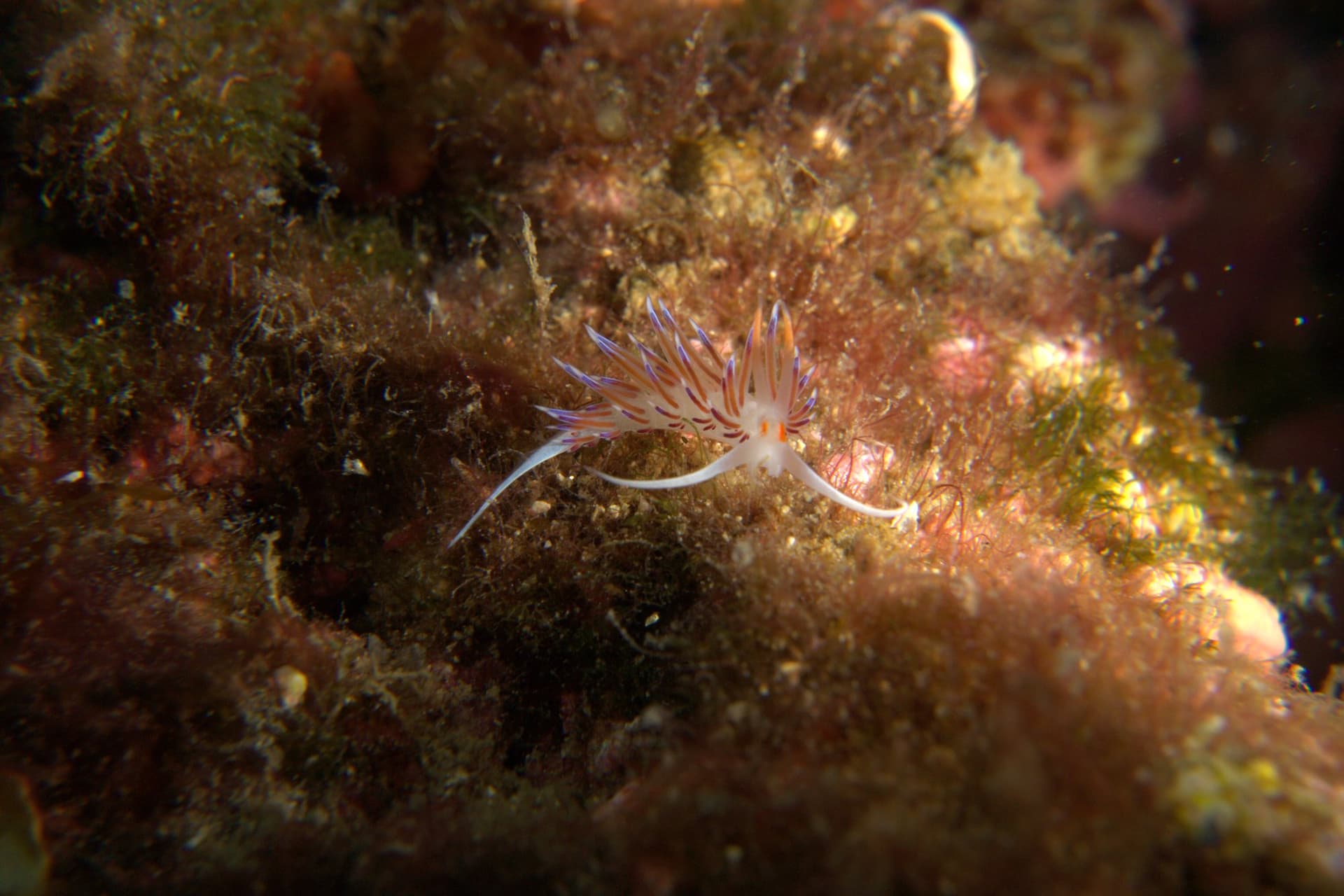
The dive's tempo is set by torch work in the rock structure rather than fast travel. Crevices and overhangs are the headline interest on this kind of ridge, and the porous biogenic rock holds the small life: morays in the holes, conger eels in deeper recesses, spiny lobsters tucked under ledges, octopus on the rock-and-sand interface. An older personal log from 2010 recorded a 26.6 metre bottom on this anchorage with a buddy completing 23 minutes of decompression on the same dive, which is the practical signal that the deeper flank is accessible from this entry point and that bottom time on air is the trade-off. Nitrox extends that bottom time and is the local default for the deeper Maresme ridges.
Visibility is the variable that matters more than depth on this stretch. Summer-calm conditions can deliver 18 to 25 metres of clean water; post-rain dives drop into the 1 to 5 metre band even when the surface is sunny. The dive ends as it began, back along the centre-laid line to the anchor and a controlled ascent.
What makes it special
What sets Peu del Negre apart from the other Negre-cluster anchorages is its position rather than its fauna. As the south-west foot of the formation, it pairs naturally with Ancora del Negre in the middle and Punta Cana at the NE terminus. Picking Peu over the other two anchorages on a given day is mostly a question of which end of the structure suits the day's current and which depth band the group wants to work. The fauna palette is the standard Maresme rock-crevice mix, not a destination-grade signature: no resident large species are documented here, no signature wreck, no notable concentration of gorgonians or anthias. The dive matters because it is the deeper-and-quieter end of the Port Balis rotation, and because it completes the picture of the Barra del Negre as a single continuous formation that the area's regulars work in three different ways.
Know before you go
Bring Nitrox. The 22 to 26 metre working depth makes EAN31-32 the appropriate gas; on air the bottom time is too short to work the crevices. Carry a torch for crevice scanning, a computer and SMB for ascent, and a working compass for navigation along the ridge. Suit choice tracks bottom temperature, not surface: 5mm with hood for summer, drysuit or 7mm semi-dry for spring, autumn, and winter. The dive style is slow rock-line drift with patient observation, not fast distance over the ridge. Bookings run through Posidonia Dive at Port Balis.
Why Dive Peu de Negre
What makes this dive site stand out.
- SW foot of Barra del Negre
Anchored at one end of a 1.5km continuous underwater ridge, paired with Ancora del Negre and Punta Cana
- 22-26m working depth
Deeper than most Mataro bars; sits in the area's Nitrox-favouring band
- Porous-rock crevice habitat
Standard Maresme small-life palette: morays, congers, lobsters, octopus, macro subjects
- Calm Port Balis profile
Not flagged as a current-exposed site; navigation along the ridge is straightforward
Depth & Profile
Location
41.5350°N, 2.4900°E
Conditions & difficulty
Warmest water and longer summer-calm visibility windows. Diveable year-round with appropriate exposure.
Verify current rates with Posidonia Dive.
Open Water possible on the shallower top of the ridge, but the working depth at the Peu end (22-26m) approaches the OW boundary.
Summary
Depth and crevice torch work are the difficulty drivers. Navigation along the ridge is straightforward; current is not flagged here.
Safety considerations
What can go wrong here, and what divers do about it. Conditions change - take the briefing from the operator on the day.
- Depth: Bottom band 22-26m squeezes air NDLsPlan on Nitrox. Watch the computer.
- Visibility: Post-rain visibility can drop to 1-5mCheck conditions with the centre on the morning of the dive
Marine Life
Rules and permits
Dive centres in Catalonia must require insurance from every diver on their dives, and must be able to offer a policy to anyone who has none.
Frequently Asked Questions
What is the Barra del Negre and how does Peu fit in?▾
Barra del Negre is a continuous underwater rocky ridge running roughly 1.5km along the coast off Port Balis. Boats anchor at three named entry points along the formation: Peu del Negre at the south-west foot, Ancora del Negre in the middle, and Punta Cana at the north-east terminus. Each anchorage works a different depth band on the same continuous structure.
What certification do I need for Peu del Negre?▾
Advanced Open Water is the practical floor. The shallower upper part of the formation sits at 15-22m, but the Peu segment specifically works in the 22-26m band, which approaches the OW depth boundary. AOW divers find the dive comfortable; OW divers should pair with a guide and stay shallower.
Is Peu del Negre a current-exposed dive?▾
How does Peu del Negre compare to Ancora del Negre?▾
Same formation, different anchorages. Ancora del Negre sits in the middle of the 1.5km ridge and reaches deeper, with broader rock-crevice habitat on both flanks. Peu del Negre marks the SW foot of the same ridge and tends to sit slightly shallower at the working bottom. Many Maresme regulars rotate between the three Negre anchorages depending on group depth comfort and current direction.
Why is Nitrox the local standard at this depth?▾
At 22-26m on the working bottom, air NDLs erode quickly. The crevice work that defines this dive needs bottom time to be worth the descent. EAN31-32 materially extends that bottom time and improves the safety margin on a profile that already runs deeper than the shallower Mataro bars. Posidonia offers Nitrox fills at Port Balis.
Photos
Every dive has a story. Share yours.
Log your dives - notes, photos, conditions and the marine life you saw - and share them as one public diver profile. What you share helps the next diver, too.
Log every detail
Depth, duration, conditions, gear, buddy, notes — all in one place. Import from Suunto and other dive computers.
Track marine life
Record species sightings on each dive. Build a personal catalogue of everything you've seen underwater.
Your public dive profile
Share your dive history, stats, and experiences with a profile page you control. Show the world where you've been.