
Cap de Creus Dive
PADI 5-Star center in El Port de la Selva with brand-new Aqualung gear, max 4 divers per guide, and year-round boat diving in Cap de Creus Natural Park.
PADI4 languages
Also known as: El Port de la Selva, Puerto de Selva
Northern access point for Cap de Creus Natural Park, with boat dives to 20+ Paleozoic walls, caves, gorgonian gardens, and the 1884 Woodside wreck.
Last updated May 2026
Two boat dives, a surface interval at the dock or on one of the 39 park buoys (three-hour cap per buoy), and a site choice driven by the morning's wind read.
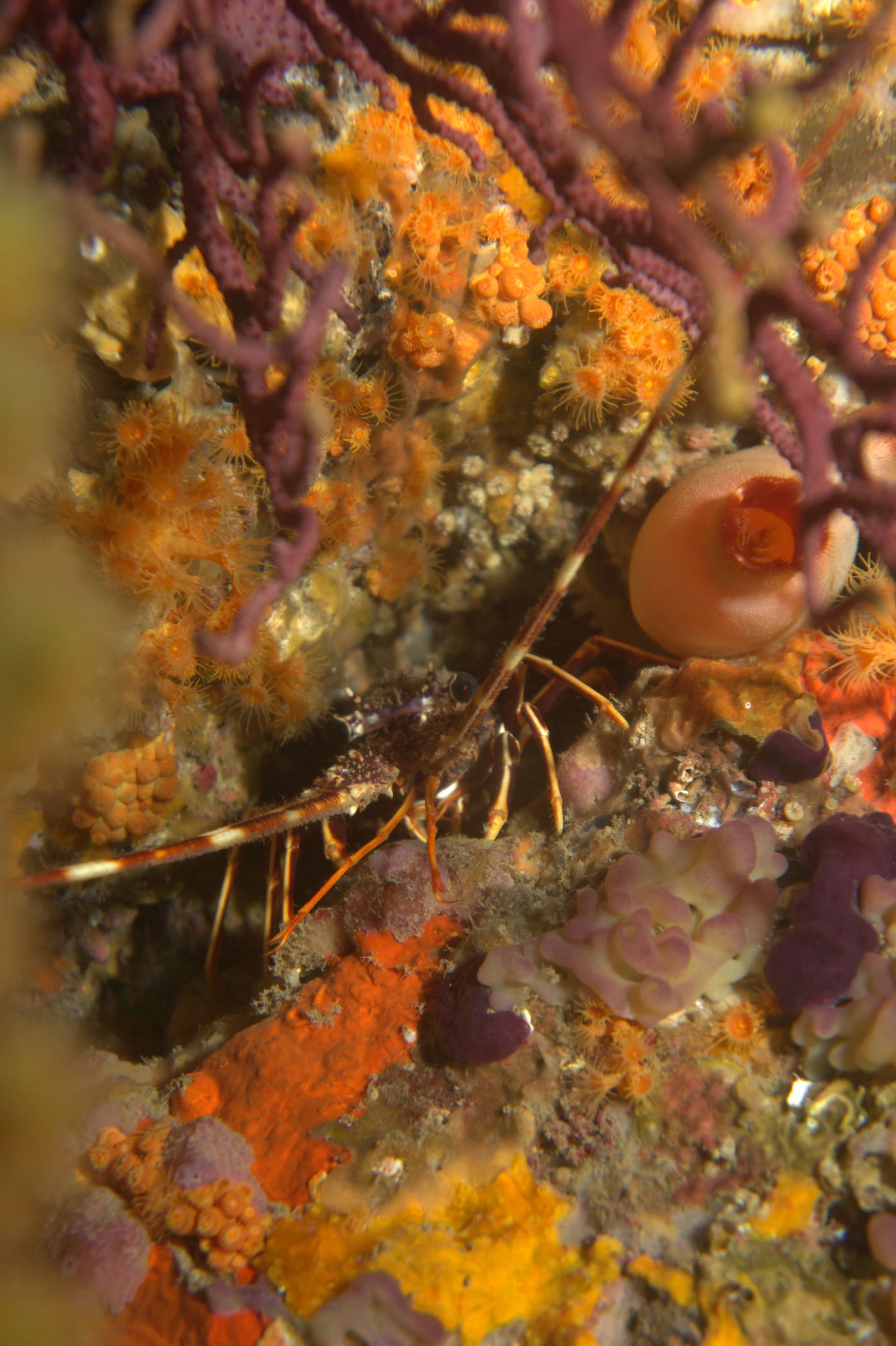
The underlying script is recognisable across the sector. Descend onto a Paleozoic wall or pinnacle, follow pegmatite dikes that protrude from softer schist, work through canyon channels and swim-throughs cut by differential erosion. On the Woodside the routine is to drop to the deck at 25m, work the rail under its red-gorgonian coat, look in through structural gaps for anthias and nudibranchs on the encrusted plates, then ascend the buoy line. El Molar is gentler: sand and rock from 12 down to 25m+, white and red gorgonian fingers, anthias schools, no current to fight, and monkfish on the sand in winter.
Above the wall the summer drama belongs to the schools - one logged August dive recorded anchovies pursued by tunas across the column. Below 15m the thermocline does the rest: surface water sits near 23C in August and bottom water reads 14C at 25-30m, so the briefing leans hard on exposure suit and hood for the bottom phase.
Three access points share the same natural park, each defining itself against the others. Cadaques runs the headline pinnacles. Roses runs the southern coast. Port de la Selva runs the northern sector - the stretch from Els Farallons through Cala Culip and around the Woodside to Cap Gros - and that stretch is the least-dived part of the park. The trade is honest: same Paleozoic geology, same protection regime, quieter buoy lines, paid for in more weather-dependent days.
The harbour supports three operators with no exclusive access. Cap de Creus Dive and CIPS run as PADI 5-Star centres with multilingual staff and full tech progression. The CNPS Nautical Club section is the working-club end - around 30 euros for a member dive, baptisms from age 8, and an annual seabed cleanup. All three share the same coastline, so the atmosphere is less about brand and more about place: short boat hops, lighter buoy traffic, and centres that lead with geology over fish count.
The defining wreck is the SS Woodside, an English steamer running Sete to London in 1884 when fog closed in and put her on the bottom. She sits at around 25m, gorgonian-draped, with deck and rail open enough to fin alongside and look in through structural gaps. It is the single named wreck every source agrees belongs to this sector.
Cap de Creus was declared Catalonia's first maritime-terrestrial natural park in 1998 under Ley 4/1998. In July 2025 the new PRUG fixed the rules in force today: caps on Group A and Group B operator companies, the 39-buoy network, the 80cm fin-length limit, mandatory Geoblau boat tracking, and the ecobriefing on every trip. The cap is not yet binding - roughly 10-12 active centres park-wide against a ceiling of 23.
The northern coast pays photographers in two currencies. Wide angle handles the geology - dark metamorphic walls veined with lighter pegmatite, the swim-through canyons, and the Woodside hull from the deck angle with red gorgonian rosettes filling the foreground. Macro pays out on the wreck plates and at El Molar: nudibranchs across the encrusted metal, anthias against the gorgonian fans, scorpionfish tucked into the schist. The 14C bottom in August is harder on housings than on subjects; condensation discipline matters on summer trips. The CNPS Nautical Club runs an annual underwater photo and video championship under FECDAS scoring.
Tramontana from the north is the deciding voice. It can shut the outer coast for days, and operators redirect to lee-side options or stand the day down rather than fight it. Treat a multi-day trip as a window, not a fixed schedule.
The 2025 PRUG framework applies to every dive. Bring a certification card, a logbook, and medical clearance under two years old; the mandatory ecobriefing covers conservation and the day's zone rules. S'Encalladora north face is closed entirely. Maximum fin length is 80cm. Do not touch gorgonians, archaeological remains, or fishing gear; collection and spearfishing are prohibited.
Plan exposure suit by depth, not surface temperature. A 5mm handles July-August above the thermocline; the wreck and 25m+ walls want a 7mm with a hood. Both PADI centres carry nitrox, with Trimix, Rebreather, and Sidemount progression on offer.
What makes this dive site stand out.
Working-village harbour onto the least-dived sector of the natural park
Schist and pegmatite walls carved by 350 million years of differential erosion
Hull draped in red gorgonians with structural gaps to fin through
Two PADI 5-Star centres plus a CMAS nautical-club section share the same buoy network
Surface 23C drops to 14C at 25-30m in August below a 15m thermocline
42.3365°N, 3.2010°E
Summary
Range across the sector is wide. Sheltered baptism options exist; outer walls and the wreck sit at intermediate-to-advanced level. Tramontana exposure is the recurring complication, not depth or current alone.
Safety considerations
What can go wrong here, and what divers do about it. Conditions change - take the briefing from the operator on the day.
Book a guided dive at this site.
PADI 5-Star center in El Port de la Selva with brand-new Aqualung gear, max 4 divers per guide, and year-round boat diving in Cap de Creus Natural Park.
Get in touch to add or claim your dive center listing on DiveCodex.
Natural park, not a strict marine reserve. Independent diving allowed with prior notification (max 6 dives/day, 30/week, 120/year per person). Authorised centres handle the framework. The 2025 PRUG sets an operator cap that is not yet binding. Bring certification card, logbook, and medical clearance under two years old. Mandatory ecobriefing before the first dive of each trip. Maximum fin length 80cm.
The northern sector of Cap de Creus. Cadaques runs the central pinnacles (Massa d'Or, S'Oliguera) and Roses runs the southern Cap Norfeu coast. Port de la Selva covers the stretch in between, including El Molar, Cala Culip, and the Woodside wreck. The geology is the same Paleozoic backdrop, but the buoy lines are quieter because the northern coast is more Tramontana-exposed and runs fewer dive days.
An English steamer that sank in fog in 1884 en route from Sete to London, now resting at 25m. The hull is draped in red gorgonians; structural gaps let you look through the deck for anthias clouds and nudibranchs on the encrusted plates. The dive runs as a buoy-line descent, a working pass along the rail, and an ascent on the same line. AOW is the practical floor.
Surface temperatures sit around 23C in August, but a sharp thermocline at roughly 15m drops bottom water to 14C at 25-30m. This is the single most important briefing item for July and August diving here. A 5mm wetsuit handles the surface; for the wreck or deeper walls, plan 7mm with a hood for the bottom phase.
Diving with an authorised centre handles the framework for you. Independent divers must notify park management in advance and stay within personal caps (6 dives a day, 30 a week, 120 a year). Everyone needs certification, a logbook, and medical clearance under two years old. A mandatory ecobriefing applies on every trip. The S'Encalladora north face is closed to diving.
Yes. Cap de Creus Dive and the Port de la Selva Nautical Club both run year-round. CIPS Dive operates seasonally with extended periods. Winter diving is possible with a 7mm semi-dry or drysuit; the El Molar monkfish window is a winter draw, and the inner sites stay accessible on most days that exposed walls do not.
Maximum fin length 80cm for scuba divers. Geoblau tracking is mandatory on all operator boats with monthly activity reporting. No touching gorgonians, marine life, archaeological remains, or fishing gear. No spearfishing. Buoy stops are capped at three hours.
No chamber is published as confirmed in the local sources. Reasonable referral routing for any hit would be Hospital Josep Trueta in Girona or a chamber in Barcelona; centres carry the current emergency procedure and the Salvamento Maritimo vessels Salvamar Sirius and Salvamar Alnilam operate in the area.
Log your dives - notes, photos, conditions and the marine life you saw - and share them as one public diver profile. What you share helps the next diver, too.
Log every detail
Depth, duration, conditions, gear, buddy, notes — all in one place. Import from Suunto and other dive computers.
Track marine life
Record species sightings on each dive. Build a personal catalogue of everything you've seen underwater.
Your public dive profile
Share your dive history, stats, and experiences with a profile page you control. Show the world where you've been.