

Cap de Creus Dive
PADI 5-Star center in El Port de la Selva with brand-new Aqualung gear, max 4 divers per guide, and year-round boat diving in Cap de Creus Natural Park.
PADI / SSI10 services4 languages
Current-driven walls, pinnacles and caves on a wind-scoured stretch of the Costa Brava, with grouper aggregations and barracuda schools inside a natural park.
Last updated September 2026
Cap de Creus is built from Paleozoic schist cut by resistant pegmatite dikes, and the differential erosion between the two rock types is what a diver actually swims through: plunging walls, isolated pinnacles, caves and swim-throughs, both above and below the surface, at the point where the Pyrenees run into the Mediterranean. Massa d'Or is the area's signature dive, an offshore pinnacle rising from deep water that concentrates grouper aggregations and barracuda schools in current strong enough to demand real skill. El Gat, off Cap Norfeu to the south, is the more forgiving counterpart: a gorgonian wall stepped from shallow platforms down to deeper ledges, working for a wider range of levels. Isla de Messina, an open-water island east of Port Lligat, pairs pelagic passes with a gorgonian wall and currents that can shift mid-dive. Bau de la Ferrera, a boulder-and-wall dive further south, carries the area's clearest wreck story: the Phedon, a Greek steamer that sank in 1933 in a case Lloyd's investigated for insurance fraud. Out in the Bay of Roses, the Saint Prosper, a French steamer sunk by a mine in 1939, is a deep technical wreck and a war grave, in a different class of diving from everything else here.
The whole coastline sits inside a natural park declared in 1998, 13,843 hectares in total, 10,780 of them on land and 3,056 at sea, and its current management plan, Ordre TER/130/2025, in force since 14 August 2025, narrowed the rules further: diving is banned only in the Integral Reserve at S'Encalladora, on the north face1; everywhere else in the park stays open to diving. Poseidon Diving Roses, which opened in 1972 under the name "Poseidon Nemrod Club," is the oldest dive centre name still tied to the area.
Cadaqués is the natural base for Massa d'Or, Isla de Messina and the lighthouse dives; Roses sits closest to El Gat, Cap Norfeu and the Bau de la Ferrera wreck; Port de la Selva and Llançà serve the quieter northern shore. Girona-Costa Brava is the nearest airport, with Barcelona around two and a half hours away by narrow mountain road, and no coastal road links Cadaqués directly to Port de la Selva. The 2025 park plan also sets two licence categories for commercial dive centres, not a headcount of who is currently working the water: Group A, capped at 15 centres running daily immersions, and Group B, capped at 8 centres limited to 2 activities a week and 20 dives a year. Book ahead in peak season. Independent divers must notify the park in advance; the dive limits are counted per boat, not per diver. Open Water covers the sheltered coves and the Cap Norfeu platforms; the offshore pinnacles ask for Advanced Open Water and comfort in current that can change without warning. May to October is the working season, though the Tramontana can close the exposed sites for days at any time of year, and a booked trip usually just moves to a sheltered alternative.
Paleozoic Variscan schist cut by resistant pegmatite dikes; the two erode at different rates, carving the walls, pinnacles, caves and swim-throughs divers see both above and below the surface.
The diving here splits into 4 zones:
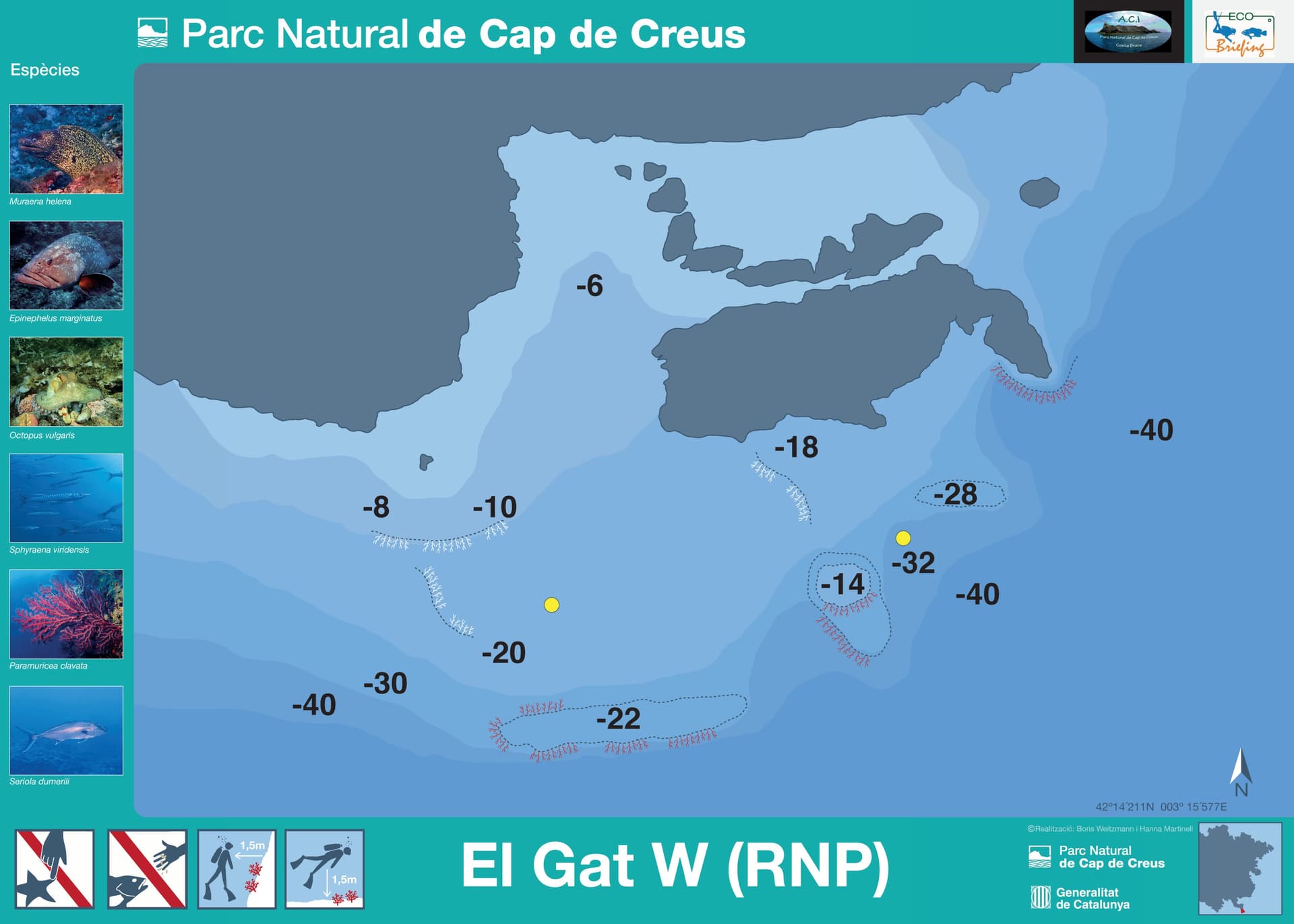
A single wall running white gorgonians shallow to red gorgonians deep
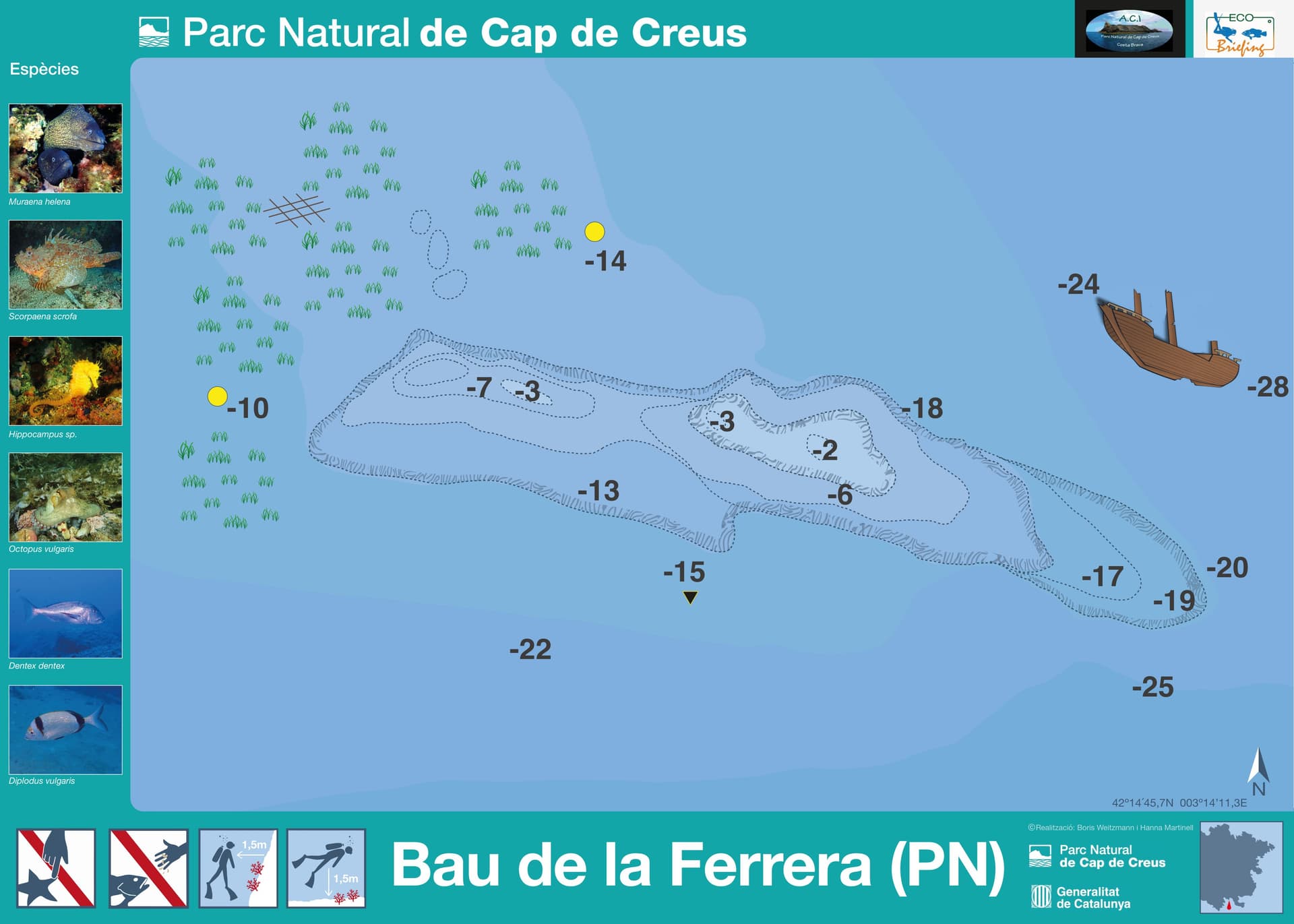
A near-surface Cap de Creus shoal with a 1933 insurance-fraud wreck at its base
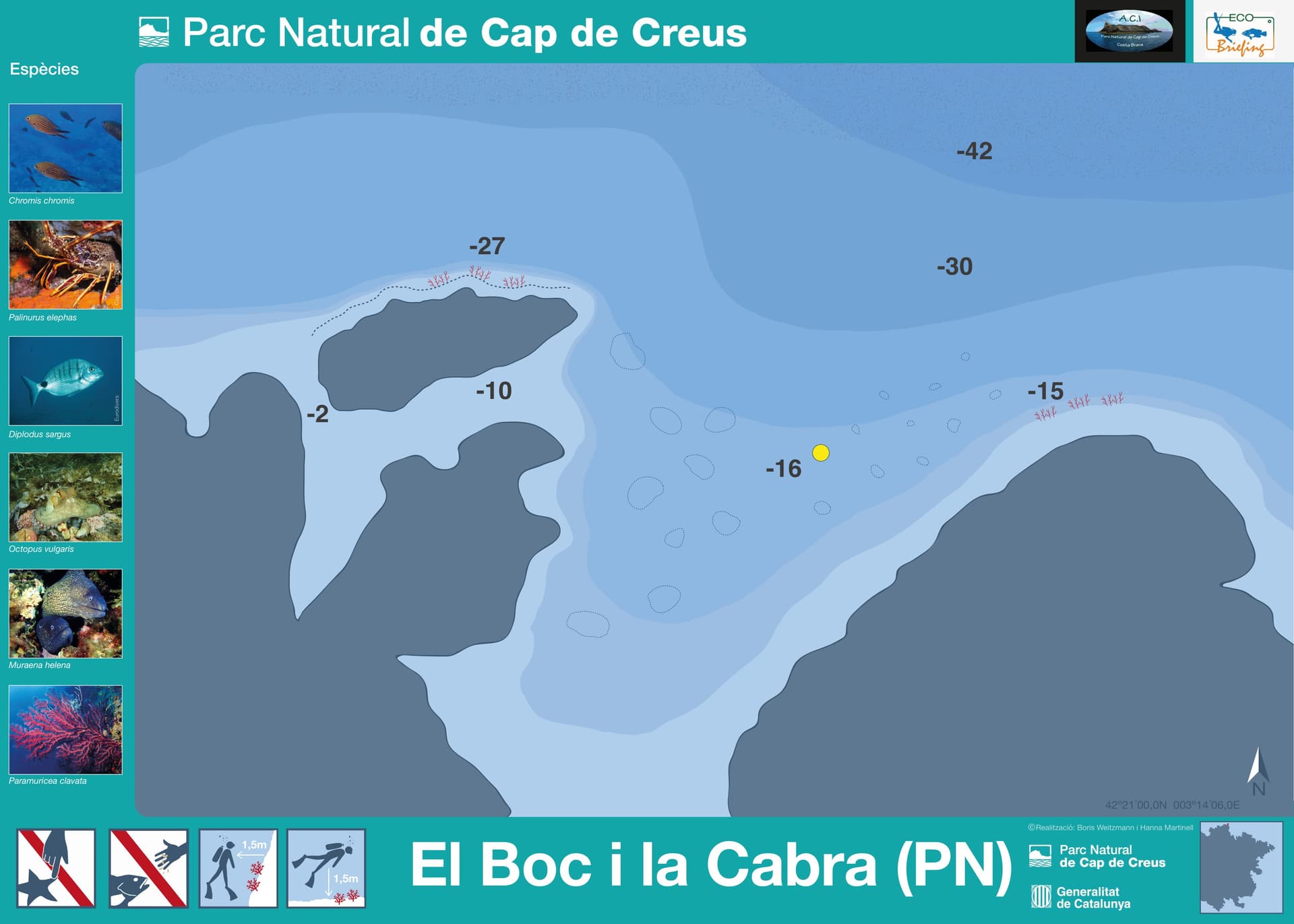
A wall, cave and channel in one Cap de Creus profile, 8-28 m
Cap Norfeu wall with a sardine-filled tunnel and cave at 12 m
A Cap de Creus wall whose cave holds a trapped-air chamber, to 40 metres
A Cap Norfeu wall from an Advanced Open Water shelf to a technical base.
A Cap Norfeu wall spanning a shallow marked point to a tech-grade 48 m base
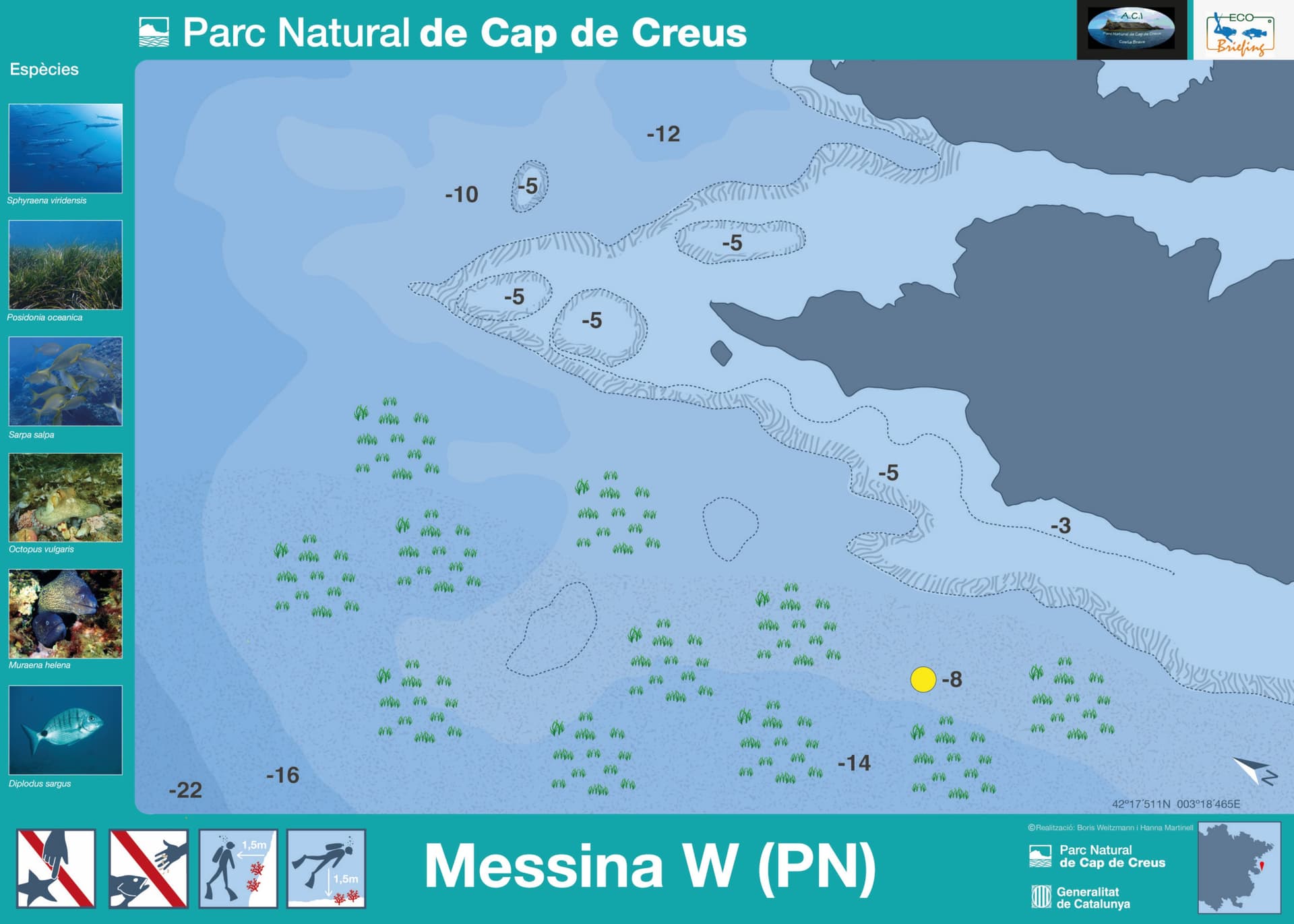
Cap de Creus island with two government routes: a canyon and a Posidonia meadow
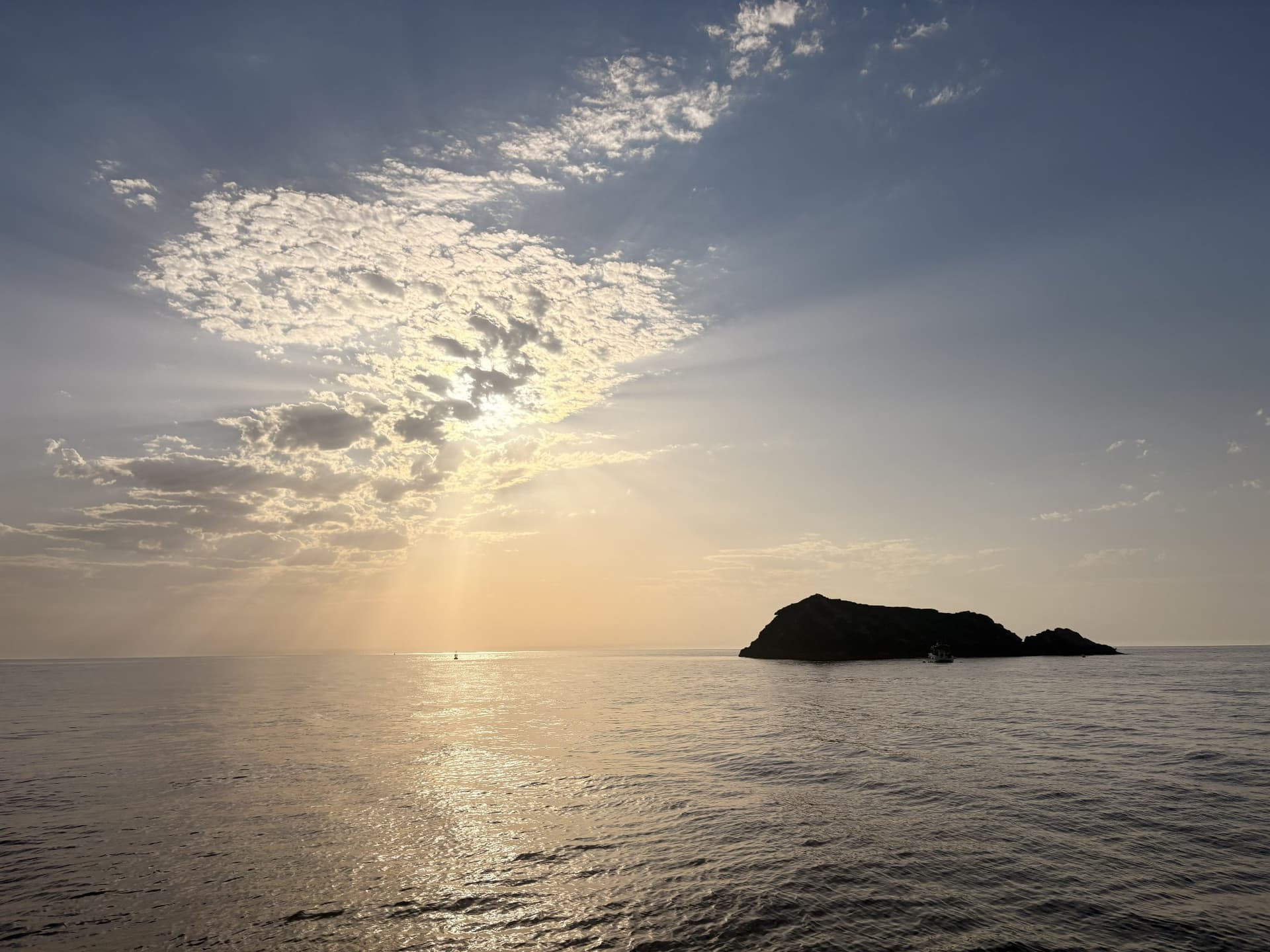
Cap de Creus's flagship pinnacle for grouper and barracuda aggregations
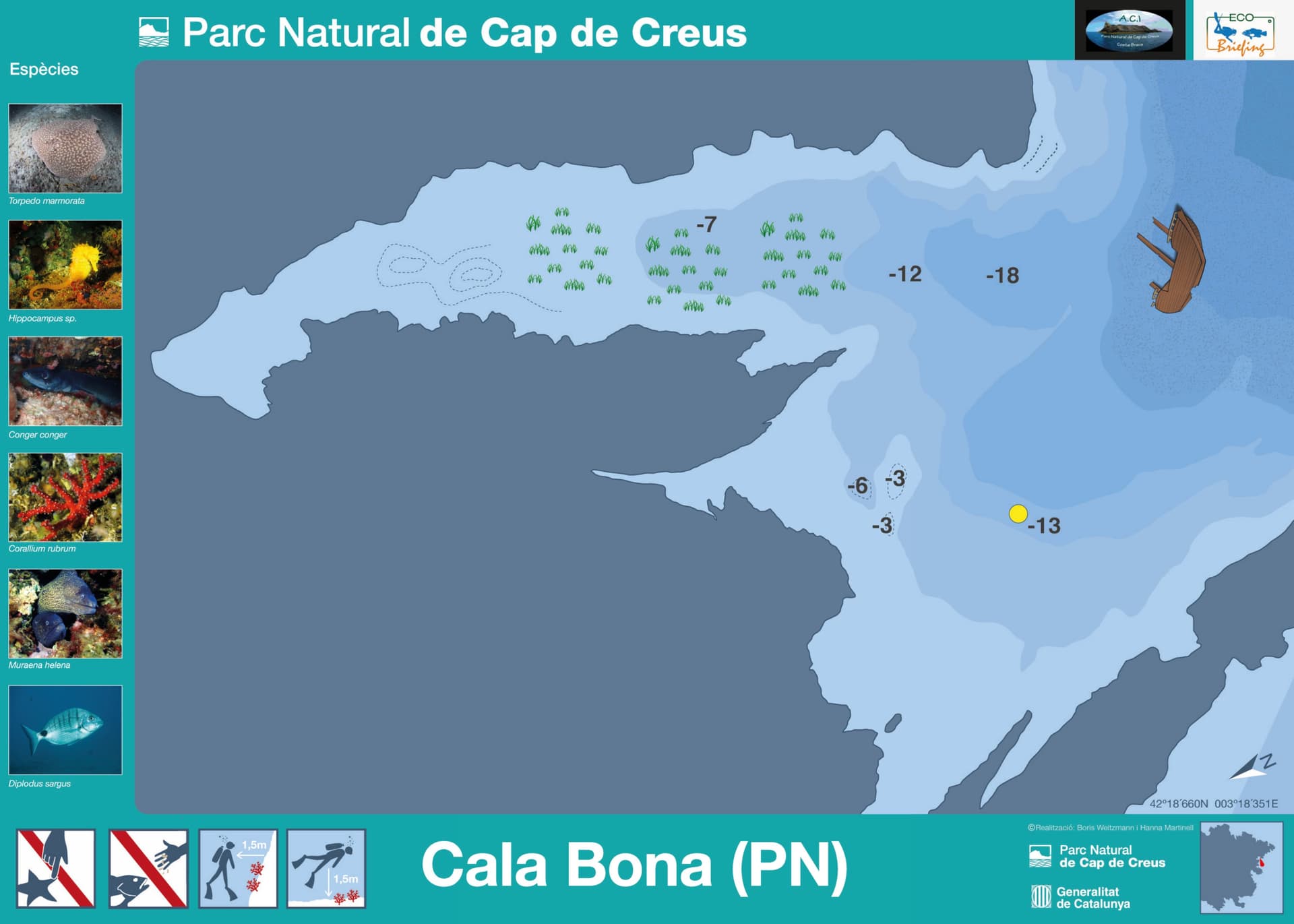
Self-guided Tregastel wreck exploration, reached on foot or by boat
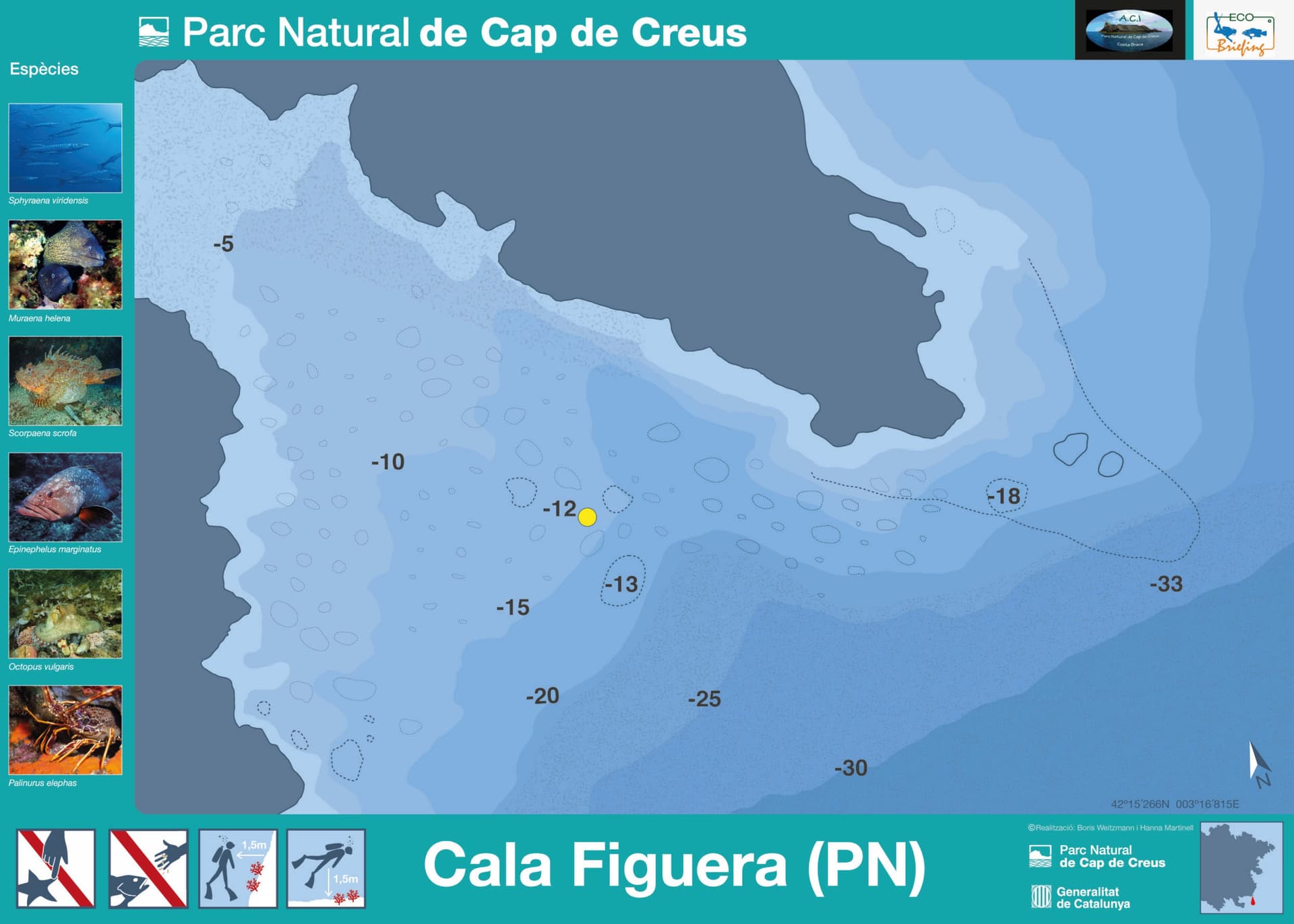
One of 30 Cap de Creus points defined by its own government eco-route sheet
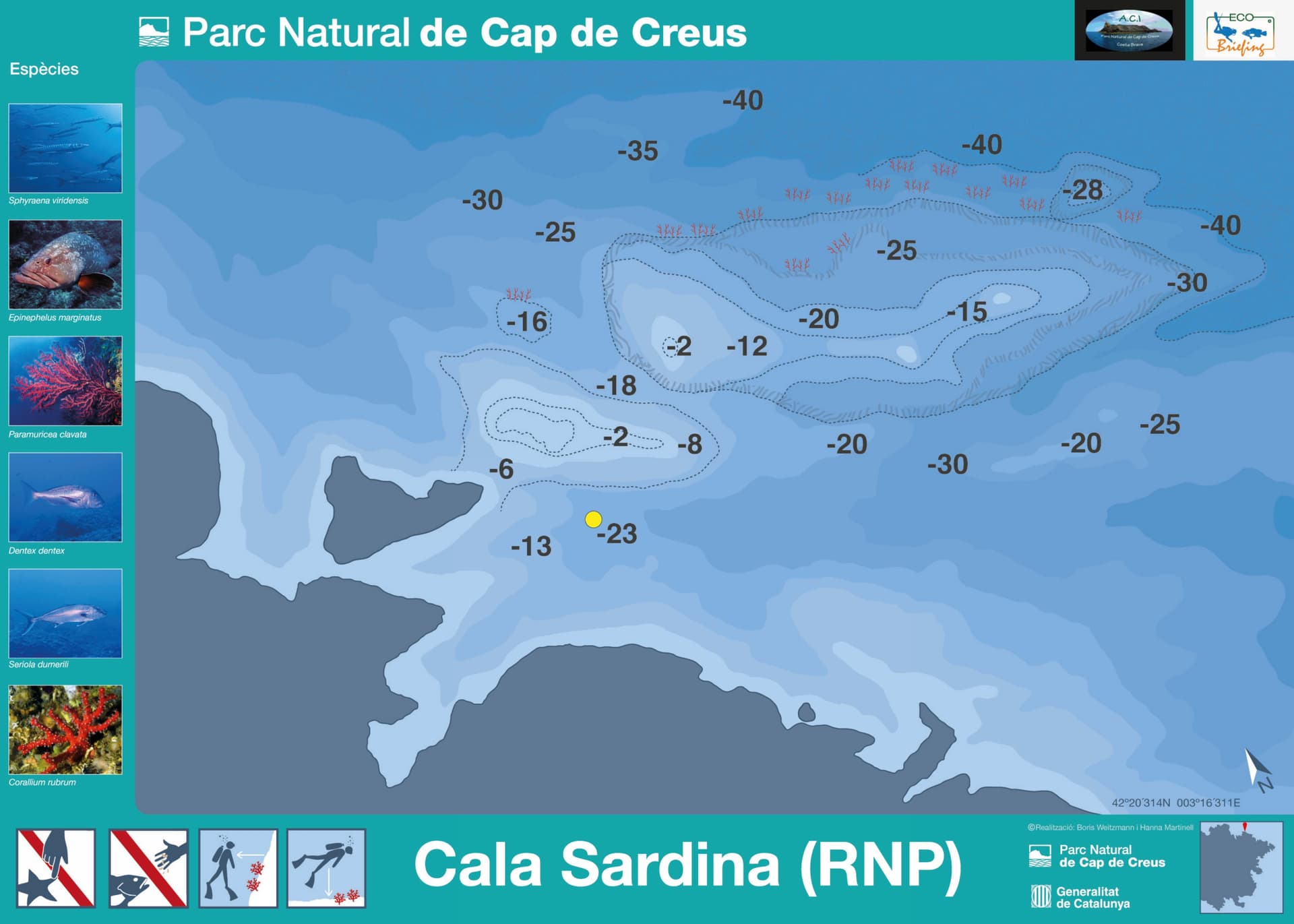
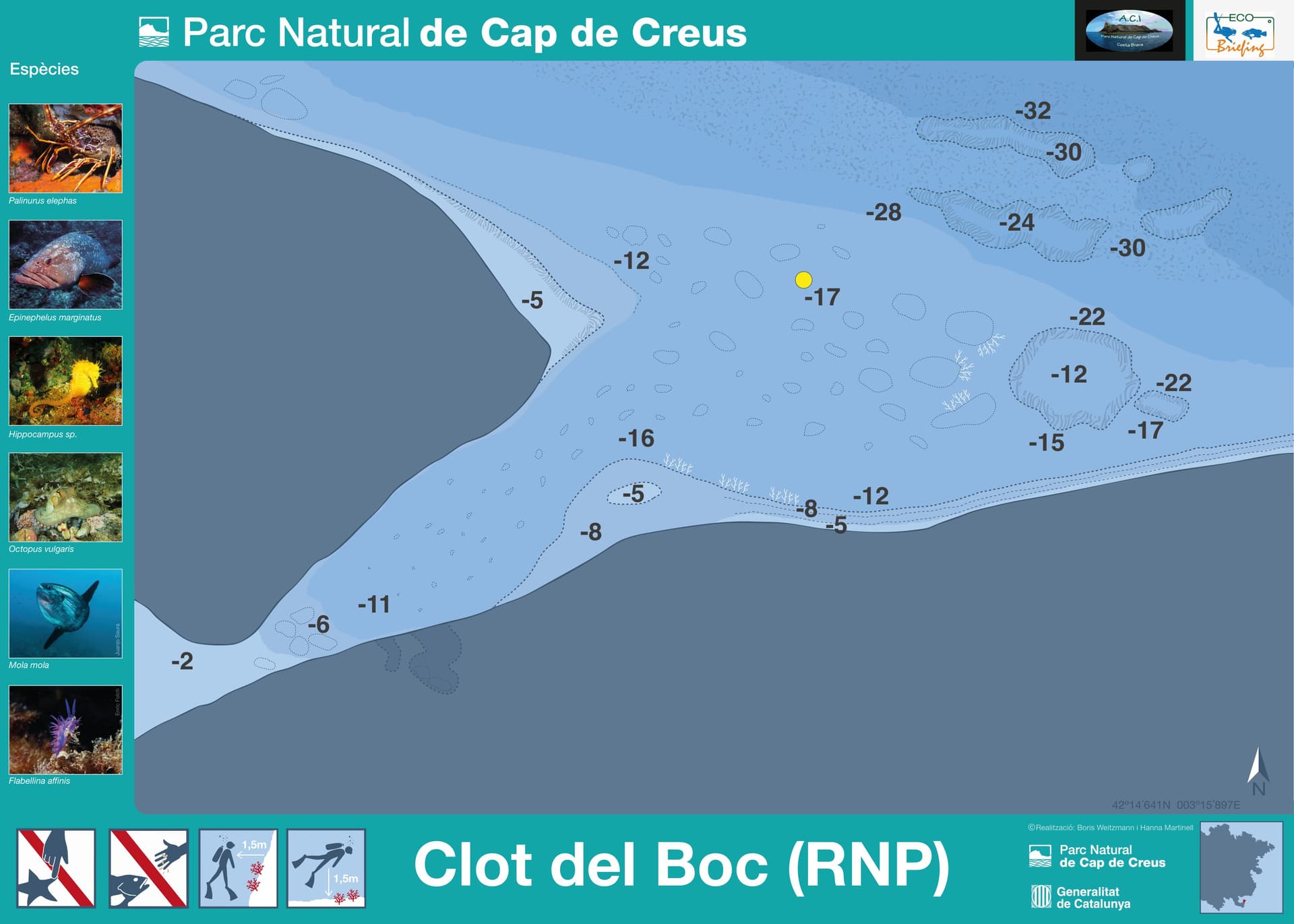
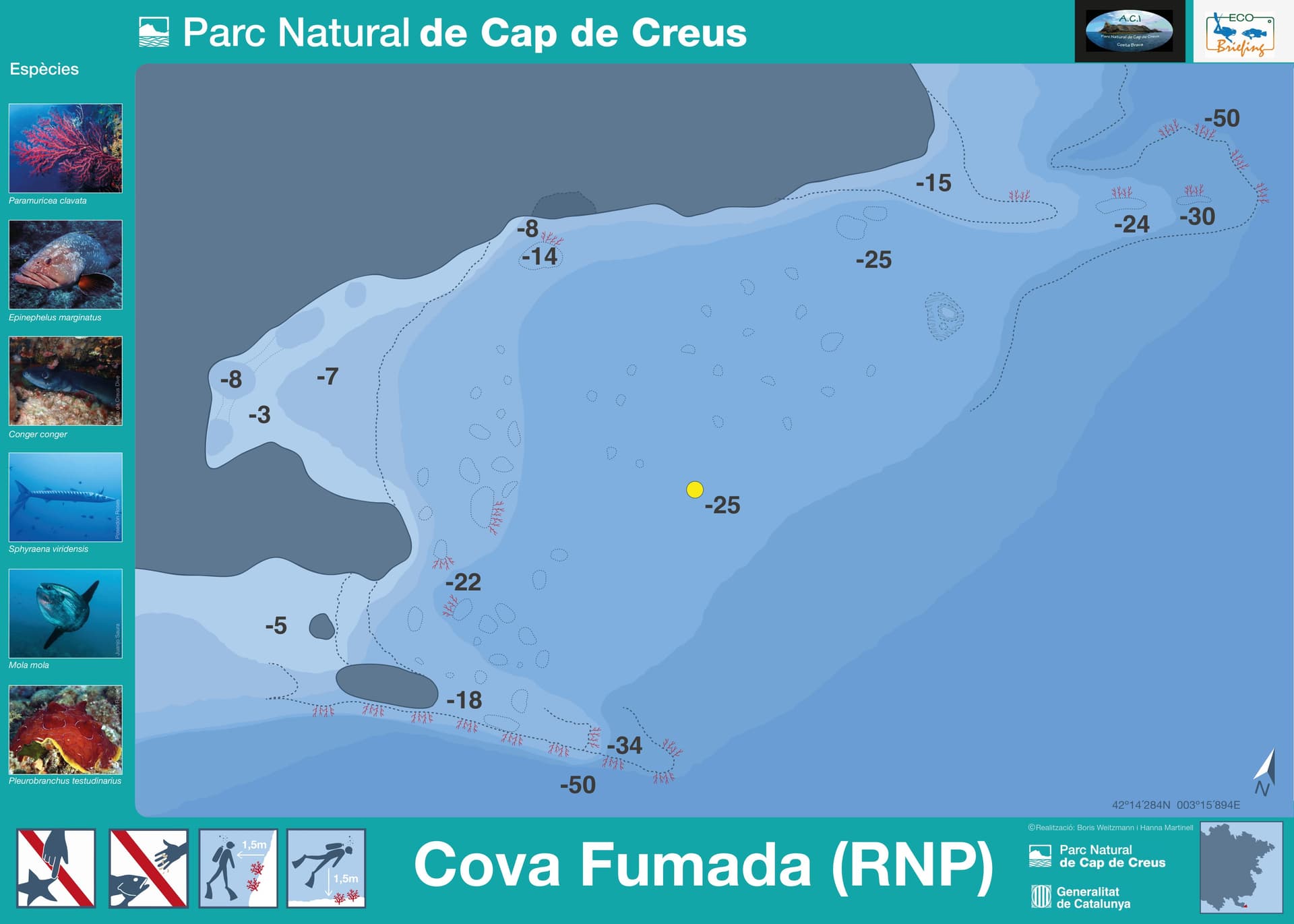
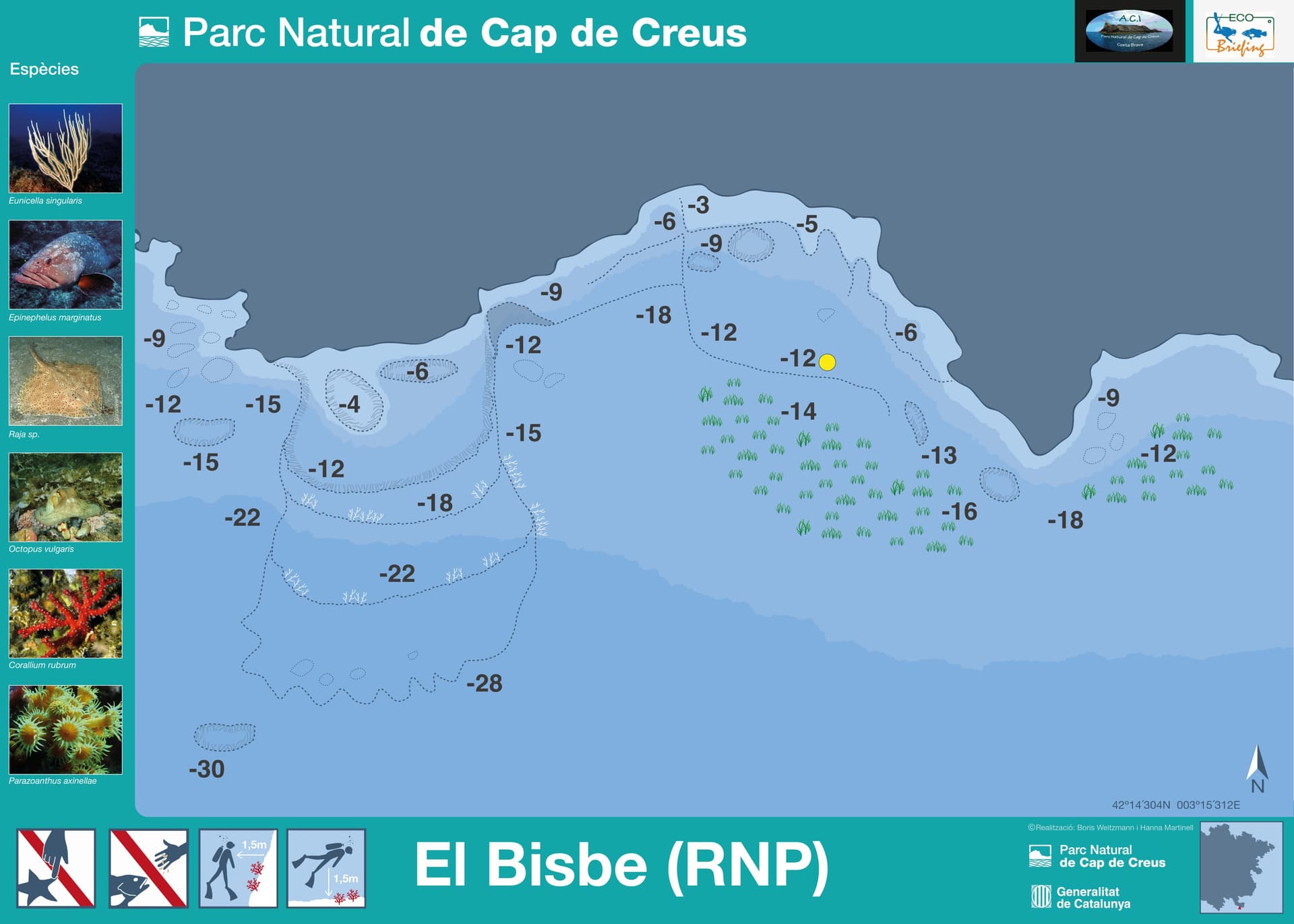
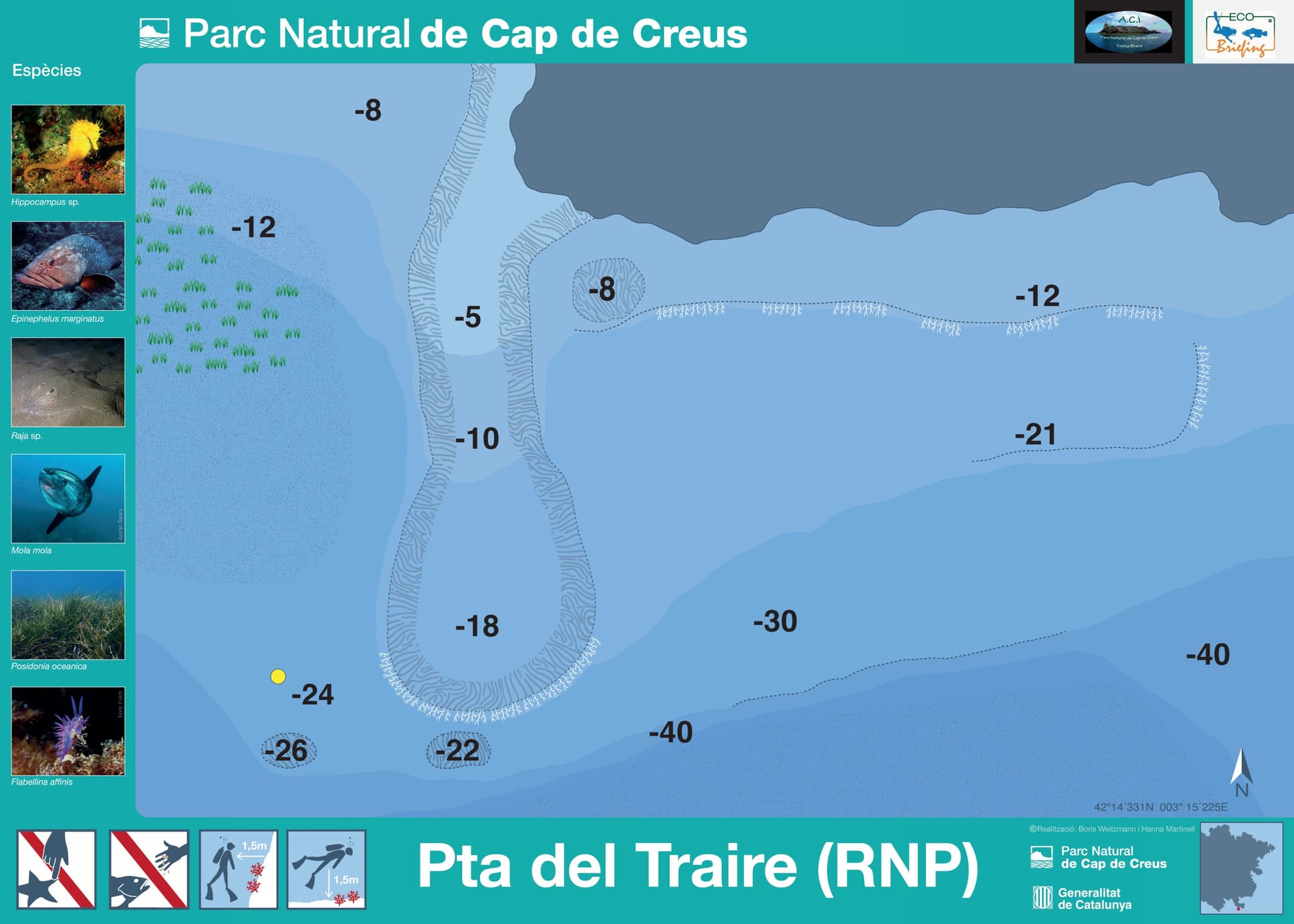
One of the park's own species-illustrated eco-briefing points
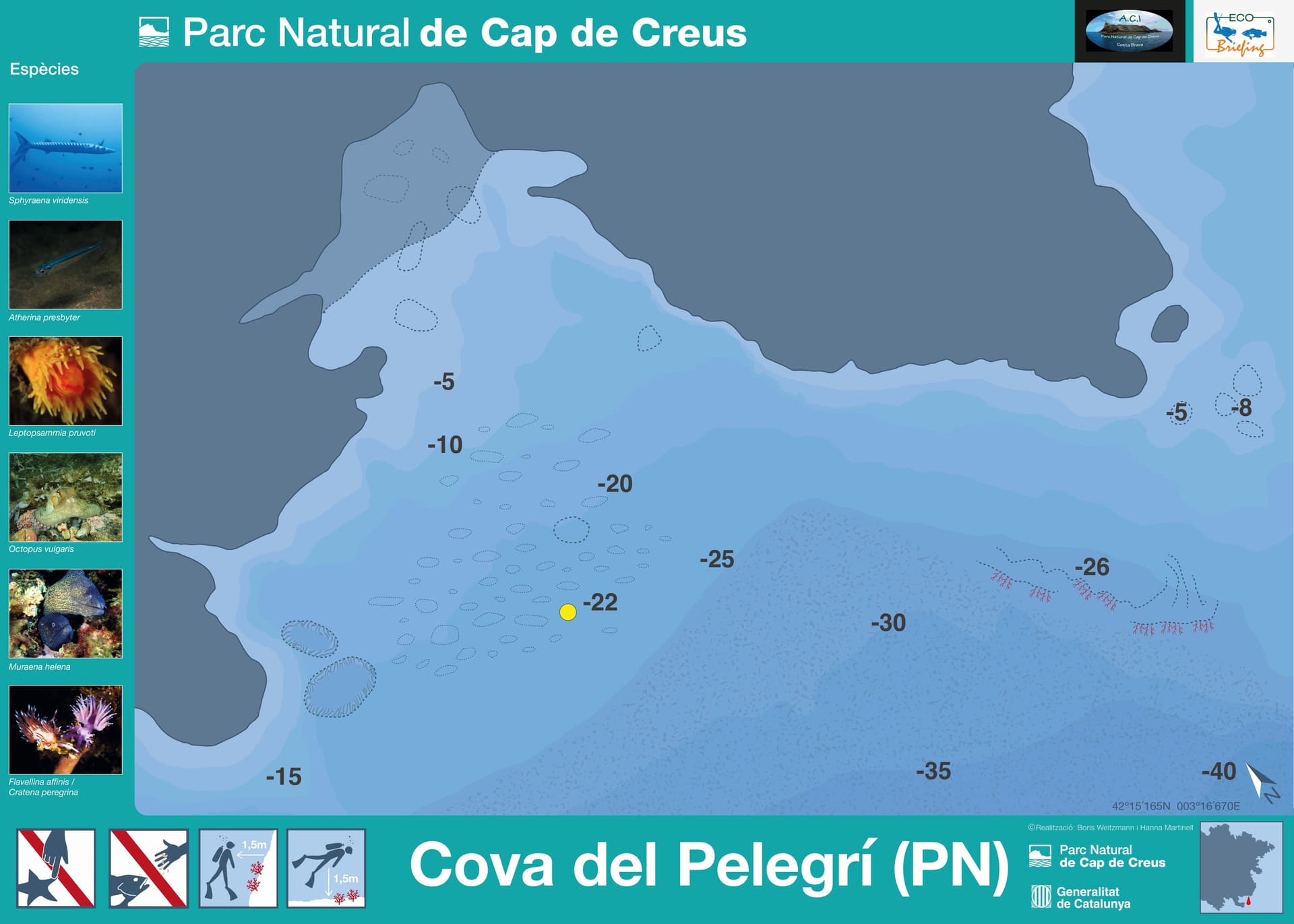
A Cap de Creus wall and cave outside the reserve's bautismo and night limits
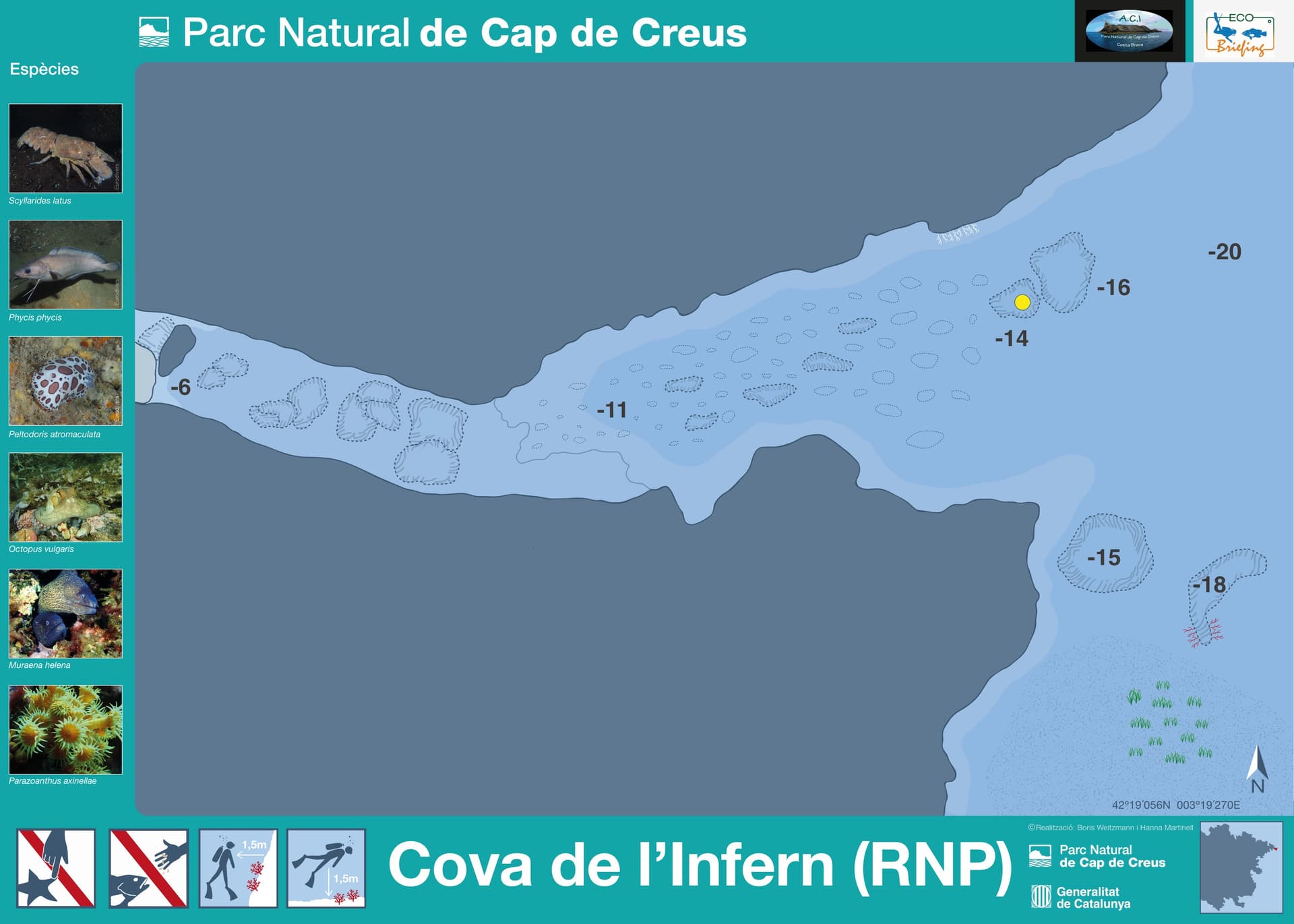
Open Water divers wanting an easy, geology-focused second tank from a Cadaqués boat circuit
A shore-accessible WWI wreck that stays diveable when the Tramuntana blows
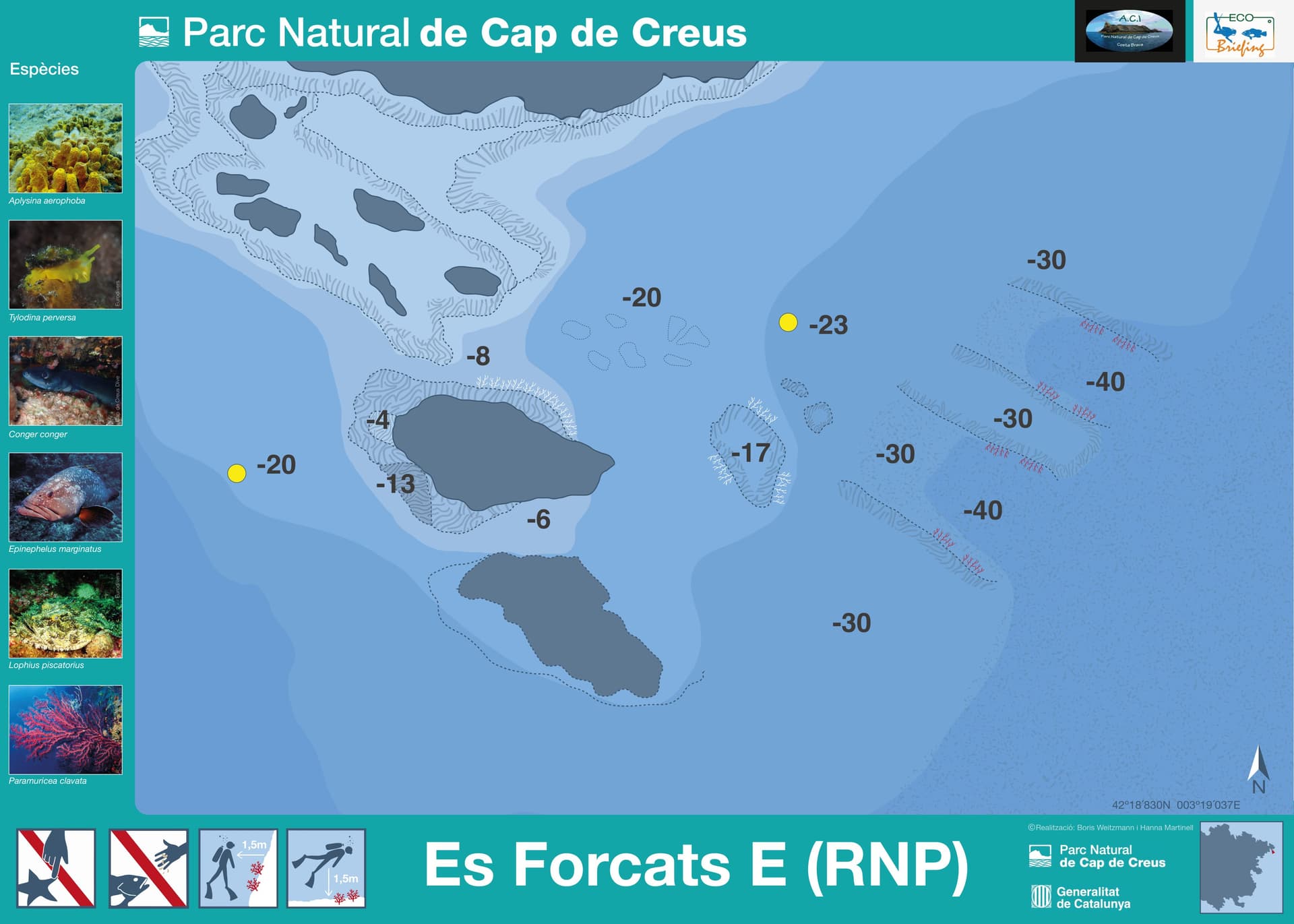
Two-buoy islet cluster in Cap de Creus with separate shallow and deep routes
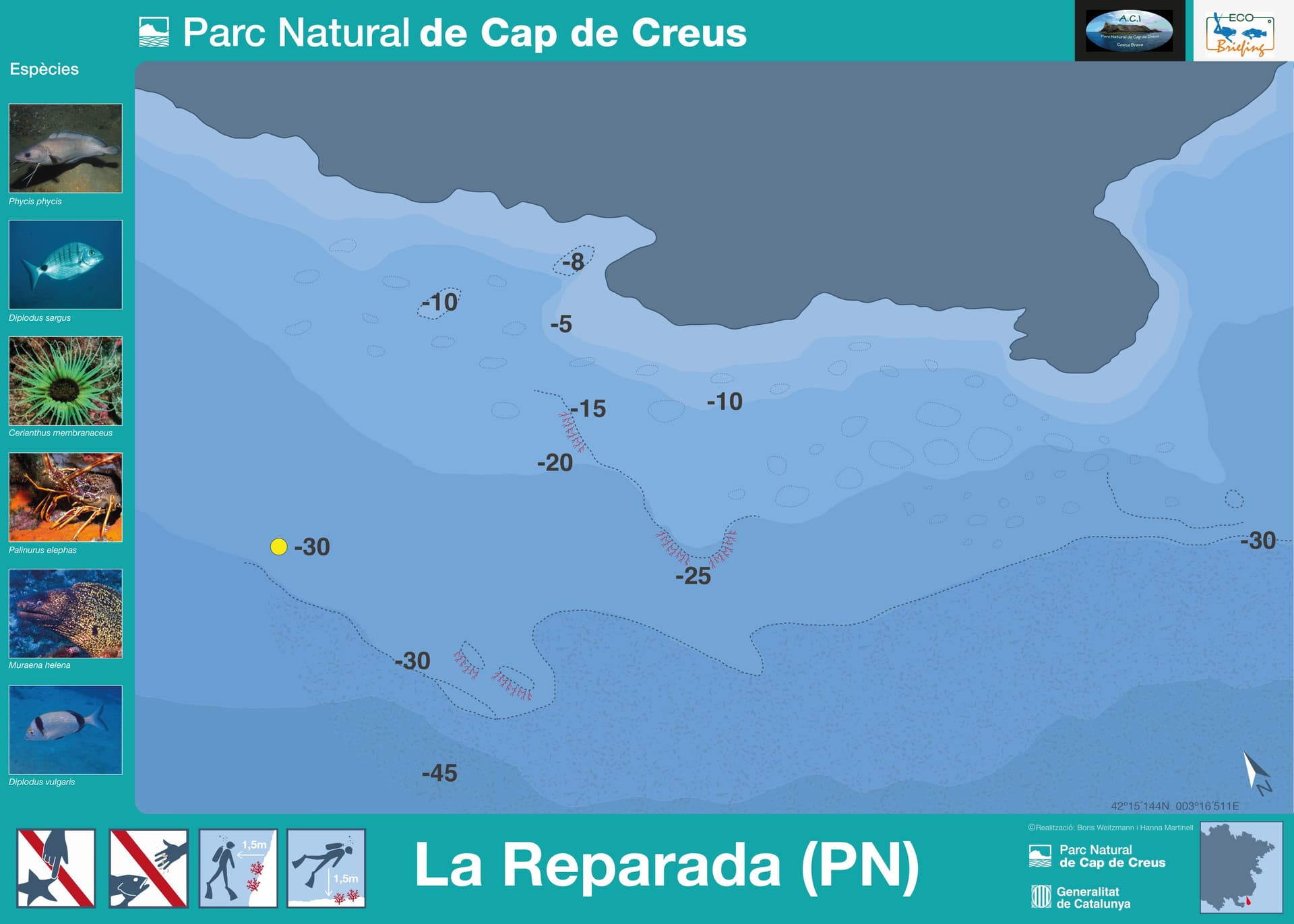
A natural gorgonian slope with its own government-illustrated species panel
One Cadaqués pier, two shore entries, and a wall reachable on foot or by boat
Technical divers seeking a Spanish Civil War wreck with genuine difficulty and deep historical weight
A Cap de Creus wall built on a mica mine's submerged pegmatite dike
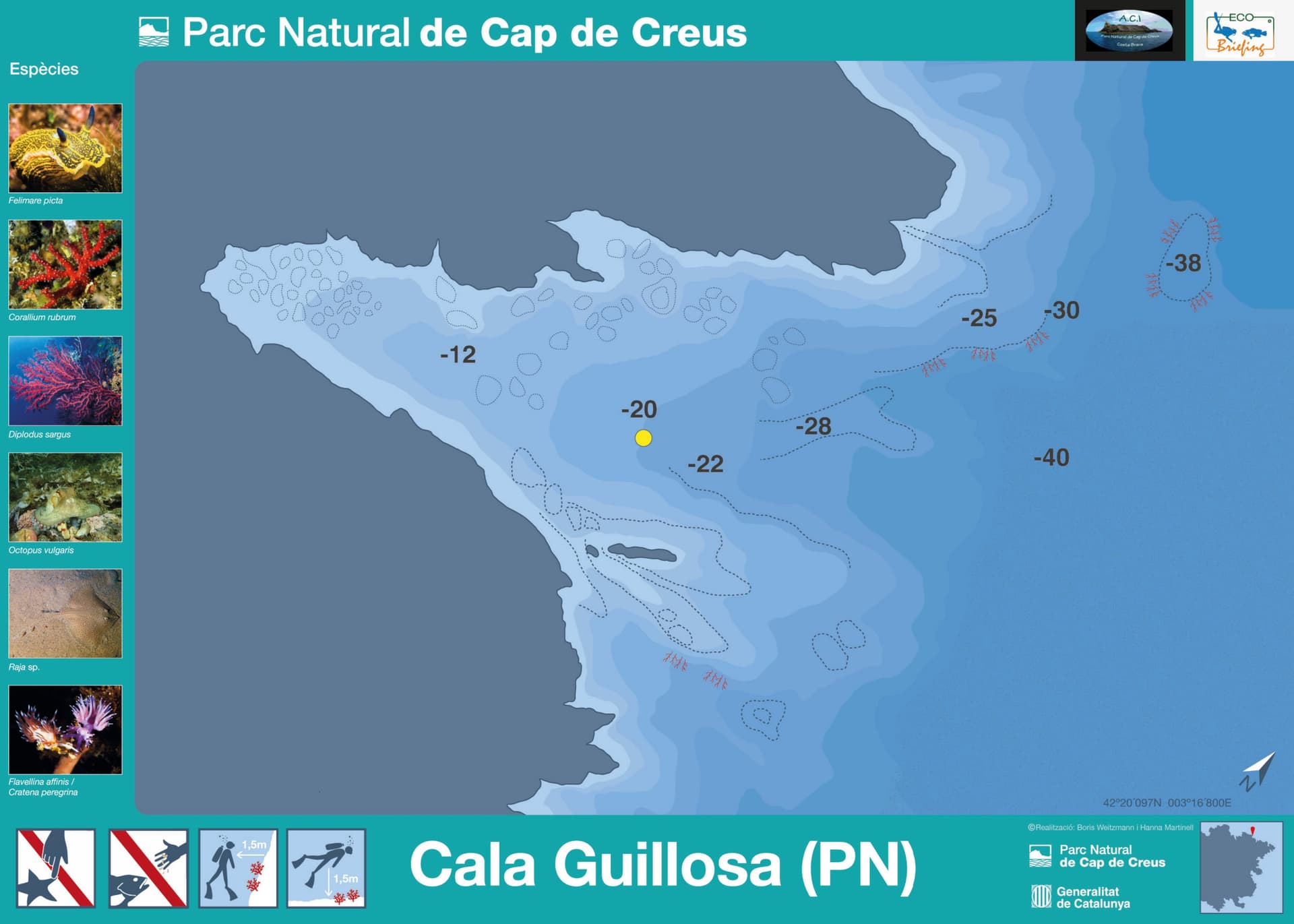
An easy, archaeology-rich Cap de Creus cove for snorkelers and Open Water divers
Sheltered wall on the Mar d'Amunt, calm when the Tramuntana blows
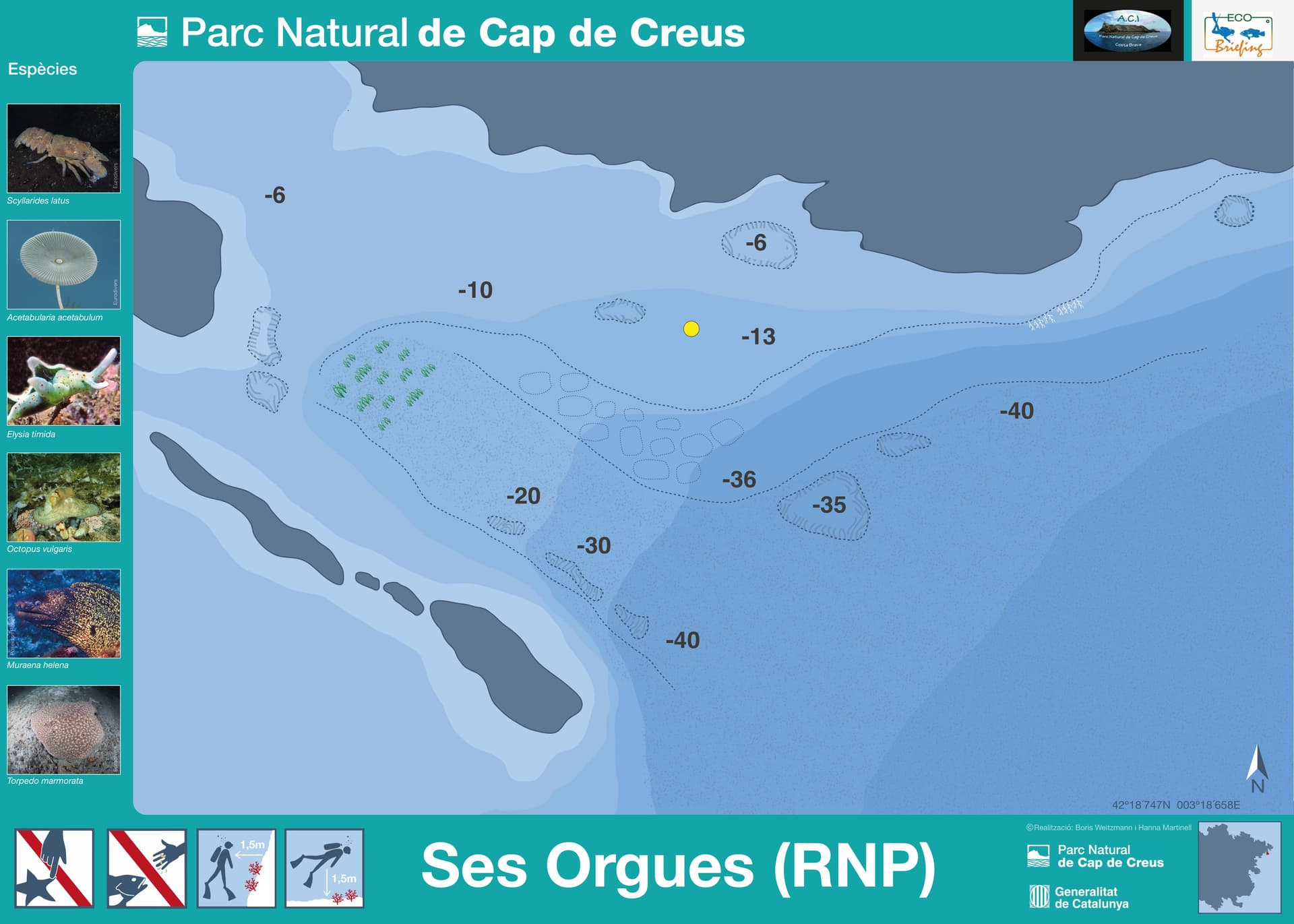
One of only three named marine reserves inside Cap de Creus Natural Park
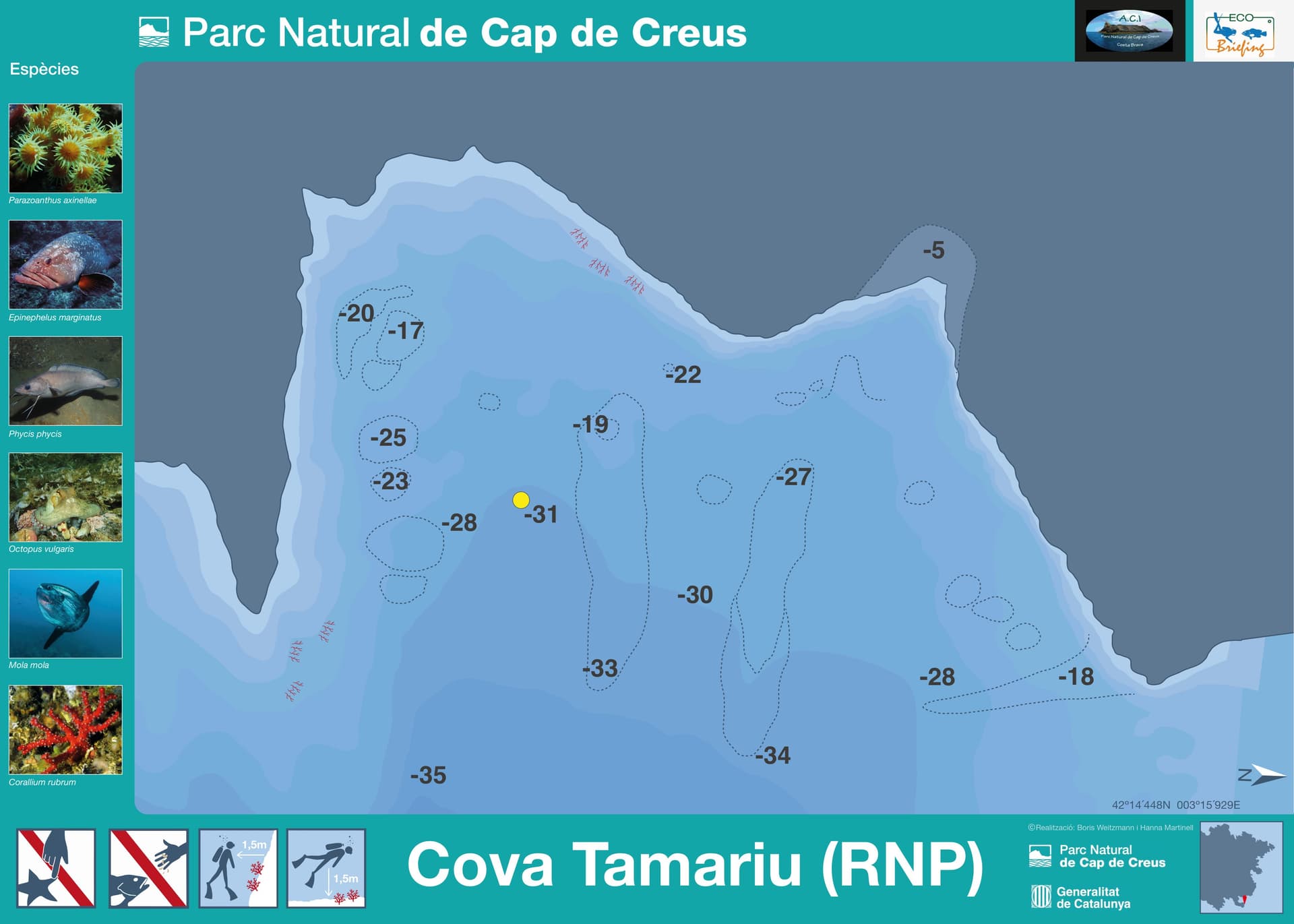
A ~31 m point tagged inside one of Cap de Creus's three marine reserves
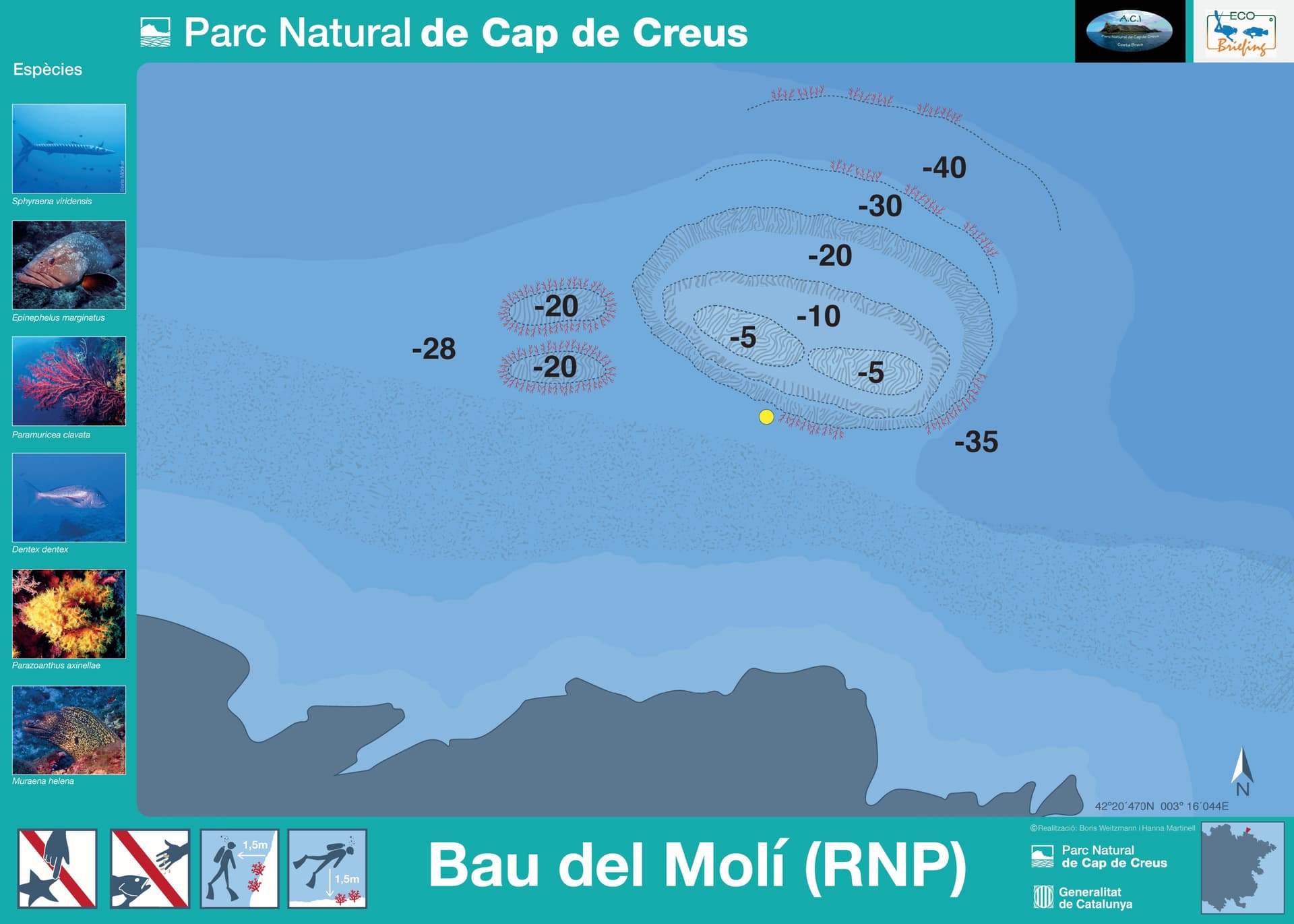
Advanced gorgonian pinnacle and wall on Cap de Creus's quiet north shore
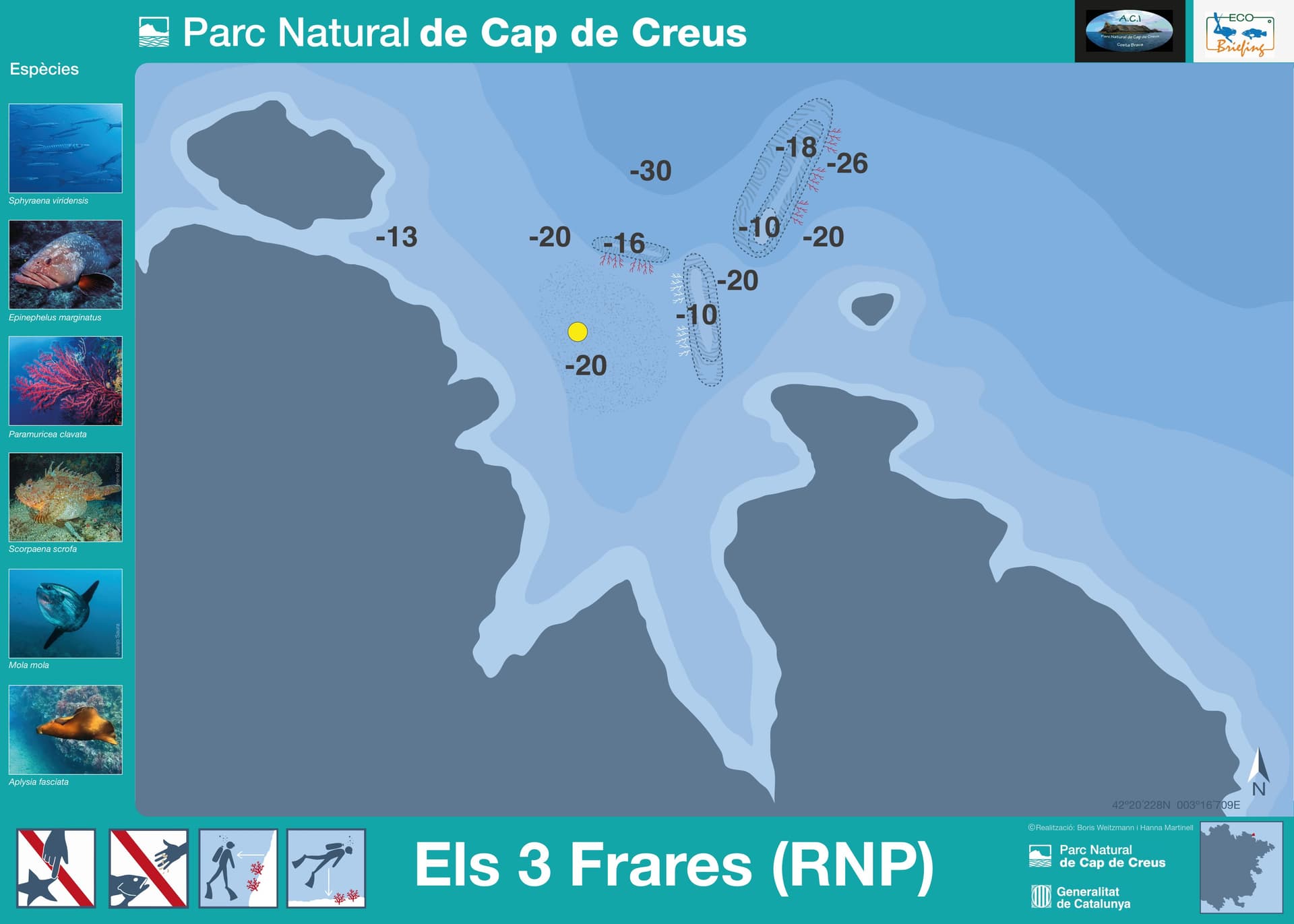
Mar d'Amunt wall and channel dive, launched from Llançà and Port de la Selva
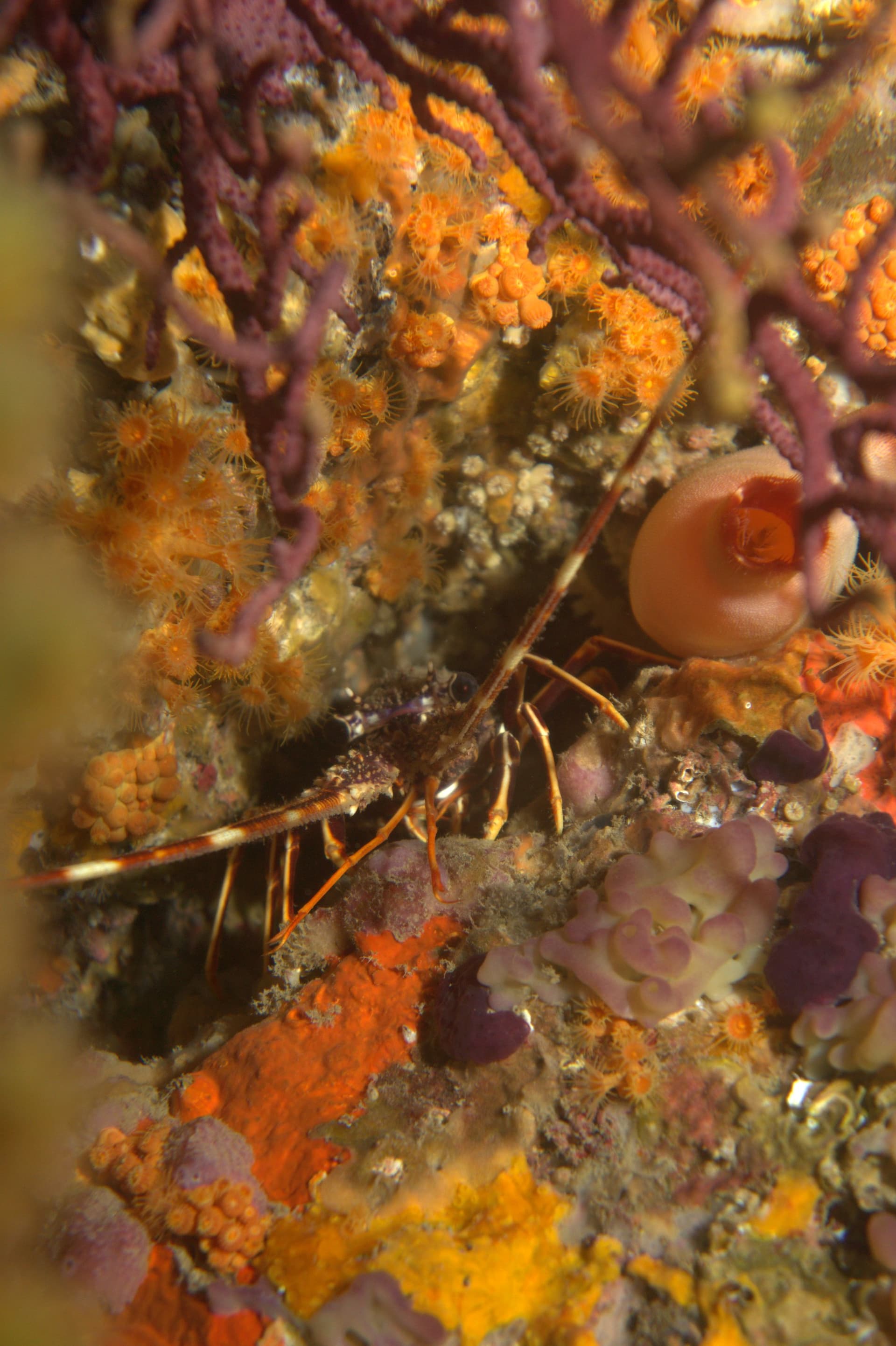
A rare shore-entry point on a stretch of Cap de Creus otherwise dived by boat
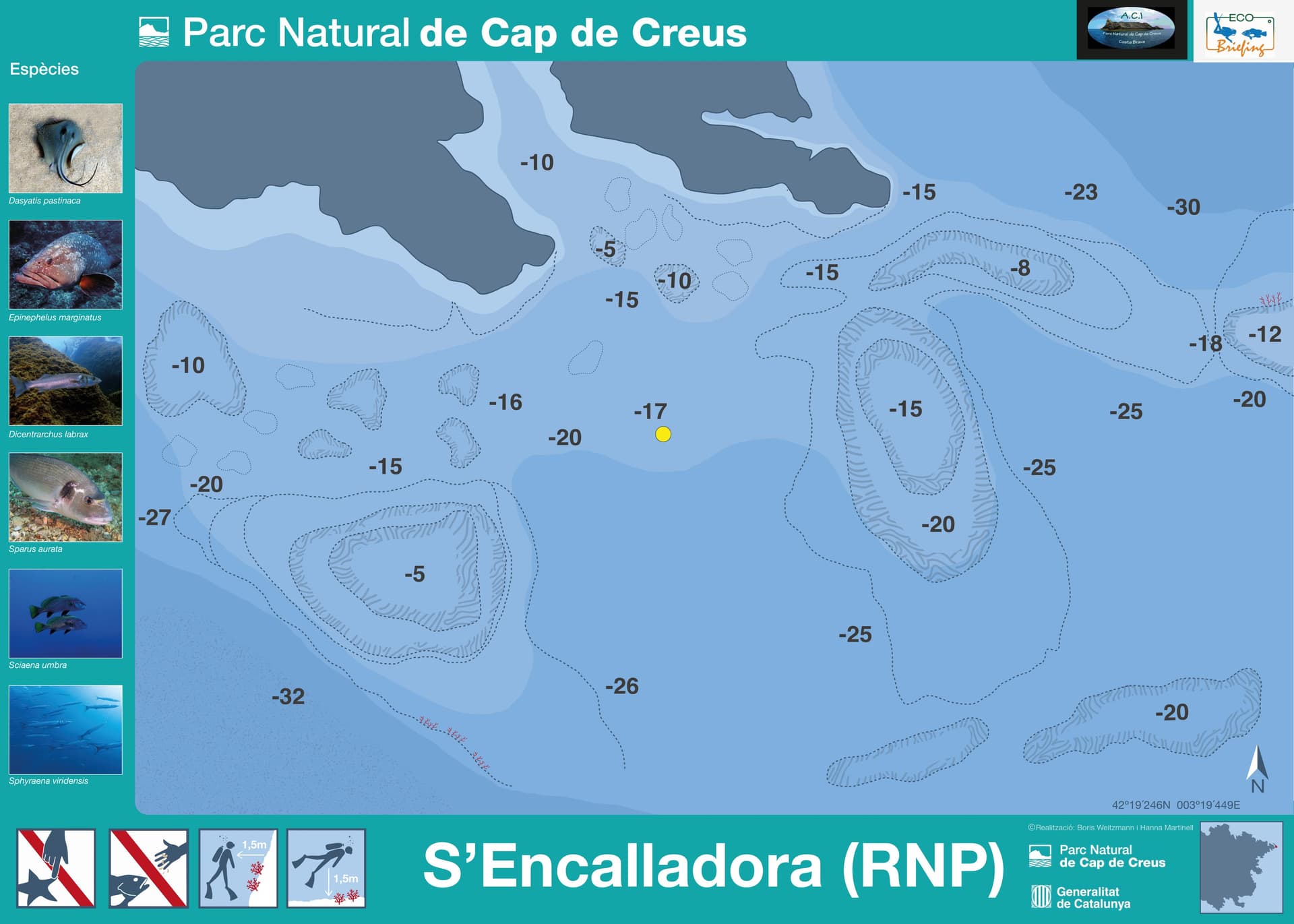
A Cap de Creus reef point right beside the park's no-dive Integral Reserve
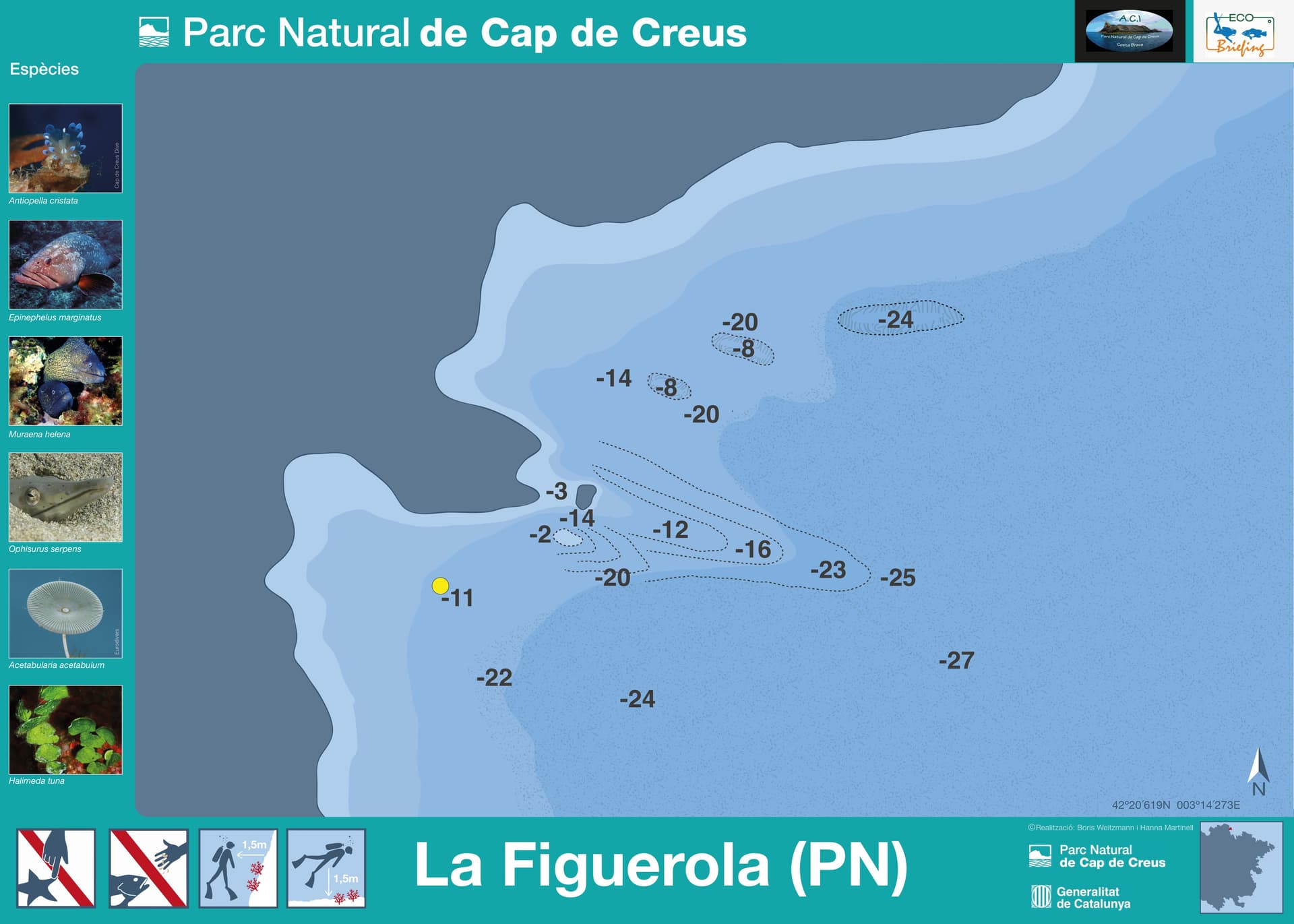
Beginner-friendly wall and sandy-bottom dive with rare sand-transition fauna
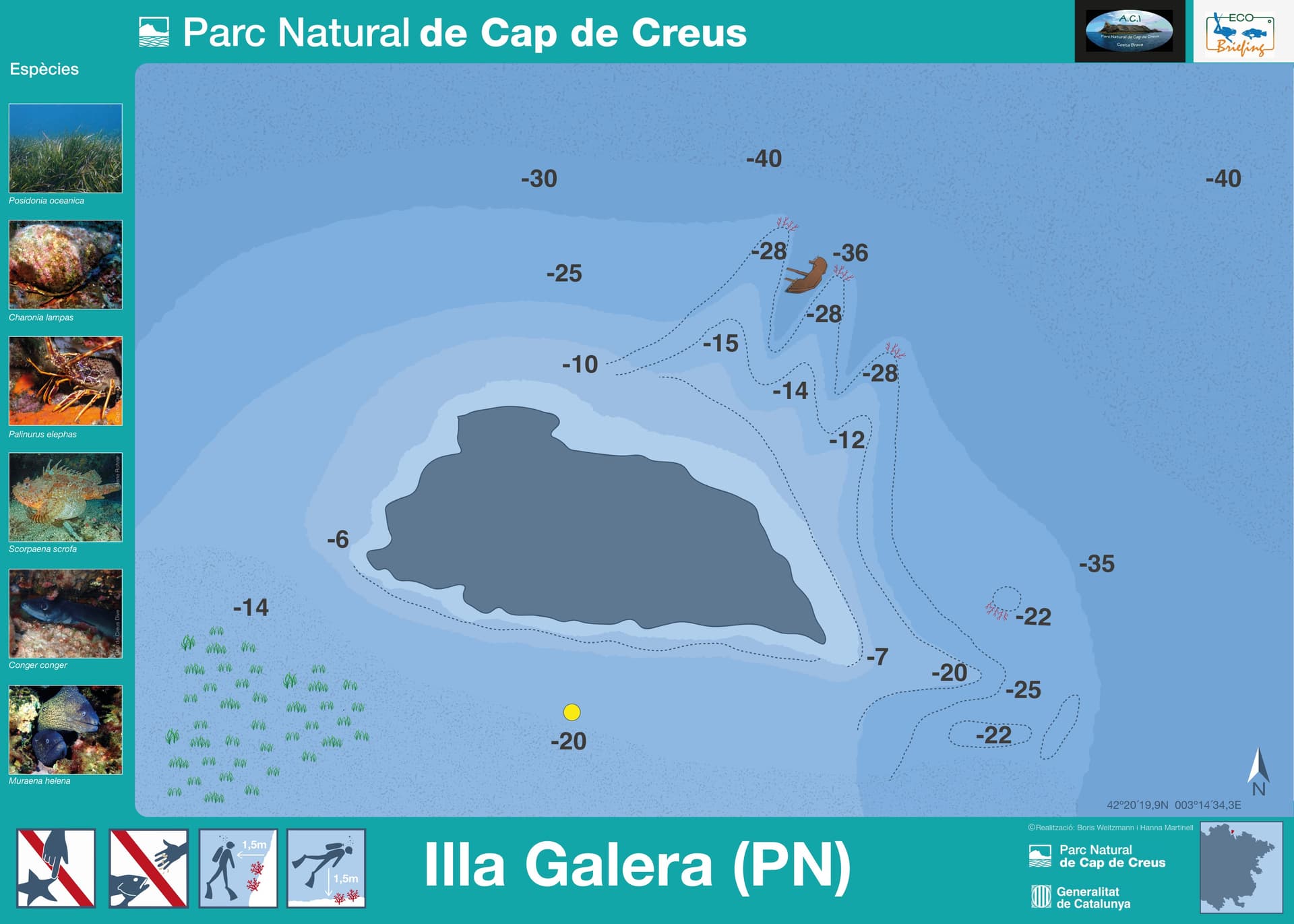
Rock wall between Figuerola and Taballera, gorgonians and red coral to 45 m
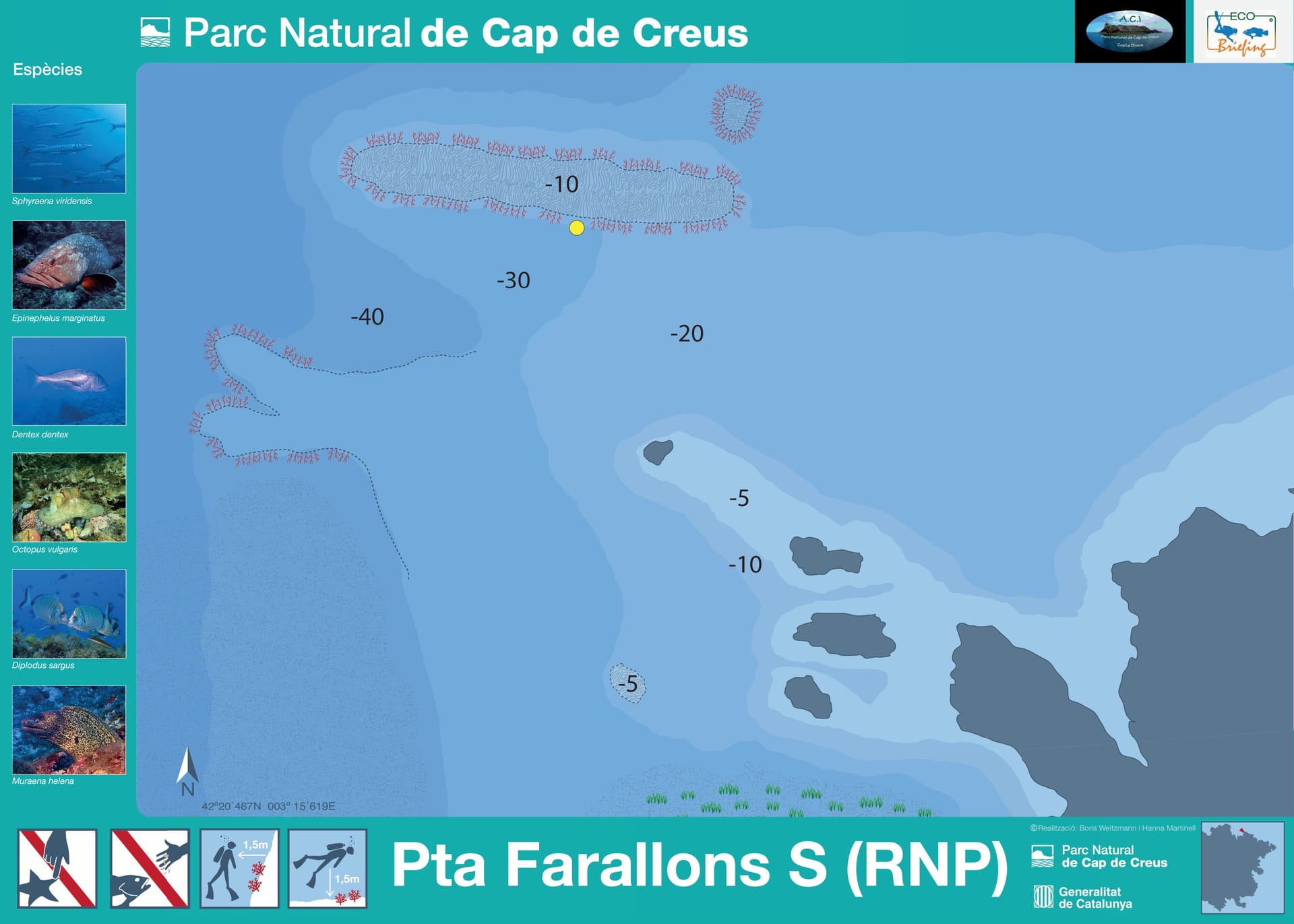
A reef ridge shoaling to 10 m over a gorgonian wall to 40 m
A Cap de Creus cove with its own park-run, free mooring-buoy field
Book online or contact a centre that dives this area.
PADI 5-Star center in El Port de la Selva with brand-new Aqualung gear, max 4 divers per guide, and year-round boat diving in Cap de Creus Natural Park.
SSI-affiliated dive centre in Llançà, the Cap de Creus Natural Park's northern access point, with air-only fills and a one-instructor-per-diver baptism dive.
PADI/CMAS/FFESSM centre in El Port de la Selva, running since 1994; daily boat dives across ~20 Cap de Creus sites including Massa d'Or, April-October.

German-run CMAS/RSTC dive centre on Cadaqués's Es Caials shore since 1975, with two shore dives near the door and boat trips on an informal daily schedule.
Small PADI centre in Camping Sant Miquel, working Colera's Tramontana-sheltered coast into France's Cerbère-Banyuls reserve.
SSI-listed dive centre inside the Carpe Diem Cadaqués complex, running since 2008 with three daily boat departures across 15 named Cap de Creus sites.
Beachfront PADI/FEDAS/CMAS dive centre inside the Cala Montjoi resort near Roses, running its own boat to Cap de Creus sites and a seasonal freediving course.
Get in touch to add or claim your dive center listing on DiveCodex.
The Tramontana, a strong northerly wind, is the real season here: it can close the outer sites for days at any time of year, and centres switch to a sheltered site instead of cancelling. A sharp thermocline sits around 15 m in summer, so plan the exposure suit for the cold side of it, not the surface reading.
What can go wrong here, and what divers do about it. Conditions change - take the briefing from the operator on the day.
Natural park
Park use and management plan (Catalan)Park protection law (Catalan)Frequently asked questions (Catalan)Checked: Oct 2026
Decree on dive centresGeneralitat page for dive centresChecked: Oct 2026
National rules also apply: Rules and permits in Spain
Divers who dive both usually see it as a question of mood, not merit: Cap de Creus for wilder coastline, clearer water and the offshore pinnacle of Massa d'Or, Illes Medes for a smaller, more sheltered marine reserve. Neither substitutes for the other, and some trips combine both areas.
Only one place: the Integral Nature Reserve at S'Encalladora, on the north face, where the park bans diving entirely. Two other Integral Reserves exist, at the Cap de Creus point and at Cap Norfeu, but both are terrestrial, covering only the islets around them, so they leave the water nearby open to diving. Three further Partial Nature Reserves, at Cap Gros, Cap de Creus and Cap Norfeu, stay open to diving under extra rules such as the ban on unauthorised night diving.
The park's management plan, Ordre TER/130/2025, in force since August 2025, sets two licence categories for commercial dive centres, not a count of how many currently operate: Group A is capped at 15 centres running daily immersions, and Group B is capped at 8 centres limited to 2 diving activities a week and 20 dives a year. Licensed boats must also carry the park's tracking system and report their activity monthly.
It depends on the site. Open Water covers the sheltered coves and the shallow platforms at Cap Norfeu. The offshore pinnacles and open-water dives, Massa d'Or and Isla de Messina among them, run in current that can shift mid-dive and call for Advanced Open Water or better, plus recent diving experience.
May to October is the main season, with August and September usually giving clear water and steady conditions at Massa d'Or. Diving continues through winter at sheltered sites when the Tramontana allows, but the wind turns more aggressive in the colder months and can close the exposed sites for days.
Yes, at the right sites. Sheltered coves and the shallow platforms at Cap Norfeu work for Open Water divers and baptisms; centres will not run beginner sessions inside the park's no-fishing sectors, so they pick sites accordingly. The offshore pinnacles and current-exposed dives sit in a different, more advanced tier.
It decides more of the schedule than the calendar does. This strong northerly wind can close the exposed outer sites, Massa d'Or included, for several days at a time, in any season. Centres read the forecast and substitute a sheltered site instead of cancelling, so a flexible itinerary beats a fixed one built around a single dive.
Yes. Diving outside a commercial centre requires notifying the park management in advance and keeping within its dive limits, which apply per boat rather than per diver: six dives a day, 30 a week, 120 a year for the boat as a whole. Most centres also ask to see ID, certification, a logbook and a medical clearance issued within the last two years before you board, guided or not.
Also known as: Cabo de Creus
Log your dives - notes, photos, conditions and the marine life you saw - and share them as one public diver profile. What you share helps the next diver, too.
Log every detail
Depth, duration, conditions, gear, buddy, notes — all in one place. Import from Suunto and other dive computers.
Track marine life
Record species sightings on each dive. Build a personal catalogue of everything you've seen underwater.
Your public dive profile
Share your dive history, stats, and experiences with a profile page you control. Show the world where you've been.