
S.S. Thistlegorm

Also known as: SS Thistlegorm

WWII British cargo ship sunk 1941 at Sha'ab Ali, with motorcycles, trucks, rifles, and two locomotives on the seabed at 16-32m.

Last updated April 2026

The dive

Two hundred tonnes of WWII military cargo sit in the holds of a 130-metre ship on white sand at 30 metres. Most trips split the wreck across two dives. The exterior route begins at the stern, where the anti-aircraft gun still points skyward at 18m. From there, divers move along the hull past the gap where the explosion tore the ship apart and the two steam locomotives rest on the seabed at 30m. The scale of the engines only registers when another diver swims alongside for reference. At the bow, a WWI-era 4-inch cannon completes the circuit.

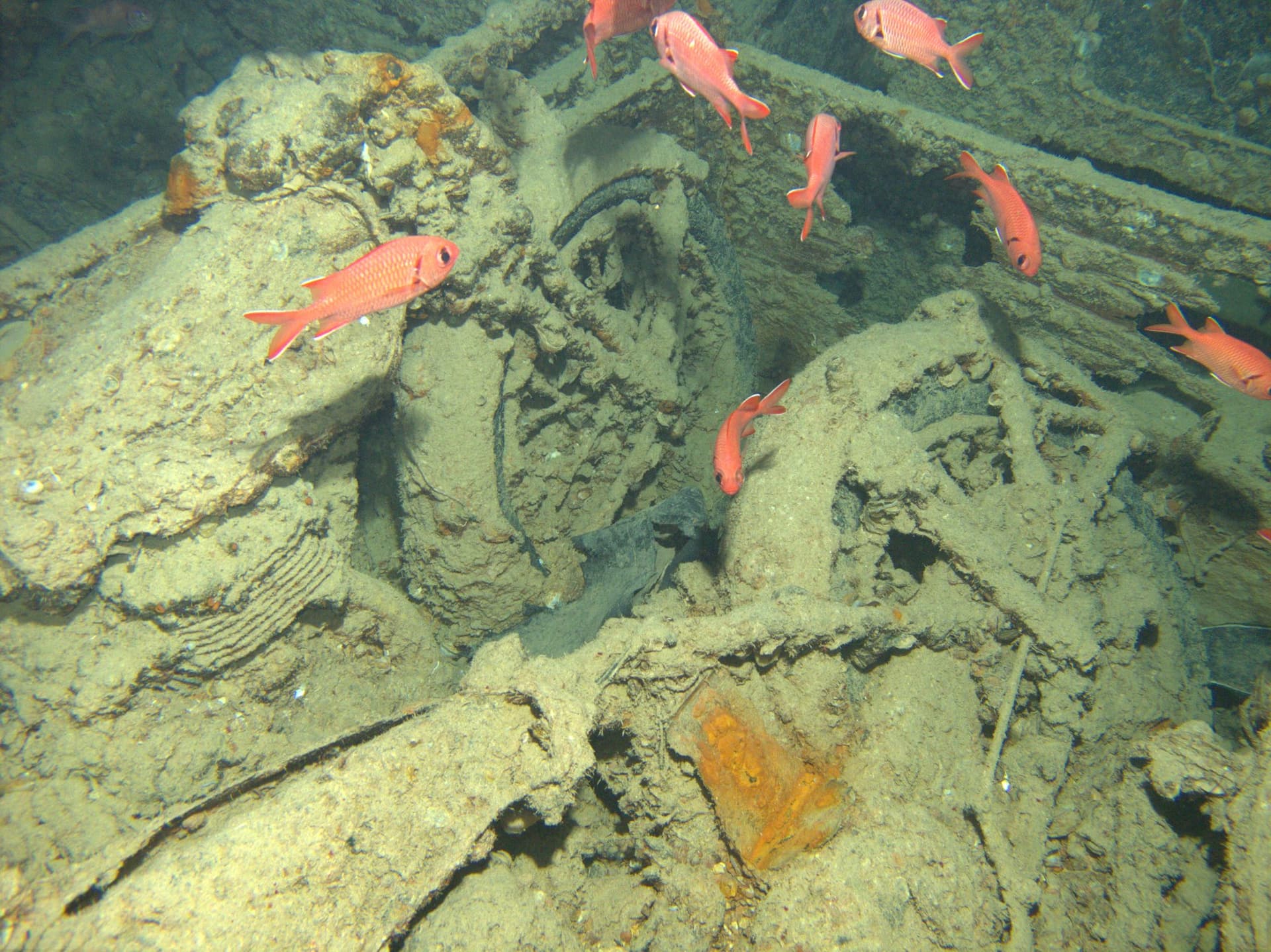
The second dive enters the forward cargo holds. Hold 1 and 2 contain the motorcycles and trucks, recognisable after 80+ years despite coral colonisation. Norton 16H and BSA machines sit on their frames. Deeper in, Lee-Enfield rifles stand in rows and ammunition cases remain stacked. Torch beams pick out serial numbers and tyre treads. Silt is the enemy inside: one careless fin stroke can blank the hold for everyone behind you.

What makes it special

The Thistlegorm's reputation rests on a combination no other recreational wreck matches. The cargo is not crates or scrap. It is an identifiable WWII military supply chain frozen mid-transit: motorcycles, trucks, armoured vehicles, rifles, aircraft wings, Wellington boots, and two steam locomotives. The depth range (16-32m) keeps the entire wreck within AOW territory. And Cousteau's 1955 discovery adds a layer of diving heritage few wrecks carry.

The tension between the wreck's significance and its popularity runs through every diver account. Some find it transcendent regardless of crowds. Others note decades of damage from mooring lines and looting. Both are honest. The wreck is diminished and still magnificent.

Know before you go

The difference between a good Thistlegorm dive and a great one is timing. Day boats from Sharm leave at 5am and arrive mid-morning together. By then, 20+ boats are moored and the holds fill with divers and silt. Liveaboard guests dive at dawn or after dark, when the wreck belongs to them. Night dives are liveaboard-exclusive and widely rated as the most atmospheric way to experience the wreck.

Nitrox is close to essential: at 30-32m, air cuts bottom time sharply and multiple dives per day load nitrogen fast. A torch is mandatory for hold penetration. Deploy an SMB before ascending into the surface traffic above. Currents can strengthen with the lunar cycle, so descend and ascend on the mooring line when conditions are uncertain.

Why Dive S.S. Thistlegorm

What makes this dive site stand out.

  1. 1
    Intact WWII military cargo

    Norton and BSA motorcycles, Bedford trucks, Lee-Enfield rifles, and ammunition still in the holds

  2. 2
    Locomotives on the seabed

    Two LMS Stanier 8F steam engines rest on the sand at 30m, blown off the deck by the explosion

  3. 3
    Accessible wreck depth

    Superstructure at 16m, seabed at 32m. Full exterior within AOW range

  4. 4
    Night dive via liveaboard

    Liveaboard-only access after dark. Crocodilefish, scorpionfish, invertebrates emerge

  5. 5
    Crowding contrast

    20+ day boats arrive mid-morning together. Liveaboard dawn dives see empty wreck

Depth & Profile

16m
Min depth
32m
Max depth
17–30m
Typical range
WreckSand

Location

27.8141°N, 33.9203°E

Conditions

Temperature
20°C30°C
Visibility
15–30m
Current
variable

Difficulty & Certification

AdvancedMin cert: AOWNitrox recommended

Depth to seabed (30-33m), variable currents influenced by lunar cycles, overhead penetration environments in the holds, and silt disturbance risk

Wreck Information

Vessel
SS Thistlegorm
Type
cargo
Length
126.5m
Sunk
1941-10-06
Reason
war

Frequently Asked Questions

Is the SS Thistlegorm worth the long boat crossing from Sharm?
Almost universally yes among experienced wreck divers. The combination of intact WWII military cargo at recreational depth is unmatched. Motorcycles, trucks, rifles, locomotives. Three dives is the minimum to begin seeing it all. Night diving via liveaboard adds another dimension.
What is the best way to dive the Thistlegorm — day trip or liveaboard?
Liveaboard is the significantly better experience. Day boats from Sharm arrive together mid-morning and the wreck becomes crowded. Liveaboard divers get early morning and last-light dives with few or no other divers, plus night dive access that day trips cannot offer. Day trips involve a 5am start, 3-4 hour crossing, and just two dives.
What cargo can you see inside the Thistlegorm?
Forward holds contain Norton 16H and BSA motorcycles alongside Bedford trucks. Deeper holds hold Lee-Enfield Mk III rifles, Bren guns, and ammunition cases. Outside the hull, four Universal Carrier armoured vehicles sit on the deck. Two LMS Stanier 8F steam locomotives rest on the sandy seabed, blown clear by the explosion.
What certification do you need for the SS Thistlegorm?
Advanced Open Water (AOW) or equivalent is the minimum. The seabed at 30-33m exceeds the 18m OWD limit. Some operators require 20+ logged dives. Circle Divers mandates Nitrox certification. For hold penetration, Wreck Diver specialty is strongly recommended.
Is the SS Thistlegorm in Ras Mohammed National Park?
No. The Thistlegorm is at Sha'ab Ali in the Gulf of Gubal, roughly 60km from Ras Mohammed at the tip of Sinai. It is not within the national park. The free Sinai-only entry stamp does not cover this site because it lies in the Gulf of Gubal, not the Sinai zone.
What is the best time of year to dive the Thistlegorm?
March to June and September to November offer the best balance of visibility, temperature, and currents. July to September brings warmest water and visibility up to 40m but the highest day-boat crowding. The wreck is diveable year-round.
Is there marine life on the Thistlegorm or just the wreck?
Both. After 80+ years the wreck functions as a substantial artificial reef. Batfish swarm the superstructure, giant trevally patrol the exterior, crocodilefish sit on the sand alongside the hull. Lionfish and moray eels occupy the interior. Napoleon wrasse are resident. Night dives reveal a different cast of invertebrates and hunting fish.

Photos

Log your dives

Track every dive with depth, duration, conditions, and marine life sightings. Join a club and share your underwater experiences.

Try DiveLog — it's free