

Scuba Divers Red Sea
PADI dive centre in Sharm El Sheikh est. 1993, with beachfront base, daily boats to Tiran and Ras Mohammed, and liveaboard fleet.
PADI5 services4 languages
Southern Sinai hub where Ras Mohammed walls, the Straits of Tiran and the SS Thistlegorm wreck sit within day-boat range in warm water all year.
Last updated October 2026
The southern tip of Sinai, where the Gulf of Aqaba and the Gulf of Suez meet the open Red Sea, puts walls, wrecks and a national park within reach of a single hotel bed. Ras Mohammed was declared a national park in 1983, the first in Egypt. It covers 480 km2, 70% of it marine, having grown from an original 97 km2, and now extends to Tiran and Sanafir islands. Its signature dive is Shark and Yolanda Reef, where an 800 m wall and the Yolanda's cargo field, bathroom fittings included, share one current. North of town the Straits of Tiran hold four reefs: Jackson for fast wall drifts and hammerhead sightings from August to early October, and Thomas for soft-coral walls above a canyon that runs far past recreational depth. Operators place manta rays, and the odd whitetip reef shark, off Sodfa from March to the end of June.
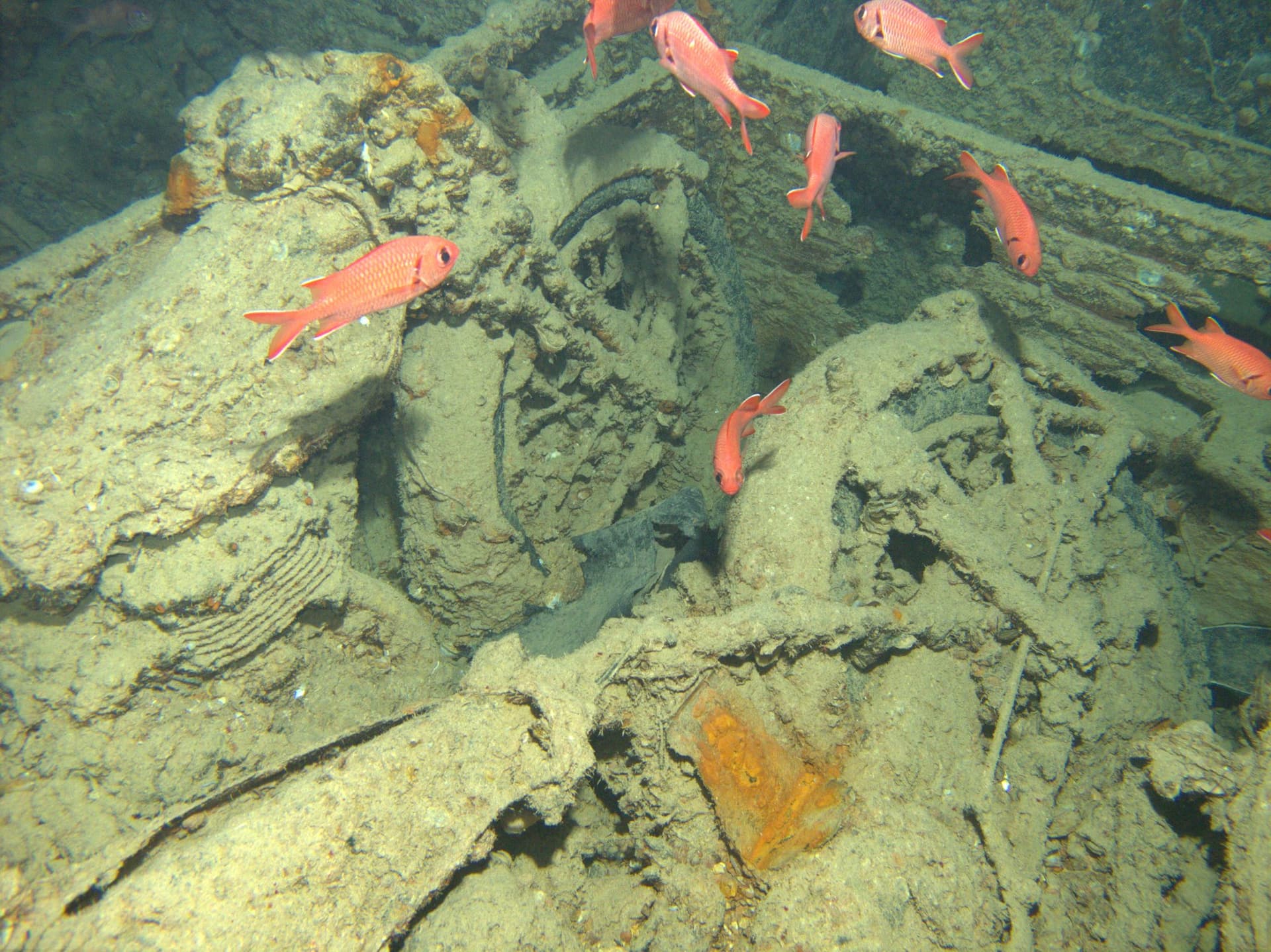
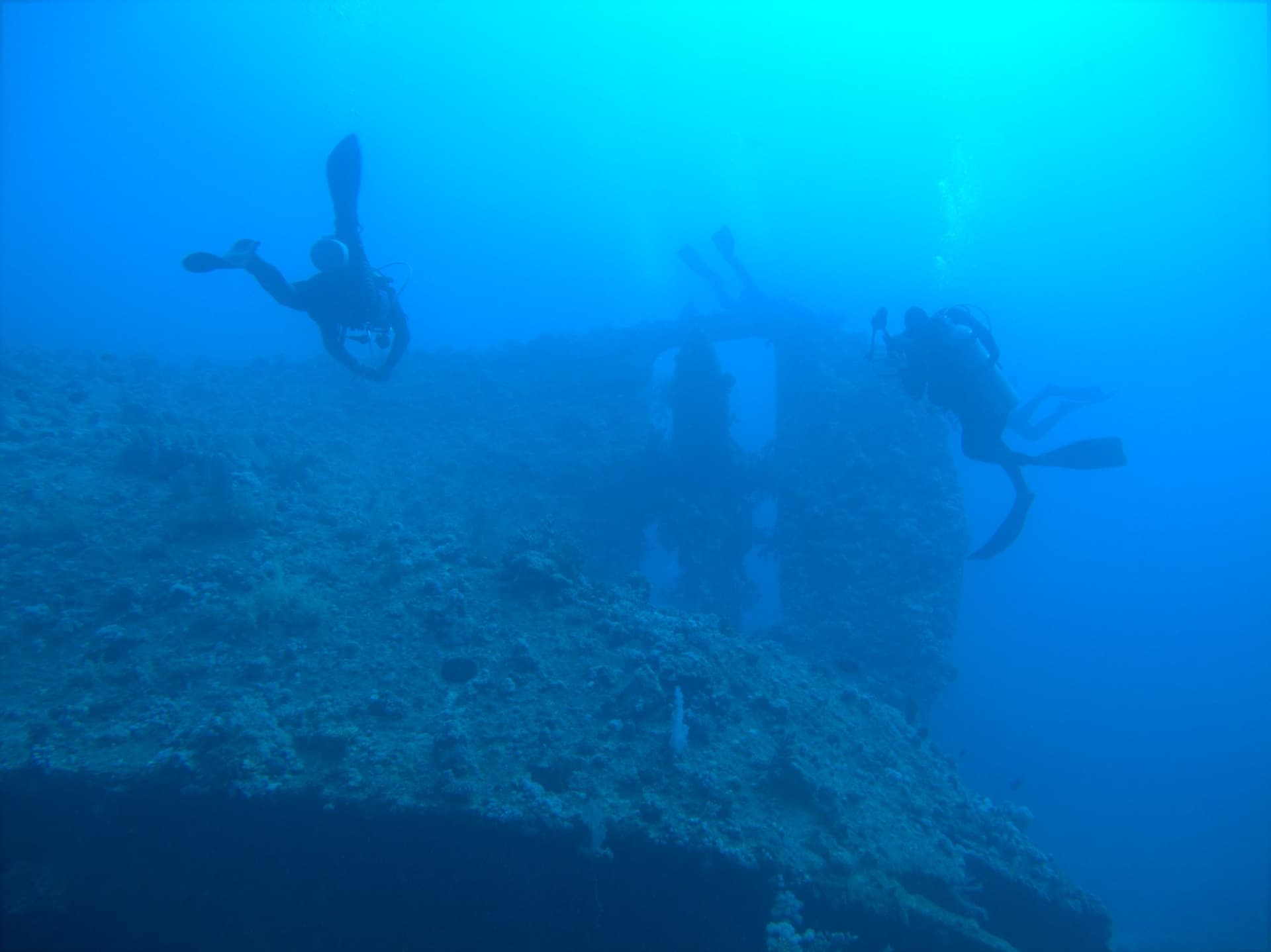
Nearer to town, Ras Umm Sid, Temple and the Gardens give sheltered coral pinnacles and night dives with no current to manage. The Thistlegorm, a British cargo ship bombed on 6 October 1941 and found by Cousteau in the early 1950s, lies at around 30 m with trucks, motorcycles and rifles in its holds. Its two locomotives were deck cargo blown clear of the hull and lie on the seabed beside it; they are often described as being in the holds, and they are not. The overturned Dunraven, which struck the reef in 1876 and is now thick with coral, is the other wreck people travel for.
Coral health varies by sector. HEPCA's 2024 Bleach Watch put the Gulf of Aqaba among the least affected stretches of the Egyptian coast, yet that sector still saw bleaching of about 10% of colonies on the reef flat and roughly 25% at 10 m.
Sharm El Sheikh International (SSH) is about 10 km from town. Centres collect divers from hotels between 07:00 and 08:30 and bring them back between 15:30 and 17:00, with two guided boat dives, tanks and weights included and a third dive available on board. Ras Mohammed and Tiran are day-boat trips. The Thistlegorm is a separate excursion with a very early start and a surcharge, so a liveaboard suits anyone whose priority is the wreck. Park and marine fees go on top of every trip price and are paid locally; confirm the current rates with your centre. Egypt's tourism ministry said in April 2026 that it is updating diving regulations and developing the Hyperbaric Medical Center in Sharm.
Most centres set the Sharm coast at Open Water and the Tiran reefs and the Thistlegorm at Advanced. In 2024 PADI EMEA announced that members providing other agencies' courses would lose membership across the Middle East, so centres here have split between staying with PADI and moving to SSI; check which agency a centre teaches before booking a course. Spring and autumn are the easiest seasons; bring 3 mm for summer and 5 mm for winter.
Fringing coral reef that breaks into vertical walls, charted to about 800 m off Shark Observatory, around a raised fossil-reef headland at Ras Mohammed; four reefs rise from deep water in the Straits of Tiran.
The diving here splits into 4 zones:
One pier ladder, two dives: hard coral to the right, sea fans to the left
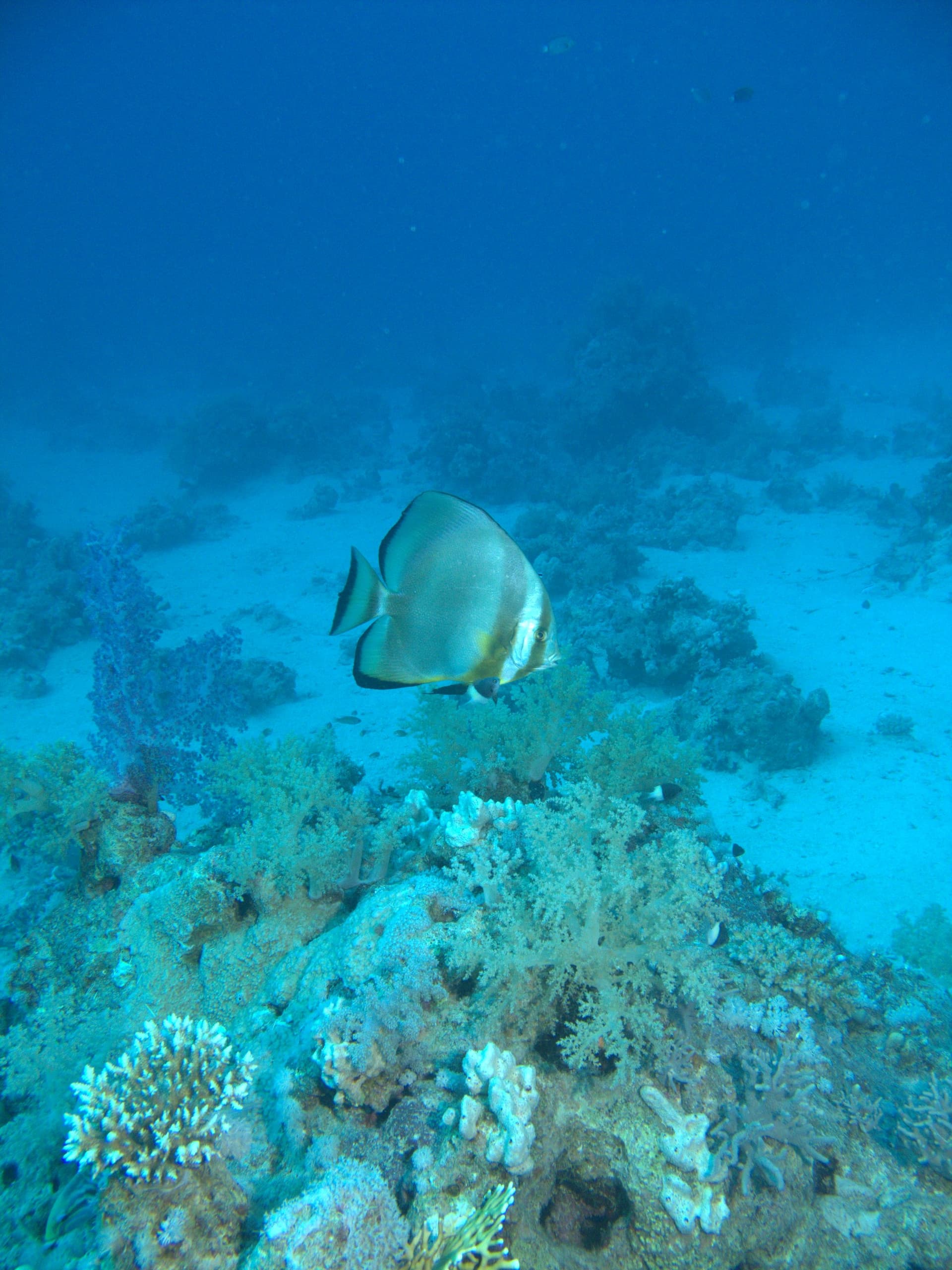
Calm pinnacles and goby-shrimp sand for a relaxed first Red Sea dive
Shore-accessible wall dive with gorgonians and occasional pelagics near the Tiran approach
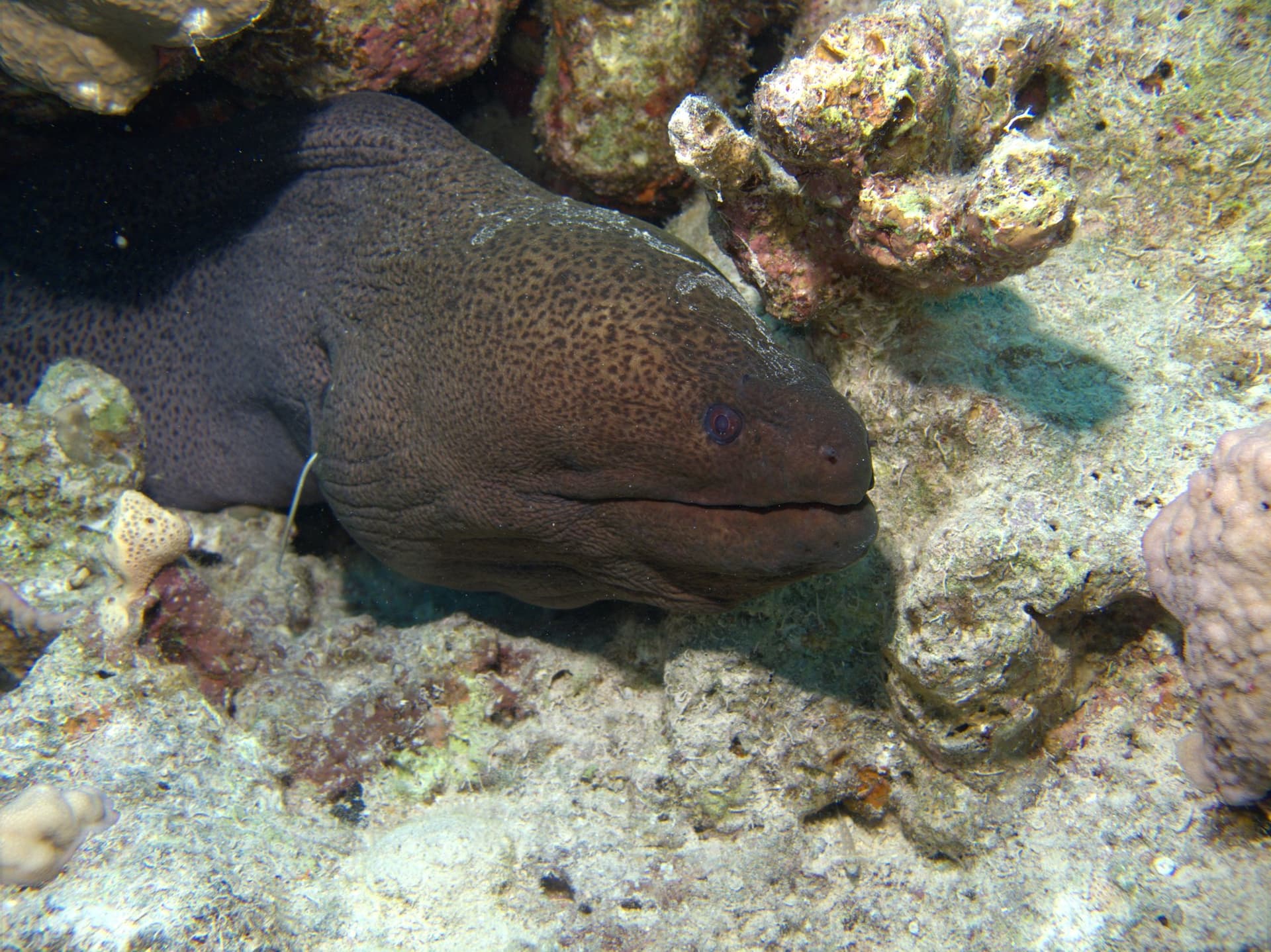
Pinnacle swim-through and night dive in a sheltered Sharm bay
Glass fish pinnacle and soft-coral ergs, a jump from a hotel jetty
A drift over coral pinnacles to a 17th-century anchor and amphoras
Sun beams down a vertical canyon wall on a drift off Ras Umm Sid
Red Sea's defining dive, an 800 m wall meeting wreck cargo and pelagic schools
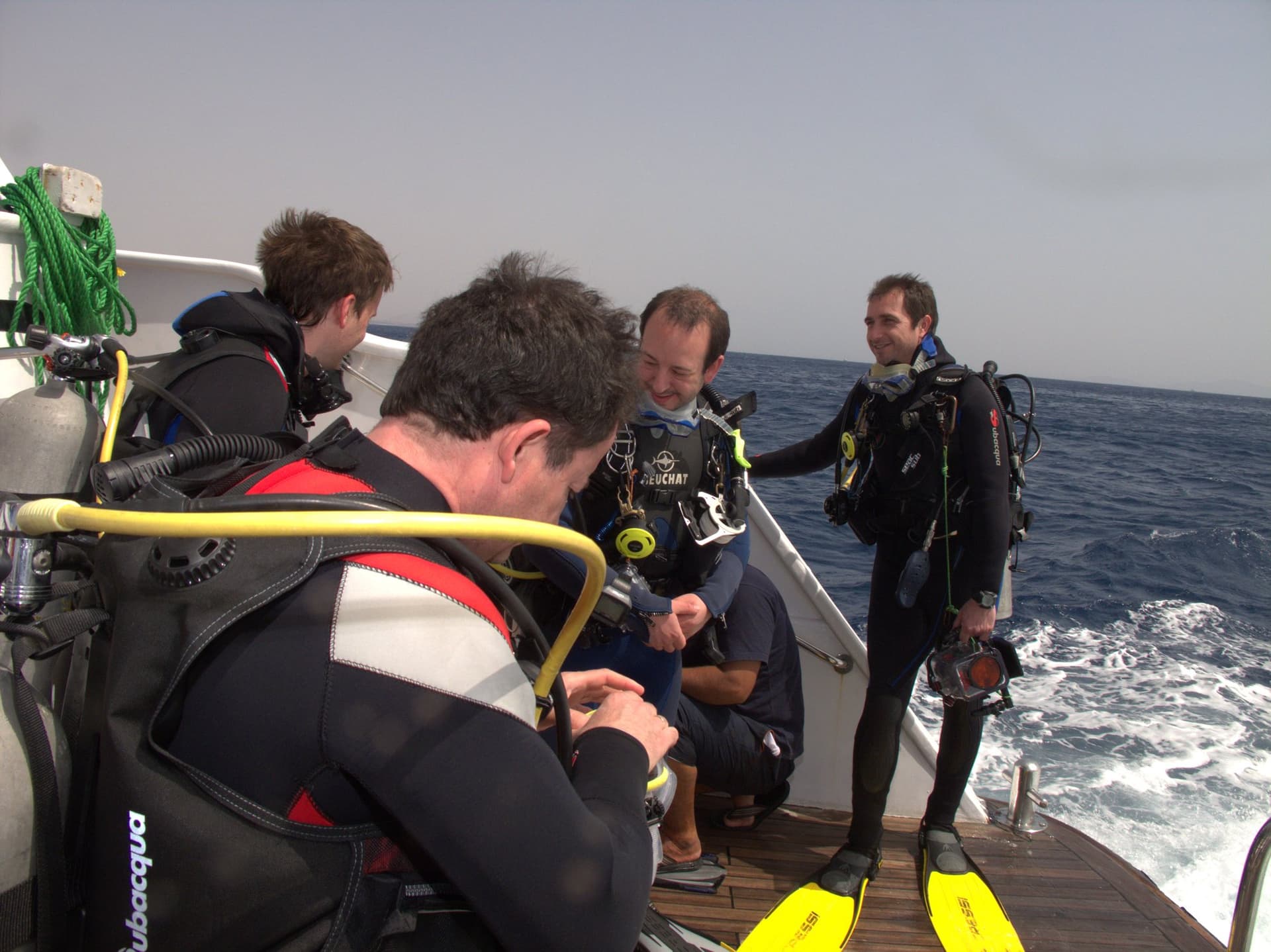
A drift down a sandy alley between a swim-through wall and a satellite reef
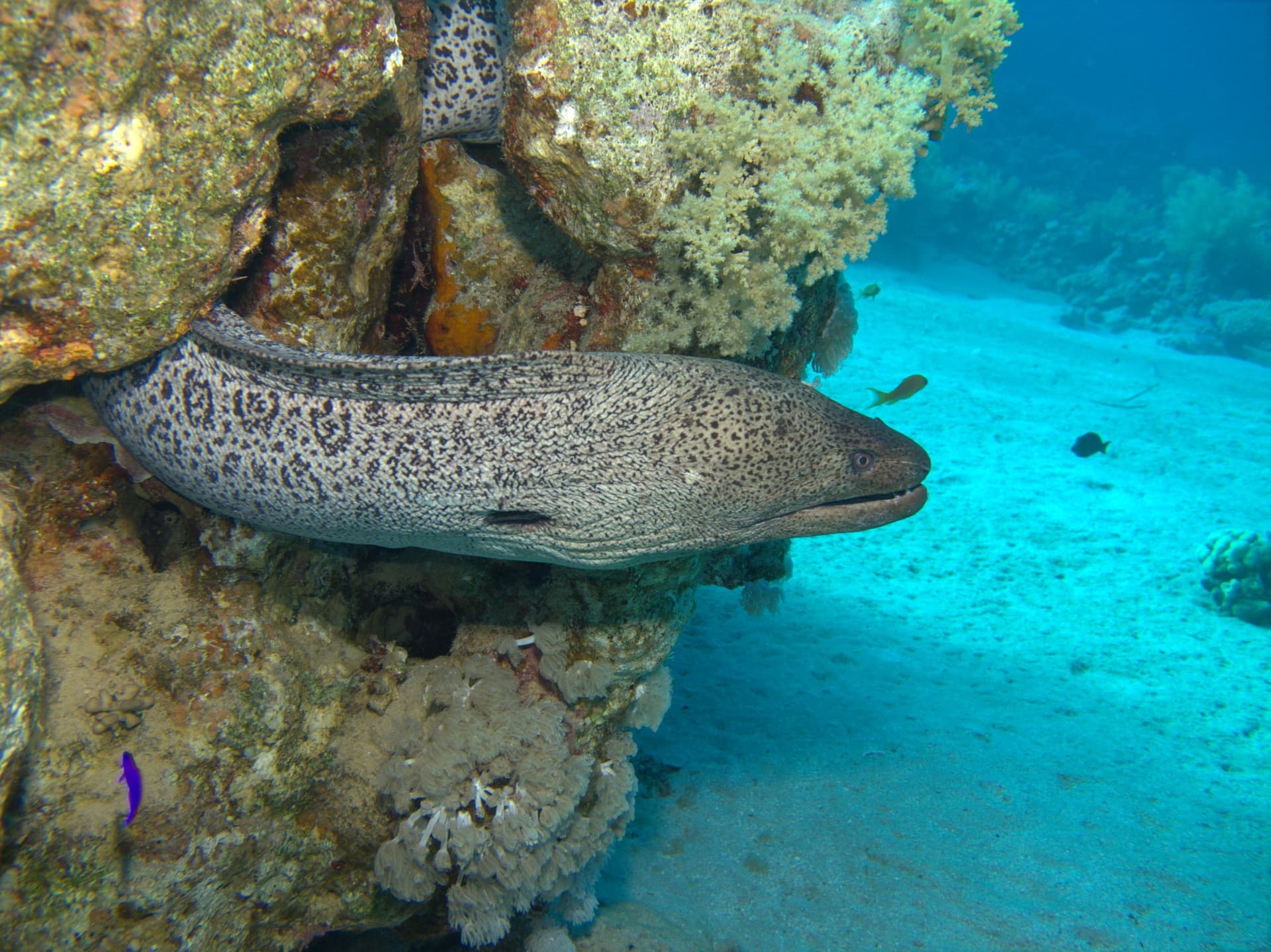
Table corals and glassfish towers in a sheltered Ras Mohammed drift
Gorgonian wall under a former shark-spotting cliff
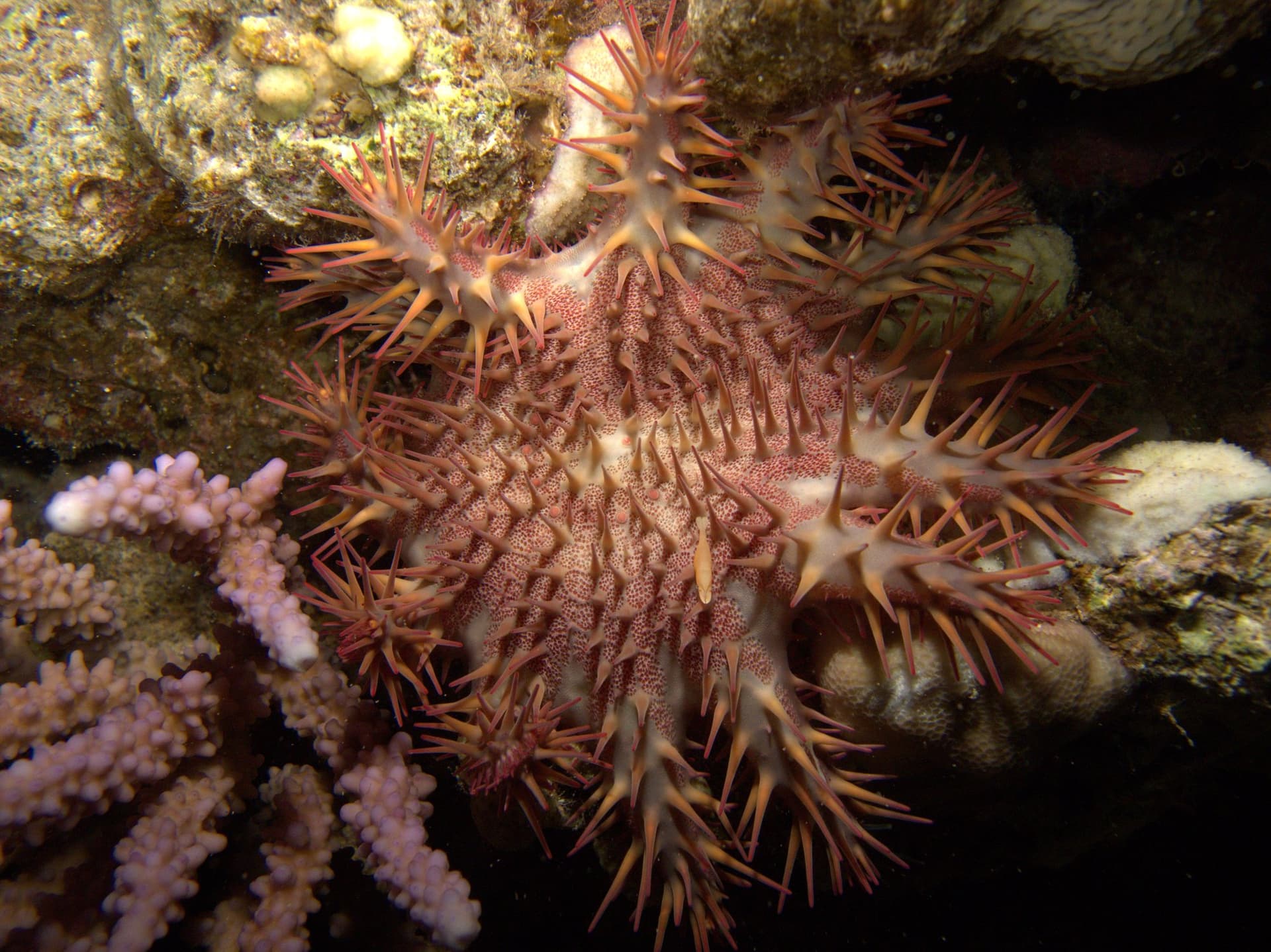
Whitetip sharks in a sandy amphitheater below a stranded 1981 hull
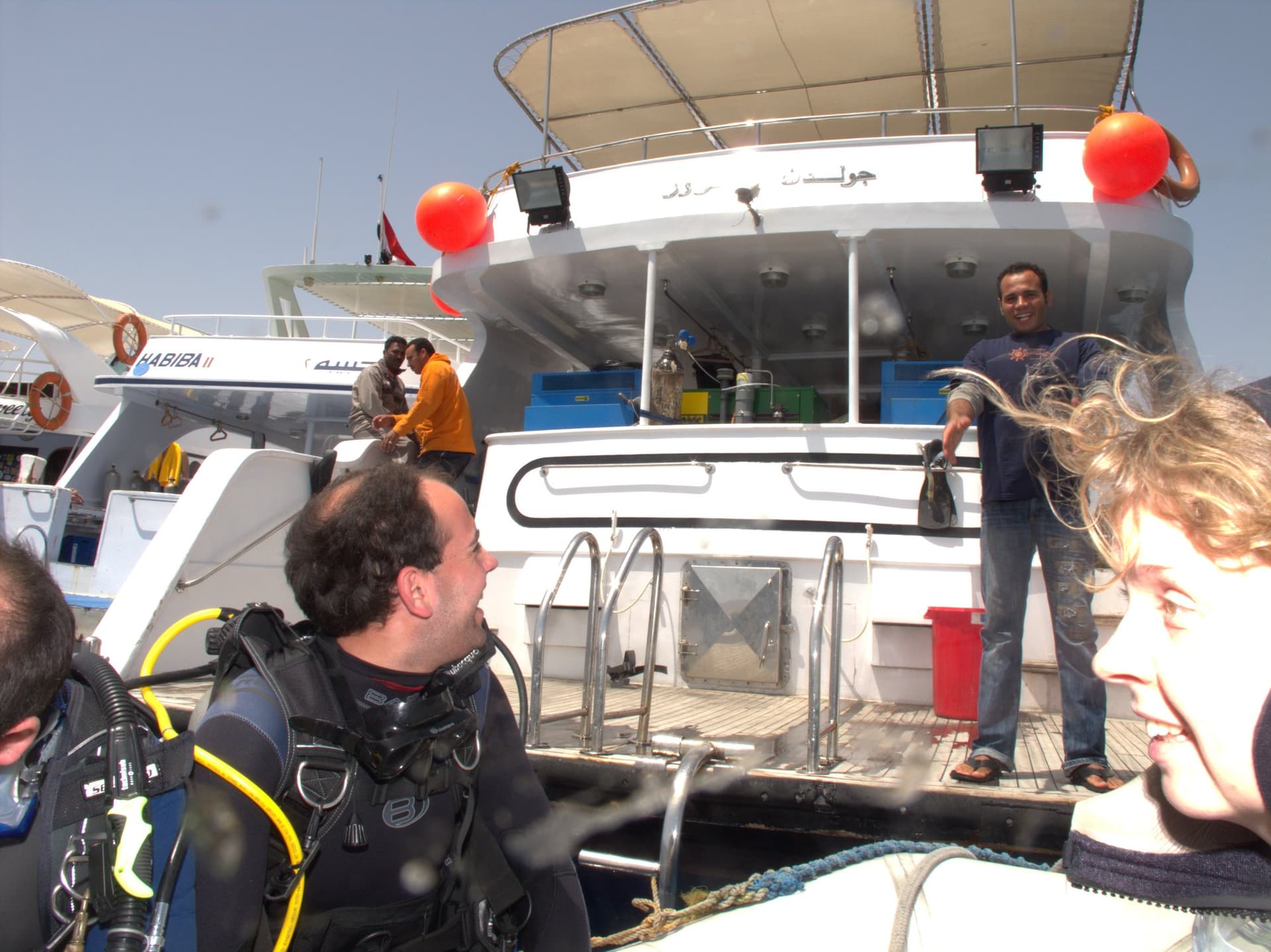
A kilometre-long Tiran drift with a canyon and the washing machine eddy
Gorgonian wall drift with a technical-only canyon alongside
Sheltered pinnacle diving with a reliable stingray cleaning station and night dives rich in glassfish
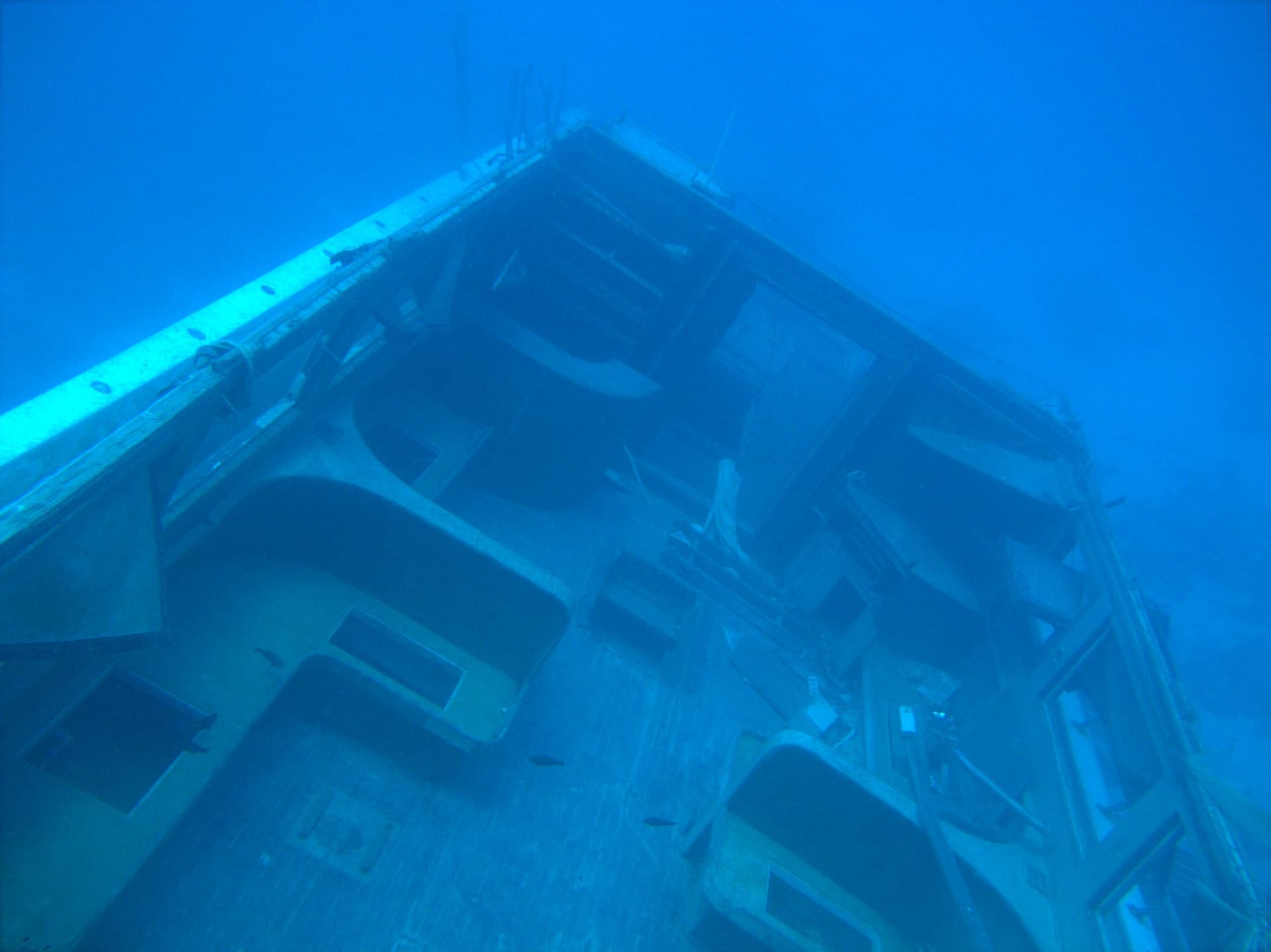
Wreck enthusiasts and macro photographers on Red Sea liveaboard itineraries, paired with the nearby Dunraven at Beacon Rock
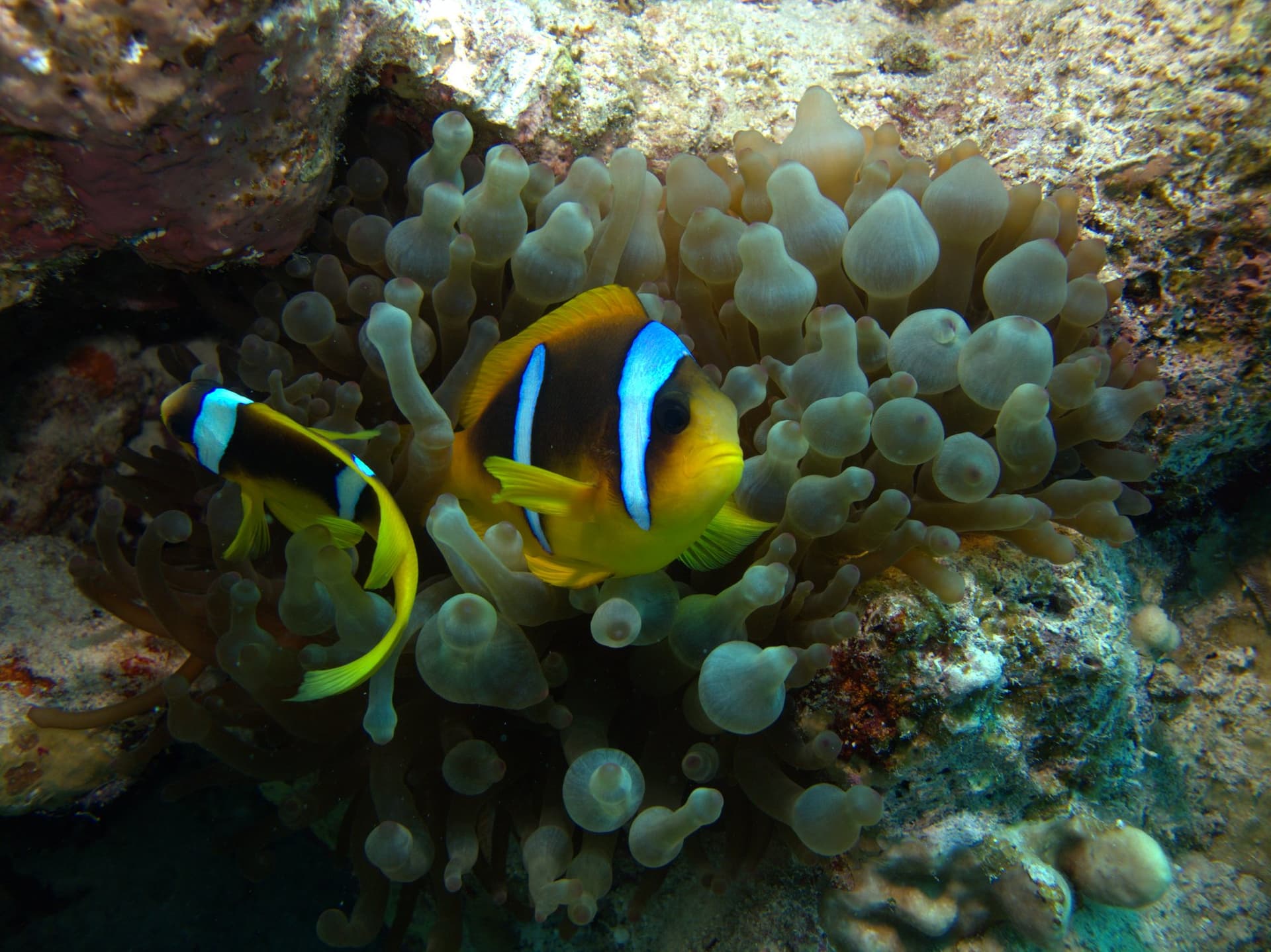
Tidal drift through a reef gap into a liveaboard lagoon
Blue spotted stingrays gathering on a snorkel-friendly erg in spring
Book online or contact a centre that dives this area.
PADI dive centre in Sharm El Sheikh est. 1993, with beachfront base, daily boats to Tiran and Ras Mohammed, and liveaboard fleet.
Get in touch to add or claim your dive center listing on DiveCodex.
Safari boats based elsewhere that run itineraries to these dive sites.
41m, 26-guest wooden liveaboard running Master Liveaboards' full Egyptian Red Sea catalogue from Hurghada and Port Ghalib, from northern wrecks and Tiran through the offshore Brothers, Daedalus and Elphinstone to the far-south Rocky, Zabargad and St John's reefs.
38 m wooden liveaboard with 13 ensuite cabins for 26 guests, on 7- and 10-night Red Sea trips from Hurghada and Port Ghalib.

26-guest sister of Superior with Junior and Executive suites, ranging across Emperor's Egypt catalogue from northern wrecks and offshore Brothers, Daedalus and Elphinstone to the Deep South.

13-cabin, 26-guest wooden liveaboard running Emperor's northern Red Sea wreck-and-reef weeks from Hurghada, plus offshore Brothers, Daedalus and Elphinstone.

Red Sea Explorers' largest liveaboard: 37.5m, 28 guests across 14 cabins, running the same GUE-leaning offshore and deep-south Egypt route catalogue.

36m, 22-guest steel liveaboard with a dedicated camera room and gas-blending deck, running the Brothers, Daedalus, Deep South and Fury Shoal weeks.

Red Sea Explorers' tech flagship: a 37m, 22-guest steel liveaboard with a full trimix/CCR fill station and scooters for offshore and deep-south Egypt safaris.

42m steel liveaboard released 2018, the Spanish-operated Blue Force Fleet's Egypt boat, running week-long Red Sea routes from Hurghada and Port Ghalib, with English and Spanish spoken on board.
Spring and autumn balance water, air and visibility. Winter gives the clearest water, up to 40 m, and summer the warmest, with air temperatures of 40 to 45 C.
What can go wrong here, and what divers do about it. Conditions change - take the briefing from the operator on the day.
National rules also apply: Rules and permits in Egypt
Yes, at the sheltered local sites. Ras Katy and the Gardens are calm and shallow, and centres run introductory dives there for people with no certification. The step up is current: Ras Mohammed and Tiran are drift dives that suit divers with some logged experience.
Most centres treat the Sharm coast as Open Water diving, Ras Mohammed as intermediate to advanced, and the Tiran reefs and the Thistlegorm as Advanced level. That is operator practice, not a legal minimum, so ask the centre what it expects before booking a specific site.
Yes, if you accept the heat. The air is hot but dry, often 40 to 45 C, and the water is at its warmest. Summer is also when hammerheads are sought at the back of Jackson Reef, from August to early October, and when bohar snapper and barracuda gather at Ras Mohammed. Sightings are never guaranteed.
Whitetip reef sharks are resident at several sites, including Ras Katy and Gordon Reef, and grey reef sharks patrol Ras Mohammed and Ras Za'atar in summer. Scalloped hammerheads are the headline sighting at Jackson Reef from August to early October. Oceanic whitetips are occasional in deeper water and whale sharks are rare, with no reliable season.
By day boat or liveaboard. It is an Advanced-level dive: the wreck lies at about 16 to 32 m in the current-swept Strait of Gubal, descent and ascent are on a fixed shot line, and operators expect logged wreck or deep experience. Day boats leave very early, make two dives and spend several hours each way, and several boats usually arrive at once, so the wreck gets busy. A liveaboard allows more dives on it.
HEPCA's 2024 Bleach Watch found bleaching rising steadily southward along the Egyptian coast, lowest in the Gulf of Aqaba and northern Hurghada sectors and highest south of Marsa Alam. The Gulf of Aqaba sector was not unaffected: bleaching ran from about 10% at the reef flat to roughly 25% at 10 m. These are sector figures, so individual Sharm reefs can differ, and a diver's report of clean reefs at Ras Mohammed does not settle it.
Yes. Some Sharm operators run technical dives from day boats, and divers name Emperor Divers as the main one. A technical diver can spend around three hours on a single Thistlegorm dive while the rest of the boat does two recreational dives. Dahab, about 80 km north, is the usual alternative for shore-based technical diving.
Also known as: Sharm
Log your dives - notes, photos, conditions and the marine life you saw - and share them as one public diver profile. What you share helps the next diver, too.
Log every detail
Depth, duration, conditions, gear, buddy, notes — all in one place. Import from Suunto and other dive computers.
Track marine life
Record species sightings on each dive. Build a personal catalogue of everything you've seen underwater.
Your public dive profile
Share your dive history, stats, and experiences with a profile page you control. Show the world where you've been.