

SubLimits Diving Center
SSI Instructor Training Center in Sant Feliu de Guixols, open year-round, running boat dives and the full professional training pathway on the Costa Brava.
SSI7 services4 languages
Also known as: Roca de S'Adolitx, Roca S'Adolitx, S'Adolitx
Small islet south of Port Salvi at Sant Feliu, 2-24m circumnavigation with a 5m tunnel at 14m and white-sand patches where rays cross.
Last updated May 2026
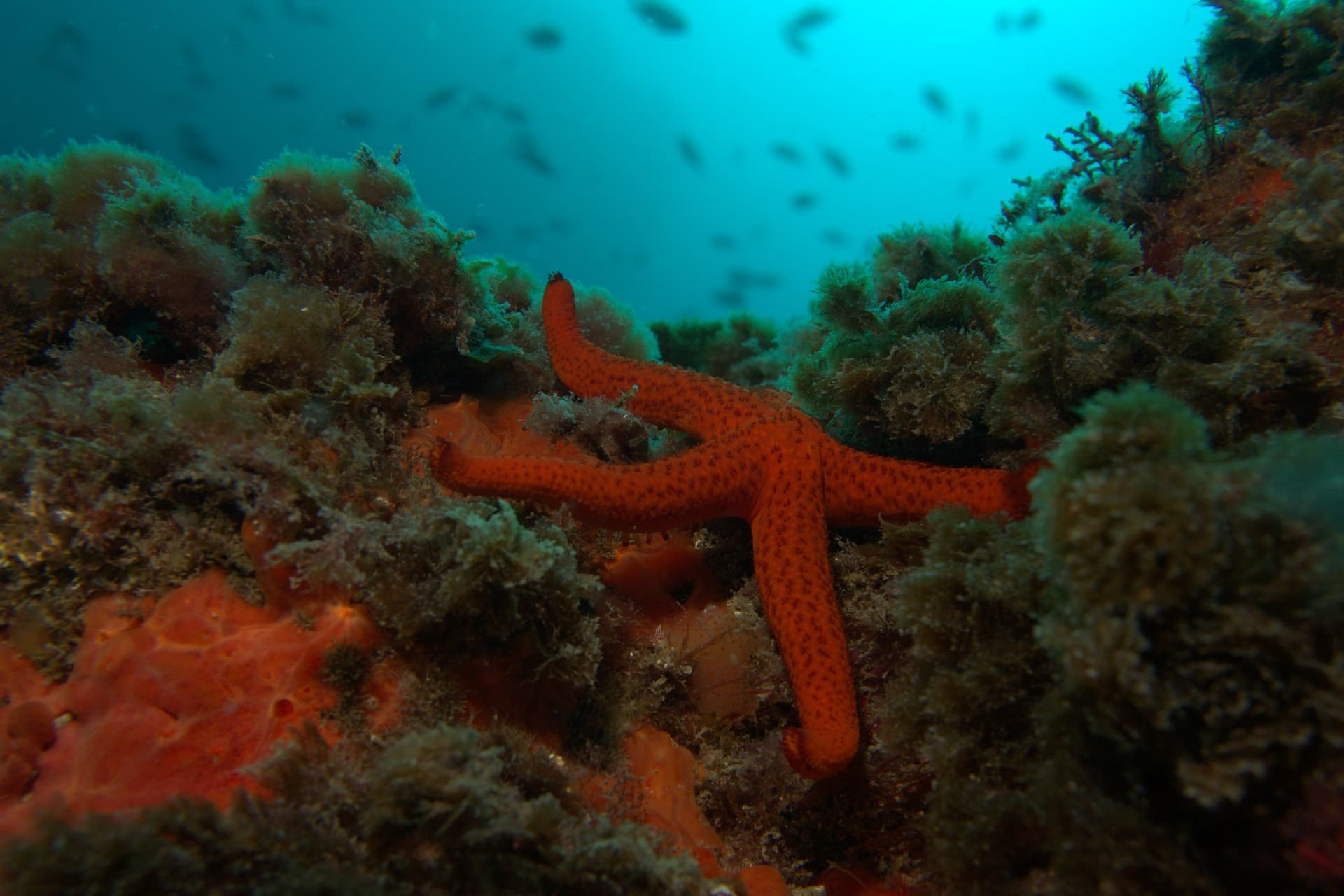
The boat run is short, around fifteen minutes south from the harbour, and the islet shape gives itself away from the surface: a chunk of dry rock standing about 12 metres above the water, south of Port Salvi. Underwater the seabed slopes smoothly off the islet to roughly 24 metres, so the dive becomes a depth-of-your-choosing loop around the rock. The pre-coralligene face carries the small Mediterranean macro the area's centres point out — porcelain-shell molluscs sitting on the rock, anemones with Periclimenes shrimp inside, the occasional moray in a hole. Around 14 metres, between the islet and the coast, La Cuarta cueva runs about five metres E-SE; centres open it to advanced divers and note juvenile spiny lobsters as the routine sighting. Down at the deepest point, around 24 metres, the white sand opens out from the base of the rock and rays and electric rays cross between rock and posidonia. The dive ends shallow on the islet shoulder for the safety stop, where slow work tends to reward you with one more macro find.
S'Adolitx reads as the area's easy rotation site rather than a signature dive, and that is the point. The two centres that name it on their site lists frame it the same way: a small visible islet, smooth descent, all levels welcome. What separates it from sibling rocky reefs in the cluster is the short tunnel at 14 metres and the white-sand surrounds where rays cross — the pairing of overhead taster and sand-edge wildlife on a single easy dive. It pairs naturally with Tuneles de Port Salvi or La Llosa de Sant Feliu when centres want a shallower second dive after a deeper morning. The pre-coralligene rock is the bottom story: an intermediate community between photophilic algae and true coralligenous assemblages, the kind of substrate that holds the area's typical macro at depths a beginner can reach.
Pick your depth at the start. Shallow at 3-12 metres is the islet shoulder and small life. The 14m tunnel adds the lobster crevices and a brief overhead — wide enough to swim through and only about five metres long, but trim and exit awareness still apply. The deeper sand edge at 20-26 metres is where to drop for the rays before climbing back up. Boat traffic at the surface is the operational hazard: this is a popular Sant Feliu entry/exit zone. Carry an SMB and deploy it before ascending. Plan exposure suit for the typical bottom range, not the surface reading: the summer thermocline at about 20 metres puts the working depth several degrees below the warm surface number from May onwards.
What makes this dive site stand out.
Rock breaks the surface ~12m above sea level, so the shape is unmistakable from the boat
Short tunnel ~5m long oriented E-SE between the islet and the coast
Porcelain-shell molluscs and Periclimenes shrimp inside anemones in crevices
White-sand patches around the islet where stingrays and electric rays cross
41.7790°N, 3.0340°E
September and October offer cleaner visibility and the reliable thermocline. Diveable year-round subject to weather and centre operation.
Boat outing pricing applies; no site-specific fees. Verify rates with your centre.
OW sufficient for the main loop at any depth. The 14m tunnel sits at the edge of OW limits, so centres typically reserve it for AOW or experienced divers.
Summary
All-levels site. Depth selection is the main planning variable: shallow on the islet shoulder for beginners, the tunnel and 24-26m sand edge for AOW divers.
Safety considerations
What can go wrong here, and what divers do about it. Conditions change - take the briefing from the operator on the day.
Book a guided dive at this site.
SSI Instructor Training Center in Sant Feliu de Guixols, open year-round, running boat dives and the full professional training pathway on the Costa Brava.
Get in touch to add or claim your dive center listing on DiveCodex.
Upcoming trips to this dive site published by local centres.
Availability is read from each centre's public calendar and refreshed daily. Last checked October 16. Confirm with the centre before travelling.
Dive centres in Catalonia must require insurance from every diver on their dives, and must be able to offer a policy to anyone who has none.
A short tunnel between the islet and the coast at about 14 metres, around 5 metres long and oriented E-SE. The colloquial name (fourth cave) echoes the three Port Salvi tunnels but the relationship is naming-only; S'Adolitx is a separate site. Centres open it to advanced divers and report juvenile spiny lobsters inside.
Yes. The circumnavigation works at any depth from the islet shoulder down to 24-26m. Beginners typically stay on the shallow rock and skip the tunnel; AOW divers add the tunnel and the sand edge to 24-26m on the same plan.
Octopus is the centre-photographed species. Juvenile spiny lobsters are reported inside the 14m tunnel. The pre-coralligene rock holds porcelain-shell molluscs and Periclimenes shrimp inside anemones in the crevices. White-sand patches around the islet are where divers occasionally spot stingrays and electric rays crossing.
No. The site sits inside the municipal Bio-knowledge Marine Area at Cala Vigata, plus PEIN Cadiretes and a Natura 2000 ZEC coastal extension. None of these designations imposes diver permits, fees or quotas. Marketing references to a marine micro-reserve are not a legal designation.
Port Salvi is the deeper AOW cave complex at 26-29m with overhead environment management as the dominant theme. S'Adolitx is a single rocky islet with one short tunnel at 14m. Centres pair them naturally as a deeper morning at Port Salvi and a shallower afternoon at S'Adolitx.
May to October for the warmest water and best operating window. September and October offer cleaner visibility once the spring bloom passes, and the reliable summer thermocline is gone. The site is shallow enough to dive year-round when weather and your centre's schedule allow.
Log your dives - notes, photos, conditions and the marine life you saw - and share them as one public diver profile. What you share helps the next diver, too.
Log every detail
Depth, duration, conditions, gear, buddy, notes — all in one place. Import from Suunto and other dive computers.
Track marine life
Record species sightings on each dive. Build a personal catalogue of everything you've seen underwater.
Your public dive profile
Share your dive history, stats, and experiences with a profile page you control. Show the world where you've been.