Sha'ab El Erg

Also known as: Dolphin House, Dolphin House Hurghada, Reef of the Dunes, Shaab El Erg

Horseshoe reef 25 km off Hurghada with a sheltered lagoon used by a resident dolphin pod, plus outer walls and pinnacles reported to around 25 m.

Last updated September 2026

The dive

Most trips drop into one of two zones. Inside the lagoon, the descent is onto white sand at 8-12 m, scattered with dark coral blocks (the ergs the reef takes its name from), and the route loops slowly along the edge with the dolphin pod somewhere in the open water above. Outside the horseshoe, the descent is onto the reef wall: the western drop-off finishes at 13 m on a shelf before stepping deeper into open water, and three pinnacles sit close together off the plateau leading toward the channel.

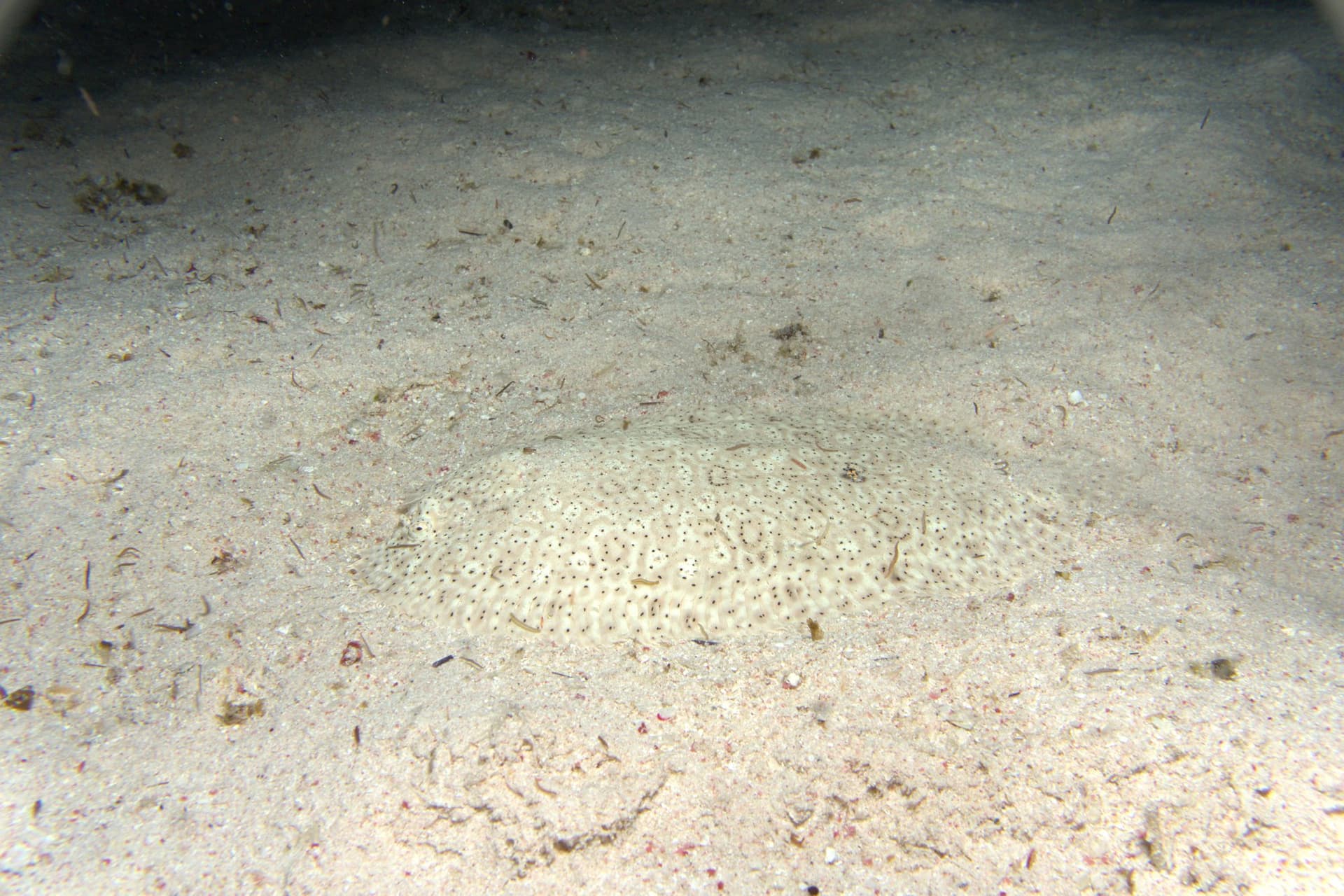
The standard two-tank day uses both halves. A guide will often run the outer wall first while gas planning is fresh, then bring the group back through a roughly 8 m channel between the main reef and two smaller round knolls overgrown with table corals. After the channel, four more pinnacles line up across a coral garden back into the lagoon for the ascent. The southern Lighthouse section runs as a gentle drift when current is up, and that is the better play in peak-season midday when the lagoon is busy with moored snorkel boats. After dark, the same lagoon edge becomes a different site: a logged night dive there found blue-spotted rays, moray eels, prawns, flatfish and small crabs out on the sand.

What makes it special

What sets Sha'ab El Erg apart from the other Hurghada inshore reefs starts with the lagoon: a sheltered, light-flooded, sand-bottom training profile is rare on a Red Sea offshore reef, and it is the reason the resident dolphin pod chose this lagoon as a daytime rest area. It continues with the encounter itself, one of the few places where wild dolphin encounters are a regular, in-water possibility under an actual regulatory framework, not a boat-side spectacle: interaction stays passive and at a set distance, and the pod sets the terms of any encounter that happens.

The honest counter-case lives in the same lagoon. When the pod is not there on the day, the inner reef is sand-and-coral-knoll terrain, and community readings of a no-dolphin lagoon dive land flat. The outer wall and pinnacle dives are the more reliable answer: they hold up on their own merits regardless of whether the pod shows. A diver going in expecting outer reef as the keeper and lagoon as the bonus tends to leave satisfied either way.

Know before you go

Early morning is the dolphin window, calm and wind-free days outperform rough days, and November to February typically gives the best odds. The site is busy in season: multiple boats moor in the lagoon at the same time and underwater traffic from different operators overlaps. HEPCA's Code of Conduct, not just operator courtesy, sets the encounter rules: boats and swimmers keep at least 30 m clearance and approach the pod only parallel to it, at up to 4 knots; snorkellers must wear fins, mask, snorkel and a lifejacket, and nobody chases, touches or feeds the pod. HEPCA states that breaking the code is punishable by law and a fine. Divers do not follow the pod into the lagoon rest area or descend directly onto it.

Practical points: bring a torch if there is any chance of a night dive (centres confirm coast-guard permission in advance; it is not always granted). 3 mm in summer, 5 mm in winter is the standard exposure suit. From Hurghada the run is around 90 minutes; from El Gouna it is shorter and boats arrive earlier. Independent diving is not permitted in Egypt; access here, as everywhere in the country, is through CDWS-licensed operators only. Two-tank days here are also commonly paired with Erg Sabina or the Abu Nuhas wreck cluster on the boat schedule. Ask for a profile that combines the lagoon with the outer wall. Covering only the lagoon is the version that draws the mixed reviews.

Why Dive Sha'ab El Erg

What makes this dive site stand out.

  1. Resident dolphin pod

    Uses the lagoon as a daytime resting and nursery zone after nocturnal hunts; local operators disagree on the exact species (see FAQ)

  2. Sheltered training-grade lagoon

    8-12 m sand bottom with scattered ergs, calm and well-lit, beginner-friendly

  3. Outer wall and pinnacles

    Coral wall reported to around 25 m with stepped pinnacles, table-coral channel, and a southern drift section

  4. Strong night dive

    Prawns, flatfish and small crabs confirmed on a lagoon-edge night dive when coast-guard permission is granted

  5. HEPCA-regulated dolphin etiquette

    HEPCA's Code of Conduct sets 30 m clearance, a parallel approach at up to 4 knots, and no chasing, touching or feeding; 2026 government-attributed guidelines separately name the lagoon among the region's protected dolphin rest areas (see FAQ)

Depth & Profile

8–25m
Depth range (reported)
8–25m
Typical range
ReefSandy bottomSandCoral

Location

27.4196°N, 33.8609°E

Conditions & difficulty

Temperature
20°C – 30°C
Visibility
15–30m
Current
Mild
Best season
October-May

October-May is the dolphin window, and November-February typically gives the best odds. Calm, windless mornings outperform rough days.

Cost

Site cost is rolled into Hurghada and El Gouna day-boat packages. Verify current rates with your dive centre.

Checked May 7, 2026
EasyMin cert: Open Water

Open Water covers the lagoon and the shelf to about 13 m. The full route onto the outer walls and pinnacles runs past the Open Water depth limit to around 25 m and needs Advanced Open Water; the southern drift section also asks for more comfort with current.

Summary

Easy in the lagoon and main reef; moderate on outer walls and the southern drift

Safety considerations

What can go wrong here, and what divers do about it. Conditions change - take the briefing from the operator on the day.

  • Surface and boat traffic: Heavy day-boat and snorkel-boat traffic in season; multiple operators stack moorings inside the lagoonDeploy SMB before ascending, stay clear of mooring lines, and follow the guide's surface-procedure brief
  • Surface and boat traffic: Popular site with day-boats and snorkellers overlapping in the lagoon; visibility can drop near mooring areas in peak seasonRequest early-morning departures or shift to the outer wall and southern drift when the lagoon is full

Marine Life

Giant morayGymnothorax javanicusBlue-spotted rayTaeniura lymmaHumphead wrasseCheilinus undulatusBottlenose dolphinTursiops truncatusWhitetip reef sharkTriaenodon obesus· RareOcellated eagle rayAetobatus ocellatus· RareGrey reef sharkCarcharhinus amblyrhynchos· RareGreen sea turtleChelonia mydas· RareReef manta rayMobula alfredi· Rare

Liveaboards visiting this site

View all

Multi-day safari boats with this site on their itinerary.

Blue Horizon logo

Blue Horizon

41m, 26-guest wooden liveaboard running Master Liveaboards' full Egyptian Red Sea catalogue from Hurghada and Port Ghalib, from northern wrecks and Tiran through the offshore Brothers, Daedalus and Elphinstone to the far-south Rocky, Zabargad and St John's reefs.

Liveaboard26 guestsHurghada
Emperor Elite logo

Emperor Elite

26-guest sister of Superior with Junior and Executive suites, ranging across Emperor's Egypt catalogue from northern wrecks and offshore Brothers, Daedalus and Elphinstone to the Deep South.

Liveaboard26 guestsHurghada
Emperor Superior logo

Emperor Superior

13-cabin, 26-guest wooden liveaboard running Emperor's northern Red Sea wreck-and-reef weeks from Hurghada, plus offshore Brothers, Daedalus and Elphinstone.

Liveaboard26 guestsHurghada
Long Island logo

Long Island

Red Sea Explorers' largest liveaboard: 37.5m, 28 guests across 14 cabins, running the same GUE-leaning offshore and deep-south Egypt route catalogue.

Liveaboard28 guestsHurghada
MV Tala logo

MV Tala

Red Sea Explorers' tech flagship: a 37m, 22-guest steel liveaboard with a full trimix/CCR fill station and scooters for offshore and deep-south Egypt safaris.

Liveaboard22 guestsHurghada
Scuba Scene logo

Scuba Scene

48.5m new-build luxury liveaboard for up to 28 guests, launched 2023, running All Star's Northern and Southern Red Sea routes from Hurghada, with Thistlegorm and Ras Mohammed wrecks in the north and the Brothers, Daedalus, Elphinstone, Rocky Island and St John's offshore.

Liveaboard28 guestsHurghada
Sea Serpent Grand logo

Sea Serpent Grand

44m, 28-guest wooden liveaboard and the Sea Serpent Fleet's technical flagship, running the fleet's shared Egyptian Red Sea route pool: offshore Brothers-Daedalus-Elphinstone, northern wrecks and the Strait of Tiran, and southern St John's and Fury Shoals.

Liveaboard28 guestsHurghada
Seawolf Dominator logo

Seawolf Dominator

Teak-finished 42m, 24-guest liveaboard running Seawolf's full Egypt catalog from Hurghada and Port Ghalib, from northern wrecks and the Strait of Tiran to the Brothers, Daedalus, Elphinstone and the Deep South.

Liveaboard24 guestsHurghada

Dive Centers

View all

Book a guided dive at this site.

Rules and permits

  • Conduct: no touching, no feeding, no taking anything.

Rules for Hurghada

Frequently Asked Questions

How likely are dolphin encounters at Sha'ab El Erg?▾

Experienced repeat divers report encounters on roughly four out of five dives, with calm, windless mornings between November and February giving the best odds. Early departures help: the resident pod tends to settle into the lagoon before the day-boat fleet arrives. Encounters are not guaranteed, and a no-show day is part of the deal.

Is Sha'ab El Erg worth diving if the dolphins don't show up?▾

The outer wall and pinnacles hold up on their own. Coral cover on the western drop-off, the table-coral channel, and the stepped pinnacles between the plateau and the wall give a 25 m dive worth a place on a two-tank day. Community readings of the inner lagoon-only dive on a no-dolphin day are less enthusiastic; if the pod is absent, ask for the outer route rather than another lagoon loop.

Can a beginner or a discover-scuba guest dive here?▾

The lagoon at 8-12 m on sand is one of Hurghada's most beginner-friendly profiles. Discover-scuba programmes run here regularly and the lagoon is calm enough for a relaxed first dive. Certified Open Water divers can extend onto the outer reef to 25 m on a second tank.

What are the dolphin etiquette rules?▾

HEPCA's own Code of Conduct sets the operational rules for the encounter: boats and swimmers keep a minimum 30 m clearance from the pod, approach it only parallel to its path at up to 4 knots (never head-on), and nobody chases, touches or feeds the dolphins. Snorkellers must wear fins, mask, snorkel and a lifejacket, and divers do not follow the pod into its lagoon rest area or descend directly onto it: bubbles released below the pod scare it off. HEPCA states that breaking the code is now punishable by law and a fine. Separately, Egyptian press reported in July 2026 that the government's Red Sea Protectorates Administration has issued its own guidelines naming Sha'ab El Erg's lagoons among the region's protected dolphin rest habitats. Whether that guidance amounts to a formally enacted decree, or remains administrative guidance running alongside HEPCA's own mandatory code, is not settled: a May 2026 press feature on Red Sea dolphin protection described the wider picture as an unlegislated regulatory gap awaiting future legislation.

How does the dive run from Hurghada vs El Gouna?▾

From Hurghada Marina the day-boat run is around 90 minutes; from El Gouna it is shorter: about 30 minutes by speedboat or 60 minutes by day boat. El Gouna boats often arrive earlier in the morning, which can mean less mooring traffic on a calm-day dolphin window.

Is night diving available at Sha'ab El Erg?▾

Yes when coast-guard permission is granted; centres confirm this in advance and it is not always given. A logged night dive there found blue-spotted rays, moray eels, prawns, flatfish and small crabs out on the sand. Profile is typically a shallow ~8-10 m route along the reef.

What dolphin species use the lagoon?▾

Local operators disagree. One describes the resident group as Indo-Pacific bottlenose dolphin, another as spinner dolphin, and the dispute is unresolved. Whichever it is, the pod uses the lagoon as a daytime rest and nursery area after nocturnal hunting further offshore, and the same distance and no-touch rules apply regardless of species.

Photos

DIVECODEX LOG

Every dive has a story. Share yours.

Log your dives - notes, photos, conditions and the marine life you saw - and share them as one public diver profile. What you share helps the next diver, too.

Log every detail

Depth, duration, conditions, gear, buddy, notes — all in one place. Import from Suunto and other dive computers.

Track marine life

Record species sightings on each dive. Build a personal catalogue of everything you've seen underwater.

Your public dive profile

Share your dive history, stats, and experiences with a profile page you control. Show the world where you've been.

Create your free dive log