
Torre Ferrer
Also known as: Congres, Mas Ferrer, Torre Ferrera
Wide porous-rock barra at 16-19m off Mataro, a long ridge for patient small-life observation in the Mataro-cluster of the Maresme barras.
Last updated April 2026
The dive
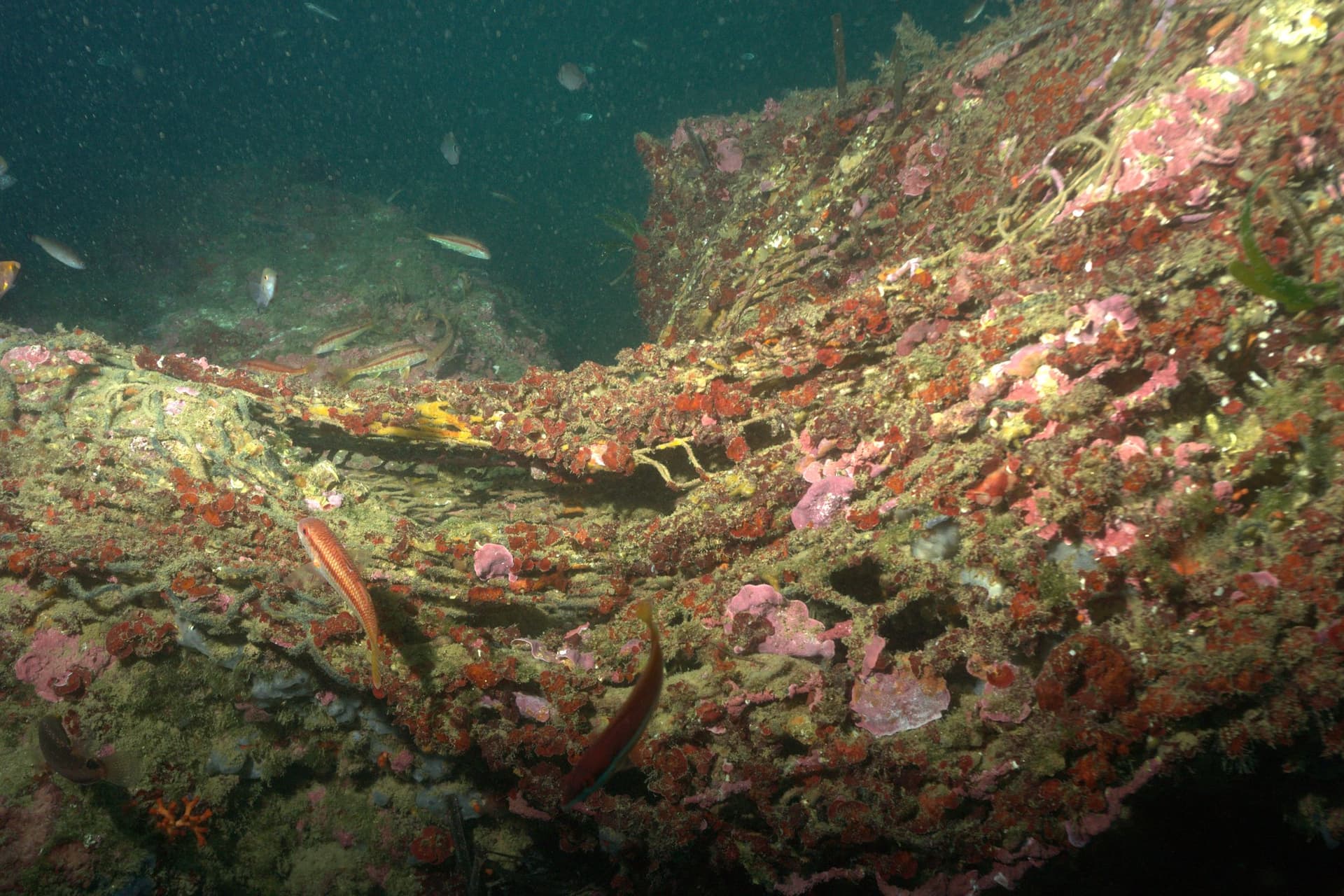
Torre Ferrer is a long, low porous-rock ridge running roughly parallel to the shore in the Mataro-side cluster of the Maresme barras. The boat runs out 10 to 15 minutes from Mataro port and anchors over the top of the ridge at about 16 metres. The centre lays a guide line from the anchor across the rock so divers can find their way back. A 2011 personal log put the working length of the ridge at roughly 700 metres, with flanks sloping from the 16 metre top down to 19 to 21 metres on the sand line.
The dive is patient observation work along the rock rather than fast travel. Centre framing leans on macro: scorpionfish on porous surfaces, conger and moray eels in the crevices, nudibranchs for camera-equipped divers. The local nickname Congres reflects the resident conger eels in the rock holes. At 16 to 19 metres on the working depth, NDLs are not the constraint and air is fine; Nitrox is optional rather than the local default at this depth.
What makes it special
Torre Ferrer is the quieter neighbour to the better-known Mataro Row 4 ridges. Barra de l'Arbre and Barreta d'en Serra carry the same depth and character but appear more often in centre rotations and forum reports. Torre Ferrer's distinctive feature, as far as published sources go, is its length and the conger-eel reputation captured by the Congres nickname. No signature wreck, no resident large fauna, and no notable concentration of any one species is documented at this site specifically. It earns its place in the rotation as a competent Mataro-cluster ridge with room to slow down and look.
Know before you go
Standard Maresme boat-dive kit applies: computer, SMB, compass, and a torch for crevice work. The bottom is comfortably within OW limits, so air is the practical default and Nitrox is optional. Plan the wetsuit for the bottom: 5mm with hood through summer at this depth, drysuit or 7mm semi-dry from November through April. An older personal log noted submerged netting across part of the ridge in 2011, which is a familiar Mediterranean substrate rather than an active hazard, and may or may not still be in place today. Solo diving is not appropriate here. Bookings run through Blaumar at Mataro port.
Why Dive Torre Ferrer
What makes this dive site stand out.
- Long porous rocky bar
About 700m of ridge with a 16m top and 19-21m sides, walkable in a single dive
- Mataro-cluster small-life palette
Scorpionfish, conger, moray, nudibranchs in the crevices and porous rock
- All-certifications depth
Top at 16m and sides at 19-21m sit comfortably within recreational limits
Depth & Profile
Location
41.5550°N, 2.5100°E
Conditions & difficulty
Calmest weather and best summer-calm visibility windows. Diveable year-round with appropriate exposure.
Verify current rates with Blaumar.
Open Water sufficient; all certifications welcome at this depth band.
Calm typical conditions, moderate depth, straightforward navigation along the ridge.
Marine Life
Rules and permits
Dive centres in Catalonia must require insurance from every diver on their dives, and must be able to offer a policy to anyone who has none.
Frequently Asked Questions
Is Torre Ferrer the same site as Mas Ferrer?▾
Almost certainly yes. Niman Sub published the same Mataro ridge at 16-18m as Mas Ferrer; the DB carries it as Torre Ferrer; older personal logs use Torre Ferrera and the local nickname Congres. All four names refer to the same long porous-rock barra in the Mataro-side cluster, but no single source explicitly equates them. A fresh dive would help confirm.
What certification do I need for Torre Ferrer?▾
Open Water with a guide is sufficient. The ridge tops at 16 metres and the flanks reach 19 to 21 metres, which sits comfortably within OW depth limits. The site is centre-published as suitable for all certifications, and the navigation along it is straightforward.
Why is the site called Congres?▾
Congres is the Catalan word for conger eel (Conger conger). Local divers historically used the nickname for this barra, likely reflecting the resident conger eels in the porous-rock crevices that Niman Sub also called out as a feature of the dive. The DB name Torre Ferrer follows the Catalan farmhouse-tower (mas / torre) naming pattern shared across this stretch of coast.
What centres run trips to Torre Ferrer?▾
Blaumar (Mataro) lists it on the salidas calendar as Torre Ferrer at 16-19m. Niman Sub historically scheduled it as Mas Ferrer before the centre closed in 2026. Mediterranean Dive and Manatee Diving both operate the broader Mataro-side ridge rotation and are plausible second options; specific scheduling for this site by those centres is not documented.
Is Torre Ferrer worth diving as a Barcelona day trip?▾
It is a competent everyday Mataro barra rather than a destination dive. The 30-minute drive plus 10-15 minute boat transit is the same as for the better-documented Mataro bars (Barra de l'Arbre, Barreta d'en Serra), and the depth, fauna, and conditions sit in the same band. Pick it for a quiet rotation day or pair it with a more characterful sibling site on the same morning.
Photos
Every dive has a story. Share yours.
Log your dives - notes, photos, conditions and the marine life you saw - and share them as one public diver profile. What you share helps the next diver, too.
Log every detail
Depth, duration, conditions, gear, buddy, notes — all in one place. Import from Suunto and other dive computers.
Track marine life
Record species sightings on each dive. Build a personal catalogue of everything you've seen underwater.
Your public dive profile
Share your dive history, stats, and experiences with a profile page you control. Show the world where you've been.