

Diversub
Small SSI center on the Cala Gogo beachfront near Sant Antoni de Calonge, capping discover dives at two and courses at four, with the boat from Palamos.
SSI6 services4 languages
Also known as: Cova del Carretó, Cova del Dofí, Coves de Sant Feliu de Guíxols, Cuevas de Sant Feliu, Cuevas Eden Rock, Los Túneles de Port Salví, Port Salví, Túneles de Port Salvi, Túneles de Port Salví
Six-tunnel limestone complex at Punta de Garbí, Sant Feliu, with main route 12-27m, an iron dolphin statue, and a compass-rose seabed marker.
Last updated May 2026
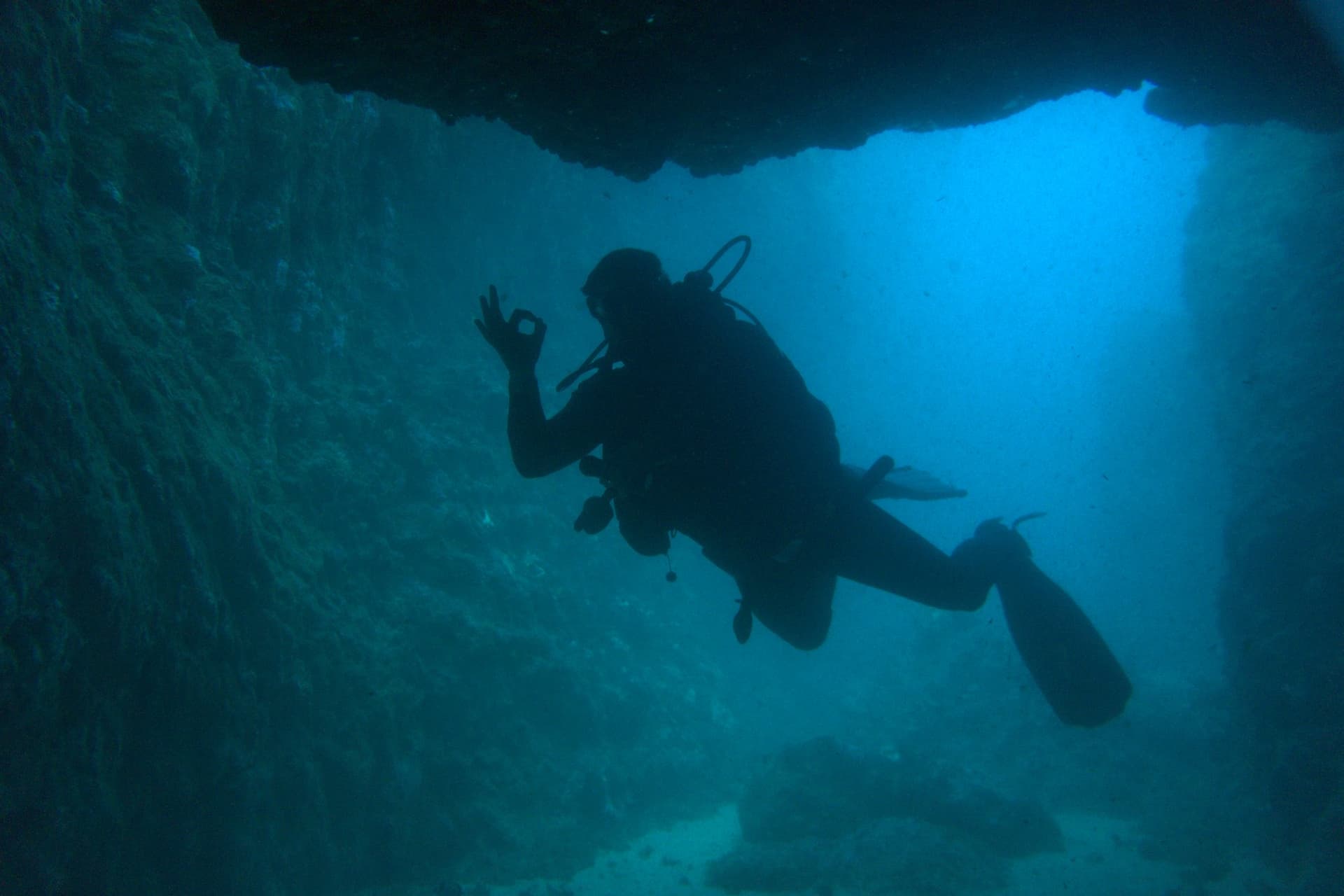
Drop down the line off Punta de Garbí to about 18 metres and the 2-metre sand corridor opens toward the first cave mouth. Above two of the cave entries, a compass-rose sculpture sits on the seabed; locals use it to confirm position before committing to a tunnel run. Cova del Dofí is the main gallery. An iron dolphin stands at the entrance. Inside, the ceiling drops to roughly 1.5 metres at the low points and rises to about 3 metres elsewhere, with daylight visible at the exit on most days, so divers traverse without artificial light. The ceilings are covered in delicate sessile life: any careless fin kick or trapped exhalation bubble damages a swathe of substrate, which is why the centre briefings call out buoyancy and bubble management as critical. Between the cave mouths the route opens into pre-coralligenous rock at 26-29 metres. Scorpionfish wedge into cracks. Lobsters back into wall holes. The terrain between entries is wide enough that the cave-to-cave transit becomes a depth-management problem before the next entry shows up. Túnel III is the shortest cave but holds a 3-metre internal drop that needs a controlled ascent. The dive ends back at the line for boat divers, or via the rope-assisted exit at Eden Rock for shore divers.
This is the only complex on the Costa Brava with multiple connected overhead environments at recreational depths reachable from a single entry. Most cave dives in the region are deeper, boat-only, or properly technical. Here the combination of tunnel transit, two underwater sculptures, and a shore-or-boat option in one moderate dive is unusual. The dolphin statue is a recognisable artefact among Catalan divers regardless of how recently they last visited; one 2014 forum reply on a photo set noted simply that it had been a while since they had seen photos of that dolphin. Port Salví has the status of a local rite. Forum threads from 2006, 2007, 2009, 2011, 2012 and 2014 all describe the same dolphin, the same compass rose, the same crustacean-laden ceilings. The shore-access drama is part of the lore: divers grumble about the parking and the rope exit and then say the dive is worth it. That cycle is what regulars are signing up for.
Two named installations define the underwater identity of the site. The iron dolphin sits at the mouth of Cova del Dofí. The compass rose rests on the seabed above two of the caves. Sources do not give a precise placement date or sculptor for either; both are simply present in trip reports going back to 2006, when forum users described the cave system as already established and visited routinely. Cova del Carretó takes its name from a cart that sat at the entrance for many years, referenced as a historical detail rather than a current feature. Earlier site names track the use of Hotel Eden Roc as the shore-entry landmark, with Catalan-language usage centring on Coves de Sant Feliu and Cova del Dofí. No wreck or shipwreck connection appears in any source, despite the sculptures.
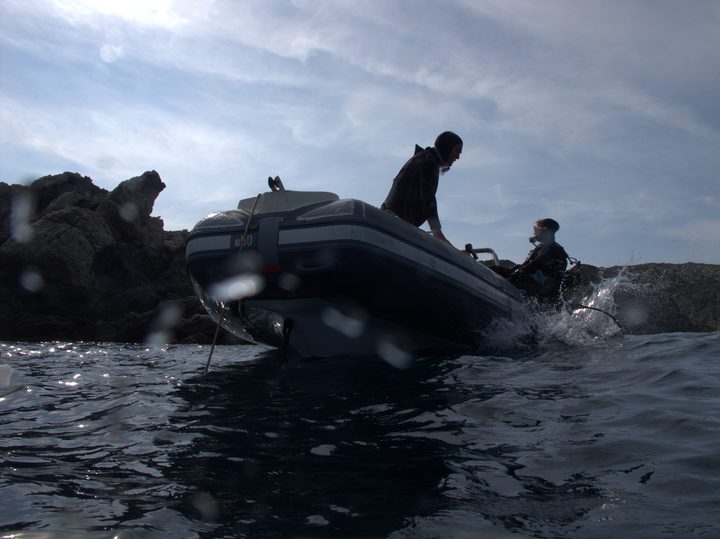
Park early to claim a spot near the beach. In peak season the hotel restricts car access, so the alternative is the roundabout further out and a walk down with full kit. Entry uses a frog-jump technique; exit is rope-assisted and harder in swell. A torch helps in Túnel III's 3-metre drop and on any low-visibility day. Plan exposure suit for the in-tunnel temperature near 17C, not the warmer surface reading. Cave-to-cave transit happens at 26-29 metres, so nitrox is standard and gas planning matters more than usual. From Túnel III, the surface return runs longer than at the other two caves; carry compass and SMB and watch for a north current on the swim back, especially at night. Three centres run the dive: Piscis Diving, SubLimits and Varadero Dive operate boat trips around fifteen minutes from the marina, with Varadero closest to the shore-entry beach.
What makes this dive site stand out.
Stands at the mouth of Cova del Dofí, the main 18-25m gallery
Seabed sculpture above two of the caves serves as orientation landmark
Three named caves recur in centre catalogues across a multi-entry complex
Rope-assisted entry from Hotel Eden Roc beach or 15-min boat from Sant Feliu
Inside-tunnel temperature near 17C even when surface peaks at 24C in August
41.7830°N, 3.0330°E
Diveable year-round. Local divers favour winter for marine-life density inside the caves and easier shore-access logistics; summer offers warmer water but heavier hotel-beach pressure on the entry.
Boat outing pricing applies; no site-specific fees. Verify rates with your centre.
AOW recommended. Cave entrances at 26-29m and gas planning between spaced cave mouths put the standard route beyond OW depth limits. OW divers may join shallower margins under direct guide supervision.
Summary
Overhead environment without cave certification, depth management at 26-29m between entries, and ceilings covered in delicate life. Cova del Dofí traverses in natural daylight in normal conditions.
Safety considerations
What can go wrong here, and what divers do about it. Conditions change - take the briefing from the operator on the day.
Book a guided dive at this site.
Small SSI center on the Cala Gogo beachfront near Sant Antoni de Calonge, capping discover dives at two and courses at four, with the boat from Palamos.

PADI 5-Star IDC Center at Port Marina Palamós with technical, recreational, and freediving programs and daily boat trips to Ullastres and the Boreas wreck.
Dive center at Port Marina Palamós, 20+ years running, with a full published price list and DPV rental under owner Jordi.

SSI Instructor Training Center in Sant Feliu de Guixols, open year-round, running boat dives and the full professional training pathway on the Costa Brava.
Get in touch to add or claim your dive center listing on DiveCodex.
Dive centres in Catalonia must require insurance from every diver on their dives, and must be able to offer a policy to anyone who has none.
An iron sculpture placed at the mouth of Cova del Dofí, the main tunnel. It is the site's recognisable artefact among Catalan divers; trip reports going back to 2006 photograph it. The placement date and sculptor are not publicly documented.
No. Cova del Dofí can be traversed in natural daylight in normal conditions, and exits are visible. The complex is treated as overhead-environment recreational diving rather than technical cave diving. Buoyancy discipline matters because the ceilings are covered in delicate life. AOW is recommended for the cave entrances at 26-29m.
Yes, from the private beach at Hotel Eden Roc (also branded as Hotel Cape Roc). Entry uses a frog-jump technique and exit is rope-assisted. The walk from the parking with full kit is the most-quoted complaint in two decades of local forum threads. In peak season, boat from the Sant Feliu marina is the more comfortable option.
Notably colder than the surface. A reading inside the tunnels in August 2012 logged 16.9C while surface temperatures peaked at 22-24C. Plan exposure suit for the in-tunnel temperature: 5mm minimum in summer, 7mm semi-dry in shoulder and winter months.
No. The site sits inside PEIN Cadiretes and a Natura 2000 ZEC coastal extension. Neither imposes diver permits, fees, or quotas. The municipal Bio-knowledge Marine Area covers other parts of the headland under Custòdia Marina agreements. Marketing language calling this a marine reserve is not accurate to the legal designation.
Local divers favour winter for marine-life density inside the caves and easier shore-access logistics. Summer offers warmer water but heavier hotel-beach pressure at the entry point. The 2007 forum advice still holds: arrive early and park down at the beach, or come in winter.
It is the only multi-cave complex in the area reachable from a single entry. Les Planetes is shallower with open corridors for all levels. La Llosa is a sheltered twin-rock reef. El Jardín y La Red is an open-water two-zone profile. Port Salví is where centres route their AOW guests when the goal is overhead environments and underwater sculpture.
Log your dives - notes, photos, conditions and the marine life you saw - and share them as one public diver profile. What you share helps the next diver, too.
Log every detail
Depth, duration, conditions, gear, buddy, notes — all in one place. Import from Suunto and other dive computers.
Track marine life
Record species sightings on each dive. Build a personal catalogue of everything you've seen underwater.
Your public dive profile
Share your dive history, stats, and experiences with a profile page you control. Show the world where you've been.