

Rubicon Diving
SSI Diamond ITC in Playa Blanca with 4 boats across two sectors, daily Museo Atlantico excursions, tech diving to 100m+, and Lanzarote's only Mermaid School.
SSI4 languages
Also known as: Fariones Wall, On the Edge of the Abyss
Volcanic wall off Puerto del Carmen dropping from a sheltered pier shallow past 40m to black-coral country beyond 60m, all within a short swim of shore.
Last updated May 2026
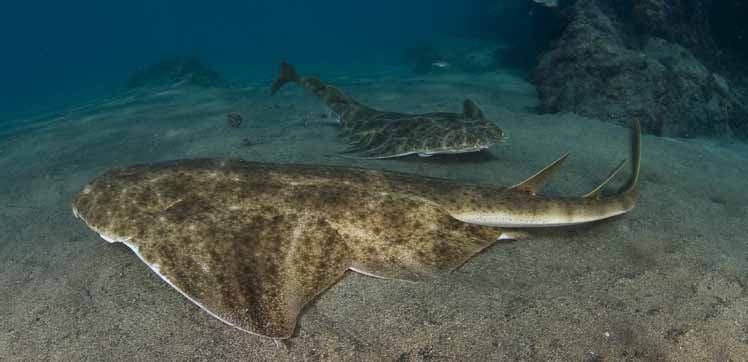
You walk in from Playa Grande or, on busier days, drop off a boat ten minutes out from the old harbour, and you are at the wall in two minutes. The pier-side rock cluster at 5m is the first stop on the way down: a tight aquarium of small life beside the little Fariones pier, busy enough to be its own micro-dive on the way back up. From there the seabed runs out to the lip and falls away. Most recreational profiles settle between 22m and 30m and trace the wall face leftward.
The face is niche-pocketed and encrusted: bright anemones on the rock, a branch of orange coral around the 40m line, leopard sea slugs in the cracks, large dusky groupers tucked into the bigger niches and watching the column. Trumpetfish hold position. Ornate wrasses flash beside the groupers. The 2011 Biosphere Reserve guide calls out the same beat that 2007 dive photographers logged here: the wall hides surprises that take a slow eye to find.
The return is back up the wall to the 5m pier rock cluster for the safety stop. Technical divers go the other direction, dropping past the recreational 40m line into black-coral country beyond 60m, with the wall continuing well past 100m within a short swim of the beach.
Fariones is the line on this coast where shore-diving and tec-diving overlap. The 2011 official guide names it the steepest near-shore slope on the Canary Islands and the reason Lanzarote built a reputation as Spain's technical-diving destination: a diver can step off the beach and be in black-coral country within minutes. Few Atlantic sites compress that whole gradient into one shore-entry plan, from the pier-side snorkel shallow through the recreational wall face to the technical fall-off below.
For recreational divers the appeal is the texture of the wall itself rather than a single landmark feature. The face combines a working depth full of large groupers with a 5m rock cluster overhead that the official guide describes as "practically an aquarium." Older dive logs and centre briefings still attach the name Felix to a recurring resident grouper, and the wall remains a long-standing photographer's site for the same reason: large fish that tolerate close approach against a dark volcanic backdrop, with macro along the cracks.
Plan a depth ceiling before you descend. The wall keeps going past 40m and the gradient makes it easy to drift a few metres lower than intended; a hard number on the computer is the simplest defence. Nitrox is worth the supplement on the working face and most Puerto del Carmen centres carry it. Bring a torch for the niches and for colour on the wall at depth. Currents are usually mild but tide-driven pickup happens, so check the forecast and carry an SMB for the ascent. On boat days the launch is a short hop from the old harbour; on shore days the walk in with gear from Playa Grande / Fariones beach is the price of admission, and the boat option is the standard summer alternative.
What makes this dive site stand out.
The 2011 Biosphere Reserve guide rates this the steepest near-shore slope on the Canaries.
A 5m rock cluster beside the small Fariones pier doubles as a safety stop and snorkel zone.
Antipathella wollastoni forests begin past 60m, reached in minutes from a beach entry.
Large meros hold cliff niches on the recreational face and tolerate close camera work.
A long-established Lanzarote technical training and exploration line.
28.9191°N, 13.6662°W
Puerto del Carmen sits largely sheltered from the prevailing NE trade winds, so conditions stay stable across seasons.
Check current pricing with a Puerto del Carmen dive centre; nitrox supplements are area-standard.
OW divers stay on the upper section to about 18m and the pier-side shallow. AOW recommended for the 25-40m wall face. Technical certification required for the deeper black-coral zone past 40m.
Summary
Moderate on the typical recreational face; the wall keeps dropping, so depth discipline matters.
Safety considerations
What can go wrong here, and what divers do about it. Conditions change - take the briefing from the operator on the day.
Book a guided dive at this site.
SSI Diamond ITC in Playa Blanca with 4 boats across two sectors, daily Museo Atlantico excursions, tech diving to 100m+, and Lanzarote's only Mermaid School.

PADI 5-Star Dive Resort on Playa Chica in Puerto del Carmen, one of 9 MOD ComMac-approved centres worldwide, with 40+ years on the island.

PADI 5-Star IDC in Puerto del Carmen, the only Halcyon dealer in the Canary Islands, with 5.0/5 across 386 reviews and Playa Chica shore-diving access.
Get in touch to add or claim your dive center listing on DiveCodex.
Free shore access. Lanzarote's UNESCO Biosphere Reserve designation imposes no diving permits, fees, or quotas. The only Lanzarote marine reserve (Chinijo Archipelago) lies in the north of the island.
Gradient. The 2011 Biosphere Reserve guide calls it the steepest near-shore slope on the Canary Islands. Cathedral hides a daylit cavern, Agujero Azul stages a short tunnel onto a cliff, Fariones is a single continuous wall that runs from a 5m pier shallow past 40m and keeps going. If you want depth without a boat trip, this is the site.
Yes, on the upper section. The 2011 official guide rates the minimum-depth profile, which uses the pier-side rock cluster at 5m, as basic and even snorkel-friendly. OW divers can stay on the shallow zone and the top of the wall to around 18m. The 25-40m wall face is an AOW dive, and the technical fall-off past 40m is tec-only.
Older Puerto del Carmen accounts and dive-centre briefings refer to a resident grouper named Felix. Large dusky groupers do hold position in the wall niches today, but a specific named individual is not something to expect on any given dive. Treat it as part of the site's character rather than a guaranteed encounter.
Both work. Shore entry runs from the Playa Grande / Fariones beach, with the rock cluster beside the small Fariones pier as the snorkel and safety-stop anchor. A boat from the old harbour reaches the wall in about ten minutes and skips the surface swim with gear, which is the easier option on the busier summer days.
South-coast viz on Puerto del Carmen typically sits in the 20-30m range. Winter often improves as plankton drops out. The 2011 guide cites an exceptional 40m ceiling for the site, but that is rare; older diver accounts also describe trips where the viz was below local norms, so it varies.
The whole Puerto del Carmen cliff reads as a pass-through corridor for tuna, bonito, amberjack and wahoo, with Fariones on the migratory line. Devil rays (Mobula sp.), dolphins, turtles and Bryde's whale are documented as rare encounters from the wall. Plan the dive for the wall and its residents; the pelagic side is a bonus.
Log your dives - notes, photos, conditions and the marine life you saw - and share them as one public diver profile. What you share helps the next diver, too.
Log every detail
Depth, duration, conditions, gear, buddy, notes — all in one place. Import from Suunto and other dive computers.
Track marine life
Record species sightings on each dive. Build a personal catalogue of everything you've seen underwater.
Your public dive profile
Share your dive history, stats, and experiences with a profile page you control. Show the world where you've been.