
Diving in Khao Lak
Andaman coast beach town in Thailand, the departure hub for Similan Islands liveaboards with its own tsunami-linked wreck dives on the side.
Last updated September 2026
Overview
Every confirmed dive site local to Khao Lak began as a wreck or a built structure, never a natural reef grown over centuries: two mining dredgers lost to accident or scuttling, a cargo carrier that went down in transit, and a decommissioned patrol boat sunk on purpose in a queen's honour. The town's wider reputation sits offshore instead: Thap Lamu pier here launches the liveaboards and day trips into the Similan Islands, Koh Bon, Koh Tachai and Richelieu Rock, an itinerary researched and published as its own area, however many boats leave from the same jetty as Khao Lak's own trips.
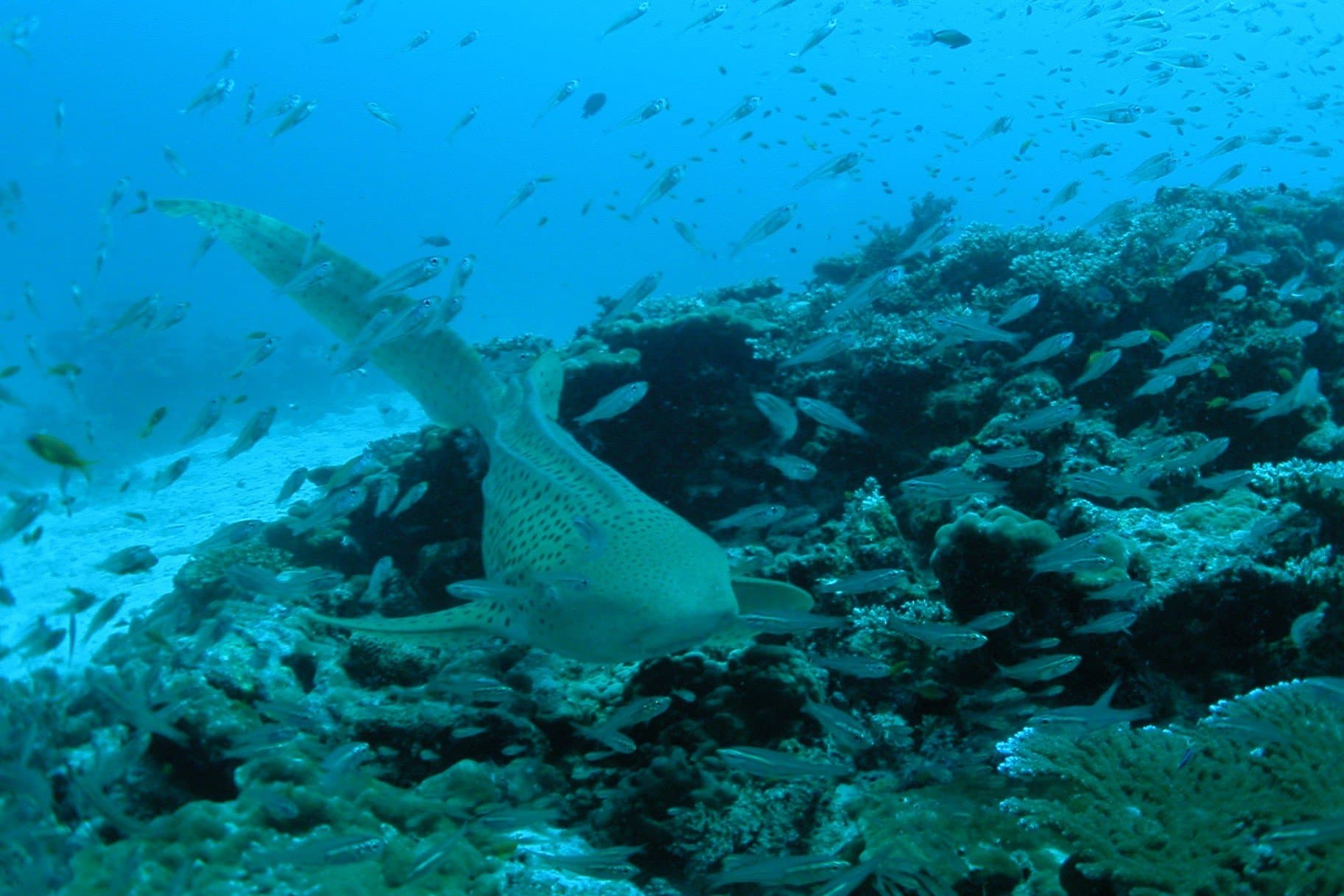
Local diving here centres on the Boonsung Wreck, a tin-mining dredger that sank sometime in the early-to-mid 1980s (sources place it anywhere from 1983 to 1985) and now lies broken into four or five sections, a legacy of the 2004 tsunami that struck this stretch of coast harder than anywhere else in Thailand. Divers call it the "fish soup" for its dense schools of trevally, snapper and fusilier, and its macro life is thick enough that one section carries its own "nudi hotel" nickname. Whale sharks are reported here too, though the sources describing them disagree on how often, from regular to seasonal, and neither wins out. Structural damage from the tsunami means the wreck is closed to penetration.
Premchai, the near-twin wreck sunk on purpose in 2001, dives less densely colonised and carries a no-penetration rule of its own, this time because of nets and cables tangled through the hull, unrelated to tsunami damage. The T-13 Artificial Reef adds sunken trucks, concrete cubes and a motorbike around a scuttled patrol boat in a shallow 8 to 15 metres, built out and still maintained by Thailand's marine and coastal resources department; Khao Na Yak's shallow house reef is the one true, if modest, coral dive in the local set. Sea Chart I sits apart from all of them. A cargo wreck at 30 to 40 metres, it calls for advanced or technical-diver skills, deeper than anything else dived locally. Stonefish, scorpionfish, lionfish and black sea urchins turn up often enough at the wrecks that every operator names buoyancy as the skill that actually matters here.
Planning your visit
Khao Lak has no airport of its own. Phuket International Airport, the gateway, sits somewhere between 60 and 80 kilometres south depending on which source you check, roughly a one-and-a-half to two-hour transfer, and every trip, local wreck, offshore liveaboard or day trip alike, departs Thap Lamu pier south of town. None of Khao Lak's own wreck or reef sites lies within a national-marine-park boundary, and no DNP entrance fee applies to them in practice: the similarly named Khao Lak-Lam Ru National Park charges its own land-visitor fee for trails and a waterfall, unconnected to diving, and the T-13 Artificial Reef is a Department of Marine and Coastal Resources structure, not a national-park site. Operators run the local wreck and reef programme roughly mid-October to mid-May, a seasonal convention of their own, separate from the mandated closure that governs the Similan/Surin itinerary sold from the same pier. A long, dense strip of independent PADI shops along the beach road sells the same wrecks and reefs, with no operator holding exclusive access to any of them.
Geology & underwater terrain
Flat sand seabed, in contrast to the granite boulders of the Similan Islands offshore; the local inventory is wrecks and one DMCR-built artificial reef rather than natural coral formation, apart from Khao Na Yak, a shallow natural reef of max 9 m.
Dive sites in Khao Lak
The diving here splits into 2 zones:
- The local wreck-and-reef circuit
- — Boonsung, Premchai, Sea Chart I and the T-13 Artificial Reef sit on flat sand within a half- or full-day boat ride, alongside Khao Na Yak's shallow training reef.
- The Similan gateway
- — The same Thap Lamu pier launches liveaboards and day trips into the Similan Islands, Koh Bon, Koh Tachai and Richelieu Rock, a separate itinerary researched and published under its own area.
Marine life
When to dive
- Best season
- October to May
- Water temperature
- 27-29°C at the wreck sites, reported by one operator's own site data
Operators run the local wreck and reef programme roughly 15 October to 15 May, a seasonal convention of their own, separate from the mandated park closure that governs the Similan/Surin itinerary sold from the same pier. Local trips can still be cancelled for rough seas in the June-October window even without a permit-driven shutdown behind it.
Safety considerations
What can go wrong here, and what divers do about it. Conditions change - take the briefing from the operator on the day.
- Marine life: Stonefish, scorpionfish and black sea urchins are repeatedly reported at the local wreck sites.Keep buoyancy tight; avoid resting hands or fins on the wreck or the sand around it.
- Overhead: Both major wrecks are closed to penetration: Boonsung's structure has been unstable since the 2004 tsunami, and Premchai is tangled with nets and cables.Dive the exterior only; no operator here runs a penetration trip on either wreck.
Rules and permits
National rules also apply: Rules and permits in Thailand
Frequently Asked Questions
What year did the Boonsung Wreck actually sink?▾
Operator pages describing the wreck each give a different year (1985, 1984, and '1983 or 1984'), and none is corroborated over the others. The honest answer is the mid-1980s window itself, not a specific year inside it.
How often are whale sharks seen at the Boonsung Wreck?▾
The two accounts describing it don't agree: one calls sightings regular, the other says visits happen only at certain times of year, and neither source supports a firmer word like 'occasional' or 'rare' either. Treat the chance as real but unscheduled, and don't plan a trip around one sighting.
Is there a national-park fee for diving at Khao Lak?▾
Not for the local wrecks and reefs. The similarly named Khao Lak-Lam Ru National Park charges a land-visitor entrance fee for its own trails and a waterfall, but that fee has nothing to do with diving and doesn't apply to Boonsung, Premchai or any other local site. The fee that does apply on a Khao Lak-based trip is for the offshore Similan/Surin itinerary, charged separately by whichever operator sells it.
How far is Khao Lak from Phuket airport?▾
Distance estimates differ by about 20 kilometres: a grounded discovery search puts it around 60 km, a Thai national-park page puts it around 80 km. Either way, budget roughly one and a half to two hours for the road transfer.
Can I dive the Similan Islands from Khao Lak without booking a liveaboard?▾
The main archipelago and the Koh Bon/Koh Tachai legs both run as day trips as well as liveaboards, so a liveaboard booking isn't the only way in. That's the Similan Islands' own page to answer, not this one: the islands are a separate dive area with their own dossier, even though every boat to them leaves from the same Thap Lamu pier Khao Lak's local wrecks use.
Are Khao Lak's local wreck dives suitable for a newly certified diver?▾
Boonsung, Premchai and the T-13 Artificial Reef sit within Open Water range and mainly call for careful buoyancy around the stonefish, scorpionfish, lionfish and black sea urchins reported at the wrecks. Sea Chart I is the exception, at 30 to 40 metres an advanced or technical-course dive, not a first wreck to attempt.
Is Khao Lak worth diving in its own right, or is it just the Similan launch point?▾
Divers who've done both describe the local wrecks and reefs as a fallback: something for a rough-weather day or a half-day between Similan trips, valued for dense fish schools and macro life over scenery. The Similan itinerary, launched from the same pier, is what actually built the town's diving reputation.
What season do Khao Lak's own dive sites run?▾
Roughly mid-October to mid-May is the operators' own working season, separate from the mandated closure that governs the Similan/Surin park further offshore. Local trips can still be called off in the June-to-October window for rough seas, but that's weather, not a permit shutdown.
Also known as: Khao Lak Beach, Takua Pa, Takua Pa District
Every dive has a story. Share yours.
Log your dives - notes, photos, conditions and the marine life you saw - and share them as one public diver profile. What you share helps the next diver, too.
Log every detail
Depth, duration, conditions, gear, buddy, notes — all in one place. Import from Suunto and other dive computers.
Track marine life
Record species sightings on each dive. Build a personal catalogue of everything you've seen underwater.
Your public dive profile
Share your dive history, stats, and experiences with a profile page you control. Show the world where you've been.