

Cascais Dive
SSI Instructor Training Center at Cascais marina, Estoril, running small-group boat reef dives from Estoril to Cabo Raso since 2011.
SSI4 services
Short RIB trips from Cascais and Estoril to Atlantic reef and rock-passage dives, fifteen to thirty minutes from Lisbon, in cold water and modest visibility.
Last updated September 2026
Diving here means a short RIB ride out of Cascais or Estoril, not a dive inside Lisbon itself: every named site on this coast sits ten to thirty minutes offshore, and the Lisbon-registered clubs and schools that exist run their own trips out to this same water, or across the Tagus to Sesimbra, never to anywhere inside the capital. Divers who have dived both routinely rate Sesimbra higher for marine life and calmer conditions, and the pattern repeated across several years of community reports is convenient, not compelling: workable diving twenty to thirty minutes from a European capital, not a destination in its own right.
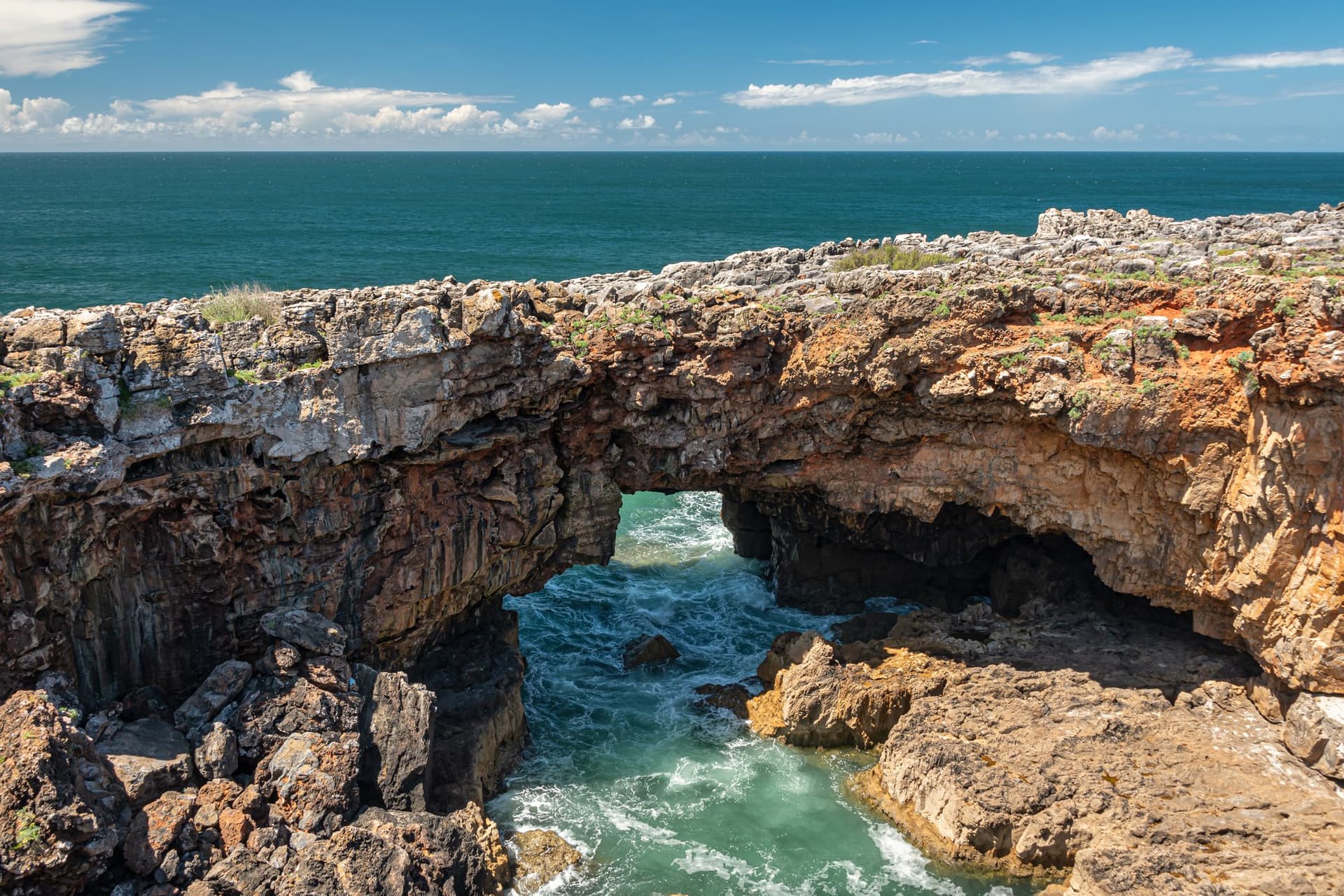
Two of the coast's operator-named signature dives sit close together: Boca do Inferno, beside the coastal chasm landmark west of Cascais, where the reef runs nine to sixteen metres before it meets sand, and Gruta da Pombeira, a short rock passage through the cliffs ten minutes further out, pitched at complete beginners. Tubos, built around a concrete structure and two large pipes off Baia da Guia, is the site reserved for experienced divers past 26 metres. This coast has two shore-entry sites: Praia da Poca, a house reef dived straight off the beach, and Praia da Duquesa, historically run as a twice-daily beach dive. Every other named site here is boat access. Cuttlefish and octopus turn up on most guided trips, and a small-spotted catshark sighting has given one rocky patch its name; seahorses and nudibranchs are occasional finds. Sharks beyond that catshark, turtles, dolphins and larger pelagics are not part of the picture on this stretch.
Cascais and Estoril sit ten to fifteen minutes by car, or about thirty minutes on the Cais do Sodre to Cascais train line, from central Lisbon, and dive centres collect divers at or near their own base, not in the city. No permit, quota or reserve fee applies to this coast: the adjacent Sintra-Cascais Natural Park protects the coastline and clifftop, not a marine zone. Water runs roughly 14 to 21C across the year, and a 7mm semi-dry with hood, gloves and boots covers most divers through it; check what your operator's rental gear actually includes; at least one centre's standard rental is a plain wetsuit, not a semi-dry. The coast's most-reviewed operator prices a single boat dive at EUR40 and two dives at EUR80 (minimum four divers), plus an Open Water course at EUR475, current as of September 2026; treat that as one centre's rate rather than a fixed area price and confirm directly with whichever operator you book. The area's own dive schools certify Open Water divers to 18 metres, so Tubos and anything past that line calls for an Advanced-level card, not a locally earned one. No liveaboard runs on this coast; Portugal's liveaboards, where they exist, run out of the Azores or Madeira's main island.
A rocky Atlantic coastline of low cliffs, gorges and short rock passages, with scattered concrete structures and one recorded wreck offshore; no true cave systems, only grotto-like passages.
Easy boat dive along the coast beside Cascais's Boca do Inferno landmark
Short cave passage under the Cascais cliffs, with a resident barnacle colony
Cascais' easiest bay dive: sand into rock cutwork thick with sea bass
The Cascais dive built around a close small-spotted catshark encounter
Cascais' artificial-structure dive, for experienced divers only, from 26 m
Book online or contact a centre that dives this area.
SSI Instructor Training Center at Cascais marina, Estoril, running small-group boat reef dives from Estoril to Cabo Raso since 2011.
Private, non-profit Portuguese Navy officers'/cadets' club (1888) at Alfeite Naval Base, Almada, with an SSI/IPDJ dive school open to non-members.

PADI 5-Star dive department of Cascais's 1938 sailing club, teaching Discover Scuba through Divemaster from the town marina.

Lisbon-based SSI dive school and equipment-service centre, founded 2021, teaching technical diving through Extended Range and servicing 15+ equipment brands.

Get in touch to add or claim your dive center listing on DiveCodex.
Boat-dive visibility typically runs 10 to 15m, and the Nortada, a northerly wind that picks up in spring and summer, degrades it further; the shallow shore site can drop to 2 to 6m in poor conditions.
What can go wrong here, and what divers do about it. Conditions change - take the briefing from the operator on the day.
National rules also apply: Rules and permits in Portugal
No. Every named site on this coast sits ten to thirty minutes offshore by RIB from Cascais or Estoril, west of the city. Lisbon-registered clubs and schools exist, but they run their own trips out to this same coast or across the Tagus to Sesimbra, not to anywhere inside the capital.
It depends on what you compare it to. Divers who have tried both this coast and Sesimbra, across the Tagus, routinely rate Sesimbra higher for marine life and calmer water. Taken on its own terms, it makes an easy add-on to a Lisbon trip: cuttlefish, octopus and the occasional seahorse on a short RIB ride, with no need to build a whole holiday around it.
Cascais and Estoril are about ten to fifteen minutes by car or roughly thirty minutes on the Cais do Sodre to Cascais train line. Boats leave from Cascais marina or Estoril, ten to thirty minutes from the named sites.
No, and the two should not be conflated. No official source designates a marine reserve, diving permit, quota or fee for this coast; the adjacent Sintra-Cascais Natural Park protects the coastline and clifftop, not a marine zone. Sesimbra, across the Tagus, is sometimes described by divers as having its own marine park, but that rests on a single community mention, not a confirmed designation, so treat it as unverified, not as an established fact about that coast.
Expect roughly 14 to 21C across the year, colder in winter, with one account of a 10C cold snap. Divers who dive here regularly settle on a 7mm semi-dry with a hood, gloves and boots for most of the year; check what your operator's rental gear actually includes, since at least one centre's standard rental is a plain wetsuit, not a semi-dry.
Sesimbra is the coast community sources point to for better visibility and more marine life, with one unverified community mention of its own marine park. Cascais and Estoril are the shorter, more convenient trip from central Lisbon, with a beach-entry option and an accessible rock passage for beginners. Divers based in Lisbon for a short trip often pick Cascais for convenience and Sesimbra when the extra travel time is worth it to them.
The area's own dive schools certify Open Water divers to 18 metres. Sites that start past that, including the coast's one dedicated technical site built around a concrete structure at a minimum of 26 metres, call for an Advanced Open Water card or equivalent, not a locally earned one.
One is listed, but its identity and depth are not settled. One record puts it at around 30 metres, while a separate, older report describes an unrelated cargo ship sinking near Cascais and lying at roughly 100 metres. The two have not been confirmed as the same object, so treat any specific depth for a Cascais wreck as unresolved until an operator or dive confirms it.
Mostly boat diving from Cascais marina or Estoril, but this coast has two shore-entry sites: Praia da Poca, a house reef dived directly from the beach, and Praia da Duquesa, historically run as a twice-daily shore dive by a beach-based operator that no recent source confirms is still trading.
Also known as: Estoril coast, Lisboa e Cascais, Lisbon
Log your dives - notes, photos, conditions and the marine life you saw - and share them as one public diver profile. What you share helps the next diver, too.
Log every detail
Depth, duration, conditions, gear, buddy, notes — all in one place. Import from Suunto and other dive computers.
Track marine life
Record species sightings on each dive. Build a personal catalogue of everything you've seen underwater.
Your public dive profile
Share your dive history, stats, and experiences with a profile page you control. Show the world where you've been.