

Atalaia Diving Center
SSI/PADI Dive Resort at Caniço de Baixo, Madeira, running a six-site house reef the centre calls the island's largest, since 1988.
SSI / PADI7 services4 languages
Volcanic reef and wreck diving off Madeira, anchored by the 1986 Garajau Marine Reserve's habituated groupers and a scuttled naval corvette.
Last updated September 2026
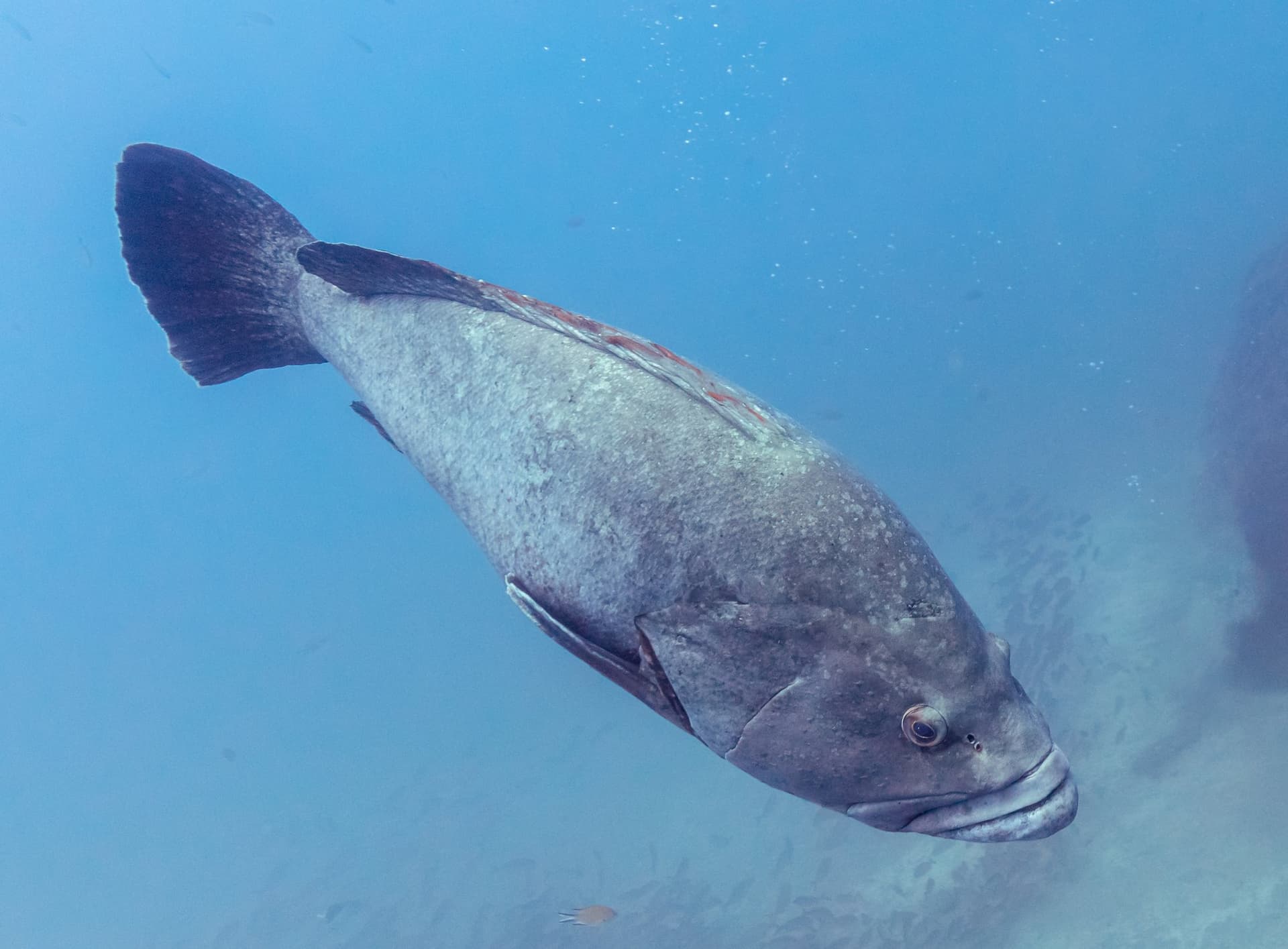
Madeira's diving is built on volcanic rock, not coral: lava arches, drop-offs, swim-throughs, pinnacles and sandy plateaus run along three coastal clusters, Funchal, Canico de Baixo and Machico. The anchor site is the Garajau Marine Reserve, created 4 October 1986 (Decreto Legislativo Regional n.o 23/86/M) as a nursery for the coast's fish stocks and now home to a population of dusky groupers habituated enough that repeat divers ask after one by name, a resident some divers nickname Elvis. A 2010 Portuguese newspaper report and a cultural-heritage source called Garajau the country's only exclusively marine reserve at the time; the reserve's own regulatory decrees never made that claim themselves.
Wreck diving is the island's other draw: the naval corvette Afonso Cerqueira, deliberately scuttled off Cabo Girao in 2018, is described by one diver as allowing a full stern-to-bow penetration for those with wreck-penetration training, while the Bowbelle, a former Thames dredger tied to the 1989 Marchioness disaster, broke apart in a 1996 storm and lies as an unplanned, debris-strewn wreck west of Funchal. Divers describe Madeira less as a dedicated dive destination than a sightseeing trip with diving attached, and point to its rough edge as often as its highlights: several south-coast shore entries face open Atlantic swell strong enough to demand a quick, careful exit. Rays and turtles turn up but are never guaranteed, and Mediterranean monk seals breed in the Desertas Islands, showing up on Madeira's own coast only as an occasional visitor.
Madeira Airport (FNC) sits closest to the Machico/Canical cluster and a short drive from Funchal or Canico de Baixo, the two other bases. No established liveaboard fleet operates for Madeira or Porto Santo: diving runs as day boats or shore entries from all three clusters. Independent, unescorted divers in the Garajau reserve face a capped group size of eight, a marked buoy and a ban on fishing gear except a knife; divers on a guided trip are covered by their operator instead. Expect Advanced Open Water for the deeper wreck dives. Several operators work the island, from long-established single-site specialists to multi-base chains; at least one Machico operator runs a bookable Desertas Islands day trip for the monk seal colony there. Madeira Divepoint, the Funchal operator behind the Carlton Hotel house reef, now trades online as XPoint Madeira. Pack a 5mm wetsuit for summer, and a 7mm, or a hooded 5mm, from December to March.
Volcanic terrain built from lava flows: arches, drop-offs, swim-throughs, overhangs, pinnacles and sandy plateaus, with no coral reef anywhere on the island.
The diving here splits into 4 zones:
Shore-entry amphitheatre tunnel dive inside the Garajau reserve
A Funchal canyon dive sold as a WWI wreck; no naval record names a ship here
Funchal's shortest named wreck run, a genuine 1929 cargo loss
The Garajau reserve's dedicated twin-pinnacle dive, known locally as Mamas
Three house-reef operators, a different named formation every day
A house reef known for its 40-year resident moray, Esmeralda
Madeira's resident-seahorse wall dive, also a highly recommended night dive
A weather-gated volcanic cone off Machico, peak to sand base in one dive
Funchal reef dive with a permanent guide cable, since 2013, and resident moray eels
Madeira's offshore black-coral wall, AOWD-rated but reaching Deep-diver depth
Madeira's monk seal-named seamount, black coral slope to 40m
Madeira's shore-tunnel dive at Reis Magos beach, with a deeper boat-only version
Caniço de Baixo's canyon reef too big for one dive, on foot or by boat
Madeira's signature wreck dive, penetrable from engine room to bridge
A macro wall dive off Caniçal, 4-25m, easy for beginners to advanced divers
Caniço de Baixo's lava wall with a named 55m cave and occasional monk seals
Advanced-level walls to around 40m at Madeira's most current-exposed east-end point
Caniçal's current-free wall, thick with morays, octopus and reef fish
Shore-entry beach dive inside the protected Garajau reserve, near Funchal
Three volcanic pyramids off Machico, with a rare tree-coral tunnel
Book online or contact a centre that dives this area.
SSI/PADI Dive Resort at Caniço de Baixo, Madeira, running a six-site house reef the centre calls the island's largest, since 1988.
SSI dive centre at the Clube Naval do Funchal marina, Madeira, running house-reef and boat dives, SSI courses and conservation-partnered research diving.

PADI 5-Star centre with two bases in Funchal and Caniçal, Madeira, running reef, wreck and Ponta de São Lourenço boat dives since 2014.
SSI centre on Praia da Ribeira Brava, Madeira, founded by Carlos Relvas (diving since 1968); runs a joint liveaboard with sister centre Calheta Dive Center.
Mobile dive centre based at Caniçal's Whale Museum, Madeira, running SSI courses and guided dives with instructor Joao to five named coastal sites.

SSI dive centre in Santa Cruz, near Madeira's airport, running boat trips to 23 named sites since 2006, with a focus on underwater photography.
PADI dive centre at Hotel Dom Pedro Baía, Machico, part of the six-base Haliotis chain, diving nine named sites plus Desertas Islands day trips.

Get in touch to add or claim your dive center listing on DiveCodex.
Community divers report typical visibility of 10-20m; the 30-40m figure in tourism copy is an occasional summer ceiling, not the norm. A 5mm wetsuit covers summer and early autumn, and most divers switch to 7mm, or a 5mm with a hood, from December to March.
What can go wrong here, and what divers do about it. Conditions change - take the briefing from the operator on the day.
Marine wildlife watching rules (decree)Park service legislation pageChecked: Oct 2026
National rules also apply: Rules and permits in Portugal
Yes. Water stays around 17-20C in winter and 22-24C in summer, and community divers dive through December to February in a 5mm to 7mm wetsuit. The trade-off is visibility, which drops toward the lower end of its 10-20m typical range in the colder months.
Not if you dive with a commercial operator: the 1997 regulation's fee, logbook and group-size rules apply specifically to unpaid, independent diving, not centre-guided trips. An independent diver entering the reserve alone or in a private group needs to follow those rules directly.
Independent divers pay a daily fee under the 1997 regulation, which originally set the rate in escudos, the pre-euro currency. Ask your operator or the IFCN park office what the current charge is before booking.
Independently confirmed sources put the wreck between 21 and 32m. One 2019 diver account described it nearer 40m, but that figure stands alone against every other source, so plan around the 21-32m range and confirm with your operator's briefing.
That figure comes from tourism and operator marketing and describes an occasional summer best case. Divers who dive Madeira regularly report a more typical 10 to 20m, so treat the higher number as a ceiling, not an expectation.
No established liveaboard fleet operates here or on neighbouring Porto Santo. Diving runs as day boats from Funchal, Canico de Baixo and Machico, or from shore.
Only as an occasional sighting on Madeira's own south-east coast. The reliable place is a boat day trip to the Desertas Islands, where an estimated resident colony of 30 to 40 animals lives; at least one Machico-based operator sells this as a standing trip.
Many divers do: it's a short ferry away, with its own operators built around two wrecks and calmer, warmer water, against Madeira's groupers and volcanic terrain. Porto Santo runs as its own destination, with its own dive site list, distinct from Madeira's.
Expect operators to ask for Advanced Open Water for the Bowbelle and similar wrecks, since both reported depths sit past the Open Water limit.
Log your dives - notes, photos, conditions and the marine life you saw - and share them as one public diver profile. What you share helps the next diver, too.
Log every detail
Depth, duration, conditions, gear, buddy, notes — all in one place. Import from Suunto and other dive computers.
Track marine life
Record species sightings on each dive. Build a personal catalogue of everything you've seen underwater.
Your public dive profile
Share your dive history, stats, and experiences with a profile page you control. Show the world where you've been.