Illa Negra
Island circuit with a detached coralligenous rock and a gorgonian wall
Easy22mBoatReefWall
Small PADI centre in Camping Sant Miquel, working Colera's Tramontana-sheltered coast into France's Cerbère-Banyuls reserve.
Book your dive directly with this centre.
Diving Center Colera runs out of Camping Sant Miquel, on the Costa Brava's northern edge, about 5 km south of the French border, with the training pool, classroom and campsite accommodation on the same grounds. Hugo directs the operation as skipper and lead PADI/FEDAS instructor, with a small named crew (Ségolène, Pera and Maddie recur in reviews) small enough that returning guests get greeted by name.
The working boat is the standout piece of kit: a two-deck vessel with a hydraulic dive lift, a hot shower and a head, known informally among some reviewers as "Fly Blue." The lift is the most-mentioned single detail in customer reviews, raised again and again by older divers and those with mobility limits, and it backs the centre's adaptive-diving support with real equipment on the water.
Geography is the other differentiator. The Tramontana, the dry north wind that regularly shuts down exposed stretches of Cap de Creus, runs roughly parallel to this coast and is partly blocked by the Pyrenean foothills, so La Veta Blanca and Bau de Cap Falcó often stay diveable when headlands further south are not. The area also crosses the maritime border past Portbou into France's Cerbère-Banyuls Marine Reserve, on top of roughly fifteen sites of its own; Massa d'Or is the outlier among them, an Advanced/Expert-only wall from 5 to 40 m where the rest sit at Beginner/Advanced.
Courses lean toward beginners and family stays, from Discover Scuba Diving at 10 through a junior Open Water track, Open Water (18 m, 15 m under 15) and Advanced Open Water (30 m, 21 m under 15) to Divemaster and a four-month instructor-track internship. PADI is the headline affiliation; an SSI listing also turns up in directory data, though the centre's own site foregrounds PADI.
The picture holds steady across platforms: a small, French-fluent, family-friendly operation built around one standout boat. Most public reviews are written in French, which tracks with the campsite's own customer base and the short drive to the border.
Three things repeat. The hydraulic lift on the boat comes up more than anything else, usually in the context of older divers or divers with mobility limits, where most small Costa Brava operators sell their boat as merely "comfortable." Hugo and the small named team are praised individually by multiple independent reviewers, with kindness and patience the recurring words, the kind of pattern that only shows up when guests are small enough in number to be remembered. And the campsite-integrated stay comes up repeatedly as a plus in its own right, letting divers slow down between dives instead of commuting to a separate base.
Island circuit with a detached coralligenous rock and a gorgonian wall
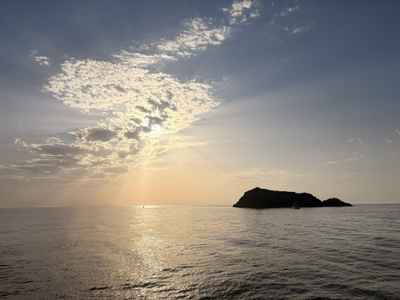
Cap de Creus's flagship pinnacle for grouper and barracuda aggregations
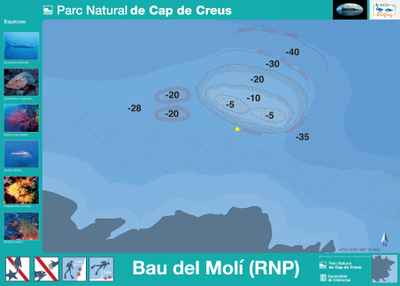
Advanced gorgonian pinnacle and wall on Cap de Creus's quiet north shore
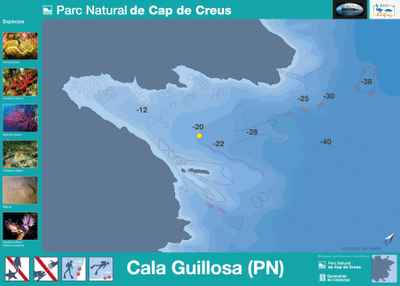
Sheltered wall on the Mar d'Amunt, calm when the Tramuntana blows
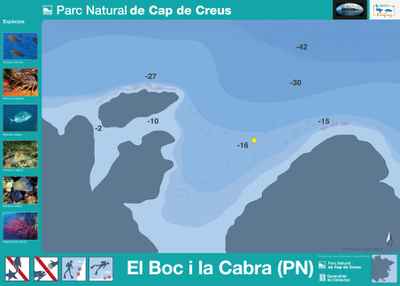
A wall, cave and channel in one Cap de Creus profile, 8-28 m
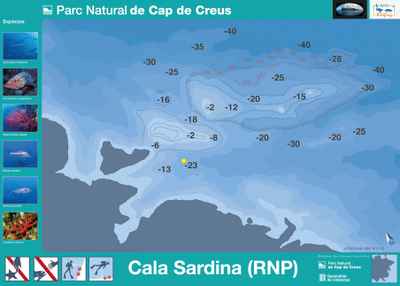
One of the park's own species-illustrated eco-briefing points
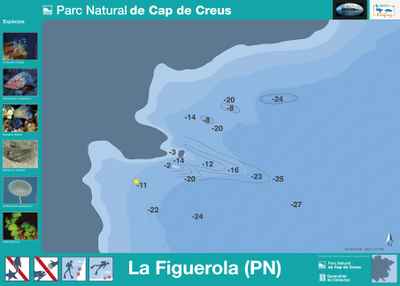
Beginner-friendly wall and sandy-bottom dive with rare sand-transition fauna
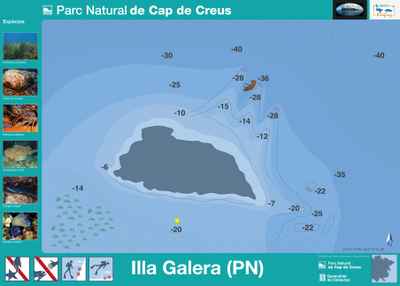
Rock wall between Figuerola and Taballera, gorgonians and red coral to 45 m
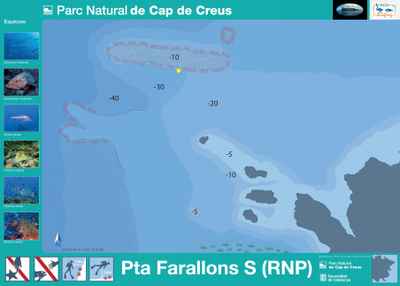
A reef ridge shoaling to 10 m over a gorgonian wall to 40 m
Yes. The working boat is a two-deck vessel with a hydraulic dive lift between the dive deck and the water, plus a hot shower and a head on board. The lift is the single most-mentioned feature in customer reviews, often from older divers and divers with mobility limits. The centre also lists adaptive diving support, including personalised training for divers with disabilities. Anyone with specific access needs should call ahead.
Often, yes. The Colera-Portbou stretch runs roughly parallel to the Tramontana, the dry north wind that regularly shuts down exposed sections of the park, and the angle of the coast plus the Pyrenean foothills give it partial shelter. Sites like La Veta Blanca and Bau de Cap Falcó are the centre's own wind-protected picks for those days; in calm spells the boat also runs deeper, more exposed sites further along the coast.
The centre's working area extends past Portbou across the maritime border into the Cerbère-Banyuls Marine Reserve on the French side, in addition to the northern sector of Cap de Creus Natural Park. Specific French-side permit arrangements are not detailed on the centre's own materials, so confirm current cross-border logistics when booking.
Yes, subject to availability, for 15 EUR per trip.
Yes. A four-month PADI Divemaster Internship runs May through October alongside the existing instructor team, priced at zero on the course line. Beyond that, bundled pathways run from a Beginner-to-Divemaster package up to a full Beginner-to-Instructor track, letting a diver commit once to the whole progression without booking stage by stage.
Very much so. The centre operates from Camping Sant Miquel, a largely French-clientele campsite a few kilometres from the border, and most of its public reviews are written in French. Instruction and briefings also run in Catalan, Spanish and English.
Diving Center Colera lists S'Encalladora (20-40 m) among its dive sites. Park rules ban diving specifically inside the RNI Nord de S'Encalladora marine reserve, the park's one no-dive zone for divers; nothing available establishes whether the centre's listed dive sits inside or outside that boundary. Anyone specifically interested in this site should confirm the detail directly with the centre before booking it.
Compare before you contact
Claim this page to manage your details, update pricing and hours, showcase your dive sites, and reach divers planning their next trip.