
Tritón Diving Llafranc
Family-owned dive center in Llafranc since 1979, with 4.9/5 on 717 Google reviews, covering 11 sites across two Costa Brava dive areas.
SSI5 services5 languages
Granite headland on the central Costa Brava: gorgonian walls, an offshore pinnacle dropping to about 60 m, and Roman amphorae in a shore-dive cove.
Last updated October 2026
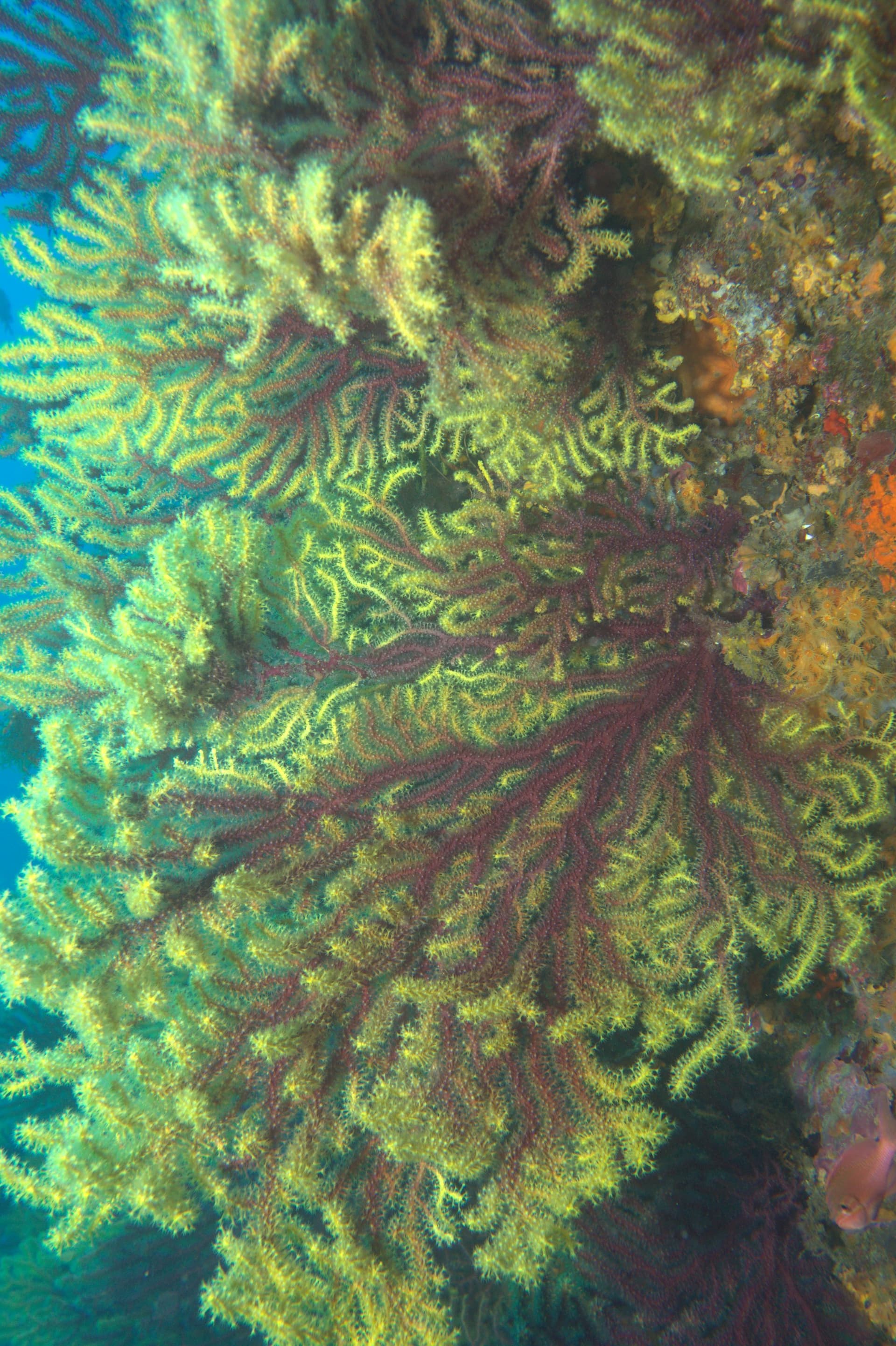
Three descending rocky bars hung with red and yellow gorgonians give Cap de Begur its character, and one operator calls the headland the point that reaches furthest into the Mediterranean and very exposed to currents. Furió Fitó, a pinnacle just under a kilometre north of the cape, is the signature advanced dive: a plateau at about 14 m that drops past 50 m toward 60 m, with a smaller pinnacle at 26 m. Illa Negra, a rock island south of the cape, is a multilevel dive between about 6 and 23 m with a crevice that holds lobsters, congers and morays.
Inshore the water is gentler. Aiguablava cove gives a protected shore entry within 20 m, with Roman amphorae and the remains of sunken boats on the seabed, and local centres turn that into an archaeological baptism dive. Sa Tuna, behind Punta Es Ploms, has a submerged canyon and a cave full of lobsters, at depths of roughly 14 to 25 m. Canons de Tamariu adds parallel rock bars in calmer water.
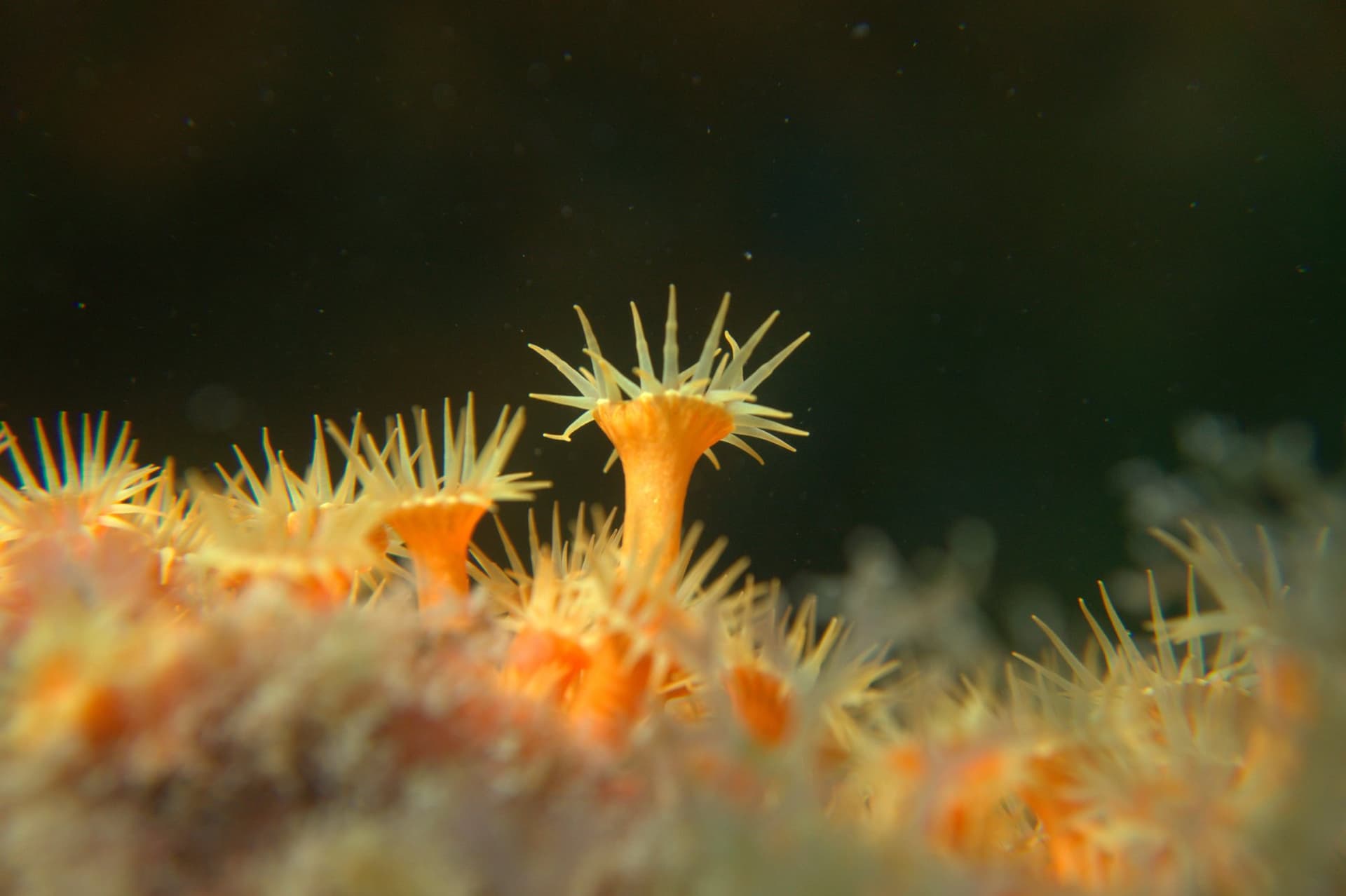
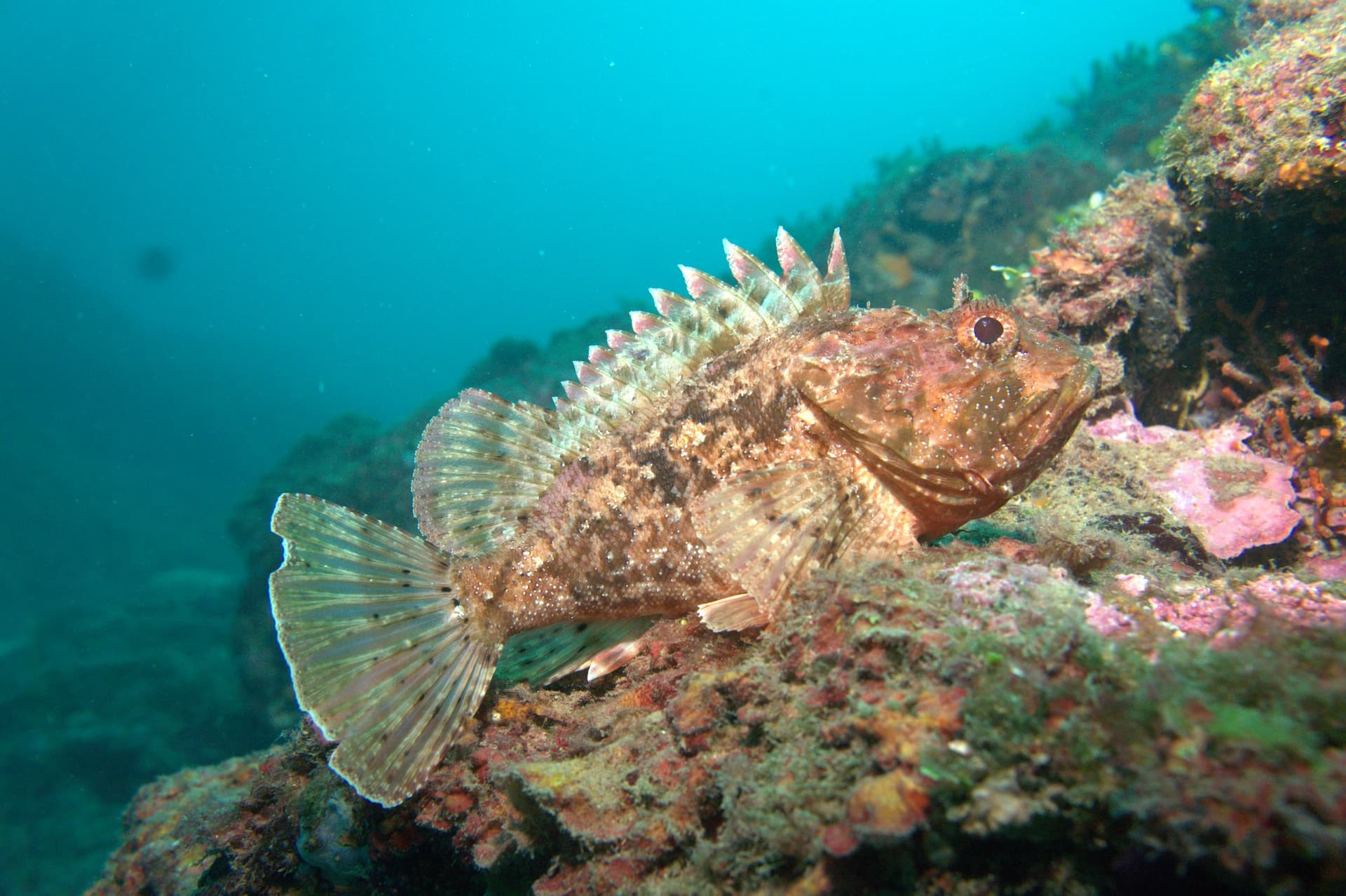
Spiny lobsters, morays, congers and octopus are the regulars, and sunfish and eagle rays turn up off the cape in late spring.
All the boat diving leaves from the beach at Aiguablava, and one local operator advertises more than ten sites within ten minutes by boat. Begur sits between the Palafrugell coast to the south and L'Estartit to the north, so it works as a base for the middle of the Costa Brava. Girona is about 45 km away and Barcelona about 130 km, with the road covering the rest.
Scuba is prohibited inside the Ses Negres reserve, an 80-hectare stretch between Cap Negre and Pa de Pessic protected since 1993, as are anchoring and boat speeds above 3 knots. The dives described here lie outside it. Since 2016 guided educational visits have run through registered centres, two a day with few people; ask whether they still operate. Ask a centre before planning a summer shore dive at Sa Tuna, where a seasonal closure has been mentioned.
Match the site to your card. Aiguablava, Sa Tuna and Canons de Tamariu suit first dives and divers returning to the water. Illa Negra is an easy multilevel dive for Open Water divers on its upper levels, and the lower levels toward 23 m call for Advanced Open Water. Cap de Begur starts at 5 m, but the current makes the cape an Advanced Open Water dive, and its deeper bars ask for a guide who knows the day's conditions. Furió Fitó is Advanced Open Water with deep-dive experience. Expect summer water at 22 to 26 C at the surface, and a thicker, semi-dry or dry suit in winter. Ask your centre about conditions on the cape the morning you dive.
Granite basement of the Catalan Coastal Range, cut along joint planes into vertical walls at the cape, isolated pinnacles offshore and parallel rock-bar canyons toward Tamariu, with Posidonia meadows in the sheltered pockets.
The diving here splits into 3 zones:
OW students and macro divers wanting a sheltered Tamariu reef when north winds close the headlands
Rocky headland, slabs and two caves in one small Costa Brava cove
Open Water divers and macro photographers wanting a long, easy shore dive on the Costa Brava
Arch, cave and gorgonian walls on one rock, within Open Water reach
Book online or contact a centre that dives this area.
Family-owned dive center in Llafranc since 1979, with 4.9/5 on 717 Google reviews, covering 11 sites across two Costa Brava dive areas.

SSI dive centre on Aiguablava beach in Begur, running boat dives to more than ten Costa Brava sites within ten minutes, plus shore dives and courses.

Family-run SSI and PADI center in Tamariu since 1971, with a seahorse-rich house reef, 13 dive sites by boat, and children's programs from age 8.

Family-run SSI center on Menuda Beach in Tossa de Mar since 1998, with eco-guide philosophy, 17 dive sites, and authorized Cressi service.
PADI, SSI, and CMAS center at Port Marina Palamós with year-round boat dives, small groups, and full MARES equipment. SSI Instructor Training Center.

Small SSI center on the Cala Gogo beachfront near Sant Antoni de Calonge, capping discover dives at two and courses at four, with the boat from Palamos.
Small PADI centre in Camping Sant Miquel, working Colera's Tramontana-sheltered coast into France's Cerbère-Banyuls reserve.
Get in touch to add or claim your dive center listing on DiveCodex.
Upcoming trips published by dive centres in this area.
Availability is read from each centre's public calendar and refreshed daily. Last checked October 16. Confirm with the centre before travelling.
June to August gives the warmest water and best visibility, and autumn stays mild with fewer divers. Spring plankton can cut visibility sharply, and diving continues all year with a thicker suit.
What can go wrong here, and what divers do about it. Conditions change - take the briefing from the operator on the day.
Decree on dive centresGeneralitat page for dive centresChecked: Oct 2026
National rules also apply: Rules and permits in Spain
No. The 80-hectare reserve between Cap Negre and Pa de Pessic, created by an order of 3 March 1993, prohibits scuba. Since 2016 the Generalitat has run guided educational visits through registered dive centres, two a day with a small group, and whether that programme still runs is something to ask a local centre. You can also see the coast on foot from Cala Sa Riera along the camí de ronda.
One 2005 forum post says diving at Sa Tuna is not allowed from June to September. Treat it as an old, single report and ask a centre before planning a summer dive there. Sa Tuna is otherwise described as a beginner-friendly dive with a submerged canyon, a cave and plenty of lobsters; the maximum depth is given as anywhere from about 14 m to 20-25 m.
Advanced Open Water with deep-dive experience. The pinnacle starts at a plateau of about 14 m and falls past 50 m toward 60 m, and anything below 40 m is beyond recreational limits. A second, smaller pinnacle tops out at 26 m. Open Water divers can use the plateau around 14 m with a guide. Divers who want the gorgonians without the depth are better served at Cap de Begur's upper bars or at Illa Negra.
A drift along three parallel rocky bars running north to south, with red gorgonians on the lowest bar and yellow ones on the intermediate walls. Depth depends on the route and runs from 5 m down to between 35 and 37 m, with 37 m reported for the lowest bar. Brotola, congers and morays sit in the crevices, and the water is changeable enough that local advice is to take a guide who knows the day's conditions.
Aiguablava cove is the usual first dive: a protected sandy entry staying within 20 m. Sa Tuna is also described as easy. Centres run baptism dives from the beach, and the cove adds an archaeological option.
A first-time dive over the Roman-era remains lying on the bottom of the cove, including amphorae and the remains of sunken boats. Local centres offer it as a way to combine an introduction to scuba with a look at something ancient, in water that stays within about 20 m.
Also known as: Bagur
Log your dives - notes, photos, conditions and the marine life you saw - and share them as one public diver profile. What you share helps the next diver, too.
Log every detail
Depth, duration, conditions, gear, buddy, notes — all in one place. Import from Suunto and other dive computers.
Track marine life
Record species sightings on each dive. Build a personal catalogue of everything you've seen underwater.
Your public dive profile
Share your dive history, stats, and experiences with a profile page you control. Show the world where you've been.