
Cap de Creus Dive
PADI 5-Star center in El Port de la Selva with brand-new Aqualung gear, max 4 divers per guide, and year-round boat diving in Cap de Creus Natural Park.
PADI / SSI10 services4 languages
Also known as: Isla Massa d'Or, La Gran Maça, La Massa d'Or, La Rata, Maça d'Or, Maza de Oro, Sa Rata
Submerged pinnacle off the Cap de Creus lighthouse, known for grouper aggregations and barracuda schools in serious current. Shallow gorgonian walls (15-20m) are heat-damaged since 2022, the deeper stands intact.
Last updated September 2026
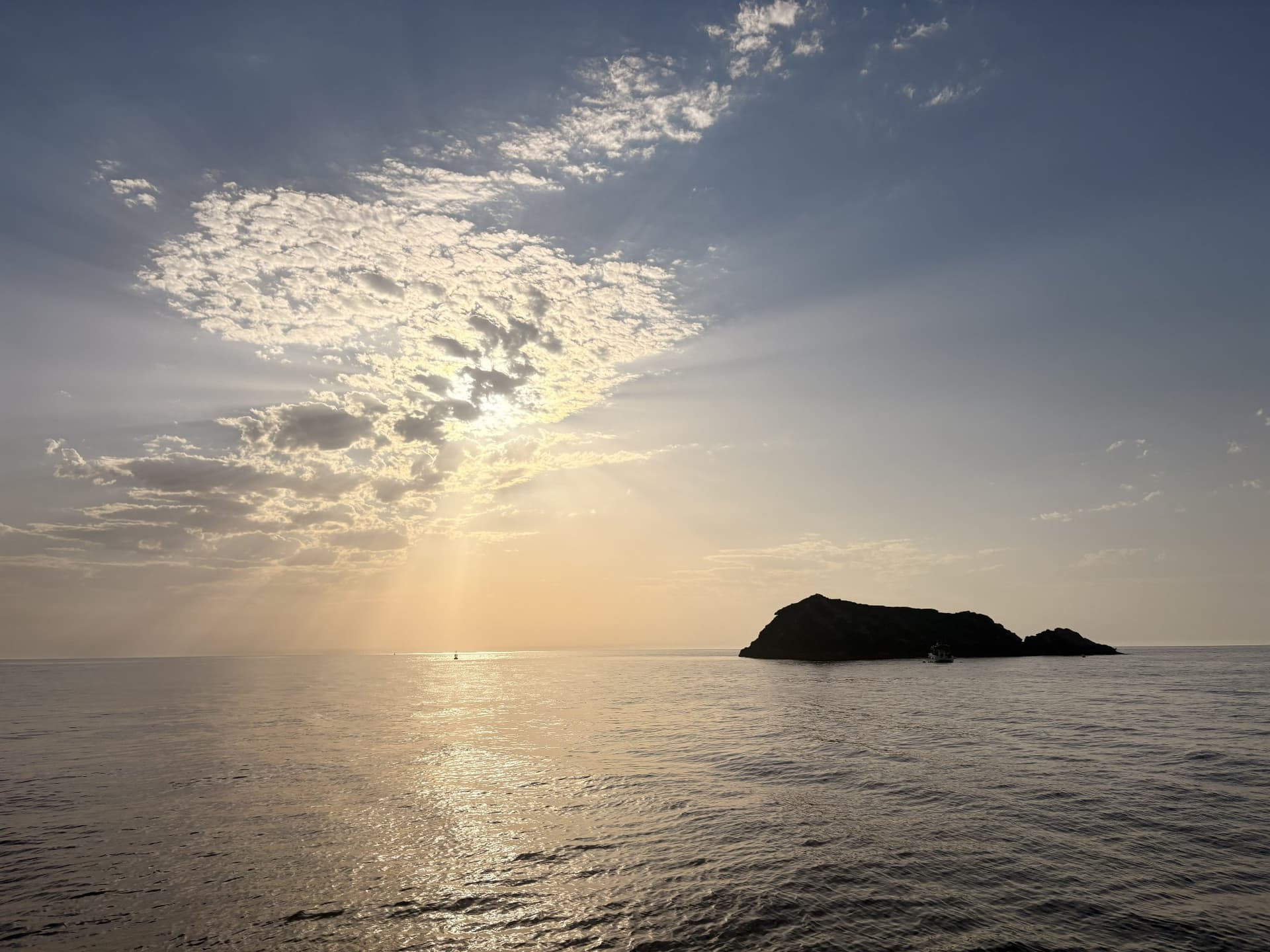
Massa d'Or earns its reputation before divers get in the water. A small boat convoy out of Cadaques, Port de la Selva or Llanca waits on wind and current, and "we'll see if we can dive it" is the standard briefing, not a confirmed plan. Once conditions allow, the dive works a pinnacle rising some 45 metres off the seabed, with a cluster of secondary peaks local guides nickname montañitas or patatas at 15-30 metres carrying the site's reputation, and a shallower entry some divers call el bolet or le champignon, feeding a small canyon toward the seaward crest. Grouper aggregations of 20 or more, several past 25-30 kilograms, have been reported here since 2010, alongside barracuda schools running into the hundreds that circle close enough to touch; a more recent account puts both figures higher again, fifty or more groupers and barracuda with no visible end, entirely above 20 metres. Visibility runs close to double what divers see at Illes Medes, credited to the lack of nearby rivers and the Tramontana's scouring effect on the water.
The gorgonian walls read two different ways depending on depth. Park monitoring since the 2022 marine heatwave traces necrosis concentrated in the shallow band, roughly 15-20 metres, across Cap de Creus stations. Neighbouring marine reserves further south fared worse in the same heatwave; Cap de Creus, colder and better flushed, came through comparatively well overall. A more recent dive found the pattern holding to about 19 metres on these walls. Deeper, on the peaks around 28-35 metres where the park's own monitoring station for this site sits, the population has the best trend of any monitored station in the park, and the walls there still carry the dense red cover older trip reports describe. Brown meagre shelter under the ledges, per one diver's account, and white seabream have been described elsewhere as unusually approachable. The current is the dive's constant companion: holding a camera steady against it is real work, and the ascent, decided by the water more than the plan, is its most exposed moment.
The pinnacle's vertical relief sets Massa d'Or apart from its Cap de Creus neighbours: rising some 45 metres off the seabed, it gives a single dive more usable terrain than the area's wall and reef sites, concentrating grouper and barracuda numbers into a depth band a recreational diver can actually work, without requiring a push past 30 metres. The biomass itself sits at the top of anything reported for the site: a more recent count of fifty-plus groupers and barracuda schools running into the hundreds sits above the longer-standing reports of 20-plus groupers over 25-30 kilograms, extending that record instead of overturning it. The exposure finishes the picture: the pinnacle sits at the most easterly point of mainland Spain, open to wind and current from more than one direction, which is why a diveable day feels earned and why the visibility, when it lands, outdoes its neighbours.
Two independent accounts, a 1998 trip report and a 2025 naturalist article, trace "Massa d'Or" to the rock's colour: one credits mica embedded in the stone that catches the sun like gold, the other the rock's golden tone at sunset. Both point to the same visual cause; neither records any documented event behind the name. "Sa Rata" or "La Rata," the affectionate local nickname used in centre briefings and forum chatter, comes from the islet's rat-like silhouette above water in both accounts. The site's modern reputation carries two separate threads, not one story repeated twice. A Spanish underwater photographer, offered "the best dive in the Spanish Mediterranean" at a federation event in Roses, is remembered locally for saying afterwards it was the best dive he had ever done in the country. Separately, longtime Cap de Creus divers comparing the area to Illes Medes have called la Rata the best dive in the area, by a long margin over everything else nearby. One historical curiosity survives from the earlier trip report: a fin whale seen from the dive boat in late August 1997, a one-off sighting, not a standing feature of the site.
Wind decides more than anything else here. The pinnacle is fully open to both the Tramontana from the north and the Levante from the east, and either can close it for days regardless of season; build slack into the trip and expect a sheltered substitute when the skipper calls it off. Pack for drift: carry an SMB, deploy it early on ascent, and stay tight to the guide and group all the way up, since a ten-minute surface-drift separation is already on record here. The thermocline around 15 metres is sharp and consistent in summer, so choose exposure protection for the depth you actually plan to work, not the surface reading. Boats to Massa d'Or leave from Cadaques, Port de la Selva or Llanca; Cadaques is the shortest transit and the long-standing local advice, and Port de la Selva is a live current option too. Where the site runs as the first dive of a two-tank day, double-check computer gas-mix settings before the second, shallower dive. Diving through a centre handles the park paperwork; an independent diver must notify park management in advance and keep within the yearly dive cap. Treat the coordinates as approximate and use the lighthouse as the working reference point.
What makes this dive site stand out.
Multiple reports since 2010 put groupers at 20 or more over 25-30 kg and barracuda schools running into the hundreds; a more recent account puts both counts higher again, above 20 m
Rises from 55 m to 5-10 m below the surface, with a cluster of secondary peaks at recreational depth and a deeper technical extension beyond
Shallow walls (15-20 m) heat-damaged since the 2022 marine heatwave; the site's own deeper monitoring station (28-35 m) shows the best trend of any monitored station in the park
Tramontana and Levante both expose the pinnacle directly; either can close it for days
Cadaques, Port de la Selva and Llanca all run current boats to the site
42.3211°N, 3.3304°E
Warmest water, longest stable windows and peak biomass. Diveable in principle year-round but sea-state-dependent.
Euro-Divers Spain publishes a single-dive rate of EUR 100 for the site, around an hour, under 40 m. At least one operator runs Massa d'Or as the first dive of a two-tank day, with the second dive kept shallow and conservative.
AOW is the operator-required minimum for the 18-30 m recreational work zone where every centre in sources actually runs the dive. The pinnacle's deeper technical extension is not part of any recreational route and needs Deep/Tec certification separately. Euro-Divers Spain additionally sets a minimum age of 15.
Summary
Advanced across centres and forum accounts; a regional dive-centre association's fact sheet grades the same dive Expert. Depth is manageable on the recreational peaks; current and drift are the real skills tested.
Safety considerations
What can go wrong here, and what divers do about it. Conditions change - take the briefing from the operator on the day.
Book a guided dive at this site.
PADI 5-Star center in El Port de la Selva with brand-new Aqualung gear, max 4 divers per guide, and year-round boat diving in Cap de Creus Natural Park.
SSI-affiliated dive centre in Llançà, the Cap de Creus Natural Park's northern access point, with air-only fills and a one-instructor-per-diver baptism dive.
PADI/CMAS/FFESSM centre in El Port de la Selva, running since 1994; daily boat dives across ~20 Cap de Creus sites including Massa d'Or, April-October.

German-run CMAS/RSTC dive centre on Cadaqués's Es Caials shore since 1975, with two shore dives near the door and boat trips on an informal daily schedule.
Small PADI centre in Camping Sant Miquel, working Colera's Tramontana-sheltered coast into France's Cerbère-Banyuls reserve.
SSI-listed dive centre inside the Carpe Diem Cadaqués complex, running since 2008 with three daily boat departures across 15 named Cap de Creus sites.
Beachfront PADI/FEDAS/CMAS dive centre inside the Cala Montjoi resort near Roses, running its own boat to Cap de Creus sites and a seasonal freediving course.
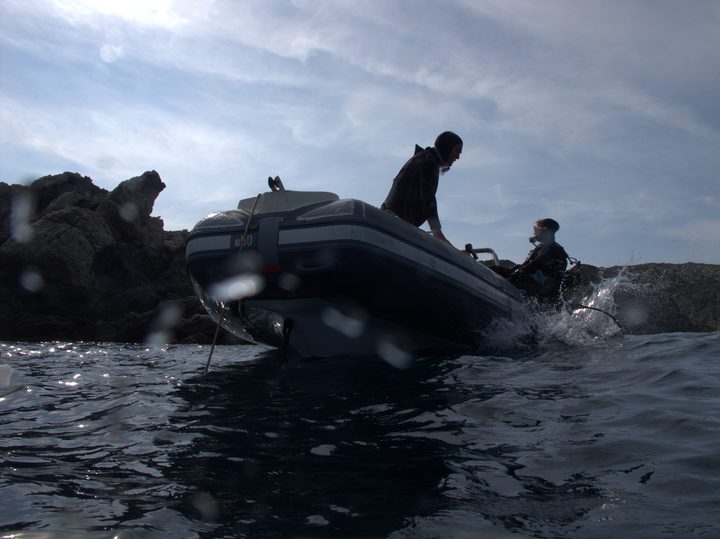
Get in touch to add or claim your dive center listing on DiveCodex.
Dive centres in Catalonia must require insurance from every diver on their dives, and must be able to offer a policy to anyone who has none.
Both ratings are on record and neither has given way. Euro-Divers Spain requires advanced-level certification as a minimum. A regional dive-centre association's fact sheet grades the identical dive Expert. In practice every centre runs it as an Advanced Open Water dive at minimum; treat the Expert grading as a warning that this is advanced diving at its harder end, not a typo.
The 2022 marine heatwave. Park monitoring records necrosis concentrated in the 15-20 m band across Cap de Creus stations that summer, and a more recent dive found the pattern holding to about 19 m on these walls. Neighbouring marine reserves further south were hit harder; Cap de Creus, colder and better flushed, came through comparatively well overall. Massa d'Or's own deeper population, monitored around 28-35 m, tells the opposite story: its affected-colony rate fell from 56% to 23% between the 2021 and 2023 census, the best trend of any station the park tracks. Go deeper on this dive and the gorgonian gardens are largely intact.
Strong and almost always present, and it can reverse direction mid-dive. One diver described being barely able to free both hands from the rock to adjust a camera; another was left adrift on the surface for ten minutes after ascent separation. SMB use and tight group discipline on the ascent are built into how operators run the site, and one skipper has been known to wait for the final go or no-go call until the boat is hovering directly over the pinnacle, instead of committing to it at dawn in port.
Cadaques, Port de la Selva and Llanca all run current trips, not Cadaques alone. Cadaques gives the shortest transit and is the long-standing local advice. Port de la Selva is also a live option: one recent account describes CIPS Dive running the site from there, deciding on the day whether the current allows it once the boat is over the rock.
Not a strict one. The site sits inside a Partial Nature Reserve within Cap de Creus Natural Park. Diving through a centre needs no personal permit and carries no diver quota at the site itself. The park's Integral Marine Reserve, where diving is prohibited outright, sits separately at the s'Encalladora north face and does not cover this pinnacle. An independent diver, without a centre, must notify park management in advance and keeps to a yearly dive cap.
Two separate strands of local reputation say yes. A Spanish underwater photographer is remembered locally for calling it the best dive he had done in the country, after a photography-federation event in Roses. Separately, longtime Cap de Creus divers comparing the area to Illes Medes have rated la Rata the best dive in the area, by a long margin over everything else nearby. A recent first-hand account opens the same way, unprompted, describing groupers and barracuda with no visible end. On a Tramontana or Levante day, the honest answer is that you do not dive it at all.
Massa d'Or rivals the Medes for grouper density but the fish are warier and the setting wilder: fewer boats, no marine-reserve permit system, and visibility that often runs close to double. The trade-off is exposure. The Medes are sheltered enough to dive most days; Massa d'Or is earned when the wind allows it.
Log your dives - notes, photos, conditions and the marine life you saw - and share them as one public diver profile. What you share helps the next diver, too.
Log every detail
Depth, duration, conditions, gear, buddy, notes — all in one place. Import from Suunto and other dive computers.
Track marine life
Record species sightings on each dive. Build a personal catalogue of everything you've seen underwater.
Your public dive profile
Share your dive history, stats, and experiences with a profile page you control. Show the world where you've been.