

Blaumar
CMAS dive centre in Mataró port with 40+ years of trading, running 600+ boat outings a year on the Maresme rocky ridges, 30 minutes by train from Barcelona.
CMAS7 services3 languages
Also known as: Barra del Arbol, Barra del Arbre, Barreta de l'Arbre, L'Arbre de Mataró, La Barreta de l'Arbre
Long crevice-rich rocky ridge at 15-21m off Mataro, the most-photographed Row 4 barra in the local rotation and a regular Mataro-port night-dive site.
Last updated April 2026
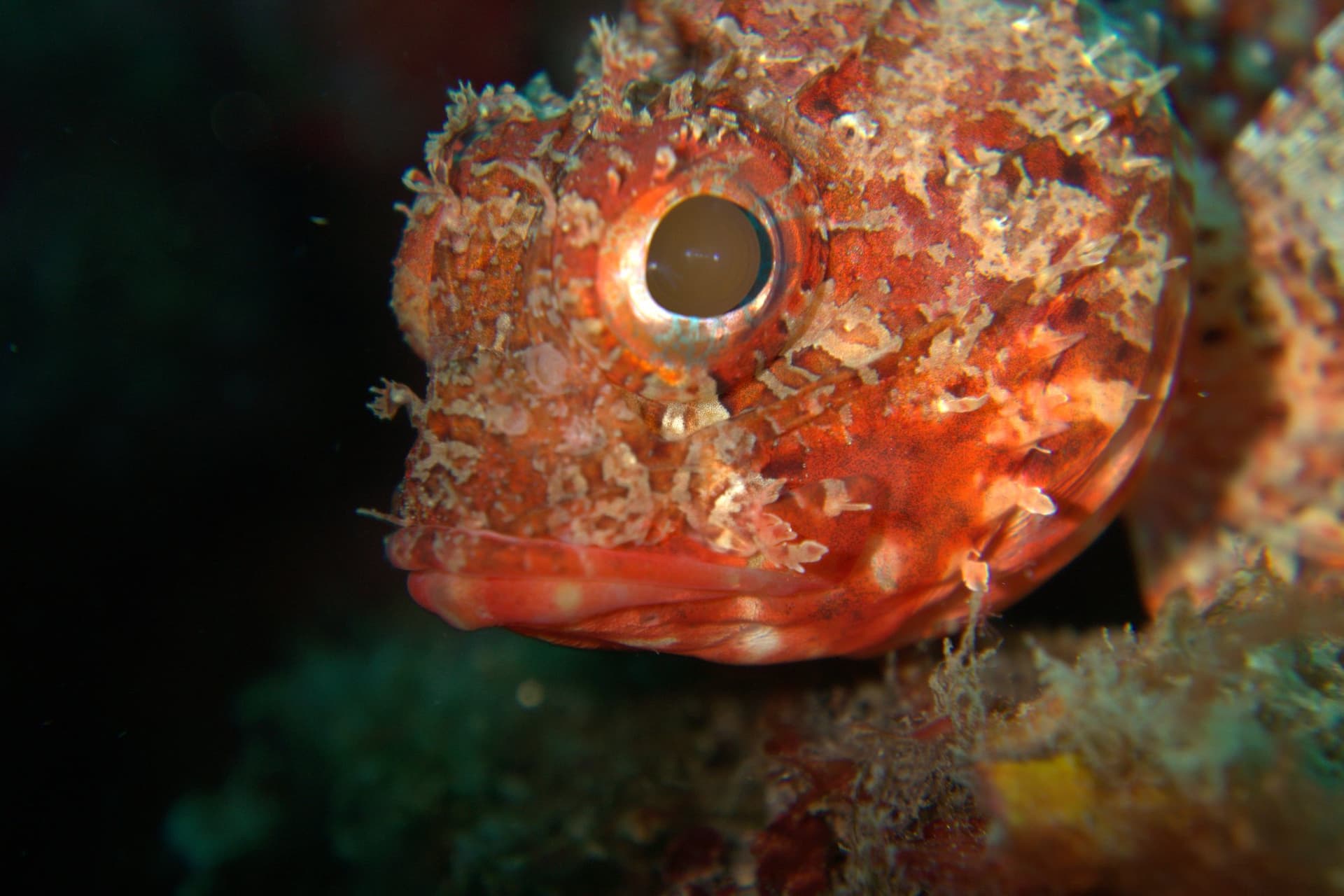
A couple of nautical miles off Mataro the descent finds the top of a long rocky ridge running roughly south-west to north-east, surrounded by sand on both sides. The ridge top sits at 15 to 17 metres and is dense with cracks and overhangs. The coast-side flank stays shallow at the same depth band; the open-sea flank slopes down to 20 or 21 metres on sand. Local convention is to pick a direction along the ridge, favour counter-current or the deeper side first, and return on the opposite flank or along the shallower top. The centre's tag-line, laid across the rock from the anchor, takes you back to the ascent.
Every metre of the top is worth a torch. Crevices reliably hold a moray or two, a conger if you check the bigger overhangs, and hermit crabs in the smaller ones. Octopus turn up on the rock or on the sand at the foot of the ridge, and nudibranch density runs high enough that local photographers visit specifically for it. The south-west tip is the standout topographic moment: the ridge splits into two parallel mini-ridges with a sandy channel between them, a brief navigation puzzle inside an otherwise linear dive. Typical bottom time on a single Nitrox-32 fill is 49 to 66 minutes at 18 to 21 metres. Air alone works at this profile but cuts the dive shorter.
Night here is materially different. Cleaner shrimps appear on the rock, ghost shrimps work the sand at the foot of the ridge, stingrays settle into crevices, and large blueish dentex-like fish sleep on the rock close enough to count their scales. A torpedo ray, which is an electric ray, has been reported on a 2009 night dive at this site. That is a sighting worth flagging because contact is hazardous.
L'Arbre is the most-logged Maresme site for divers who live in the corridor between Mataro and Barcelona. A 25-minute drive plus a 10 to 15-minute boat transit puts a 60-minute dive inside an after-work window, and the Manatee/Pitu hot-broth tradition that has carried over from the late-2000s night-dive crowd is the social signature of that culture. Inside the local Row 4 stratigraphy of named barras at 15 to 22 metres, this one earns its rotation slot for two reasons: the south-west split into two parallel sections gives navigation variety inside what is otherwise a linear ridge, and the crevice density at the top runs higher than the neighbouring barretas. The site's value compounds with attention. Photographers come back here repeatedly rather than once.
Macro is what this dive rewards. The crevice work along the top of the ridge is where the time goes: nudibranchs on hydroid-bearing rock, hermit crabs in the smaller cracks, and a conger or a moray that will sit for a portrait if you approach slowly. Local photographers cycle through L'Arbre as a regular subject rather than a one-off; gallery uploads from the early 2010s show the same divers returning with new sets from the same site year after year. Slow down on the top of the rock and a single dive can fill a card. The south-west split adds a wide-angle moment when visibility cooperates: two parallel ridges with sand between them photograph as a frame in a way the rest of the linear ridge does not.
Compass and SMB belong on every dive here. The barra is a single rocky ridge with featureless sand on both flanks, and leaving the rock can cost you the entry point fast. The standard convention is anchor-line descent, follow the centre's return-line across the ridge, and ascend at the anchor or deploy an SMB if you are off-line. Bring a torch even on day dives. The interesting part of the dive is inside the rock, not above it. Buoyancy matters: silting the bottom hurts visibility for everyone behind you. Hover, do not kneel. Dress for the bottom, not the surface: dive-depth temperatures sit at 12 to 15 degrees from December through March and 17 to 19 degrees in summer, so a 5mm with hood is the realistic summer minimum. Manatee Diving and Blaumar both run night dives at the site; book the night slot specifically if that is what you came for.
What makes this dive site stand out.
Top of the barra is dense with cracks and overhangs holding morays, congers, and hermit crabs
Top at 15-18m, deeper flank to 21m, sits inside Open Water limits
Active night-dive rotation since at least 2009 with documented Manatee/Pitu hot-broth tradition
Two parallel mini-ridges with a sandy channel between them at the south-west tip
41.5350°N, 2.4900°E
Warmer bottom temps and longer surface intervals. Site runs year-round on Blaumar's calendar.
Standard Mataro-port boat-dive rate. No site-specific access fee. Verify current rates with the centre.
Max depth 21m sits inside the Open Water envelope with normal margin.
Summary
Easy on the rock, moderate the moment you leave it. The barra is the only feature; sand on both sides has no orientation cues.
Safety considerations
What can go wrong here, and what divers do about it. Conditions change - take the briefing from the operator on the day.
Book a guided dive at this site.
CMAS dive centre in Mataró port with 40+ years of trading, running 600+ boat outings a year on the Maresme rocky ridges, 30 minutes by train from Barcelona.
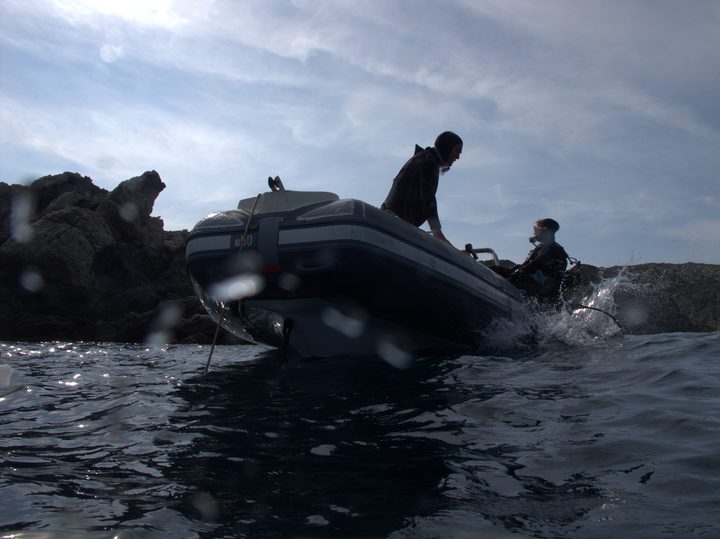
Port-based SSI club in Mataró, 30 km from Barcelona, running year-round boat dives on the Maresme barras with adaptive and technical training.
Get in touch to add or claim your dive center listing on DiveCodex.
Dive centres in Catalonia must require insurance from every diver on their dives, and must be able to offer a policy to anyone who has none.
Yes. The top of the ridge is at 15-17m and the deeper flank reaches 21m, well inside Open Water limits with normal margin. Centres run the site on rotation for OW-level groups; AOW divers get the same value because the site does not deepen with experience.
It is the local night-dive standard for the Mataro port. Fauna shifts materially after dark: cleaner shrimps and ghost shrimps come out, stingrays settle into crevices, and large blueish dentex-like fish sleep on the rock at close range. A torpedo ray has been reported on a 2009 trip with a Mataro centre, so do not handle anything you cannot identify.
Compass and SMB are not optional. The barra is the only feature; the sand on both flanks has no orientation cues. A torch belongs on every dive, even daylight, because the dive's value is inside the cracks. A 5mm with hood covers summer; drysuit or 7mm semi-dry covers November to April.
Different scale of dive. Medes is destination diving with permits, quotas, and signature pelagic encounters. L'Arbre is a 25-minute drive plus 10-15 minutes of boat transit and works as an after-work or weekend habit. Fauna is Mediterranean rock-crevice work: morays, congers, hermit crabs, nudibranchs. The trade is convenience and depth comfort against headline animals.
Spring through early summer reads well in the personal log: the May 2012 sightings of a hooked conger, a lone barracuda, and the cigarra-plus-spiny-lobster pairing in November 2010 cluster on the cooler months either side of summer. Bottom-water temperature drops to 12-15 degrees in winter, so dress accordingly.
Yes. Renfe Rodalies R1 runs from Barcelona to Mataro station in roughly 58 minutes. From the station the port is a short walk. Driving is faster at about 25-30 minutes from central Barcelona.
Log your dives - notes, photos, conditions and the marine life you saw - and share them as one public diver profile. What you share helps the next diver, too.
Log every detail
Depth, duration, conditions, gear, buddy, notes — all in one place. Import from Suunto and other dive computers.
Track marine life
Record species sightings on each dive. Build a personal catalogue of everything you've seen underwater.
Your public dive profile
Share your dive history, stats, and experiences with a profile page you control. Show the world where you've been.