

Begur Dive
SSI dive centre on Aiguablava beach in Begur, Costa Brava, running boat and shore dives to a dozen sites within ten minutes of the launch.
SSI6 services4 languages
Also known as: Begur Cape, Cabo de Begur
Three parallel rocky ridges at 5-38m off Costa Brava's most exposed headland, with red gorgonian forests on the deepest wall at 37m.
Last updated May 2026
Jump in near the north wall and the drift begins. The first structure you meet is the deepest rocky ridge at 37m, where red gorgonians form a dense vertical garden. Ascending to the second ridge around 30m, calcareous rock takes over, pocked with large holes that shelter scorpionfish and moray eels. The shallowest ridge, carpeted in green algae, is where the dive eases off before you deploy your SMB and wait for the boat.
The north wall deserves the most time. Its crevices hold conger eels, spiny lobsters, large brotolas, and nudibranchs. Yellow gorgonians mix with the reds here, and octopuses patrol the openings. The three ridges run parallel, wrapping the cape from north to south, so the route is a natural multilevel profile rather than a planned ascent.
Cap de Begur is the point that pushes furthest into the Mediterranean from the Iberian peninsula. That geography shapes everything about the dive. Exposure to open water means variable currents and a marine life mix that sheltered Begur coves do not see. Where Aiguafreda offers a calm shore dive at 18m, Cap de Begur puts you in a drift along three stacked walls reaching 37m.
The gorgonian forest on the first wall is the defining image. Red and yellow gorgonians share the rock face in quantity. The crevice fauna on the north wall is equally distinctive. Large brotolas and lobsters occupy the same cracks as conger eels, a concentrated strip of life that rewards slow exploration.
Bring an SMB. The drift dive ends with a surface pickup, and the boatman needs your signal. Nitrox is recommended for the multilevel profile, and Begur Dive fills enriched air tanks at their Aiguablava base.
Conditions are weather-dependent. The exposed position means the site is sometimes closed when sheltered sites in Begur are still running. Check with Begur Dive on the morning of your trip. A 5mm wetsuit works in summer. Winter divers will want 7mm or a semi-dry suit.
What makes this dive site stand out.
Parallel rocky ridges wrap around the cape from north to south at different depths
Paramuricea clavata forms the deepest wall at 37m
The furthest point into the Mediterranean on the peninsula
Conger eels, lobsters, nudibranchs, and brotolas fill north wall crevices
41.9543°N, 3.2200°E
Peak June-August for warmest water and best visibility. Late spring adds eagle ray and sunfish potential.
Full equipment rental available for 24 EUR. Verify current rates with dive centre.
Begur Dive requires Advanced OWD. The deepest wall at 37m exceeds OW limits. Shallower walls may suit OW divers under guidance, staying above 18m.
Summary
Drift dive with variable to strong currents on the most exposed point in the area. Nitrogen management required across the multilevel profile.
Safety considerations
What can go wrong here, and what divers do about it. Conditions change - take the briefing from the operator on the day.
Book a guided dive at this site.
SSI dive centre on Aiguablava beach in Begur, Costa Brava, running boat and shore dives to a dozen sites within ten minutes of the launch.
Get in touch to add or claim your dive center listing on DiveCodex.
Advanced Open Water (AOW) is required by the local operator. The deepest wall reaches 37m, well beyond OW limits. OW divers may be able to explore the shallowest wall above 18m under guidance, but the signature gorgonian wall is reserved for advanced divers.
Three parallel rocky ridges wrap around the cape at staggered depths, each with distinct character. The deepest at 37m is draped in red gorgonians, the second at 30m features calcareous rock riddled with large holes, and the shallowest is covered in green calcareous algae. This multilevel layout is unique in the area.
It is the most exposed site in the Begur area, sitting at the point that extends furthest into the Mediterranean. Currents are variable and can be strong. It is a drift dive requiring SMB deployment, and the depth demands nitrogen management. Local expert guidance is strongly recommended.
May through October, with peak conditions June to August for the warmest water and best visibility. Late spring (May to June) adds the chance of eagle ray or sunfish sightings, though these are seasonal and never guaranteed.
The north wall crevices are rich with conger eels, spiny lobsters, nudibranchs, octopuses, and large brotolas. The deepest wall is defined by red and yellow gorgonian forests. Moray eels, groupers, and scorpionfish are regularly sighted. In late spring, eagle rays and sunfish occasionally pass through.
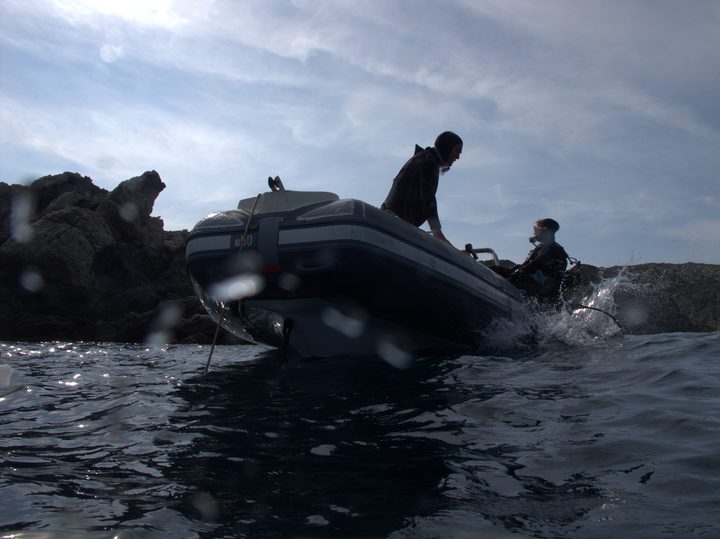
By boat only, departing from Aiguablava beach with Begur Dive. The ride is under 10 minutes. It is a drift dive, so the boat drops you near the north wall and picks you up after you deploy your signaling buoy.
Log your dives - notes, photos, conditions and the marine life you saw - and share them as one public diver profile. What you share helps the next diver, too.
Log every detail
Depth, duration, conditions, gear, buddy, notes — all in one place. Import from Suunto and other dive computers.
Track marine life
Record species sightings on each dive. Build a personal catalogue of everything you've seen underwater.
Your public dive profile
Share your dive history, stats, and experiences with a profile page you control. Show the world where you've been.