

DiveAzores
PADI and SSI dive resort and whale-watching eco-operator in Horta, Faial, running reef, blue-shark and Princess Alice Bank trips.
PADI / SSI4 services4 languages
Also known as: Banco Condor, Condor Seamount, Condor's Bank
A baited open-water hold at 5-10 m off Faial, drawing blue and mako sharks above a seamount whose 185 m summit lies far below diving depth.
Last updated October 2026
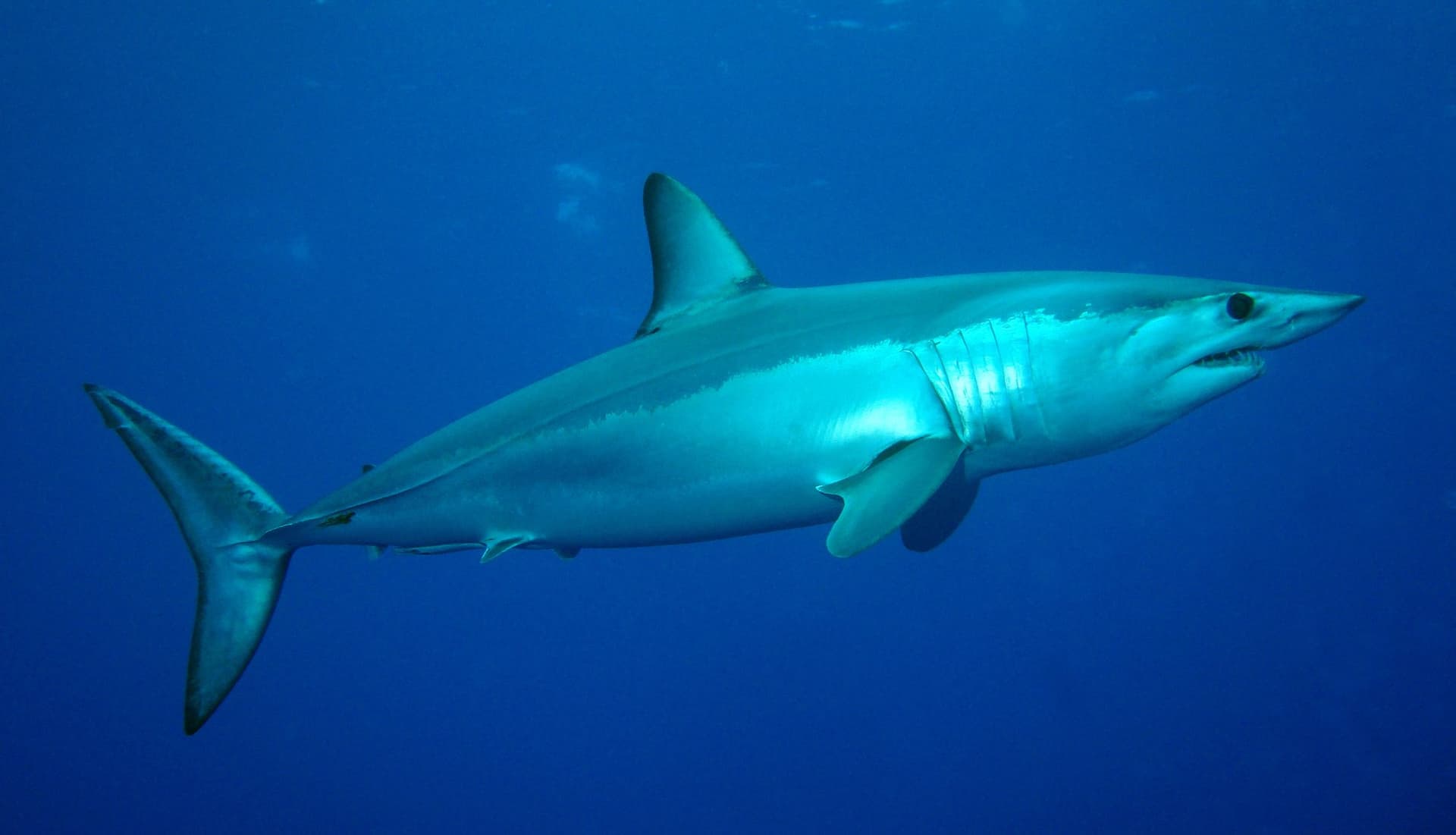
The boat runs roughly an hour out from Horta, into open water with no reef, no wall and no bottom in sight. Divers and snorkellers drop to a shallow hold at 5 to 10 metres, either clipped to a line or staying close to the hull, while the crew works to bring the sharks in close. Blue sharks come first, circling at a distance before curiosity brings them in close enough to inspect a diver or the boat, moving slowly the whole time. A mako, when one turns up, changes the mood fast, arriving quickly from below and scattering the blue sharks that were there a moment earlier. The seamount itself sits far under the group: its summit is at 185 metres and its base near 2,003 metres, so nothing below the surface layer gives a visual reference, and the current, reported at 1 to 2 knots and occasionally stronger, is felt more than seen. Trips are booked on short notice; some operators confirm only the evening before or the morning of, because conditions and shark presence change from one day to the next.
Faial and Pico have two headline offshore banks, and divers book them for different animals. Princess Alice, two to three hours out, is where divers go for a mobula ray aggregation over an open-water pinnacle; Condor Bank, about an hour from Horta, is the blue and mako shark trip. The seabed itself has also been closed to bottom fishing since June 2010, supporting a marine-research programme running since 2008 with its own underwater observatory. The bank also lies inside a fully protected marine reserve, so diving or snorkelling here needs the park authority's permit and nothing may be taken. Condor Bank is a large feature, not a single fixed point, so the exact mooring spot can vary a little between operators.
Certification requirements split sharply by activity. Go Shark's surface package, snorkelling or free-diving the encounter without a tank, needs no certification or experience at all. Scuba divers are advised to hold Advanced Open Water, and CW Azores requires it outright, plus 50 logged dives, a minimum age of 18 and a check dive before the trip. Most boats leave from Horta on Faial, but at least one Pico-based operator also runs the trip, so confirm the departure island when you book. Book with some slack in the schedule: trips depend on weather and are sometimes confirmed only a day or less ahead.
What makes this dive site stand out.
Divers hold at 5-10 m; the seamount's own summit sits at 185 m, well out of reach
Blue sharks circle close first; a mako, when one shows, scatters them fast
Roughly 10 miles (16-17 km) from Faial, the area's shorter offshore shark trip
Bottom fishing has been banned here since June 2010 to support ongoing research
38.3353°N, 28.9908°W
One operator (CW Azores) extends the window to early July-mid-October
Go Shark's own optional surcharge for diving this specific site, on top of its base shark-trip price; not a government fee
Recommended level for the scuba dive. Go Shark's surface snorkel and shark-watch package needs no certification at all; CW Azores instead requires AOW plus 50 logged dives, a minimum age of 18 and a check dive
Summary
The depth itself is shallow; the difficulty is current, holding position with no bottom in sight, and comfort with sharks close by
Safety considerations
What can go wrong here, and what divers do about it. Conditions change - take the briefing from the operator on the day.
Book a guided dive at this site.
PADI and SSI dive resort and whale-watching eco-operator in Horta, Faial, running reef, blue-shark and Princess Alice Bank trips.
SSI-affiliated shark and manta ray specialist at Marina da Horta, Faial, running marine-biologist-led Condor Bank and Princess Alice Bank trips.

Small, owner-run SSI dive centre at Marina da Horta, Faial, led by marine biologist Alba; coastal, blue shark and Princess Alice Bank diving.

Get in touch to add or claim your dive center listing on DiveCodex.
No. The seamount's summit sits at 185 metres, far below recreational range. The dive itself is a shallow hold at 5 to 10 metres in open water above it, built around the shark encounter, not the terrain below.
Chumming is documented by one catalog source as how the sharks are drawn to the boat. No operator's own site says whether hand-feeding happens, so it should not be assumed either way.
Usually Faial: most trips leave from Horta, about 10 miles from the bank. Pico is an option too, though a less common one. A Pico-based dive operator offers the site, and a Pico fishing charter puts the bank about 15 miles from that island, so the departure port depends on who you book with.
It depends on the activity. Snorkelling or free-diving the encounter with Go Shark needs no certification. For scuba, Advanced Open Water is the recommended level, and CW Azores makes it a requirement. That operator also asks for 50 logged dives, a minimum age of 18 and a check dive before booking.
July through September is the season most sources give. CW Azores runs its trips a little longer, from early July to mid-October, so the edges of the season are worth checking directly with the operator.
Possibly, but it is not settled. One catalog entry lists manta rays at Condor Bank and no operator or other catalog backs it up, so whether rays turn up here with any regularity is an open question. The seasonal mobula aggregation the area is known for is the draw at Princess Alice Bank. Book Condor Bank for blue and mako sharks and treat any ray as a bonus.
Log your dives - notes, photos, conditions and the marine life you saw - and share them as one public diver profile. What you share helps the next diver, too.
Log every detail
Depth, duration, conditions, gear, buddy, notes — all in one place. Import from Suunto and other dive computers.
Track marine life
Record species sightings on each dive. Build a personal catalogue of everything you've seen underwater.
Your public dive profile
Share your dive history, stats, and experiences with a profile page you control. Show the world where you've been.