

Adventure Divers
PADI and SSI center operating from Cabo de Palos port and La Manga Club resort, 25 years in the area, 298 TripAdvisor reviews at 4.9-5.0 stars.
PADI / SSI2 languages
Also known as: Cala de la Escalerica, Cala de la Escalerita, Cala Escalera, Cala Roja, La Escalerita
Sheltered shore-and-boat cove dive directly below the Cabo de Palos lighthouse, just outside the Islas Hormigas reserve, 0 to 20 m.
Last updated May 2026
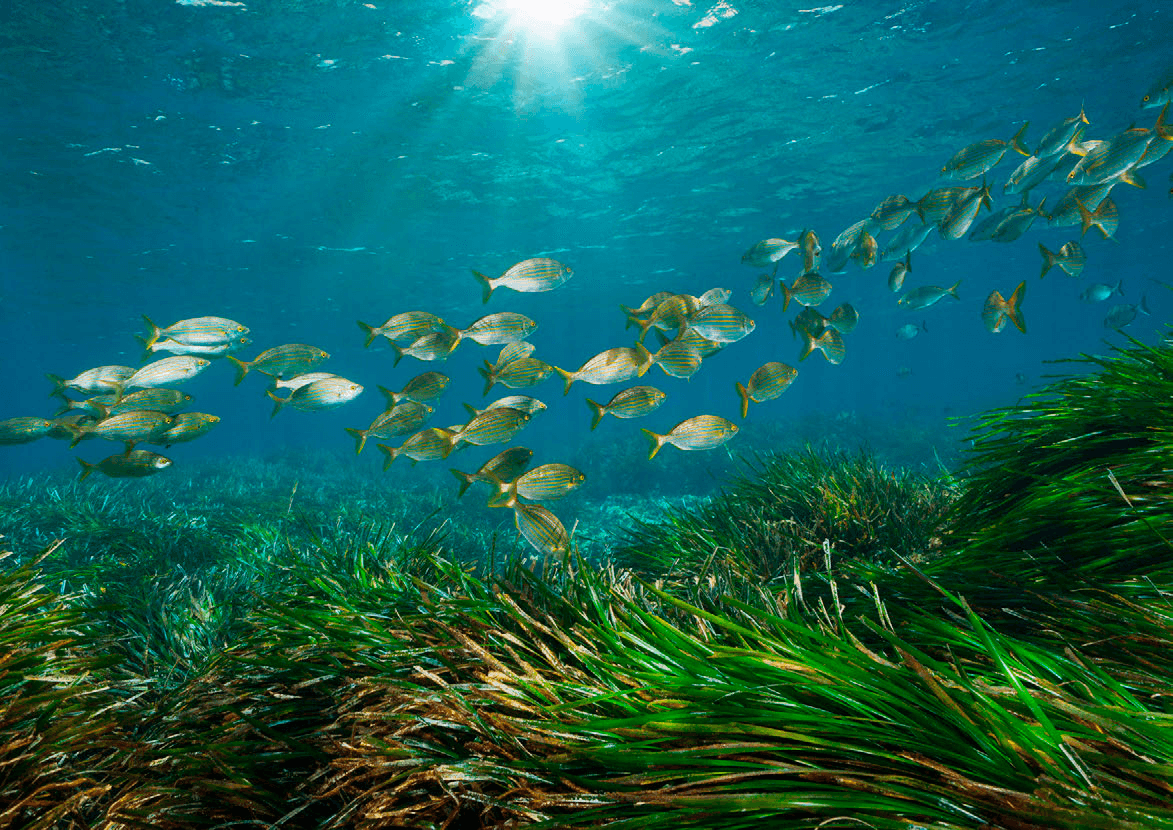
Most Escalerita dives go the same way. Descend at the cove mouth where the rocks fall to roughly 5 m, then the dive plays out laterally rather than vertically. The seaward side stacks up as a mix of large boulders, low walls, and the holes-and-passages the centres market as the Caves Route. The Labyrinth Route weaves between the pinnacles that rise close to the surface in places, and the Aquarium Route stays out over the posidonia and rocky perimeter where the fish concentrate. Past the rock garden the bottom opens to mixed sand and posidonia at 12-15 m. The deepest reachable structures sit around 18-20 m at the cove's outer edge before the route loops shallower over the seagrass on the way back.
What guides flag in the briefing is the cast of regulars rather than any single hero feature. Moray heads in nearly every overhang. Scorpionfish wedged in cracks. Octopus changing colour against the rock. The occasional grouper transiting the boundary from inside the reserve. With currents close to zero, dives run long: 50-60 minutes is normal, and air consumption is the limit more often than no-decompression time.
Escalerita is the working cove of Cabo de Palos. Centres send first-day arrivals here to refresh buoyancy before the reserve. Try-dives and Open Water students do their checkouts in the sandy patches. Photographers with their own gear walk the staircase down at dawn outside the centre rotations. When lebeche wind closes the reserve, this is where the morning dive happens instead. None of that makes it the headline of a Palos trip, and the centre material is honest about that. The cove is supportive infrastructure: shallow, accessible, sheltered, and reserve-adjacent enough to see the overflow species without paying the reserve fee or filing the paperwork.
The route variety is the practical hook. A centre can run the same cove three times in a week without repeating the dive: caves first, labyrinth second, aquarium for a photographer day. That is what keeps Escalerita on the rotation rather than rotating between the half-dozen other Cabo de Palos calas with the same depth profile.
The namesake staircase is steep. One forum diver from 2010 called it "a bit of a killer" in August with full kit, and that line still gets repeated. The boat from Cabo de Palos harbour solves the problem in five minutes. Check the wind forecast before driving down. North and east (levante) winds keep the cove glassy; lebeche (southwest) puts surface chop into the entry and makes the climb back up unpleasant. Carry the standard recreational kit: SMB for boat-traffic visibility on ascent if entering from shore, dive computer, exposure protection scaled to season. Navigation is straightforward with the rocky structure as a permanent reference, but the standard equipment still goes in the bag.
No reserve permit applies, no 5 EUR/dive fee, no daily diver cap. Spanish general rules cover the cove: valid certification, third-party diving insurance, and a recent medical certificate where centre policy requires it.
What makes this dive site stand out.
Caves Route, Labyrinth Route and Aquarium Route from a single entry point
Stairs from below the lighthouse, or a five-minute boat ride from Cabo de Palos harbour
Sits on the edge of the Islas Hormigas reserve, with morays, octopus, occasional grouper passes
Sheltered from north and east winds, used when reserve sites are blown out
37.6314°N, 0.6903°W
Area-wide golden window: water still 20-24 C, best visibility, fewer divers. Diveable year-round.
Standalone shore-dive prices in the area run around 60 EUR; double-dive packages 80-90 EUR. Verify with the centre when booking.
OW minimum for the standard route. Sandy patches in the cove host discover-scuba and try-dive sessions under instructor supervision.
Summary
Shallow, sheltered, near-zero current. Three route variants accommodate first-day refreshers through to photography days.
Safety considerations
What can go wrong here, and what divers do about it. Conditions change - take the briefing from the operator on the day.
Book a guided dive at this site.
PADI and SSI center operating from Cabo de Palos port and La Manga Club resort, 25 years in the area, 298 TripAdvisor reviews at 4.9-5.0 stars.

Long-running multi-agency dive centre in Cabo de Palos running daily boats into the Islas Hormigas Marine Reserve and the local technical wrecks.
SSI and PADI dive centre off the main strip in Cabo de Palos, with a 140 m² shorefront base and small-group RIB trips into the Islas Hormigas marine reserve.
Get in touch to add or claim your dive center listing on DiveCodex.
Outside the Reserva Marina de Cabo de Palos e Islas Hormigas. No reserve permit, no 5 EUR/dive reserve fee, no advance-notice paperwork.
No. The cove sits on the reserve boundary, just outside, directly below the Cabo de Palos lighthouse. The reserve permit, the 5 EUR/dive reserve fee, the 15-day advance notice for Bajo de Fuera, and the dive-time and boats-per-site caps do not apply here. Escalerita can be dived without booking a reserve slot.
Yes. Maximum depth is 20 m, conditions are sheltered, and currents are negligible. The cove is the area's standard refresher dive on day one of a Cabo de Palos trip, used by centres to check buoyancy and weighting before the reserve. Sandy patches inside the cove are also where centres run discover-scuba and try-dive sessions.
Caves Route runs through the overhangs and short swim-throughs at the western side. Labyrinth Route weaves between the larger rock formations and pinnacles. Aquarium Route stays out over the posidonia and rocky perimeter where the fish life concentrates. The guide picks one based on conditions, group experience, and what the divers want to photograph.
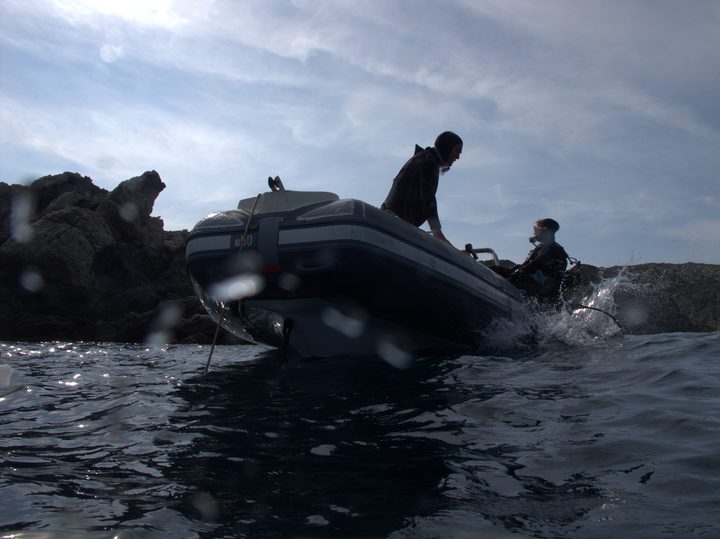
Both work. Shore entry uses a steep staircase from the area below the lighthouse car park, which forum divers describe as a tiring carry in August with a 12-litre tank and a 5 mm. The boat ride from Cabo de Palos harbour takes about five minutes and removes the climb. Most centres default to the boat in summer.
Moray eels in nearly every rock hole, octopus across the rocky relief, scorpionfish wedged in cracks, and sargo and damselfish in the column. Groupers transit through from the reserve boundary, more often than at most non-reserve calas in the area. Salp schools rise to the light in season. Tropical species claims do not apply here.
September and October match the area's golden window. Surface temperature still 20-24 C, best visibility of the year, fewer divers in the water. April is the explicitly weaker month per regional forum veterans, with cold water and less life. The cove is diveable year-round but exposure protection scales up sharply in winter.
Yes, and it is likely the same physical cove. The Cartagena regional dive guide names the site Cala Roja or Cala Escalerica; centres and forum divers use Escalerita and Cala de la Escalera interchangeably. The duplicate slug is a housekeeping item, not a different dive.
Log your dives - notes, photos, conditions and the marine life you saw - and share them as one public diver profile. What you share helps the next diver, too.
Log every detail
Depth, duration, conditions, gear, buddy, notes — all in one place. Import from Suunto and other dive computers.
Track marine life
Record species sightings on each dive. Build a personal catalogue of everything you've seen underwater.
Your public dive profile
Share your dive history, stats, and experiences with a profile page you control. Show the world where you've been.