

Adventure Divers
PADI and SSI center operating from Cabo de Palos port and La Manga Club resort, 25 years in the area.
PADI / SSI2 languages
Murcia marine reserve where submarine mountains and historic wrecks concentrate some of the Mediterranean's densest fish aggregations.
Last updated October 2026
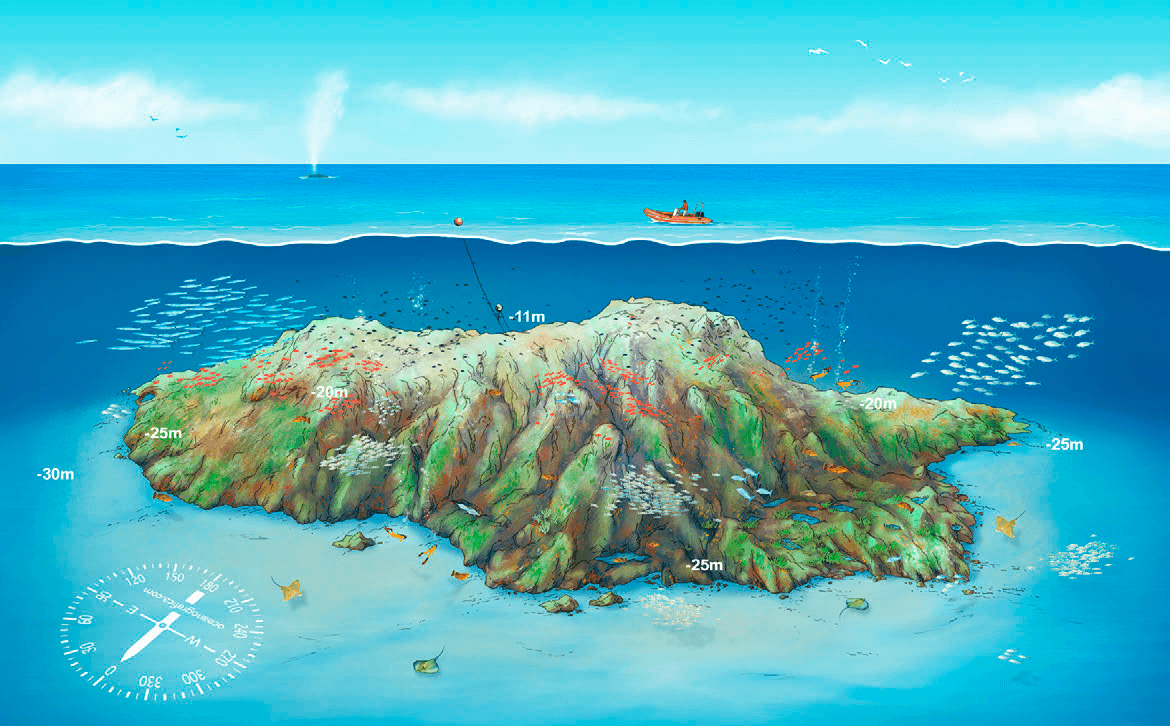
A small fishing harbour under a lighthouse, and behind it a chain of submarine mountains that surface as the Islas Hormigas. Boats run the same short distance from the quay every morning. Bajo de Dentro rises to 3 metres from a 40-metre base, a single canyon splits the pinnacle north-to-south, and resident groupers the size of small dogs approach without caution. This is the dive most visitors do first, and the reason the reserve is worth the permit paperwork. Piles 1 and Piles 2 sit to the west, 75-metre ridges between 8 and 27 metres. Their signature experience is the summer barracuda schools that circle both pinnacles in July and August. Bajo de Testa, closer to the coast and more sheltered from current, is the gentle introduction. The 1946 Naranjito rests upright at 26-40 metres. Penetrable, colonised by conger eels and groupers, it is the area's iconic wreck and has long been reported outside the permit system, a status not yet re-checked against the reserve's 2026 expansion. Deeper still, at Bajo de Fuera, three more wrecks lie within the daily 25-diver cap: the 1906 SS Sirio between 35 and 65 metres, the SS Minerva, and the Nord America. Below the lighthouse, Escalerita and the other calas start at 2 metres with tunnels and arches, usable for try-dives and bad-weather days. Reserve spillover keeps even these shallow sites rich. The trip profile most divers settle into is two dives from the same boat by 2 PM, back at the harbour for lunch.
September and October. The forum consensus is unambiguous: same marine life as summer, visibility at its yearly peak, and noticeably fewer divers. July and August deliver peak biomass but also catamaran loads, rushed 40-45 minute dives, and fully booked centres. Book weeks ahead if summer is unavoidable. Since a May 2026 decree, the reserve runs three cells: diving the bajos and wrecks (Célula B) still goes through an authorised centre holding the reserve's fisheries permit; the lighthouse coves (Célula C) added daylight-only hours in 2026 but carry no permit or fee of their own in the decree's text. Reported pricing clusters within a narrow band (45-50 EUR for coves, 50-55 EUR inside the reserve, 60-65 EUR for the Naranjito), a pattern local divers traced to a mid-2010s price agreement that has held in the years since. Bajo de Fuera demands B2 certification, 15 days advance notice, insurance, and a medical certificate. Summer thermoclines drop ten degrees between surface and 20 metres, so carry more neoprene than the air temperature suggests. Murcia International Airport sits 40 minutes by car; Alicante is 90 minutes. A car is essential for gear logistics. Centres split on guide policy and on seasonal opening, so confirm both when you book.
Submarine mountains (bajos) of the Islas Hormigas archipelago rise abruptly from 40-60m to within metres of the surface. Persistent currents have sculpted walls, ledges, and canyons into pinnacles that act as natural aggregation points for pelagic fish.
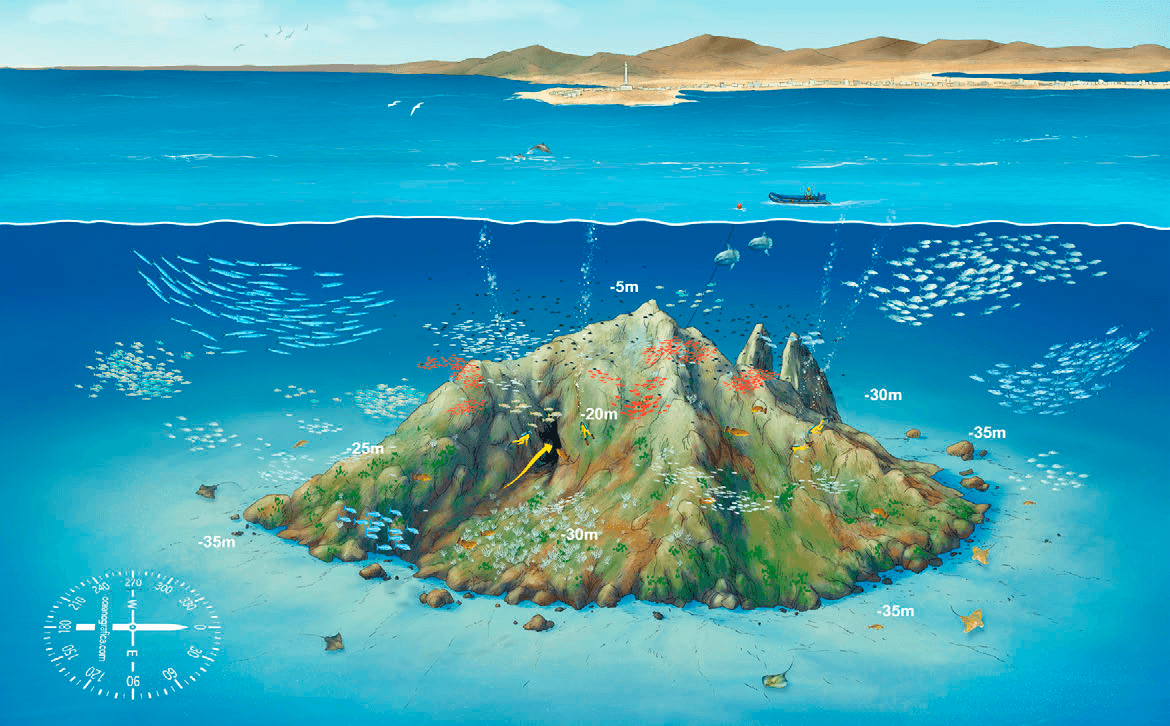
Open Water-and-up divers wanting the reserve's flagship cave-and-pinnacle dive without the deep-permit overhead of Bajo de Fuera
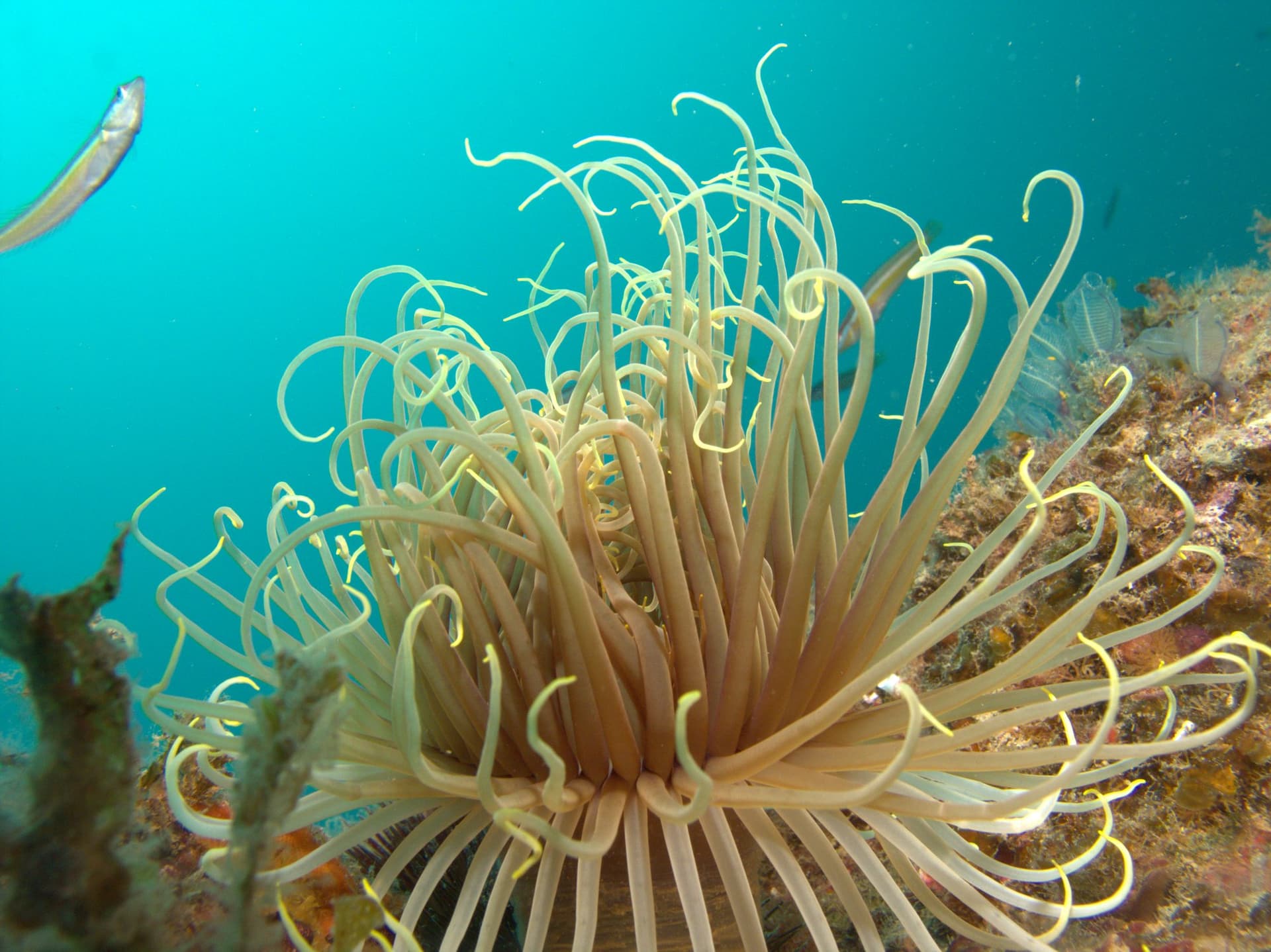
Open Water-and-up divers wanting reserve-density biology without the deep-permit overhead of Bajo de Fuera
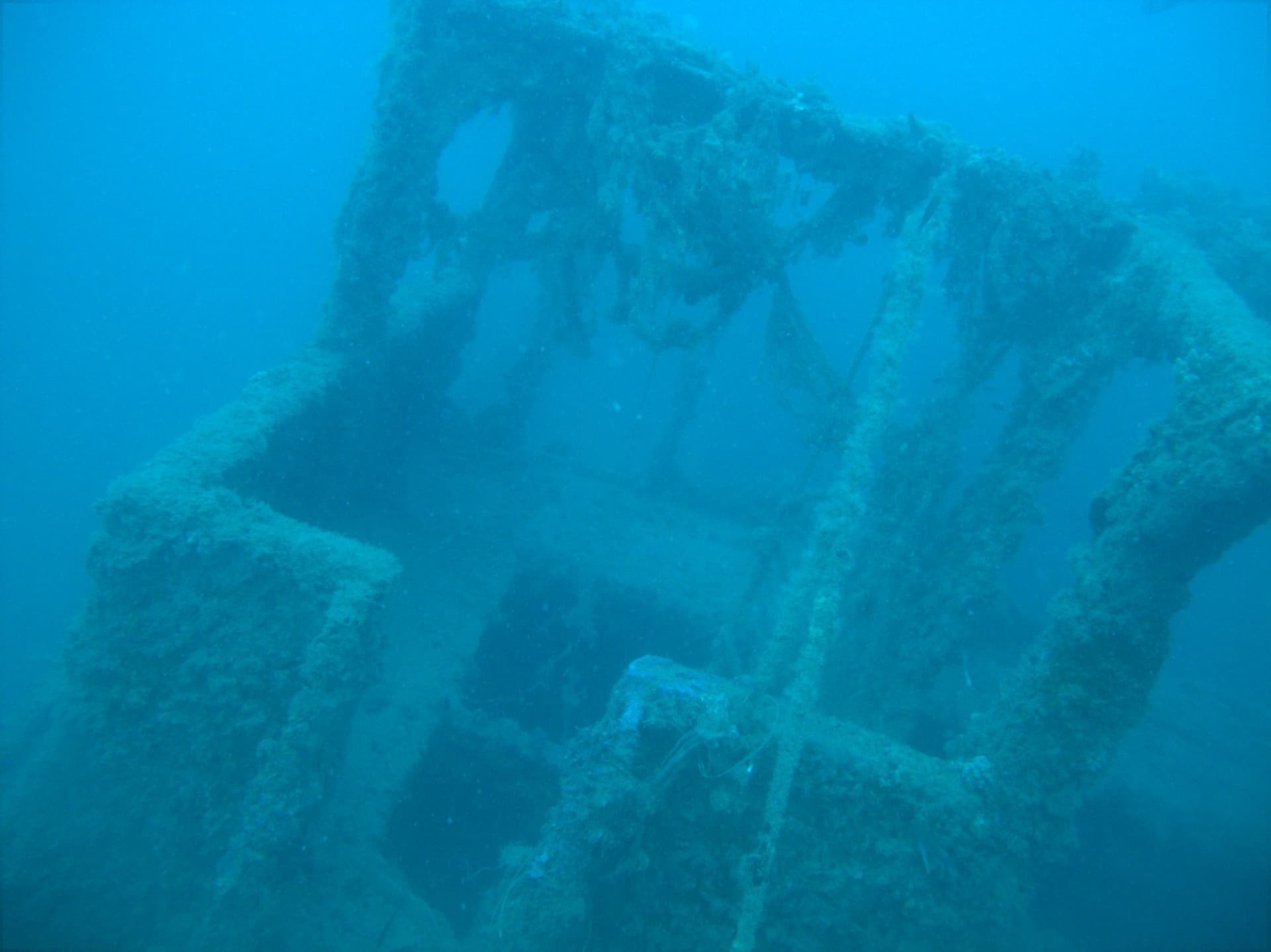
AOW divers stepping into Mediterranean wreck diving on a compact, recognisable hull with engine-room penetration
A 120 m steamship in sailing position with a gorgonian-covered propeller
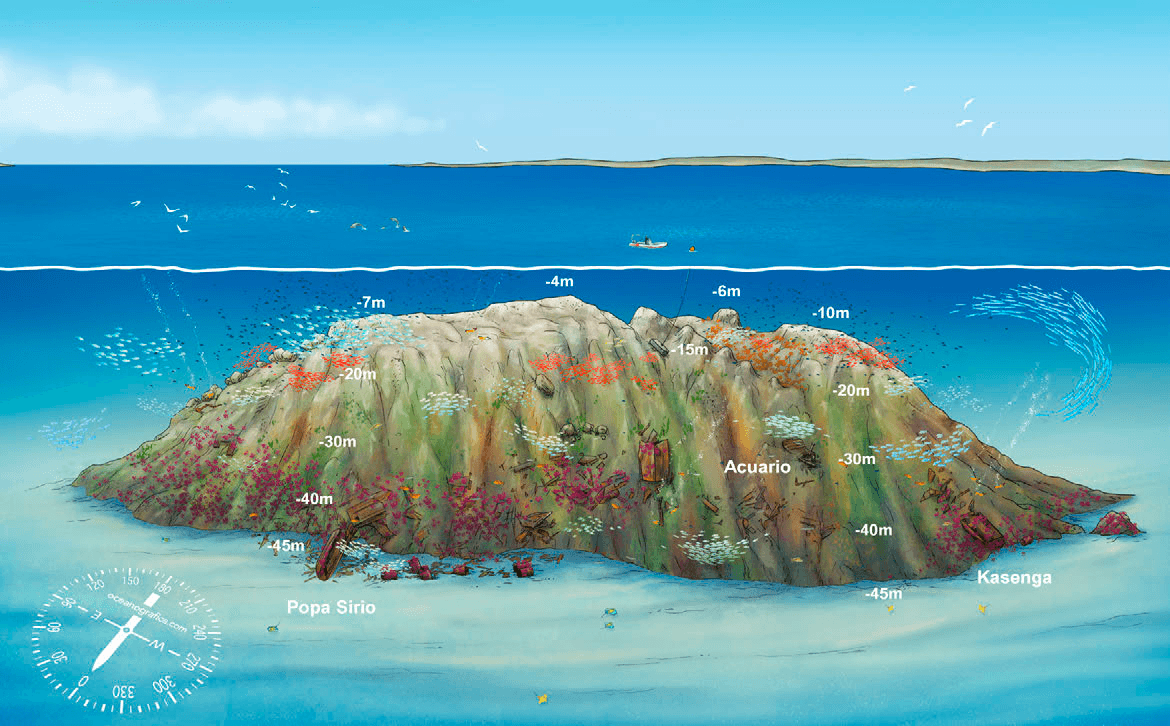
AOW-and-up divers and tec-curious wreck divers willing to plan ahead and accept demanding conditions for historic Mediterranean wrecks
A plateau route for every level, with barracuda hunting on current days
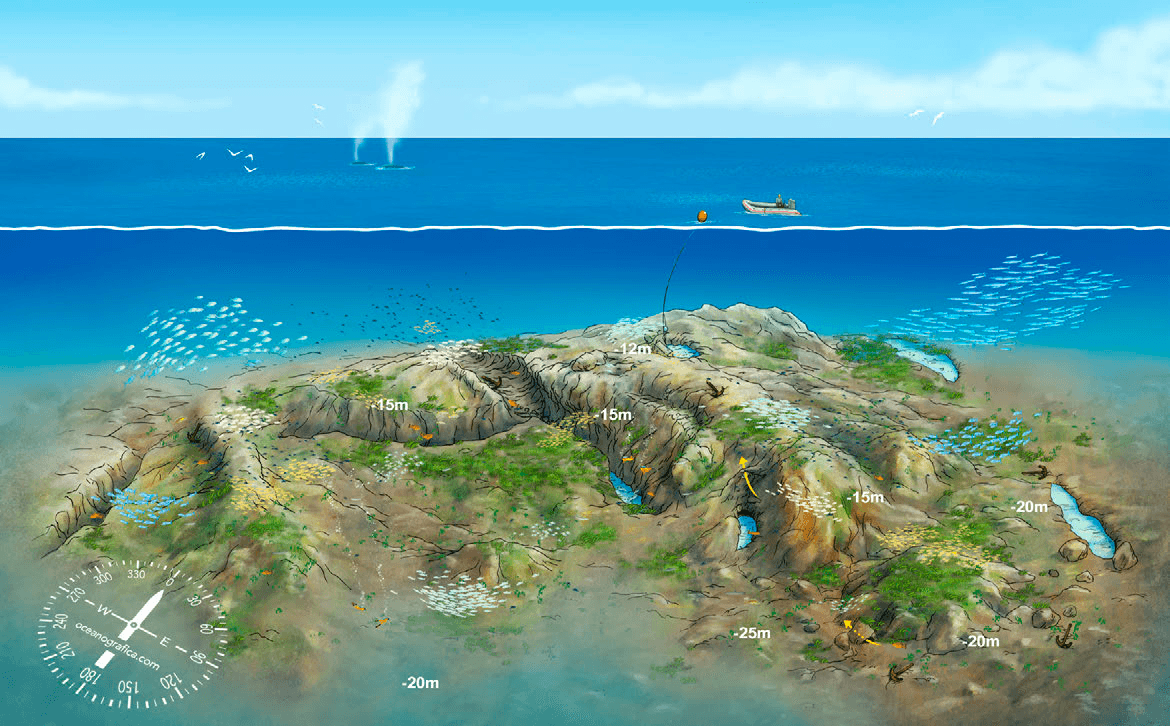
East gap where large groupers and corvinas gather
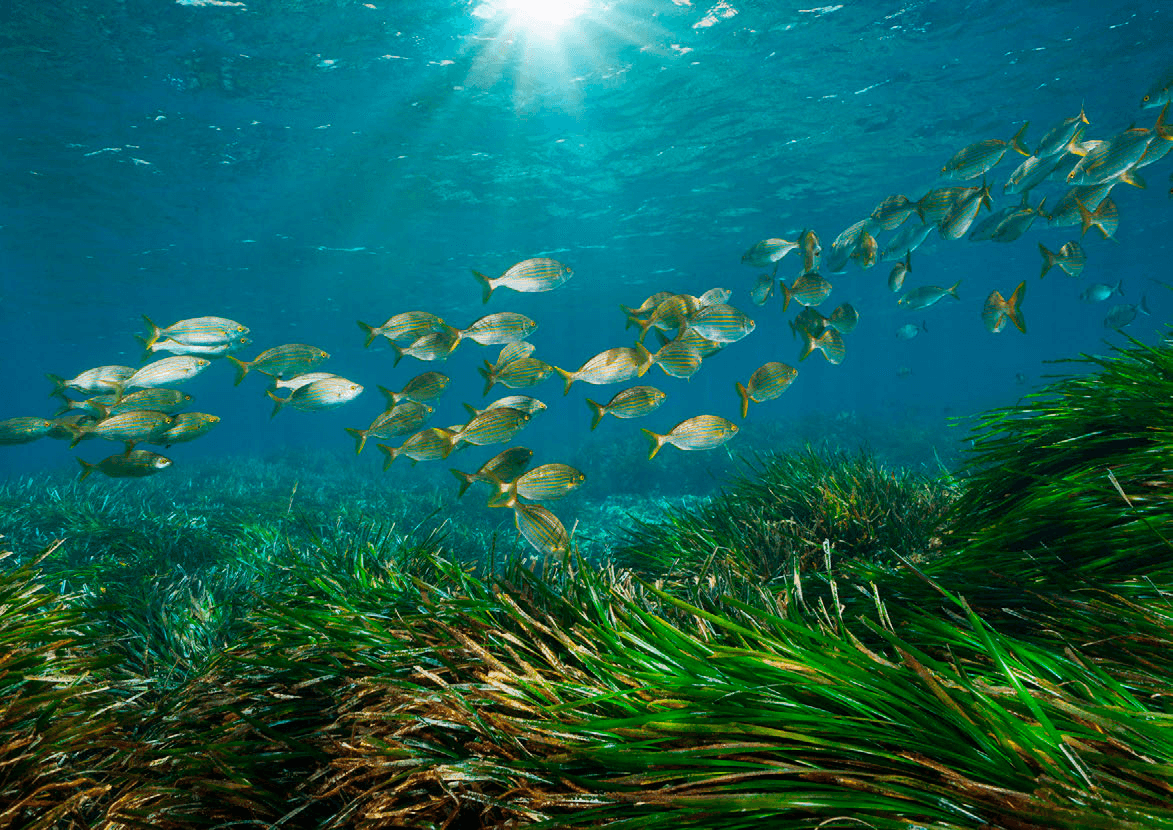
OW divers and refresher days in Cabo de Palos when the reserve is out for wind or quota
Book online or contact a centre that dives this area.
PADI and SSI center operating from Cabo de Palos port and La Manga Club resort, 25 years in the area.

Long-running multi-agency dive centre in Cabo de Palos running daily boats into the Islas Hormigas Marine Reserve and the local technical wrecks.

Cabo de Palos dive centre operating since 2004, boating divers into the Islas Hormigas reserve and onto the namesake Naranjito wreck.
SSI and PADI dive centre off the main strip in Cabo de Palos, with a 140 m² shorefront base and small-group RIB trips into the Islas Hormigas marine reserve.

PADI 5-Star Career Development Center on the Cabo de Palos harbour, run by Dutch course-director couple Martin and Brenda van Gestel since March 2023.

Nature-and-education dive center in Cabo de Palos, the first National Geographic Dive Center in Spain and the first Avelo center in Europe.

British-run PADI 5-Star centre on La Manga Strip with multi-agency teaching, small-group reserve diving, technical and cavern training at Cueva del Agua.
Get in touch to add or claim your dive center listing on DiveCodex.
What can go wrong here, and what divers do about it. Conditions change - take the briefing from the operator on the day.
Marine reserve
Outer-waters rules (state order)Responsible diving criteriaRegional dive permit (how to apply)Checked: Oct 2026
National rules also apply: Rules and permits in Spain
September and October. Water stays above 20°C, visibility peaks at 20-30 metres, marine life is at its densest, and the summer crowds have thinned. October is the quieter of the two. April is widely discouraged on Spanish diving forums: water around 14°C and markedly less life.
It depends which cell of the reserve. The bajos and wrecks sit in Célula B, where diving requires prior express authorisation from the regional fisheries authority, obtained through an authorised centre; divers may carry no fishing gear there, and guide policy varies by centre. The lighthouse coves sit in Célula C, added in 2026, where the decree sets no authorisation or fee of its own, only a sunrise-to-sunset window. Independent shore diving has long been reported there; the decree now confines it to that daylight window.
In July and August, yes. Forum regulars describe catamaran-loads of divers arriving at moorings, 40-45 minute immersions, and a queuing feel at the busiest sites. The diving quality itself is not disputed. October gets the same marine life without most of the crowd.
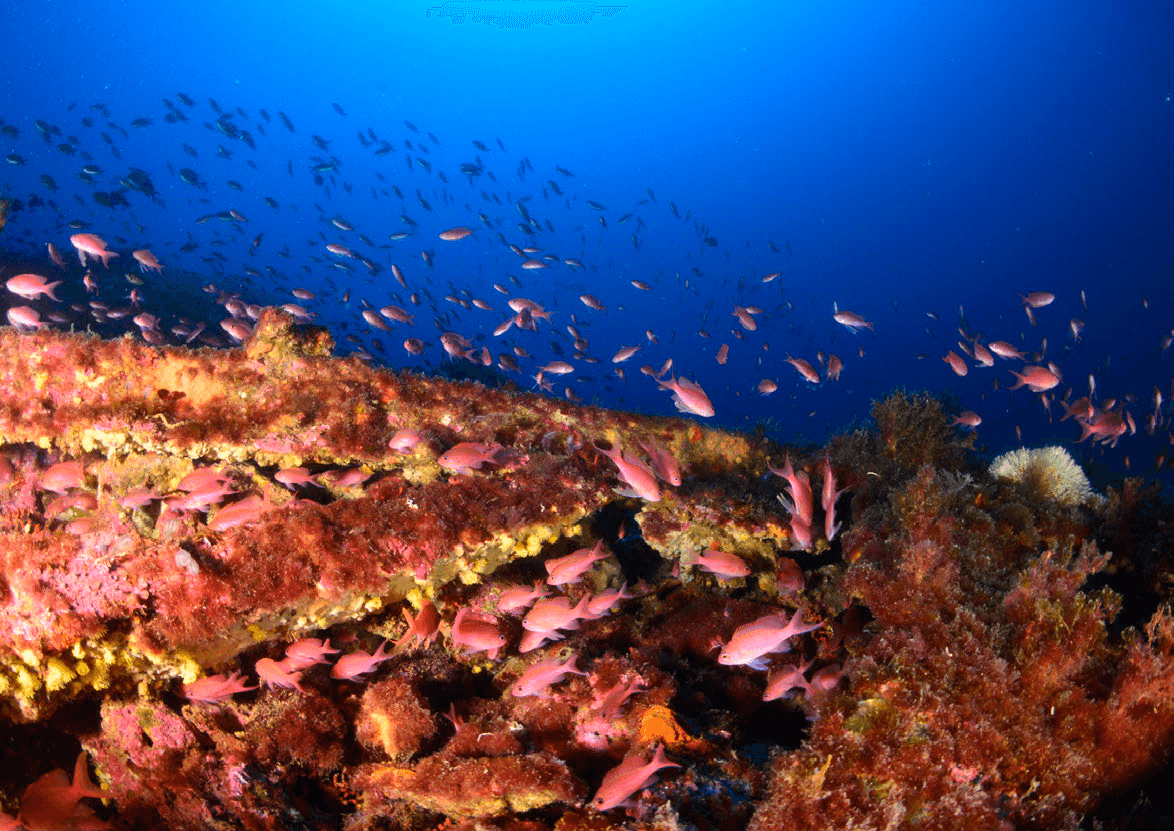
Marine life quantity is the reason divers pick Palos. The density of fish inside the reserve is the headline, and forum comparison threads consistently rate Palos higher on raw biomass. Gata wins on volcanic landscape, calmer conditions, shallower profiles, and longer bottom times. The two sit about 2.5 hours apart by car and are often combined on the same trip.
Advanced Open Water or FEDAS B2 is the standard minimum. The wreck sits upright at roughly 26-40 metres and has long been reported outside the reserve boundary, though that has not been independently re-checked against the reserve's 2026 expansion. Most centres offer it as a guided wreck profile and price it in the same bracket as inner-reserve dives.
Rules vary by cell since a May 2026 decree split the reserve into three. Célula B, the bajos and wrecks, requires an authorised centre holding fisheries authorisation. Célula C, the lighthouse coves added in 2026, restricts diving to daylight hours without a stated authorisation of its own. Célula A, a small zone around the Isla Hormiga lighthouse, is closed to recreational activity. Reserve-wide: spearfishing is prohibited, and touching wildlife, private anchoring, and unapproved gloves or knives are restricted.
Yes. Winter dives through January have been reported by visiting European divers. Water drops to 13-15°C and a 7mm semi-dry or drysuit is necessary. Winter trades summer pelagic schools for excellent visibility, dense nudibranch activity, and large moray and grouper sightings. Not every centre runs a full winter schedule, so confirm in advance.
Forum regulars frame it as no bad choice in Cabo de Palos. Mangamar runs the largest facility with catamaran transfers and a six-language staff. Centro de Buceo Islas Hormigas runs smaller boats and offers GUE Fundamentals alongside multi-agency tech support. Divers Cabo de Palos offers winter discounts and dual SSI/PADI certification.
Boats depart Cabo de Palos harbour, a short ride to the bajos and the archipelago. Murcia International Airport is about 40 minutes by car; Alicante-Elche is about 90 minutes. A car is effectively required; public transport does not cover dive-gear logistics to the harbour.
Also known as: Cabo de Palos - Islas Hormigas, Reserva Marina de Cabo de Palos e Islas Hormigas
Log your dives - notes, photos, conditions and the marine life you saw - and share them as one public diver profile. What you share helps the next diver, too.
Log every detail
Depth, duration, conditions, gear, buddy, notes — all in one place. Import from Suunto and other dive computers.
Track marine life
Record species sightings on each dive. Build a personal catalogue of everything you've seen underwater.
Your public dive profile
Share your dive history, stats, and experiences with a profile page you control. Show the world where you've been.