Habili Ali
Easternmost reef in St. John's, a flat-topped seamount with vertical walls, a grey reef shark cleaning station, and giant gorgonians on the west wall.
Last updated May 2026
The dive
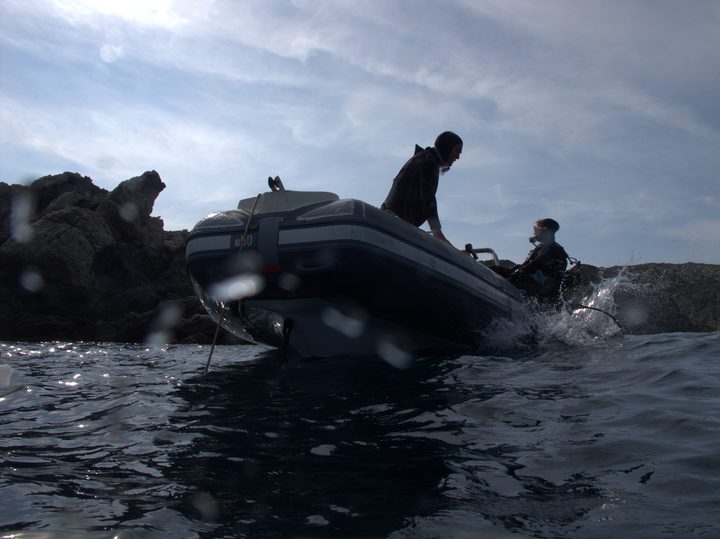
Liveaboard zodiacs drop divers at the northwest corner first thing in the morning, where black-coral curtains hang from overhangs at around seven metres against the wall. The dive descends into the gorgonian field on the west side, an open spread of giant fans between thirty and forty-five metres anchored to the steep face, with longnose hawkfish perched in their branches. Working east the current strengthens, funnelling past the eastern tip where grey reef sharks visit the cleaning station; up to four have been reported together, though the encounter is a chance, not a fixture. Anthias swarm above the reef flat on the ascent. A second dive runs the southwestern side, dropping to twenty-five metres along a natural edge and tracking north for sharks before climbing to twelve metres to work four notches in the upper wall and finishing over the anemone field on the safety stop.
What makes it special
The Arabic word "habili" describes a reef that never breaks the surface, and Habili Ali barely does — its flat top sits at ankle depth in calm conditions and lifts only when small swell breaks over it. Below that thin crown, walls plunge vertically to about thirty-one metres before turning into a slope, with the seabed eventually bottoming near two hundred metres. The position is what sets the dive apart: easternmost reef in the St. John's system, forty-four kilometres from the Egyptian coast, at the boundary where the system ends and the open sea begins. That exposure draws current and pelagic chance the more sheltered reefs further west rarely see. The gorgonian field on the west wall is among the most striking in the Deep South, and on calm days the cleaning station on the eastern tip puts grey reef sharks within close range. Two recent first-person reports from elsewhere in the Deep South describe sustained bleaching across the region since late 2024, though neither names Habili Ali specifically; one professional July 2025 account still calls the structure here a feast for the eyes.
Know before you go
Currents define every dive at Habili Ali. They shift direction without much warning, and the operator-recommended pattern is a current test before entry and a willingness to play with depth to find the right contour line, since the current can reverse against you after the first third of the north wall. The shallow reef top creates breakers in moderate swell, and the boat's call is the deciding one — Habili Ali is a "weather permitting" stop on most St. John's itineraries, and cancellations are part of the Deep South experience. When conditions align, it pays to be in the first group underwater, before multiple liveaboards converge on the moorings on the southern side. Night diving is not possible — the exposed location offers no safe mooring after dark.
Why Dive Habili Ali
What makes this dive site stand out.
- 1Eastern cleaning station
Grey reef sharks visit the eastern tip, with up to four reported together at the cleaning point
- 2Giant gorgonian field
Sea fans over 2 m diameter cover the west wall between 30 and 45 m
- 3Black coral curtains at 7 m
Antipatharia drape from overhangs on the northwest, accessible at recreational depth
- 4Open-sea seamount
Easternmost St. John's reef, 44 km from the Egyptian coast at the boundary of open water
Depth & Profile
Location
23.3995°N, 35.9844°E
Conditions
Difficulty & Certification
Strong, variable currents from all directions, walls beyond recreational limits, surface surge over the shallow reef top
Frequently Asked Questions
What sharks can I see at Habili Ali?▾
How do you get to Habili Ali?▾
Is Habili Ali suitable for beginners?▾
When is the best time to dive Habili Ali?▾
What depth do you dive at Habili Ali?▾
How is the coral after the recent Red Sea bleaching?▾
What makes Habili Ali different from other St. John's sites?▾
Log your dives
Track every dive with depth, duration, conditions, and marine life sightings. Join a club and share your underwater experiences.
Try DiveLog — it's free