
Calypso Diving Estartit
Family-run PADI centre in L'Estartit, run by Peter and Jacqueline Lane for nearly 40 years, with PADI Green Star and four other environmental credentials.
PADI5 services8 languages
Also known as: Cala Pedrosa, Illa Pedrosa, la Pedrosa
Boat dive to an islet tunnel near L'Estartit: a wide 70 m passage with a mostly open roof and red-coral walls, plus a cove and islet circuit.
Last updated October 2026
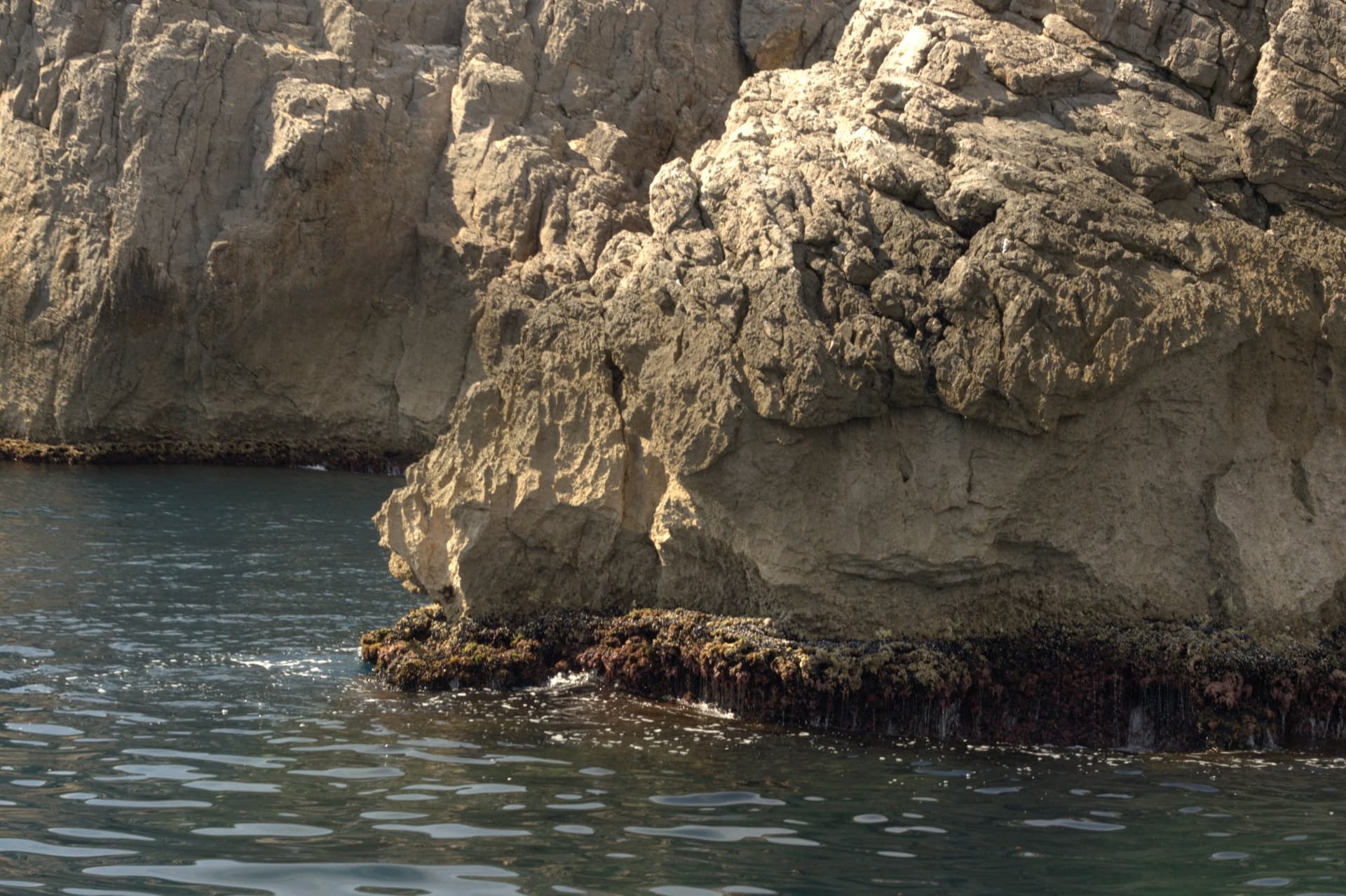
The tunnel crosses the islet between 18 and 24 metres, with sponges and red coral on walls and ceiling. A wide chimney rises through the passage before the exit. Past the exit the park describes the dive continuing beyond 30 metres, and one centre puts large boulders at 32 metres to the north, with good-sized lobsters among them. That is the deep end of the site and no part of every dive; what a group does there is the centre's call on the day.
The boat makes the crossing from L'Estartit port in about 15 minutes and moors to the islet, and the briefing decides whether the group takes the tunnel or stays in the cove. A posidonia meadow runs between 5 and 12 metres in the cove, which sits sheltered from north and east winds, and entering the tunnel is optional, since a circuit of the islet is offered. The park points the quiet cove dive at less experienced divers and the tunnel at those with more experience.
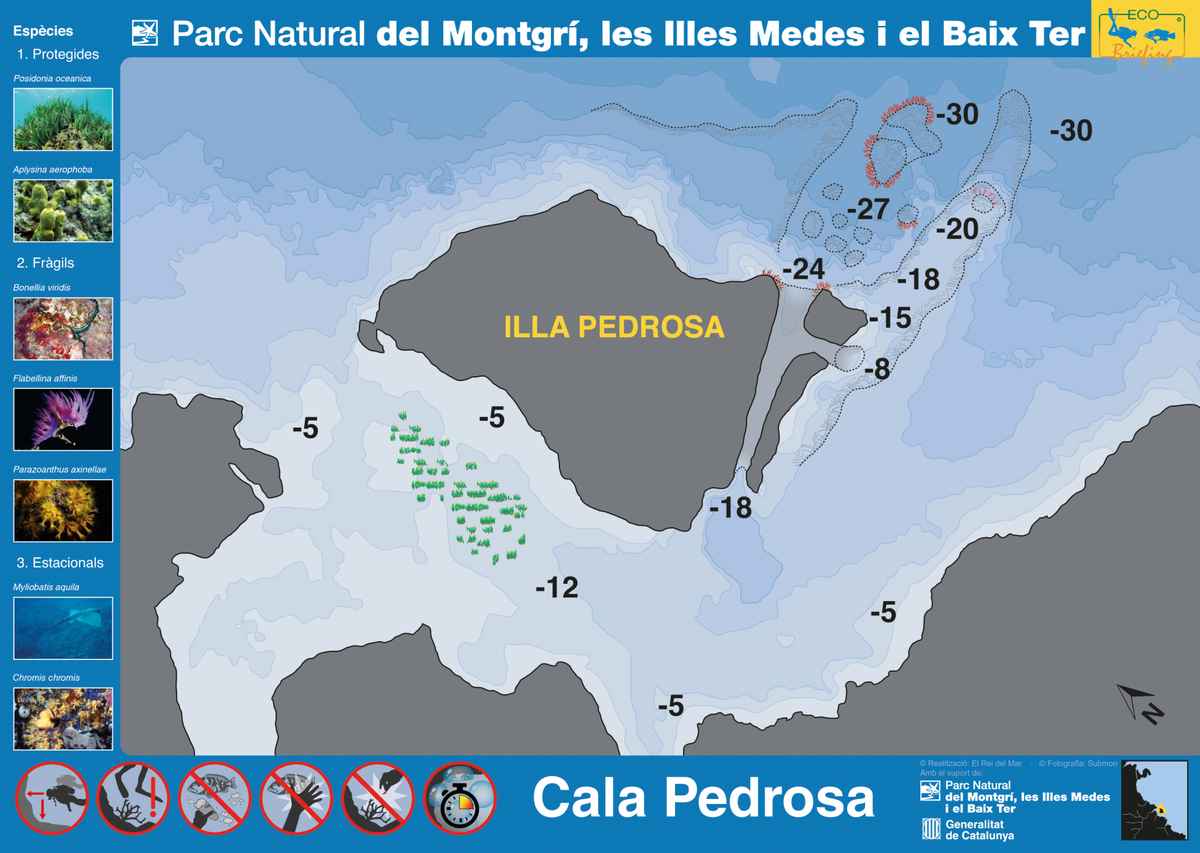
Illustration: Parc Natural del Montgrí, les Illes Medes i el Baix Ter — Generalitat de Catalunya
A passage some 70 metres long crosses the islet, wide and high, with most of its roof open to the sky. Daylight drops through the roof onto the red coral and sponges, and lobsters and slipper lobsters shelter among them.
The passage counts as an overhead environment even where the roof is open, so the group stays together and follows the plan agreed at the briefing. The guide confirms what each diver carries.
Red coral and sponges grow on the walls and the ceiling, and a fin tip or a dropped hand marks them. Keep trim level through the whole length of the passage.
What makes this dive site stand out.
About 70 m long, wide and high, with most of the roof open to the sky
Walls and ceiling of the passage are covered in sponges and red coral
A wide chimney rises through the tunnel before the exit
A sheltered cove and a circuit of the islet stay on offer for those who skip it
42.0733°N, 3.2052°E
The cove and islet circuit stay in shallow water, which sets this level. The tunnel (overhead, 18-24 m) is the part the park and centres point to more experienced divers.
Summary
The cove and islet circuit are easy; the tunnel is the part for experienced divers.
Safety considerations
What can go wrong here, and what divers do about it. Conditions change - take the briefing from the operator on the day.
Book a guided dive at this site.
Family-run PADI centre in L'Estartit, run by Peter and Jacqueline Lane for nearly 40 years, with PADI Green Star and four other environmental credentials.

PADI 5 Star centre on L'Estartit seafront with stay-and-dive packages, four daily boat dives between Illes Medes and Montgrí, plus tec diving.

L'Estartit's oldest dive centre (est. 1965), a PADI 5 Star CDC running daily boat trips to Illes Medes and the Montgrí Coast with volume dive packages.
Get in touch to add or claim your dive center listing on DiveCodex.
Dive centres in Catalonia must require insurance from every diver on their dives, and must be able to offer a policy to anyone who has none.
The park gives the tunnel as 18 to 24 m, and the centres that run it put the entrance at 17 to 18 m and the exit at 24 m. One other description places the entrance in a crack in the wall at only 8 m. Plan the tunnel route on the deeper figures and ask your centre which entrance it uses before settling the gas and the plan.
One centre has the wide shaft rising from 22 to 12 m before the tunnel ends; another description puts it at 8 to 10 m and says it calls for a torch. Treat the chimney as part of the overhead section, not as a way out, and ask the guide on the day which depths they use and what each diver should carry.
Log your dives - notes, photos, conditions and the marine life you saw - and share them as one public diver profile. What you share helps the next diver, too.
Log every detail
Depth, duration, conditions, gear, buddy, notes — all in one place. Import from Suunto and other dive computers.
Track marine life
Record species sightings on each dive. Build a personal catalogue of everything you've seen underwater.
Your public dive profile
Share your dive history, stats, and experiences with a profile page you control. Show the world where you've been.