

Buceo Aqualia
Training-led dive centre in La Herradura with SSI courses, UTD technical programmes and daily guided dives from Marina del Este, by shore or boat.
SSI5 services2 languages
Also known as: Hombre, Seca del Hombre
A seca off Punta de la Mona dived from 4 to 18 m: a pinnacle of orange coral and fanworms at 14 m, an arch between two stones at 18 m.
Last updated October 2026
The wall runs south from the foot of the Punta de la Mona cliffs, and the dive starts on it at 4-6 m, over small stones with the rock on your left. Damselfish, salemas and wrasse fill the first minutes. Next comes a band of brown algae, where slowing down is how divers find a seahorse, with luck. Large rocks with coralline growth follow, holding serranids and small groupers, and mojarras and sargos thicken in the water on the approach to the seca.
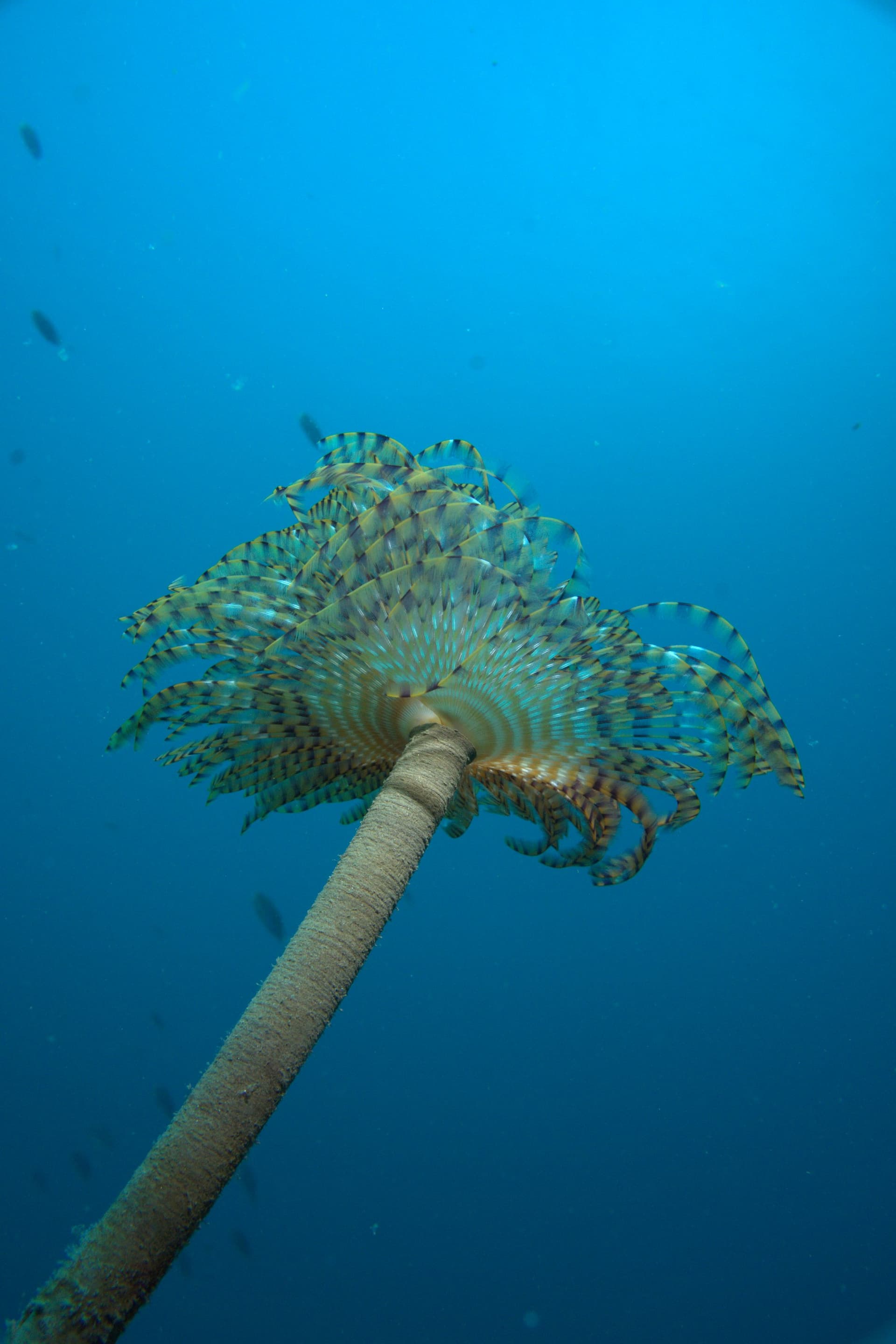
The pinnacle stands about 30 m from the cliff and rises almost to the surface. At 14 m it rests on very fine sand and is richly covered in orange coral and spirograph worms, with fry, sea bass and amberjack out in the blue and cerianthus on the sand around it. At 18 m an arch between two large stones turns the dive back along a shallower line, past crevices that hold conger, moray, forkbeard and small slipper lobsters (santiaguinos). Looking back at the rock on the return, divers pick out the outline of a man's face with a pronounced aquiline nose, which gives the place its name.
Piedra del Hombre fits a complete route into a shallow band: a wall, a separated pinnacle, an arch, and a return that stays shallow. The colour sits on the pinnacle, where the orange coral is dense enough to change the look of the dive after the muted algae and stone of the start. The way back is slower, over rock formations at around 10 m, including a large rock that breaks the surface and gathers a good deal of fish.
Most of the dive sits well inside Open Water depths, so a diver who is still building experience gets a pinnacle, an arch and a shaped route in one tank.
Nudibranchs are the macro draw. An operator calls the site an excellent area for observing them, violet sea slugs and Flabellina affinis are among the species named, and photographers who have posted from this rock describe a large variety within one dive, some on a single stone. The pinnacle's orange coral gives colour for close work, and spirograph worms stand out of it. One diver notes that the rock lies in the sun in mid afternoon.
The pinnacle can be busy, so go early. Photographers working a single subject here share the rock with other groups, and an early entry gives you more of it to yourself.
In the brown-algae band, slow down. The seahorses live there, and it is the part of the dive that most divers swim past.
What makes this dive site stand out.
Orange coral and spirograph worms cover the rock at 14 m, on fine sand.
An arch between two large stones is where the route turns back shallower.
The dive begins at 4-6 m on small stones, with the wall alongside.
Photographers report a large variety of nudibranchs, some on a single rock.
36.7250°N, 3.7367°W
Open Water is the stated minimum: the top of the dive is 4-6 m and the maximum 18 m. One operator grades the dive high and recommends current, deep and nitrox specialties for its version.
Summary
Two operators call it easy, one of them easy but intense, and one grades it high level; two descriptions report no current.
Safety considerations
What can go wrong here, and what divers do about it. Conditions change - take the briefing from the operator on the day.
Book a guided dive at this site.
Training-led dive centre in La Herradura with SSI courses, UTD technical programmes and daily guided dives from Marina del Este, by shore or boat.

PADI 5 Star IDC center in Marina del Este with 20+ years of experience, 6 instructors, and boat dives across 16 sites in La Herradura bay.

PADI 5 Star beachfront center in La Herradura with an in-house workshop, marine biology programs, and 16 sites from beginner coves to 40m walls.
Boutique SSI center in La Herradura built around deliberate slow-pace diving, marine education, and low-impact access to the Maro-Cerro Gordo protected coast.
Get in touch to add or claim your dive center listing on DiveCodex.
Two operators grade the dive easy, one of them adding that it is intense, and a third grades it high and recommends current, deep and nitrox specialties for its entry. The profile itself is shallow, with the wall starting at 4-6 m and a maximum of 18 m, and two descriptions report no current. Open Water is the minimum two operators state. The centre running the dive can say which version of the route it plans.
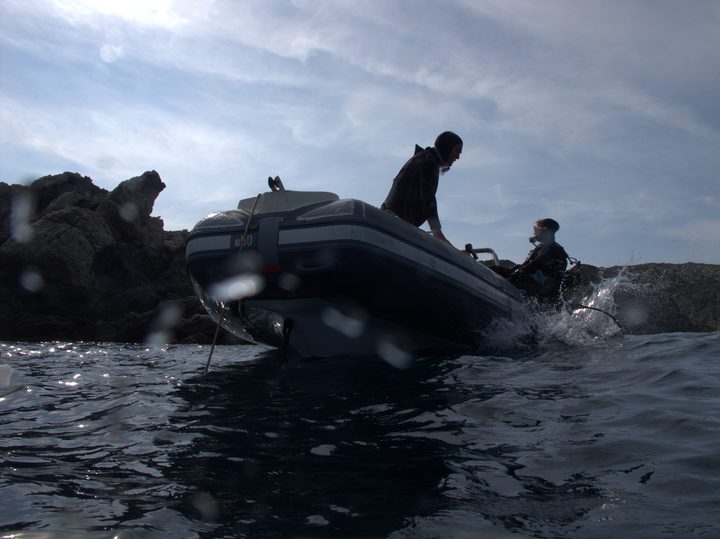
Operators describe a boat dive, with one anchoring boats at the site and another placing the seca about 500 m off the coast and 30 m out from the cliff. A separate dive-guide description tells divers to jump from the rocks or enter from the beach, although its own feature table says boat dive. Where you enter depends on how the centre you dive with runs it.
Log your dives - notes, photos, conditions and the marine life you saw - and share them as one public diver profile. What you share helps the next diver, too.
Log every detail
Depth, duration, conditions, gear, buddy, notes — all in one place. Import from Suunto and other dive computers.
Track marine life
Record species sightings on each dive. Build a personal catalogue of everything you've seen underwater.
Your public dive profile
Share your dive history, stats, and experiences with a profile page you control. Show the world where you've been.