

Buceo Las Negras
PADI and SSI center in Las Negras village, Cabo de Gata-Nijar Natural Park, operating since 2006 with a 4.7/5 rating across 110 reviews.
PADI / SSI3 languages
Also known as: Embarcadero, La Isleta, La Isleta del Moro, La Ola, La Olla, La Punta, Punta Isleta
Shore-entry headland at La Isleta del Moro circling through rock, Posidonia, and sand on a single shallow loop with a juvenile-fish nursery zone.
Last updated May 2026
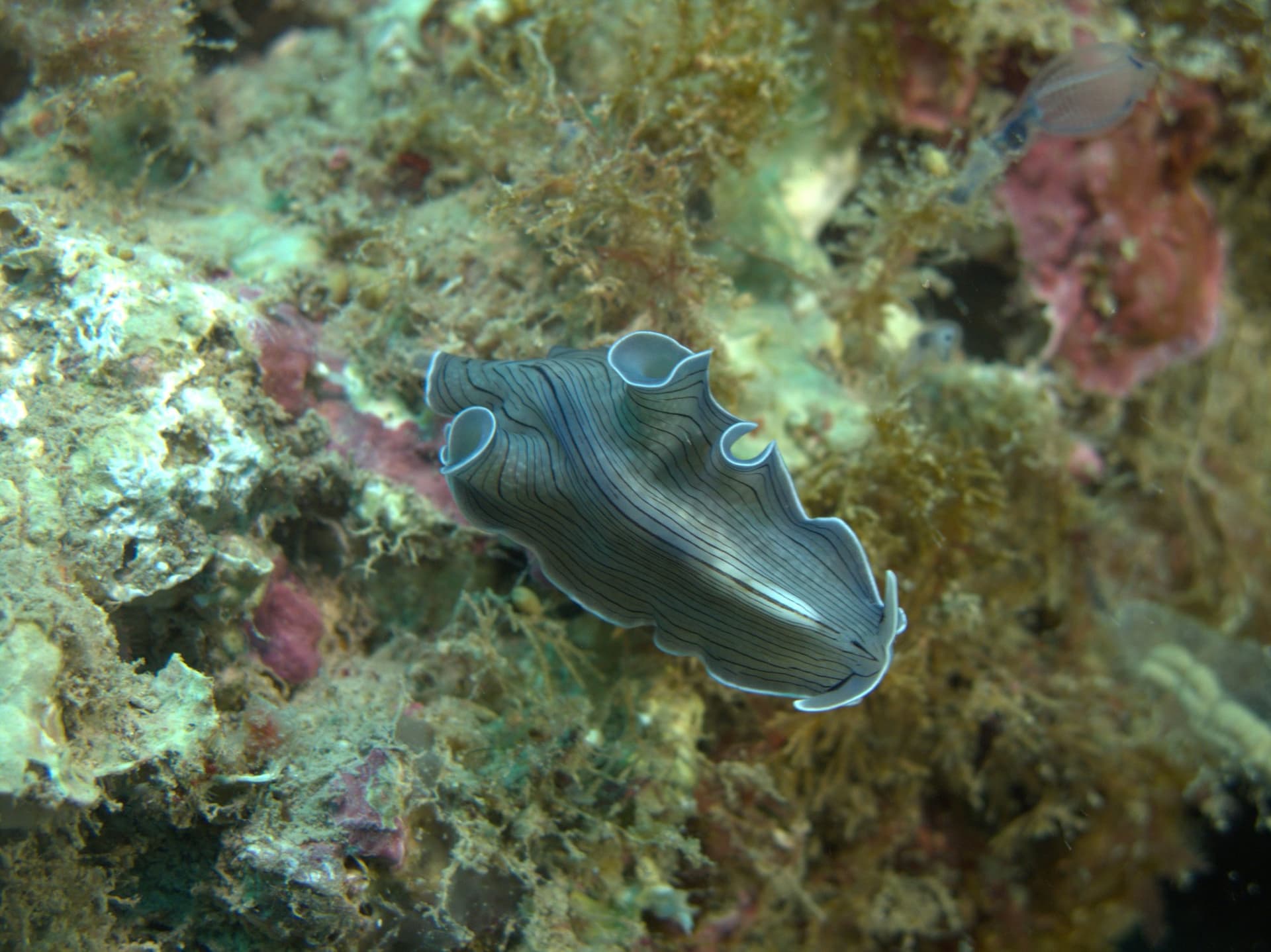
Walk off the beach at La Isleta del Moro and you are already on the dive. The headland drops into shallow canyons under the village, each one a corridor between rock walls. Follow the contour and you pass through three habitats without trying: volcanic rock thick with crevice life, Posidonia oceanica meadow stretching across the sand off the point, and bare sandy patches where cuttlefish hover at the rock edge. Cliff fissures catch the sun from above and throw shifting light across the narrow channels. Schools of juvenile fish fill the shallower formations, packed tight in the rock for shelter. Moray eels watch from the crevices. Conger eels sit in the deeper pockets. Depending on your air, you can turn back through the same canyon or push on around the point and loop home through a narrow central passage. Fifty minutes passes quickly at this depth.
Four dive centres sit within twenty metres of the waterline, and this headland is the site they keep returning to. A local underwater videographer once asked, in print, how many times he had dived here and how many edits he had made of this one spot. The question is the answer: this is the village's house dive, the headland everyone learns first and returns to often. The juvenile-fish nursery is the reason. Dense schools in the rock attract bogas and predators, and the predators attract attention. One filmed encounter shows a cormorant diving underwater to hunt bogas through the rocky channels. That kind of behaviour does not happen at deeper, less sheltered sites. The headland funnels life inward rather than dispersing it, and the shallow depth means bottom time to watch it unfold.
Shore entry from the village beach is straightforward. No booking, no boat, no individual permit if you dive with a centre. If you plan to dive independently, you will need an infanteria permit from the Junta de Andalucia, valid three months, with certification, insurance, and DNI. Independent night dives are not permitted under that regime. Centre night dives here are recommended and run around 20 EUR extra. Keep an eye on the Posidonia for seahorses; they have been spotted, though finding one takes luck and patience. At the headland point, look out into the blue water. The exposed face is where pelagic species occasionally pass through.
What makes this dive site stand out.
Rock passages, Posidonia meadow, and sand all reachable on a single shallow circuit.
Dense schools of fry shelter in the rock formations and define the site.
Step into the dive from the village beach with four centres on the same waterfront.
Cliff fissures throw shifting beams across the narrow channels through the headland.
Centres recommend the site for night dives thanks to shallow depth and calm entry.
36.7960°N, 1.9760°W
Diveable year-round. May/June and September/October pair pleasant conditions with fewer tourists.
Local centre rates (2025). Night dive supplement 20 EUR.
Centres run baptism dives and OW guided tours here. Beginners stay in the shallows; experienced divers extend with the headland circumnavigation.
Summary
Shallow depths, sheltered entry, and calm conditions. The full circumnavigation adds light navigation interest.
Safety considerations
What can go wrong here, and what divers do about it. Conditions change - take the briefing from the operator on the day.
Book a guided dive at this site.
PADI and SSI center in Las Negras village, Cabo de Gata-Nijar Natural Park, operating since 2006 with a 4.7/5 rating across 110 reviews.

Family-scale CMAS and SSI center in La Isleta del Moro, operating for 30+ years inside the Cabo de Gata-Nijar Natural Park.
Get in touch to add or claim your dive center listing on DiveCodex.
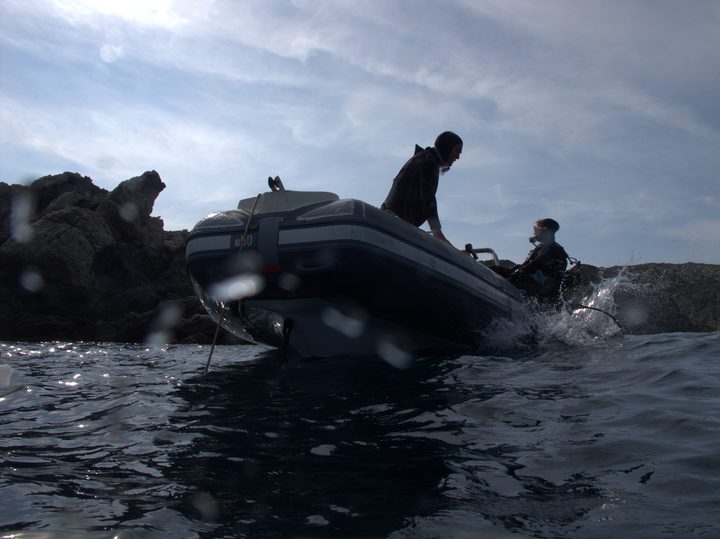
Yes. Walk in from the village beach at La Isleta del Moro. Four dive centres operate within twenty metres of the shoreline and lead guided dives straight off the beach. Boat entry is also possible for those who prefer it, with anchoring at 5 metres on the protected side.
Dense schools of juvenile fish shelter in the rock formations along the headland. The nursery zone is the site's defining feature and runs year-round. The fry attract bogas and other predators, which in turn attract attention. One local diver filmed a cormorant diving underwater here to hunt bogas through the rocky channels.
It depends on air consumption. The route follows the contour through several canyons to the point and returns through a narrow central passage. At 5-15 metres air lasts well, but completing the loop wants steady breathing and good buoyancy. Beginners typically explore the shallow shore side and turn back partway.
Rock formations, Posidonia oceanica meadow, and bare sand. Each holds different species. The rock passages have moray eels and scorpionfish. The Posidonia is where seahorses are occasionally spotted. The sand-rock interface attracts cuttlefish and pipefish. All three appear within a single shallow loop.
Centres recommend it. The shallow depth, walk-in entry, and calm conditions make it one of the safer night-dive options in the area. The night supplement is around 20 EUR through a local centre. Independent night diving is not permitted under the area's permit rules.
It is the most accessible of the village's sites. Shore entry, shallow depth, and beginner-friendly conditions distinguish it from boat-only options like La Cueva del Frances or the offshore seamounts. The three-habitat variety and nursery zone give it character beyond an easy profile, and experienced divers add length with the circumnavigation.
Possibly, but not reliably. The Posidonia meadow off the point is the habitat. A guide who knows the site improves the odds, but local sources frame it as a lucky encounter rather than a guaranteed sighting. Slow swimming and a trained eye matter more than a specific route.
Log your dives - notes, photos, conditions and the marine life you saw - and share them as one public diver profile. What you share helps the next diver, too.
Log every detail
Depth, duration, conditions, gear, buddy, notes — all in one place. Import from Suunto and other dive computers.
Track marine life
Record species sightings on each dive. Build a personal catalogue of everything you've seen underwater.
Your public dive profile
Share your dive history, stats, and experiences with a profile page you control. Show the world where you've been.