

Buceo Aqualia
Training-led dive centre in La Herradura with SSI courses, UTD technical programmes and daily guided dives from Marina del Este, by shore or boat.
SSI5 services2 languages
Also known as: Cueva de La Virgen, La Mona, Mona's Point
Advanced wall and cavern dive at La Herradura's eastern headland with Dendrophyllia yellow coral gardens from 30m and a sheltered grotto at 13m.
Last updated May 2026
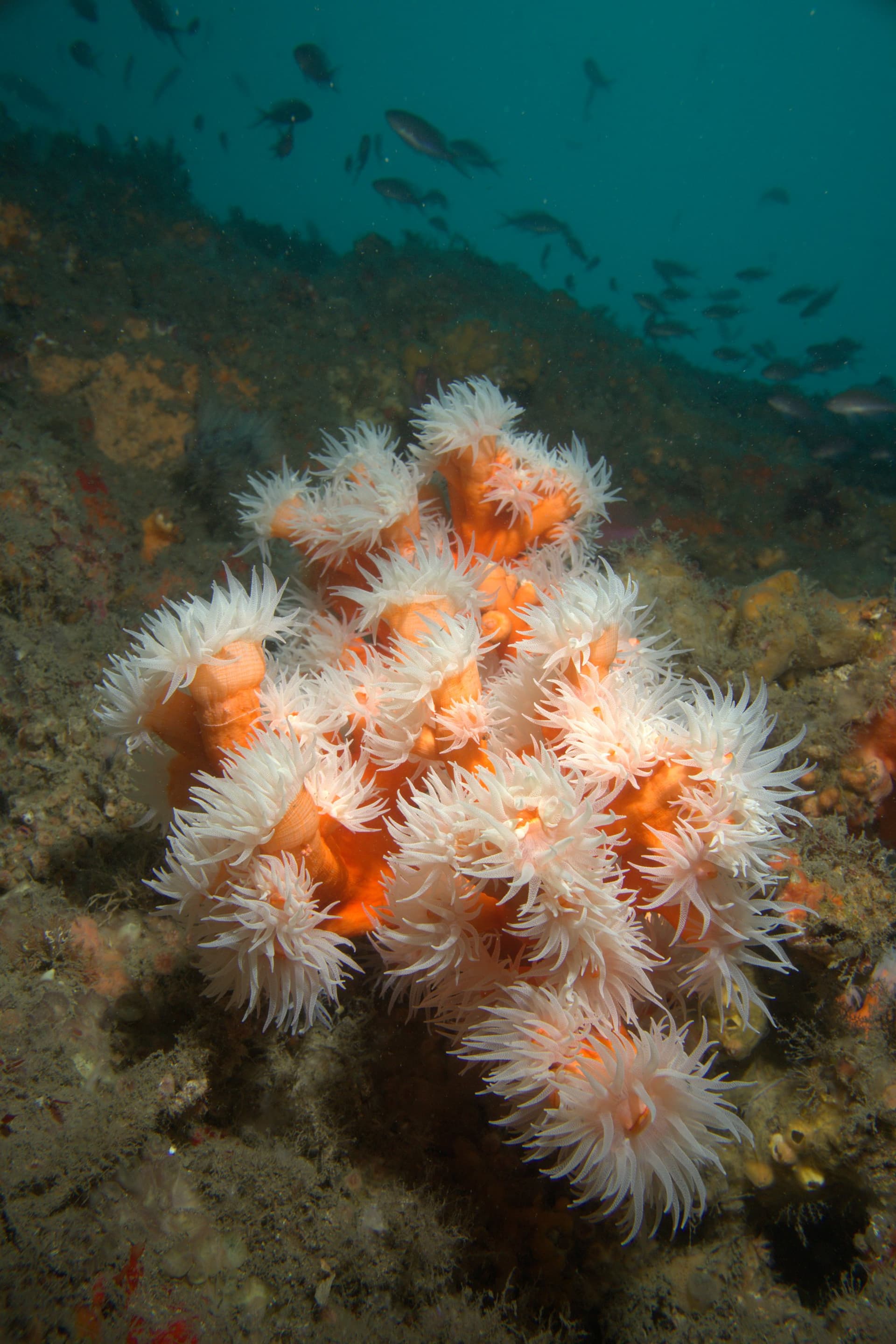
The boat ties off near a descent line on the seaward side of the headland. From the surface you drop down the line to about 17 metres, where the wall takes over: vertical rock, gorgonian coverage, and shaded crevices where Astroides coral mats blaze orange under torchlight. Stay close to it. The wall is the depth gauge cue and the navigation reference, because below you the bottom keeps falling.
From here a guide picks one of two routes. The deep route follows the wall until the rock structure spurs out into the Tres Picos pinnacles, climbing back from sand at 40 metres and beyond. The yellow coral starts appearing at 30 metres in scattered fragments, then opens out into proper gardens of Dendrophyllia ramea by 35-40 metres. This is where the depth budget runs out fast: tank pressure and no-stop time both work against you, and the ascent has to begin while the air still allows a multi-level return up the wall.
The shallow route turns inside before depth, swimming along the rock face into the Cueva de La Virgen at about 13 metres. The cavern has a sandy floor, an open mouth and daylight throughout, with octopus and anemones in the cracks. Newer divers complete the site here, and the safety stop runs comfortably near the top of the cavern feature on its way back out.
Three things separate Punta de la Mona from the rest of the La Herradura site list. First, the Dendrophyllia ramea garden. The species is widespread in the Mediterranean, but the colonies sit at technical depth in most places. Here the gardens are within recreational AOW range and the densest patch is at 35-40 metres, on a wall that runs Astroides orange coral above and gorgonian coverage between. Second, the rhodolith bed. Sixteen thousand square metres of free-living coralline algae extend east of the headland between 9 and 24 metres, documented in peer-reviewed marine science and rare to find on a recreational profile. Third, the dual character: the same boat drop runs an advanced wall and an Open Water cavern. Local centres trade on this, since the cavern carries a figurine of the Virgen de las Nieves that has given the site its alternative name and is approachable for groups who would not consider the deep route.
Macro and wide-angle both have a clear case here. Photographers have arrived from Algeciras with 50mm portrait lenses and worked the shallows for small fish and nudibranchs in 24°C September water with the kind of visibility that local divers describe as enviable. A separate documented dive in winter put a video rig on the deep route, recording the 46 metre descent and the catshark cameo that is one of the few captured for the site. The orange coral and yellow Dendrophyllia in the deeper sections need artificial light to read on camera; without it they read dark against the wall. Bring a torch for the cavern interior as well, since the orange tapestry only shows its colour under direct beam.
Currents are the variable that drives the day. The shallow cavern profile has logged repeatedly as no current across spring, summer and winter, but the exposed headland at depth can run hard, and Levante or Poniente at any strength is enough to close the site. Centres make the call on the morning. Air divers should treat the 35-40 metre yellow coral zone as a tight no-stop window and plan the ascent before the gauge forces it; Nitrox extends that window meaningfully. The cavern is approached on the sheltered side and stays workable in conditions that close the wall, so the trip rarely returns empty-handed. Bring an SMB for the open-water ascent off the wall.
What makes this dive site stand out.
Dendrophyllia ramea fields from 30m, densest at 35-40m, unusually shallow for the species
Sandy-floored cavern at 13m with the exit always in sight, suitable for OW divers
Cluster of pinnacles climbing from sand at 40m+ on the deep route
16,000 sq m of free-living coralline algae at 9-24m, documented in marine science
Same boat drop runs OW cavern and AOW wall depending on the diver
36.7193°N, 3.7272°W
September gives the best mix of warm water (24°C) and visibility. May onwards adds silver-fry bait balls and bonito at the headland.
Typical fun dive (2-bottle) at La Herradura centres. Permit fee included in trip price. Verify current rates with the centre.
AOWD minimum for the wall and Tres Picos profile. The Cueva de La Virgen circuit at 13m runs as an OW dive when centres split groups by level.
Summary
Advanced rating reflects the deep wall (40m+), variable headland currents at depth, and buoyancy demand on the cliff face. The shallow cavern circuit is comfortable for OW divers.
Safety considerations
What can go wrong here, and what divers do about it. Conditions change - take the briefing from the operator on the day.
Book a guided dive at this site.
Training-led dive centre in La Herradura with SSI courses, UTD technical programmes and daily guided dives from Marina del Este, by shore or boat.

PADI 5 Star IDC center in Marina del Este with 20+ years of experience, 6 instructors, and boat dives across 16 sites in La Herradura bay.

PADI 5 Star beachfront center in La Herradura with an in-house workshop, marine biology programs, and 16 sites from beginner coves to 40m walls.

Boutique SSI center in La Herradura built around deliberate slow-pace diving, marine education, and low-impact access to the Maro-Cerro Gordo protected coast.
Get in touch to add or claim your dive center listing on DiveCodex.
A wide cavern at about 13 metres on the sheltered side of the headland. The floor is sand and the entrance stays visible from inside, so it is not a technical cave. Local divers placed a small figurine of the Virgen de las Nieves in the cavern, which is where the name comes from. Centres run it as an Open Water dive when groups are mixed.
Advanced Open Water for the full wall and Tres Picos profile. The Cueva de La Virgen circuit at 13 metres can be run as an Open Water dive with a guide. Centres typically split groups, with newer divers on the cavern and shallow reef while AOWD divers work the deep wall.
Dendrophyllia ramea begins to appear from around 30 metres on the wall, with the densest gardens between 35 and 40 metres. This is unusually shallow for the species in the Mediterranean, where most colonies sit at technical depth. Air divers should plan a Nitrox or strict no-stop turn-around for this zone.
Both macro and wide-angle work here. Macro photographers have logged 50mm and 105mm sessions for nudibranchs and small reef fish in the shallows, with September delivering 24°C water and exceptional visibility. Wide-angle setups suit the Astroides walls and the deeper Dendrophyllia gardens, which need artificial light to bring the colour through. The two routes can support different lens choices on the same trip.
With a guide, yes, on the shallow profile only. Three independent dive logs across 2018 record the Cueva de La Virgen and surrounding reef as accessible 12-18 metre dives with no current. Centres will not run a beginner on the deep wall or Tres Picos.
Both are advanced depth dives on the same headland and divers have long paired them as the area's experienced-diver itinerary. Punta de la Mona is the wall: vertical rock, gorgonians, and the yellow coral gardens from 30 metres. Piedras Altas is the boulder structure with candelabra coral. The two together cover the depth and structure range of the Granada coast advanced sites.
The exposed headland closes off when either Levante (east) or Poniente (west) blows hard. On those days centres switch to the bay-side sites within Marina del Este. The cavern circuit is more tolerant of wind than the deep wall, but the boat ride to the headland is the limiting factor.
Log your dives - notes, photos, conditions and the marine life you saw - and share them as one public diver profile. What you share helps the next diver, too.
Log every detail
Depth, duration, conditions, gear, buddy, notes — all in one place. Import from Suunto and other dive computers.
Track marine life
Record species sightings on each dive. Build a personal catalogue of everything you've seen underwater.
Your public dive profile
Share your dive history, stats, and experiences with a profile page you control. Show the world where you've been.