

Andreas Diving
Family-run SSI center on Menuda Beach in Tossa de Mar since 1998, with eco-guide philosophy, 17 dive sites, and authorized Cressi service.
SSI4 languages
Also known as: El Catifoll, La Muladera, La Roca del Moro, Muladera, Roca Moladera
Boat dive beside a surface-piercing rock with a canyon, off Tossa de Mar, from 0 to 25 m, with nudibranchs in the canyon and groupers recommended by a local centre.
Last updated October 2026
The anchor falls into the canyon at 8 metres, and the dive follows that canyon south with the main rock on your left, to a deepest point of about 25 metres. The canyon section sits around 18 metres. The rock reaches the surface on one side and the canyon runs along the other, with a smaller second rock reported to top out near 3 metres, and centres describe backlit walls where light comes in from behind. The route turns at half tank. In the canyon safety stop, nudibranchs are the regular find, with octopus and the occasional barracuda.
One boat position gives two dives. The shallow zone starts at the surface and is wide enough for novices, and divers with air to spare go on into the deeper canyon, so a mixed group can share a mooring and still dive different profiles.
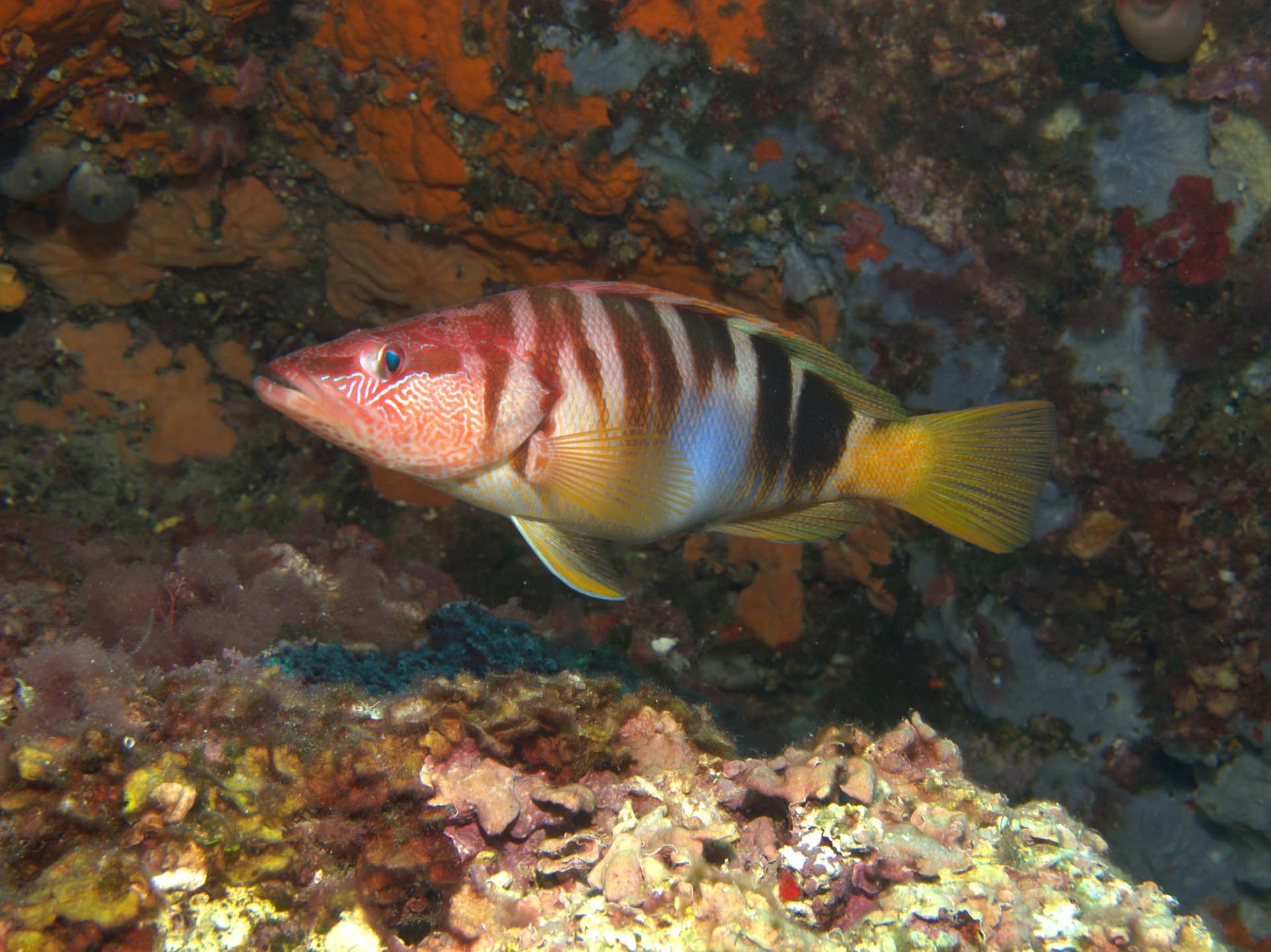
The second draw is the groupers. A Tossa centre recommends the site for seeing them, and a small dusky grouper is possible on the route; around Tossa they are occasional and wary.
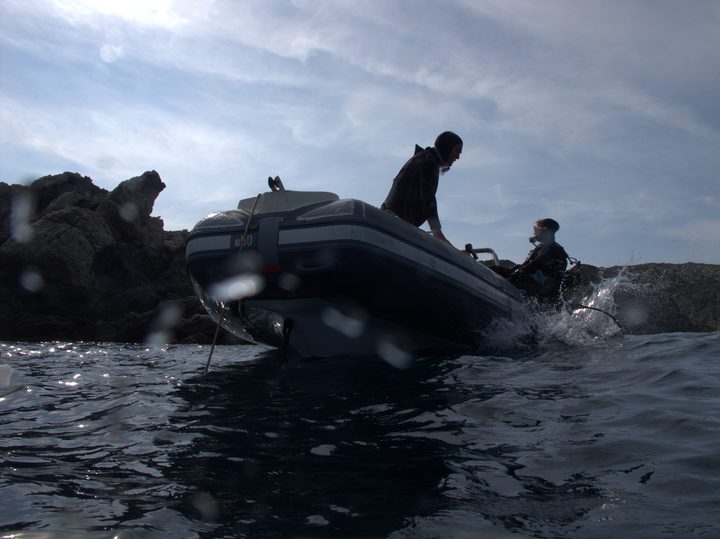
Swimming out to the rock is a different dive from the boat trip, because the inner side has a current that sets toward Tossa. Boat departures differ: about 10 minutes from Tossa port with one centre, about 20 from the Mar Menuda area with another, so ask which you are on.
What makes this dive site stand out.
A rock reaching the surface with a canyon along its flank, anchored in the canyon at 8 m.
The same boat position serves a 0 m shallow zone and a deeper canyon section to 25 m.
Centres report nudibranchs in numbers on the canyon walls and around the safety stop.
A local centre recommends the site for dusky groupers; sightings are occasional.
41.7071°N, 2.9142°E
Water of 18-25 C through the season.
As of March 2026 one operator prices a guided boat dive at EUR 51, including equipment, 12 L tank, weights, guide and boat. Diving insurance is extra (EUR 7 a day or EUR 39 a year).
As of March 2026, one centre sets Open Water as the minimum and two others describe the dive as suitable for all levels; the shallow zone starts at the surface and the deeper canyon section is a choice made from the same boat position.
Summary
Easy in the shallow zone; the deeper section asks for good air consumption.
Safety considerations
What can go wrong here, and what divers do about it. Conditions change - take the briefing from the operator on the day.
Book a guided dive at this site.
Family-run SSI center on Menuda Beach in Tossa de Mar since 1998, with eco-guide philosophy, 17 dive sites, and authorized Cressi service.

Barcelona dive school and shop diving from Lloret de Mar, Costa Brava; SSI Diamond Instructor Training Center since 2006, plus Extended Range technical courses.
Family-feel PADI and CMAS centre in Tossa de Mar with free parking, van to Mar Menuda, and a wide course menu including ice, altitude and DPV specialties.
Small-group dive center in Tossa de Mar with a year-round boat, max 4 divers per guide, PADI TecRec and CCR training, and on-site accommodation.

Family-run PADI/SSI/CMAS centre in Tossa de Mar with 21+ seasons, free Nitrox on guided dives, marine life courses, and on-site apartments.
Family-run Costa Brava dive center at Cala Canyelles, Lloret de Mar, with its own boat reaching reefs and pinnacles from Blanes to Tossa de Mar.
Costa Brava's only PADI CDC, 20+ years in Tossa de Mar with the world's sole Mediterranean SeaHorse Expert specialty and 843 five-star reviews.
Get in touch to add or claim your dive center listing on DiveCodex.
Dive centres in Catalonia must require insurance from every diver on their dives, and must be able to offer a policy to anyone who has none.
A group did in 2010, descending in the inner channel at 6 m and rounding the rock to its deepest point at 25 m. The current on the inner side swept them out toward Tossa on the way back, and a Tossa dive-club owner had warned against swimming out because of it. The dive is run by boat.
Local fishermen know the rock as La Roca del Moro. Divers write the dive name as Roca Muladera, Roca Moladera or simply la Moladera, so all of them point to the same rock.
Log your dives - notes, photos, conditions and the marine life you saw - and share them as one public diver profile. What you share helps the next diver, too.
Log every detail
Depth, duration, conditions, gear, buddy, notes — all in one place. Import from Suunto and other dive computers.
Track marine life
Record species sightings on each dive. Build a personal catalogue of everything you've seen underwater.
Your public dive profile
Share your dive history, stats, and experiences with a profile page you control. Show the world where you've been.